
Faith
Church Defends Decision to Remove Longtime Food Ministry Amid Troubling Safety Concerns


Faith Facts
- A Washington state church ended a decades-long partnership with a food ministry over serious concerns about drug use and safety on church property
- The ministry operated under a month-to-month lease arrangement that gave the church flexibility to address growing problems
- Church leadership cited their responsibility to protect the congregation and maintain a safe worship environment
A Washington state church is standing firm on its decision to end a longstanding relationship with a food charity that had served meals from its property for over 30 years. The decision comes amid serious allegations that the ministry’s operations had created an environment enabling drug abuse on church grounds.
Church leadership emphasized their primary duty to protect their congregation and maintain the sanctity of their worship space. The food ministry had been operating under a month-to-month lease agreement, which provided the church with the legal authority to terminate the arrangement when concerns arose.
The pastor defended the difficult decision, explaining that while the church values charitable outreach and serving those in need, they cannot compromise the safety and security of their members. The situation highlights the complex challenges churches face when balancing their mission to serve the community with their responsibility to protect their congregations.
Church officials reported observing troubling patterns of behavior on the property that went beyond the intended purpose of providing meals to those experiencing food insecurity. The alleged drug activity created an unsafe environment that threatened to undermine the church’s ministry and witness in the community.
The decision was not made hastily, according to church representatives. Leadership spent considerable time attempting to address the concerns with the food ministry before ultimately determining that ending the lease was the most responsible course of action for the safety of all involved.
This situation underscores the importance of proper oversight and accountability in ministry partnerships. Churches must maintain clear boundaries and expectations when allowing outside organizations to operate on their property, ensuring that all activities align with the church’s mission and values.
While compassion for the hungry and homeless remains a biblical mandate, church leaders must also exercise wisdom and discernment in how they fulfill that calling. The protection of the flock is a sacred trust that pastors and elders cannot abdicate, even in the face of criticism for making difficult decisions.
The church has expressed its continued commitment to serving those in need through other ministries and partnerships that maintain appropriate safeguards and accountability measures. They remain open to finding alternative ways to support food security in their community while ensuring the safety of their property and people.
Let us know what you think, please share your thoughts in the comments below.


Faith Facts
- Ahmed Joktan, a Saudi-born evangelist, says a dream led him to Jesus and prompted his conversion from Islam.
- After embracing Christ, Joktan suffered violent persecution for leaving the Islamic faith.
- He now urges Western believers to share the Gospel courageously with their Muslim neighbors.
Saudi-born Christian evangelist Ahmed Joktan is urging believers in the West to proclaim the Gospel without fear after he himself paid a steep price for following Jesus.
Joktan says a dream drew him to Christ and led him to abandon Islam, a decision that triggered a violent assault against him.
“I was attacked because I chose to follow Jesus,” Joktan stated.
Despite the beating he endured, the evangelist insists the cost of obedience is worth it and that American Christians must not shrink from sharing their faith.
“I want to encourage my brothers and sisters in the West to be bold in witnessing to their Muslim neighbors,” Joktan said.
His testimony highlights the stark contrast between the freedom of religion enjoyed in the United States and the harsh reality faced by converts in many Muslim-majority nations.
Family, faith, and the courage to speak truth remain central to Joktan’s message as he travels and ministers across the country.
Let us know what you think, please share your thoughts in the comments below.

Faith Facts
- The Bible records Noah’s Ark as a historical vessel built at God’s command to preserve life during the Flood.
- Archaeologists and geologists continue to study sites in Turkey that some claim match the Ark’s resting place.
- Christians are urged to ground their faith in Scripture rather than unverified discoveries.
Explosive headlines this week announced that Noah’s Ark has been discovered beneath a mountain range in Turkey. The claims have quickly spread across social media and news outlets, stirring both excitement and skepticism among believers.
Chris Sinkinson, a respected Christian author and lecturer, cautions that such announcements often outpace the evidence. He urges fellow believers to remain anchored in Scripture and verified facts rather than sensational reports.
“Christians need to stick to the facts,” Sinkinson stated. His words serve as a timely reminder that faith rests on the unchanging Word of God, not on the latest archaeological headline.
While the possibility of discovering physical remnants of the Ark is intriguing, experts note that conclusive proof remains elusive. Many past claims have failed under closer scientific examination.
Scripture itself provides the foundation for understanding the Flood and God’s covenant with Noah. Believers are reminded that the reliability of the Bible does not depend on locating the physical Ark.
Let us know what you think, please share your thoughts in the comments below.
Faith Facts
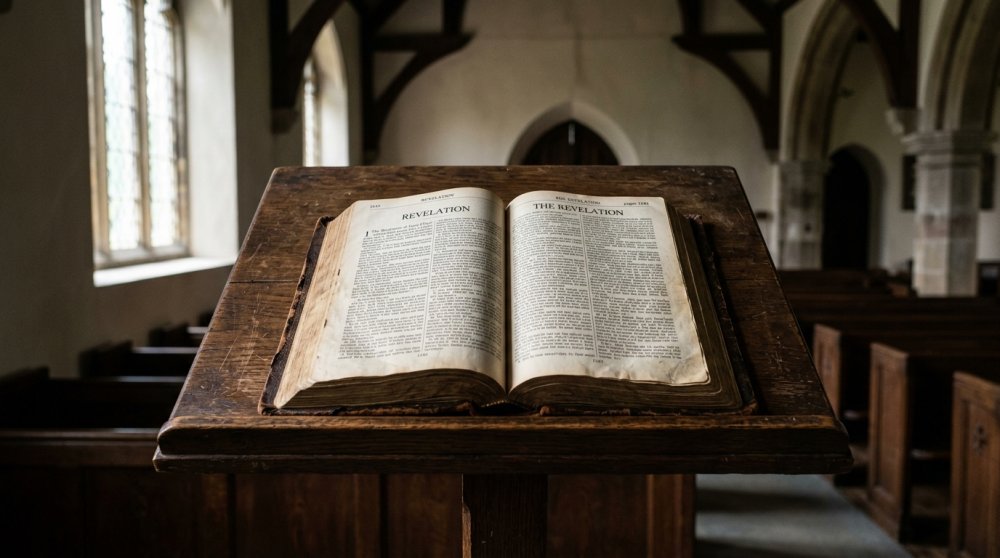
- Revelation chapters 2 and 3 contain direct messages from Jesus to seven churches in Asia Minor, blending commendation with stern rebuke.
- Scripture records that Jesus declares, “I know your works,” underscoring His intimate awareness of both corporate and personal conduct.
- The warnings delivered to these early congregations still apply to contemporary churches that drift into compromise or complacency.
In Revelation 2 and 3, the gentle and lowly Jesus speaks to seven churches with both praise and severe warning.
He knows their works, their compromises and what they can’t see about themselves.
He knows ours, too.
Let us know what you think, please share your thoughts in the comments below.


-

 Self-Reliance2 years ago
Trump’s Bold Move Uncovers Massive Social Security Fraud
-

 Faith1 year ago
New Clues Emerge in Noah’s Ark Mystery
-

 News2 years ago
Governor Walz’s Rhetoric Sparks National Controversy
-

 News2 years ago
Mel Gibson’s ‘The Passion of the Christ’ Sequel Title Announced
-

 Family2 years ago
Texas Lawmaker Targets Furries in Schools
-

 Freedom2 years ago
Maine Lawmaker Challenges Sports Fairness Controversy
-

 Family1 year ago
Canada’s Controversial Policy Sparks Ethical Debate
-
Faith11 months ago
Congress Hears Pleas for Nigerian Christians