
News
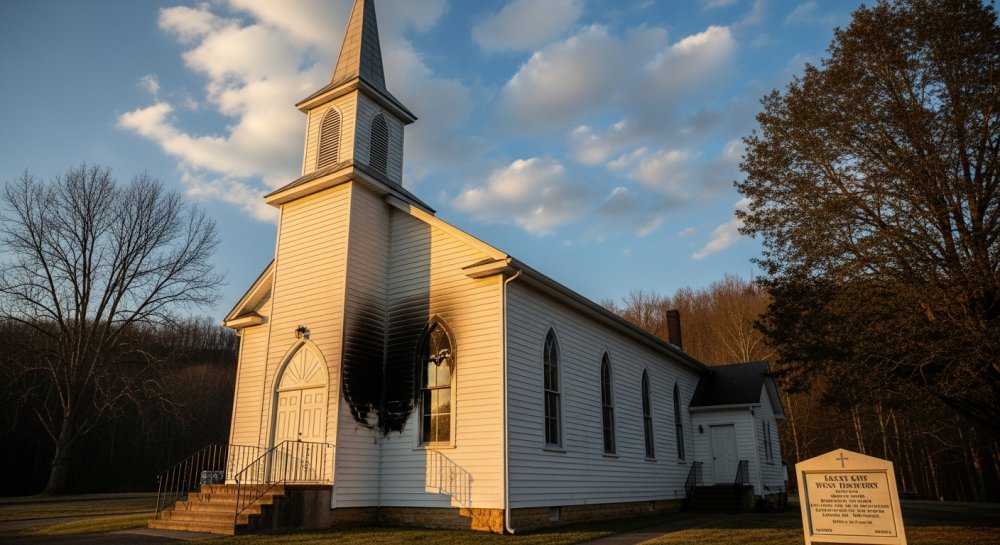
West Virginia Church Vandal Arrested After Series of Arson Attacks

Faith Facts
- A man has been arrested and charged with setting multiple fires at a church in West Virginia, targeting a place of worship in what appears to be a deliberate attack on the faith community.
- The arrest comes after a series of suspicious fires threatened the church building, raising concerns about religious freedom and the safety of congregations across America.
- Local authorities are investigating the incidents as potential hate crimes against Christian worship spaces, reflecting a growing national trend of attacks on churches.
A man has been arrested and accused of setting multiple fires at a church in West Virginia. The suspect’s actions have left the local faith community shaken but resolute in their commitment to continue worshiping and serving their neighbors.
The incidents represent a troubling pattern of attacks on churches across the United States, where houses of worship have increasingly become targets of vandalism, arson, and other destructive acts. These attacks strike at the heart of religious liberty, a foundational principle of American society and a God-given right protected by the First Amendment.
Law enforcement officials are working diligently to ensure that those who target places of worship face the full consequences of their actions. The congregation affected by these fires has demonstrated remarkable faith and resilience in the face of these attacks.
Churches have always been sacred spaces in American life, serving as pillars of community strength, moral guidance, and charitable outreach. When these institutions are attacked, it affects not just the congregation members but entire communities that depend on the church’s ministry and service.
The arrest in this case sends an important message that attacks on religious freedom and places of worship will not be tolerated. Christian communities across the nation continue to stand strong against those who would seek to intimidate or silence their witness.
As this case moves forward through the justice system, it serves as a reminder of the importance of protecting our constitutional right to freely practice our faith. The church community remains prayerful for justice and for the spiritual restoration of those who commit such acts.
Let us know what you think, please share your thoughts in the comments below.


Faith Facts
- Swiss voters narrowly defeated a referendum proposal to cap the country’s population at 10 million people in a closely watched national vote.
- The initiative was led by the right-wing Swiss People’s Party, reflecting ongoing tensions over immigration and national identity in Europe.
- The decision highlights the complex balance between border security, economic needs, and humanitarian concerns that Christian voters must navigate.
Swiss voters have rejected a controversial proposal that would have capped the nation’s population at 10 million people. The referendum, which sparked intense debate throughout the traditionally neutral Alpine nation, was defeated in what observers describe as a narrow but decisive outcome.
The initiative was championed by the Swiss People’s Party, a right-wing political organization that has consistently advocated for stricter immigration controls and preservation of Swiss national identity. The party framed the population cap as necessary to protect the country’s infrastructure, environment, and cultural heritage from the pressures of unchecked growth.
Switzerland’s current population stands at approximately 8.7 million, meaning the proposed cap would have allowed for continued growth but within defined limits. Proponents argued that such restrictions were essential for maintaining the quality of life that has made Switzerland one of the world’s most prosperous nations.
The referendum process itself reflects Switzerland’s unique system of direct democracy, where citizens regularly vote on policy matters that in most countries would be decided solely by elected representatives. This approach to governance allows the Swiss people to directly shape their nation’s future on fundamental issues.
Opposition to the measure came from various quarters, including business groups who warned that population restrictions could harm Switzerland’s economy by limiting access to skilled workers. Religious and humanitarian organizations also expressed concerns about the moral implications of strict demographic controls.
For Christians in Switzerland and abroad, the debate raised important questions about stewardship, hospitality, and national sovereignty. Biblical principles call believers to welcome the stranger while also recognizing the legitimate role of governments in maintaining order and protecting their citizens.
The outcome demonstrates the ongoing tension in Western nations between preserving national identity and cultural cohesion on one hand, and maintaining economic dynamism and humanitarian openness on the other. Switzerland, despite its small size and unique position outside the European Union, faces many of the same immigration challenges confronting larger European countries and the United States.
The Swiss People’s Party has previously succeeded with immigration-related initiatives, including a 2014 referendum that called for quotas on immigration from European Union countries. However, that measure proved difficult to implement given Switzerland’s complex relationship with the EU and its dependence on cross-border economic cooperation.
The defeat of this latest proposal suggests that while Swiss voters have concerns about immigration and population growth, they are not prepared to embrace hard caps that could limit the country’s flexibility in responding to future economic and demographic changes. This pragmatic approach reflects the careful balancing act that characterizes much of Swiss political culture.
As European nations continue to grapple with questions of borders, identity, and demographic change, Switzerland’s referendum offers insights into how democratic societies navigate these contentious issues. The close vote indicates that while the population cap was rejected, the underlying concerns about immigration and national identity remain significant factors in Swiss political discourse.
Let us know what you think, please share your thoughts in the comments below.
Faith Facts
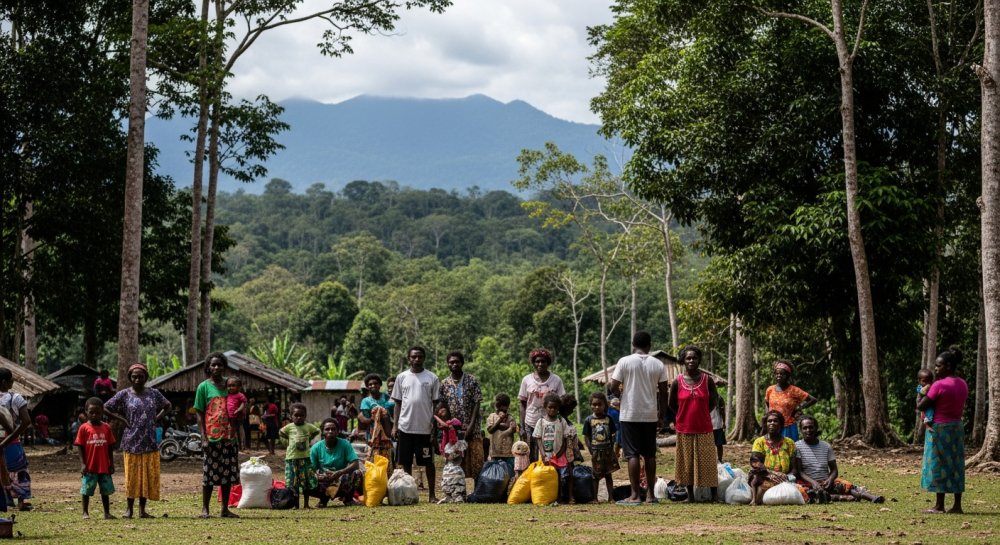
- A documentary exposing military violence against indigenous Christians in West Papua has reached over 13.6 million views on YouTube despite government suppression efforts.
- More than 107,000 people, most of them Christian, have been forcibly displaced from their homes in West Papua as of April 2025.
- Indonesian authorities attempted but failed to stop organized screenings of the film in cities throughout the country.
A powerful documentary revealing systematic violence and land dispossession against indigenous Christians in West Papua has broken through government censorship to reach millions of viewers worldwide. The film has garnered more than 13.6 million views on YouTube within just days of its release, exposing atrocities that Indonesian authorities worked desperately to keep hidden.
The documentary details how indigenous communities in West Papua, predominantly Christian, have faced brutal military crackdowns and forced removal from their ancestral lands. These are believers who have stewarded their land for generations, only to face violence from government forces seeking to exploit natural resources and suppress religious freedom.
Indonesian authorities attempted to prevent the truth from emerging by blocking organized screenings of the documentary in cities across the nation. Their efforts backfired spectacularly as the film spread rapidly through online platforms, reaching a global audience hungry for truth about religious persecution.
The scale of displacement is staggering and heartbreaking. More than 107,000 people have been uprooted from their homes in April 2025 alone, with the overwhelming majority being Christian believers. These families have lost not just their homes but their churches, their communities, and the land their ancestors tended for centuries.
The viral success of this documentary represents a triumph of truth over censorship and a vindication for persecuted believers whose suffering has too long been ignored by mainstream media. When governments attempt to hide their actions in darkness, God’s light has a way of breaking through.
This situation in West Papua should concern all Christians who value religious freedom and human dignity. Indigenous believers are being systematically targeted, their lands stolen, and their communities destroyed—all while much of the world remains silent or unaware.
The documentary’s massive viewership demonstrates that people around the world are ready to stand with persecuted Christians when they learn the truth. It also reveals the growing power of independent media to bypass government censorship and expose injustice that traditional outlets might ignore or downplay.
American Christians should take note of this crisis and lift up their brothers and sisters in West Papua in prayer. These believers need our support, our advocacy, and our refusal to let their suffering be forgotten or minimized by international bodies more concerned with diplomatic niceties than with protecting the persecuted.
The failure of Indonesian authorities to suppress this documentary is a reminder that no government can permanently hide the truth. Technology has given voice to the voiceless and visibility to those suffering in remote corners of the world.
Let us know what you think, please share your thoughts in the comments below.

Faith Facts
- A new attempt to legalize assisted suicide in the UK has sparked immediate opposition from faith-based organizations and Christian leaders
- Opponents argue that legalizing assisted suicide undermines the sanctity of life and could put vulnerable people at risk
- Christian groups continue to advocate for improved palliative care and support for the terminally ill as alternatives to assisted suicide
A renewed effort to legalize assisted suicide has emerged, drawing swift criticism from faith leaders and pro-life advocates who remain steadfast in their defense of the sanctity of human life. The latest legislative push represents another attempt to fundamentally alter how society values life at its most vulnerable moments.
Christian organizations have expressed deep disappointment with the revival of this legislation. They argue that every human life has inherent dignity and worth from conception to natural death, a principle that stands at the heart of traditional Christian teaching and American conservative values.
Opponents of assisted suicide legislation warn that legalizing the practice creates dangerous precedents that could endanger the elderly, disabled, and terminally ill. They point to evidence from other jurisdictions where assisted suicide laws have expanded beyond their original scope, raising serious ethical concerns about potential coercion and the devaluation of vulnerable lives.
Faith-based groups emphasize that the proper response to end-of-life suffering is not to end life itself, but to improve access to quality palliative care and hospice services. These alternatives honor the dignity of each person while providing genuine comfort and support during life’s final chapter.
The debate over assisted suicide touches on fundamental questions about the role of government, individual liberty, and society’s obligation to protect its most vulnerable members. Conservative Christians maintain that true compassion means supporting life, not facilitating death, and that legal protections for the vulnerable must remain paramount.
As this legislative battle continues, faith communities are mobilizing to make their voices heard. They’re calling on lawmakers to reject measures that would normalize suicide and instead invest in expanding compassionate care options that affirm the value of every human life.
Let us know what you think, please share your thoughts in the comments below.


-

 Self-Reliance1 year ago
Trump’s Bold Move Uncovers Massive Social Security Fraud
-

 Faith1 year ago
New Clues Emerge in Noah’s Ark Mystery
-

 News1 year ago
Governor Walz’s Rhetoric Sparks National Controversy
-

 News1 year ago
Mel Gibson’s ‘The Passion of the Christ’ Sequel Title Announced
-

 Family1 year ago
Texas Lawmaker Targets Furries in Schools
-

 Freedom1 year ago
Maine Lawmaker Challenges Sports Fairness Controversy
-

 Family1 year ago
Canada’s Controversial Policy Sparks Ethical Debate
-
Faith7 months ago
Congress Hears Pleas for Nigerian Christians