
Freedom
MSNBC Anchor Questioned America’s Foundation, and Patriots Weren’t Having It

Faith Facts
- MSNBC anchor Katy Tur publicly challenged House Speaker Mike Johnson’s statement that rights are God-given, sparking widespread criticism from conservatives and constitutional scholars
- The Declaration of Independence explicitly states that all men “are endowed by their Creator with certain unalienable Rights,” a foundational principle of American governance
- Critics accused the network anchor of being “historically ignorant” of America’s founding documents and the Judeo-Christian principles upon which the nation was built
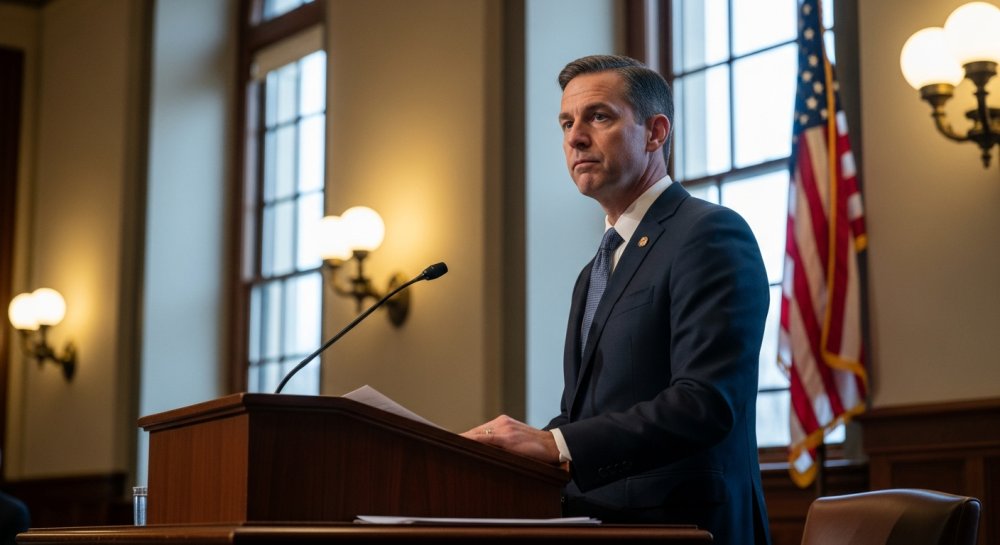
An MSNBC anchor found herself at the center of a firestorm this week after openly questioning one of America’s most fundamental founding principles. Katy Tur challenged House Speaker Mike Johnson’s assertion that human rights come from God, prompting immediate backlash from conservatives, constitutional scholars, and everyday Americans who recognize the bedrock truth upon which this nation was established.
The controversy erupted when Speaker Johnson, a Louisiana Republican known for his principled Christian faith, made remarks affirming the traditional American understanding that rights are not granted by government but are inherent gifts from our Creator. This concept, woven into the very fabric of our Declaration of Independence, has guided American governance for nearly 250 years.
God talk is SO foreign to MS NOW. Katy Tur: What about this passage from Mike Johnson declaring that our rights do not derive from government? They come from you, our creator and heavenly father. Is this him putting God over the Declaration of Independence?
McKay Coppins: I… pic.twitter.com/sfpykN5bYc— Tim Graham (@TimJGraham) May 18, 2026
Tur’s questioning of this foundational principle struck many observers as revealing a troubling disconnect between mainstream media figures and the historical truths that have made America exceptional. The Declaration of Independence could not be more clear on this point, stating that all men “are endowed by their Creator with certain unalienable Rights, that among these are Life, Liberty and the pursuit of Happiness.”
Critics were swift to point out what they characterized as historical ignorance on the part of the MSNBC personality. Conservative commentators and constitutional experts noted that the Founders deliberately grounded American rights in divine authority rather than government decree, precisely to prevent those rights from being taken away by any earthly power.
The backlash highlights a broader cultural divide in America today. On one side stand those who continue to recognize the Judeo-Christian foundations of American law and liberty. On the other are voices in media and entertainment who seem increasingly uncomfortable acknowledging the role of faith in our national identity.
For Christians and constitutional conservatives, the concept of God-given rights is not merely historical trivia—it remains the essential safeguard of human dignity and freedom. When rights are seen as coming from government, they can be revoked by government. When they are understood as gifts from God, they stand above any human authority.
Speaker Johnson, who has been vocal about his Christian faith since taking the gavel, represents a growing number of elected officials willing to publicly acknowledge the spiritual foundations of American governance. His willingness to speak plainly about God-given rights resonates with millions of Americans who believe the nation’s departure from these principles has contributed to our current cultural challenges.
The incident serves as yet another example of the disconnect between elite media culture and the values held by many Americans, particularly in communities of faith. While coastal news anchors may question the divine source of human rights, millions of citizens continue to understand that this principle is what makes America uniquely positioned to protect individual liberty.
As the 2024 election season approaches, these fundamental questions about America’s identity and founding principles are likely to remain at the forefront of national conversation. The question is not merely academic—it goes to the heart of what kind of nation we will be and whether we will continue to honor the vision of the Founders who pledged their lives, fortunes, and sacred honor to establish a nation under God.
Let us know what you think, please share your thoughts in the comments below.

Faith Facts
- The Babylon Bee successfully sued Hawaii over a law that criminalized online speech, forcing the state to repeal the statute
- Hawaii’s law imposed criminal penalties for online statements deemed to cause emotional distress, threatening religious and political satire
- Alliance Defending Freedom represented The Babylon Bee in defending constitutional free speech protections
A major victory for free speech and Christian expression has emerged from an unlikely battleground. The Babylon Bee, America’s leading Christian satire site, has successfully forced the state of Hawaii to back down from a law that threatened to criminalize political humor and religious commentary.
For years, progressive activists have sought to silence conservative and Christian voices through increasingly restrictive speech codes. Hawaii’s attempt represents one of the most aggressive efforts to date—a law that would have made it a crime to post online content that might cause someone emotional distress.
The implications for faith-based commentary and conservative political speech were chilling. Under Hawaii’s statute, Christian satire, biblical critiques of cultural trends, or humorous takes on political figures could have resulted in criminal prosecution if anyone claimed emotional harm.
Alliance Defending Freedom, the premier religious liberty law firm, represented The Babylon Bee in challenging this unconstitutional overreach. The lawsuit demonstrated how such vague “emotional distress” standards could be weaponized against anyone expressing traditional values or challenging progressive orthodoxy.
Rather than defend the indefensible in court, Hawaii chose to repeal the law entirely. This outcome represents more than a legal technicality—it’s a clear acknowledgment that the state knew its attempt to regulate speech would not survive constitutional scrutiny.
The case highlights a disturbing pattern across blue states where lawmakers attempt to carve out exceptions to First Amendment protections. From “hate speech” regulations to “misinformation” laws, the goal remains the same: silencing perspectives that challenge secular progressive ideology.
For Christians and conservatives, the message is clear. Our constitutional freedoms remain under constant threat from those who view traditional values and biblical truth as obstacles to their vision of America. The Babylon Bee’s willingness to stand firm reminds us that these freedoms must be actively defended, not passively assumed.
The site’s CEO noted that satire has always served as a check on government power and cultural excess. From the biblical prophets who used biting irony to confront corrupt leaders, to America’s founding era pamphleteers, pointed humor has been essential to free societies.
This victory also exposes the hypocrisy of those who claim to defend democracy while simultaneously working to restrict the speech of their political opponents. True commitment to democratic principles requires protecting even speech we find uncomfortable or offensive.
The case serves as a roadmap for other states considering similar restrictions. Legal experts suggest Hawaii’s rapid retreat signals that other jurisdictions pursuing speech restrictions may face similar defeats if challenged by organizations with the resources to fight.
For people of faith, this outcome reaffirms that standing firm on principle yields results. When Christians and conservatives unite to defend fundamental freedoms, even hostile state governments must acknowledge constitutional limits on their power.
The Babylon Bee continues its mission of providing humorous commentary on culture and politics from a Christian perspective, now with renewed confirmation that the Constitution protects that vital work.
Let us know what you think, please share your thoughts in the comments below.

Faith Facts
- A federal appeals court is reviewing a $4 million jury verdict in favor of Missouri teachers who were denied religious exemptions to a COVID-19 vaccine mandate
- The case represents a significant religious freedom test case involving government respect for conscience rights during the pandemic
- The appeal seeks to preserve protections for Americans who sought to honor their faith convictions amid public health mandates
A federal appeals court is now being urged to stand firm in defense of religious liberty by upholding a jury verdict that awarded Missouri teachers $4 million after they were denied religious exemptions to a COVID-19 vaccine mandate. The case has emerged as a critical test of whether government institutions will respect Americans’ deeply held religious convictions, particularly in the wake of pandemic-era policies that often sidelined constitutional protections.
The teachers at the center of this case sought exemptions based on their sincere religious beliefs, only to have their requests rejected by school officials. A jury sided with the educators, recognizing that their constitutional rights had been violated. Now, as the case moves through the appeals process, defenders of religious freedom are calling on the court to affirm that Americans should never be forced to choose between their faith and their livelihood.
This verdict represents more than just a financial award—it stands as a vindication of the First Amendment principle that government cannot compel citizens to violate their conscience. For many Christians and people of faith across the country, the case symbolizes a broader struggle to maintain religious freedom in an increasingly secular culture that often views traditional beliefs as obstacles to be overcome rather than rights to be protected.
The outcome of this appeal will send a powerful signal about whether courts will continue to safeguard the religious liberties enshrined in our Constitution. As the appeals court deliberates, millions of Americans who value faith and freedom are watching closely, hoping that the judiciary will reaffirm that religious conviction is not a second-class right to be dismissed when politically inconvenient.
The case also raises important questions about the balance between public health measures and individual rights. While reasonable people can disagree about vaccine policies, what remains non-negotiable for many Americans is the principle that sincere religious objections must be taken seriously and accommodated whenever possible. The jury’s decision reflected this foundational American value.
For the teachers involved, this legal battle has been about more than money—it has been about standing up for principle in the face of institutional pressure. Their willingness to fight for their beliefs serves as an inspiration to others who may face similar dilemmas, demonstrating that when citizens hold firm to their convictions, the Constitution still provides meaningful protection.
As this case continues through the federal court system, it serves as a reminder that religious freedom remains under constant pressure and requires vigilant defense. The appeal represents a crucial opportunity for the judiciary to reaffirm that the free exercise of religion is a cornerstone of American liberty that must be preserved for future generations.
Let us know what you think, please share your thoughts in the comments below.

Faith Facts
- Three Liberty University students are challenging Virginia’s policy denying state grants to students pursuing religious studies degrees
- A lower court previously ruled against the students, but they are continuing their appeal to defend religious freedom in education
- The case centers on whether Virginia can discriminate against students based on their chosen field of religious study
Three Virginia students are pressing forward in their legal fight after being denied state educational grants solely because they chose to pursue religious studies at Liberty University. The students are challenging a state policy they say discriminates against people of faith.
The case highlights a growing tension between government funding programs and religious liberty. While the students qualified for the grants in every other way, Virginia officials denied them assistance simply because of their chosen academic focus on faith-based studies.
A lower court previously ruled against the students, but they are not backing down. Their continued legal battle represents a broader fight for the rights of Christian students to pursue their calling without facing government discrimination.
The policy in question raises fundamental questions about fairness and constitutional protections. Should students who feel called to ministry or religious scholarship be punished financially for following that path? These students and their legal team argue the answer is clearly no.
Liberty University, one of the nation’s largest Christian universities, has long been a target for those who oppose faith-based education. This case adds another chapter to ongoing efforts to marginalize religious institutions and the students who choose to attend them.
The students’ persistence in appealing the lower court’s decision demonstrates their commitment to protecting not just their own rights, but those of future students who wish to study theology and ministry. Their fight is about ensuring that government programs don’t become tools for religious discrimination.
As the case moves forward, it will test whether Virginia can legally exclude students from generally available benefits simply because they want to deepen their knowledge of Scripture and Christian teaching. The outcome could have implications for religious freedom in education across the country.
Let us know what you think, please share your thoughts in the comments below.


-

 Self-Reliance1 year ago
Trump’s Bold Move Uncovers Massive Social Security Fraud
-

 Faith1 year ago
New Clues Emerge in Noah’s Ark Mystery
-

 News1 year ago
Governor Walz’s Rhetoric Sparks National Controversy
-

 News1 year ago
Mel Gibson’s ‘The Passion of the Christ’ Sequel Title Announced
-

 Family1 year ago
Texas Lawmaker Targets Furries in Schools
-

 Freedom1 year ago
Maine Lawmaker Challenges Sports Fairness Controversy
-

 Family1 year ago
Canada’s Controversial Policy Sparks Ethical Debate
-
Faith7 months ago
Congress Hears Pleas for Nigerian Christians