
News
Lawmaker Demands Border Action After Brutal Asylum Seeker Attack

Faith Facts
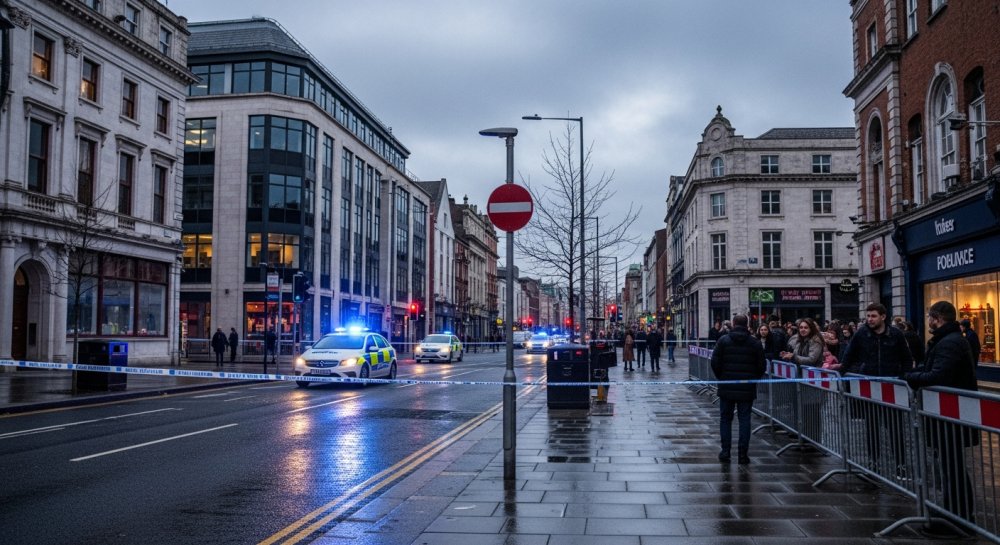
- A British MP called for stricter immigration controls after a Sudanese asylum seeker allegedly attempted to behead a man in Belfast, Northern Ireland
- The violent attack has reignited debate over border security and the consequences of uncontrolled immigration policies
- The incident highlights growing concerns among faith communities about public safety and the need for prudent immigration reform
An Irish member of Parliament in the United Kingdom has issued a stark warning about the dangers of unchecked immigration following a horrific attack in Belfast. The incident, which authorities describe as an attempted beheading, has sent shockwaves through the community and sparked urgent calls for policy reform.
On Monday night, a Sudanese man who had claimed asylum in the UK allegedly attempted to behead a victim in what witnesses described as a “medieval” attack. The brutal nature of the assault has raised serious questions about vetting procedures and the consequences of current border policies.
The MP’s response represents a growing chorus of voices demanding that government officials acknowledge the real-world impact of mass immigration on local communities. For years, faith leaders and conservative advocates have warned that inadequate screening and unlimited asylum acceptance could create dangerous situations for law-abiding citizens.
This attack comes at a time when many Western nations are grappling with the tension between humanitarian compassion and national security. Christian values call believers to care for the stranger, but Scripture also charges government authorities with protecting their citizens and maintaining order within their borders.
The incident has particular resonance in Northern Ireland, a region that has worked hard to establish peace and stability after decades of conflict. Residents who have witnessed their communities rebuild are understandably concerned about new threats to public safety.
Critics of current immigration policy argue that proper vetting, controlled numbers, and integration requirements are not anti-immigrant positions but rather responsible governance. They contend that nations have both the right and the responsibility to determine who enters their borders and under what conditions.
The call for immigration reform is not about closing doors to those genuinely fleeing persecution. Rather, it’s about ensuring that asylum systems function properly, that dangerous individuals are identified before they can harm others, and that communities are not overwhelmed by rapid demographic changes they did not choose.
As this story develops, it serves as a sobering reminder that immigration policy has real consequences for real people. The safety of citizens must be a primary consideration in any discussion about border security and asylum procedures.
Let us know what you think, please share your thoughts in the comments below.

Faith Facts
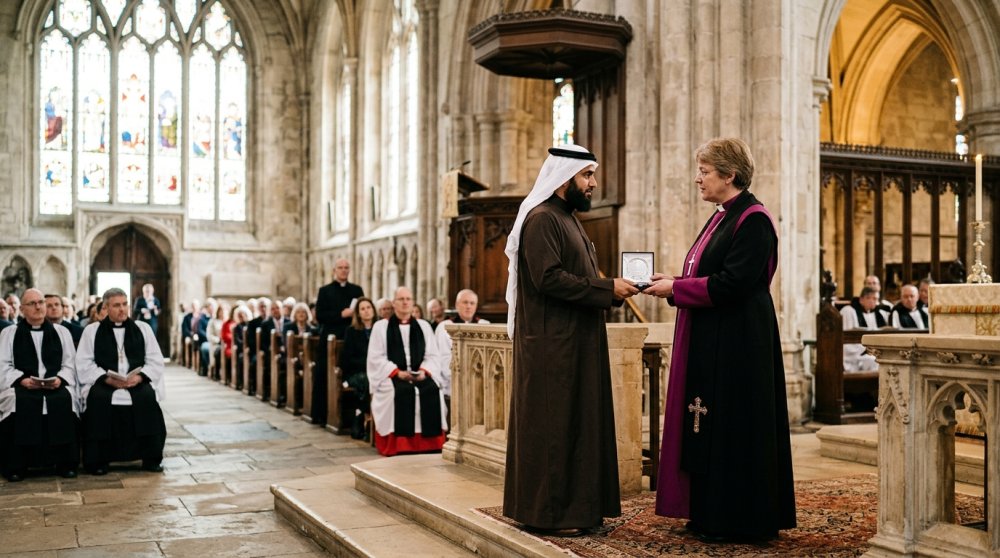
- The petition demands the resignation of Archbishop of Canterbury Sarah Mullally following her decision to honor a Muslim cleric who praised Osama bin Laden.
- The award was given on the anniversary of the September 11 attacks that killed nearly three thousand Americans.
- Thousands of Anglicans and concerned citizens have signed the petition calling for accountability and renewed commitment to traditional Christian values.
The Archbishop of Canterbury, Sarah Mullally, presented an award to a Muslim cleric who publicly praised Osama bin Laden on the anniversary of the September 11 terrorist attacks. The decision has sparked widespread outrage among Anglicans and conservative Christians across the United States and Britain.
A petition demanding her immediate resignation has quickly gained thousands of signatures. Supporters argue the award dishonors the memory of the victims and undermines the Church’s witness in a time of moral confusion.
“The timing and nature of this award represent a profound failure of leadership,” one petition organizer stated. “The Church must stand clearly against terrorism and for the values that built Western civilization.”
Many signers expressed concern that the gesture reflects a broader drift away from historic Christian teaching. They believe the Church should prioritize truth, national security, and the protection of innocent life rather than gestures of political correctness.
Critics also noted that honoring a cleric who praised the architect of the 9/11 attacks sends the wrong message to the faithful and to the watching world. The petition continues to gather support as more Anglicans and conservative Christians voice their objections.
Let us know what you think, please share your thoughts in the comments below.

Faith Facts
- Rev. Jim Rigby, longtime pastor of St. Andrew’s Presbyterian Church in Austin, Texas, has publicly questioned the historical reality of the Resurrection.
- Rigby has described the Lord’s Supper as akin to breastfeeding from a Gnostic goddess in resurfaced sermons.
- James Talarico, a Democratic candidate for U.S. Senate, has identified Rigby as his spiritual mentor.
Resurfaced sermons from Rev. Jim Rigby reveal teachings that challenge core Christian doctrines and frame the sacrament of Communion in unconventional terms.
The Presbyterian Church (USA) pastor of St. Andrew’s Presbyterian Church in Austin has described the Lord’s Supper as “breastfeeding from a Gnostic goddess.”
Texas U.S. Senate candidate James Talarico’s pastor (PCUSA) preaches during his Easter sermon that Jesus NEVER rose bodily from the dead and that he does NOT believe in a literal resurrection. pic.twitter.com/Z6ZH7hMJXg
— Protestia (@Protestia) September 21, 2026
In a shocking clip, James Talarico’s pastor interprets Communion through ancient divine-feminine and mother-goddess imagery, claiming that eating the divine represents breastfeeding:
“In the goddess religion, the blood that was being talked about was the blood of birth. The… pic.twitter.com/lrUcOuZAD2
— ???????????? ???????????? ???????? ???????????????????????????? ???????? (@creation247) September 18, 2026
Rev. Rigby has also questioned whether the Resurrection of Jesus Christ occurred as a historical event.
James Talarico, a Democratic candidate running for U.S. Senate, has publicly acknowledged Rigby as his spiritual mentor and pastor.
The comments, originally delivered in church settings, have drawn renewed attention as Talarico campaigns for higher office.
Critics argue that such teachings depart from historic Christian orthodoxy and the plain teaching of Scripture.
Supporters of traditional Christian doctrine maintain that the bodily Resurrection of Jesus is central to the faith and essential to the gospel message.
Let us know what you think, please share your thoughts in the comments below.

Faith Facts
- Scripture reminds us that justice must be tempered with mercy and truth (Zechariah 7:9).
- Christians are called to pray for those in authority and to seek God’s wisdom in difficult circumstances (1 Timothy 2:1-2).
- The sanctity of life and the protection of the innocent remain central to a biblical worldview.
A crowdfunding effort launched to support the lone holdout juror in the Lindsay Clancy trial has now exceeded $370,000, illustrating how quickly public attention can turn to those thrust into the national spotlight.
The case, which drew widespread media coverage across Massachusetts, centered on the tragic deaths of three young children and raised difficult questions about mental health, family responsibility, and the limits of the justice system.
Supporters of the holdout juror argue that her refusal to convict without being fully convinced reflects a commitment to the principle that reasonable doubt must be honored, even when public pressure is intense.
“The juror stood alone in a room full of people who wanted a different outcome,” one donor wrote on the fundraising page. “That takes courage.”
Critics, however, contend that the juror’s stance prolonged an already painful process for the families involved and question whether outside fundraising could influence future jurors in high-profile cases.
The rapid growth of the fund has also sparked broader conversations about the role of social media in shaping public perception of courtroom proceedings and the need for safeguards to protect the impartiality of the jury system.
As the legal community continues to review the case, many Americans are left reflecting on how faith, conscience, and civic duty intersect in moments of profound moral complexity.
Let us know what you think, please share your thoughts in the comments below.


-

 Self-Reliance1 year ago
Trump’s Bold Move Uncovers Massive Social Security Fraud
-

 Faith1 year ago
New Clues Emerge in Noah’s Ark Mystery
-

 News2 years ago
Governor Walz’s Rhetoric Sparks National Controversy
-

 News1 year ago
Mel Gibson’s ‘The Passion of the Christ’ Sequel Title Announced
-

 Family2 years ago
Texas Lawmaker Targets Furries in Schools
-

 Freedom2 years ago
Maine Lawmaker Challenges Sports Fairness Controversy
-

 Family1 year ago
Canada’s Controversial Policy Sparks Ethical Debate
-
Faith10 months ago
Congress Hears Pleas for Nigerian Christians