
Faith
120 Young Athletes Answer the Call at Georgia Church Outreach


Faith Facts
- A Georgia church witnessed 120 students make decisions for Christ during a specialized outreach to young athletes
- The “Night of Champions” event focused on reaching student athletes with the Gospel message
- The ministry demonstrates effective faith-based strategies for engaging today’s youth through sports evangelism
A powerful move of the Holy Spirit swept through a Georgia church as young athletes gathered for an evening dedicated to faith and sports. The outreach event resulted in 120 students making life-changing decisions to follow Jesus Christ.
The “Night of Champions” event strategically combined the passion young people have for athletics with the transformative message of the Gospel. By meeting students where their interests lie, the church created an atmosphere where hearts were open to hear about God’s love and plan for their lives.
This approach to youth evangelism reflects a biblical model of meeting people where they are. Throughout Scripture, we see examples of sharing the Good News in culturally relevant ways while never compromising the truth of God’s Word.
The success of this outreach demonstrates that when churches are intentional about reaching the next generation, God honors those efforts with harvest. Young people are searching for purpose, identity, and belonging—all of which are found in a personal relationship with Jesus Christ.
Athletic programs have long served as effective platforms for ministry, teaching valuable life lessons about discipline, teamwork, and perseverance. These same principles translate seamlessly into the Christian walk, making sports ministry a natural bridge to Gospel conversations.
The 120 decisions for Christ represent not just a number, but individual lives forever changed by the power of God. Each student who stepped forward represents a family impacted, a future altered, and a testimony that will ripple through their communities.
As churches across America seek effective ways to reach young people in an increasingly secular culture, events like “Night of Champions” provide a blueprint for success. When the Gospel is presented clearly and creatively, hearts respond.
This Georgia church’s commitment to youth evangelism reflects the Great Commission mandate to make disciples of all nations. By investing in the spiritual development of young athletes, they are building a foundation that will strengthen families, churches, and communities for generations to come.
Let us know what you think, please share your thoughts in the comments below.


Faith Facts
- The Restoration Movement produced three distinct fellowships by 1906, with Churches of Christ emerging as a conservative, Bible-focused body
- Early 20th-century leaders in Indiana, Tennessee, and Texas held differing convictions on the Holy Spirit, millennial teaching, and church institutions
- The conservative Texas tradition ultimately shaped the doctrinal identity that guided Churches of Christ for much of the twentieth century
A new book from Abilene Christian University Press offers a detailed look at the doctrinal battles that forged the identity of Churches of Christ in the decades after 1906. The volume, the first of three planned works, draws on essays by eight authors who trace how congregations navigated questions of Scripture, worship, and church order.
By the early twentieth century, the Restoration Movement had separated into three distinct groups. Churches of Christ stood apart for their commitment to congregational autonomy and a plain reading of the New Testament.
The collection opens with Daniel Sommer’s 1889 Address and Declaration, which set the tone for separation from the Disciples of Christ. Subsequent chapters highlight the contributions of David Lipscomb and respected African-American leaders such as Preston Taylor, S.W. Womack, and Marshall Keeble.
“Allen and Hicks are to be commended for editing a splendid and illuminating volume. Readers interested in the history of Churches of Christ will eagerly anticipate the next installment in the series.”
Three regional traditions emerged, each with its own convictions. Leaders in Tennessee upheld belief in miraculous divine action and a future millennial kingdom, while Indiana voices favored noninstitutional simplicity and resisted Bible colleges. The Texas tradition, emphasizing the Word alone and strict obedience to positive commands, gradually gained dominance.
Through influential publications like R.L. Whiteside and C.R. Nichol’s Sound Doctrine series and N.B. Hardeman’s Tabernacle Sermons, the Texas perspective reached congregations across the nation. By the 1930s, the Gospel Advocate had become its leading voice.
The book closes with primary source excerpts that allow readers to hear the founders in their own words. Christian families and church libraries will find this careful history both instructive and encouraging for the challenges of today.
Let us know what you think, please share your thoughts in the comments below.

Faith Facts
- Bank of America closed a Christian ministry’s account in 2020 citing internal policies against certain business types.
- Multiple ministries and faith-based organizations have reported similar account closures from major financial institutions.
- Faith-based groups are increasingly facing challenges accessing traditional banking services across the United States.
In 2020, Bank of America informed a Christian ministry that its account was being closed because the institution had chosen not to service certain types of businesses. The ministry initially believed this decision was isolated to their organization alone.
Further investigation revealed that other faith-based groups had encountered the same treatment from the same financial institution. The pattern suggests a broader policy affecting religious organizations seeking banking services.
“I thought we were the only ones. We weren’t.”
This experience highlights growing concerns among Christian ministries about access to essential financial services. Many traditional banks appear to be reevaluating their relationships with faith-based organizations.
The closure of accounts for religious ministries raises questions about religious liberty and equal access to financial services. Christian organizations across the country are exploring alternative banking options that align with their values and mission.
Let us know what you think, please share your thoughts in the comments below.
Faith Facts
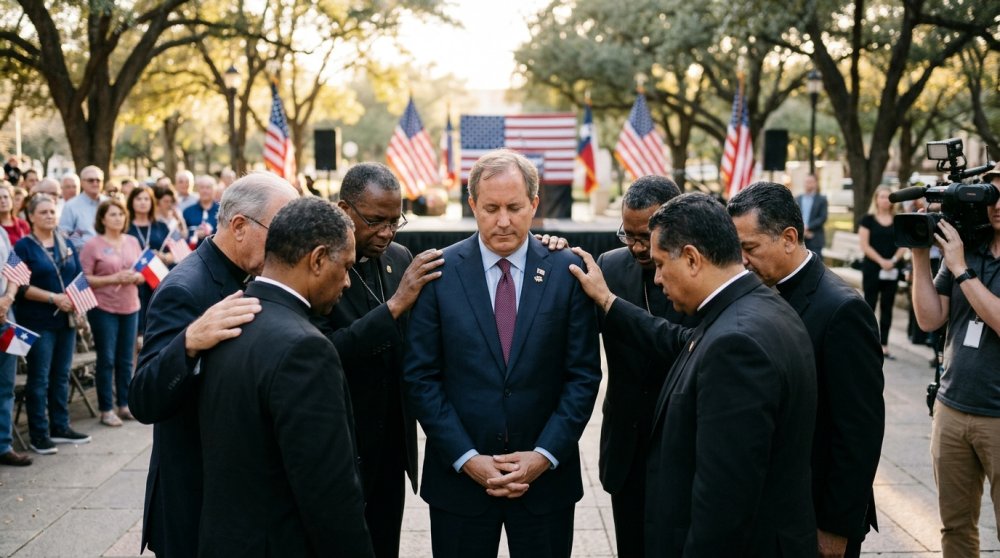
- A group of pastors gathered to pray over Texas Attorney General Ken Paxton at a campaign rally, calling on God for supernatural favor in the final weeks before the Senate election.
- The clergy specifically invoked Romans 13, urging divine support for Paxton as he seeks to represent Texas in the United States Senate.
- The public prayer event reflects a growing trend of faith leaders openly supporting conservative candidates who align with traditional Christian values.
A group of Texas pastors publicly prayed over Republican Attorney General Ken Paxton at a campaign rally this week, asking God to grant him favor with voters in the final stretch of his Senate bid.
The clergy cited Romans 13 during the prayer, reminding supporters that governing authorities are called to serve as ministers of God for justice and order.
Pastors for Paxton gathered to pray over @KenPaxtonTX at his rally today in Conroe. Pastors @Steve_Riggle and @BuntrockJames led us in asking God to grant him wisdom, strength, and protection as he serves Texas. ???? https://t.co/8GQVrU5zxO
— Pastors For Paxton (@pastors4paxton) October 20, 2026
“Give him favor with voters.”
Paxton, who has long positioned himself as a defender of biblical values on issues like life, marriage, and religious liberty, welcomed the spiritual covering from the pastors in attendance.
The event underscores the deep connection many conservative voters in Texas feel between their faith and their political choices.
Let us know what you think, please share your thoughts in the comments below.


-

 Self-Reliance2 years ago
Trump’s Bold Move Uncovers Massive Social Security Fraud
-

 Faith2 years ago
New Clues Emerge in Noah’s Ark Mystery
-

 News2 years ago
Governor Walz’s Rhetoric Sparks National Controversy
-

 News2 years ago
Mel Gibson’s ‘The Passion of the Christ’ Sequel Title Announced
-

 Family2 years ago
Texas Lawmaker Targets Furries in Schools
-

 Freedom2 years ago
Maine Lawmaker Challenges Sports Fairness Controversy
-

 Family1 year ago
Canada’s Controversial Policy Sparks Ethical Debate
-
Faith11 months ago
Congress Hears Pleas for Nigerian Christians