
Faith
Why Your Faith Demands Action Beyond Church Walls


Faith Facts
- Christian public theology emphasizes serving all people as image-bearers of God, not merely as potential converts
- Authentic incarnational faith requires believers to actively engage in society, bringing Christian values to everyday life
- Biblical compassion extends to every person based on their inherent dignity as God’s creation, not contingent on their spiritual status
For Christians committed to living out their faith authentically, a crucial question emerges: Are we called to serve others only as a means to evangelism, or does our faith demand something deeper? The answer reveals the heart of what it means to bring incarnational Christianity into the public square.
Public theology rooted in biblical truth makes a compelling case for the latter approach. Every person we encounter bears the imago Dei—the image of God.
This foundational truth transforms how believers engage with their communities, workplaces, and civic institutions. Our calling extends beyond the church building into every sphere of influence where God has placed us.
When Christians embrace this incarnational approach, they don’t compartmentalize their faith into “spiritual” and “secular” categories. Instead, they recognize that Christ’s lordship extends over all creation, and that our service to others reflects God’s own character of love and justice.
This perspective doesn’t diminish the Great Commission or the urgency of sharing the Gospel. Rather, it enriches our witness by demonstrating that Christian compassion isn’t transactional.
We serve the poor, defend the vulnerable, and work for justice not merely as evangelistic strategy, but because God’s image in every person demands our respect and care. Our actions become a testimony to the transforming power of Christ working through His people.
The implications for American Christians are profound. In our polarized culture, incarnational faith calls us to engage political, economic, and social issues with both conviction and compassion—holding firmly to biblical truth while extending Christ’s love to all.
This approach challenges both the retreat into private spirituality and the reduction of faith to political activism. Instead, it calls believers to be salt and light, bringing kingdom values into every corner of society while maintaining the primacy of the Gospel message.
Let us know what you think, please share your thoughts in the comments below.

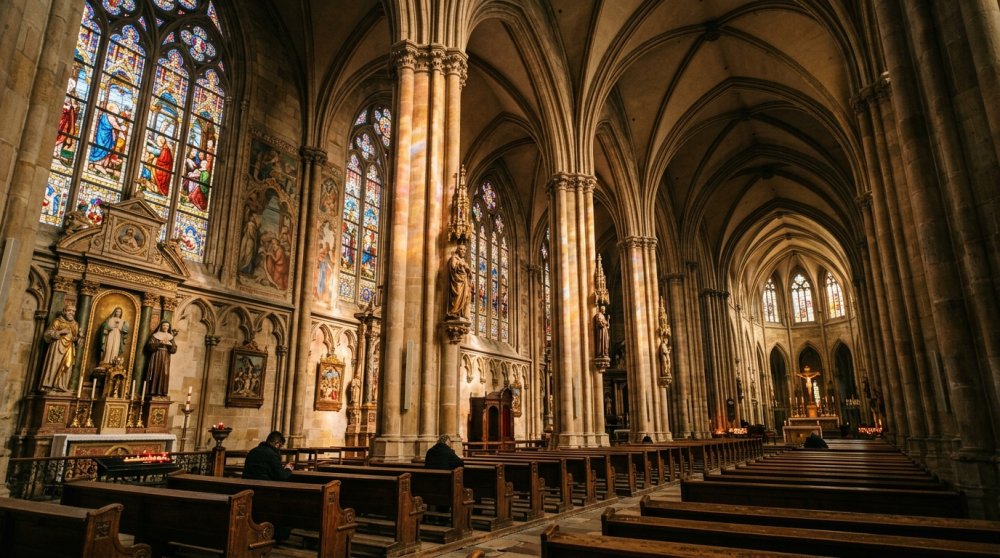
Faith Facts
- The National Catholic Reporter published an op-ed urging Catholics to pray to allegedly “transgender saints” in honor of “Transgender History Month”
- The piece prompted widespread criticism from faithful Catholics who view the article as contradicting Church teaching on human sexuality and the nature of sainthood
- Critics argue the publication is attempting to rewrite Church history and doctrine to accommodate modern gender ideology
A Catholic publication is under fire this week after publishing an opinion piece that many believers say crosses a dangerous line between Church tradition and modern secular ideology.
The National Catholic Reporter drew intense criticism Wednesday for running an op-ed encouraging readers to observe “Transgender History Month” by praying to saints the author claims were transgender. The controversial piece has sparked a fierce debate about the intersection of faith and contemporary gender theory.
August is Transgender History Month, a time to reflect on the transgender people who have led the way for transgender people’s rights and who continue fighting for legal recognition and protection. https://t.co/XqEsOofuoR
— NCR (@NCRonline) August 26, 2026
For Christians who hold to biblical teaching on God’s design for humanity—male and female, created in His image—the article represents a troubling departure from orthodox Catholic doctrine. The Church has long maintained that biological sex is an immutable gift from God, not a social construct subject to personal redefinition.
The backlash from faithful Catholics was swift and substantial. Many pointed out that the concept of “transgender” identity is a modern ideological construct that cannot be retroactively applied to historical figures who lived centuries before such ideas existed. Saints who may have dressed unconventionally or challenged gender norms of their era were doing so in service of their faith, not as expressions of confusion about their God-given identity.
Critics of the op-ed argue that the National Catholic Reporter is attempting to reinterpret Church history through a lens of progressive gender ideology, fundamentally misunderstanding both the lives of the saints and the Church’s consistent teaching on human sexuality. The Catechism of the Catholic Church clearly teaches that God created humans as male and female, and that each person’s biological sex is a divine gift to be accepted with gratitude.
This controversy highlights a broader cultural struggle within some religious institutions as they navigate pressure to conform to contemporary social movements. For many Christians, accommodating gender ideology requires abandoning core biblical truths about creation, identity, and God’s purpose for humanity.
The publication’s decision to platform this perspective raises questions about its commitment to orthodox Catholic teaching. While the op-ed section traditionally offers diverse viewpoints, faithful Catholics argue there’s a difference between healthy theological debate and promoting ideas that directly contradict Church doctrine.
Some observers note that this incident reflects a growing divide within American Catholicism between those who maintain traditional Church teaching and those seeking to harmonize faith with progressive social causes. The tension underscores the challenge facing all Christian denominations as secular culture increasingly demands affirmation of ideas that conflict with biblical anthropology.
For Christians committed to scriptural truth, the controversy serves as a reminder of the importance of grounding faith in timeless biblical principles rather than adapting to every cultural trend. The saints throughout history lived radically countercultural lives—but their witness pointed people toward Christ and His truth, not toward contemporary ideological fashions.
Let us know what you think, please share your thoughts in the comments below.
Faith
Nigerian Journalist Vindicated After Years of Legal Persecution for Reporting Christian Violence
Faith Facts
- A Nigerian journalist has been fully cleared of criminal defamation charges after reporting on violence targeting Christians in Nigeria
- The legal battle spanned several years, raising concerns about press freedom and religious persecution documentation
- The case highlights the dangers faced by journalists attempting to expose anti-Christian violence in regions where believers face systematic attacks
A Nigerian journalist who faced criminal defamation charges for reporting on violence against Christians has been cleared of all charges, bringing an end to a prolonged legal ordeal that raised serious concerns about press freedom and the ability to document religious persecution.
The case underscores the significant challenges journalists face when attempting to shine a light on the persecution of Christians in Nigeria, where believers have endured systematic violence, kidnappings, and displacement at the hands of militant groups. For years, international watchdogs have documented the escalating crisis facing Nigeria’s Christian population, particularly in the Middle Belt and northern regions.
The journalist’s legal vindication represents a crucial victory not only for press freedom but for the cause of religious liberty. Accurate reporting on violence against Christians is essential for holding perpetrators accountable and ensuring the international community remains aware of the suffering endured by believers. When journalists are intimidated or silenced through legal harassment, the persecution continues in the shadows, unchecked and unreported.
Nigeria has consistently ranked among the most dangerous countries for Christians, with thousands killed in recent years in attacks often attributed to Fulani militants, Boko Haram, and other extremist groups. Church leaders and human rights advocates have repeatedly called for greater international attention and intervention to protect vulnerable Christian communities.
The clearing of charges against this journalist sends an important message that truth-telling about religious persecution must be protected. The ability to document and report on violence against Christians is fundamental to advocacy efforts and to the protection of religious minorities facing existential threats.
For the Christian community in Nigeria and beyond, this legal victory provides a measure of hope that justice can prevail and that those who risk their safety to expose the truth about anti-Christian violence will not be silenced. The courage demonstrated by journalists willing to face legal persecution to report on the suffering of believers deserves recognition and support.
As the international community continues to grapple with the crisis of Christian persecution worldwide, the vindication of this journalist serves as a reminder of the vital role that free press plays in defending religious liberty and human rights. Without journalists willing to document and report on these atrocities, the world would remain ignorant of the scale and severity of violence targeting Christians.
Let us know what you think, please share your thoughts in the comments below.

Faith Facts
- Crossroads Church Pastor Brian Tome will return to teaching this weekend following a suspension for striking a man with a riding crop in what church leaders deemed “inappropriate physical humor”
- The Cincinnati megachurch has implemented accountability measures and pastoral counseling as part of the restoration process
- Crossroads Church, one of America’s largest congregations, emphasized the importance of repentance, forgiveness, and restoration in Christian leadership
Brian Tome, the founding pastor of Crossroads Church in Cincinnati, is set to resume his teaching responsibilities this weekend after completing a period of suspension. The discipline came after an incident in which he struck an individual with a riding crop during what church leaders described as “inappropriate physical humor.”
The megachurch’s leadership took swift action following the incident, implementing a structured restoration process. This approach reflects biblical principles of accountability while maintaining the possibility of redemption for leaders who acknowledge wrongdoing.
Crossroads Church, known for its contemporary worship style and large congregation, emphasized that the restoration process included pastoral counseling and specific accountability measures. Church leadership worked to balance the need for appropriate discipline with the Christian values of forgiveness and restoration.
The incident raised important questions about appropriate conduct for pastoral leaders and the boundaries of humor in ministry settings. Christian communities across the nation have increasingly focused on establishing clear standards for leadership behavior while maintaining pathways for genuine repentance and restoration.
Under Tome’s leadership, Crossroads has grown into one of the largest churches in the United States, with multiple locations serving thousands of attendees weekly. The church’s response to this situation demonstrates a commitment to accountability structures that many congregations are adopting to ensure pastoral integrity.
The restoration of pastoral leaders remains a delicate balance in evangelical Christianity. Scripture calls for both high standards of conduct and pathways to redemption for those who genuinely repent. Churches must navigate these principles carefully to maintain both integrity and grace.
As Tome returns to his teaching role, the church community will be watching to see how this restoration unfolds. The situation serves as a reminder that even established ministry leaders remain accountable to biblical standards of conduct and to the congregations they serve.
Let us know what you think, please share your thoughts in the comments below.

Catholic Publication Faces Fierce Backlash Over Controversial Prayer Directive
Nigerian Journalist Vindicated After Years of Legal Persecution for Reporting Christian Violence

Satanic Temple Band Targets Christian-Owned Business With Profane Video
-

 Self-Reliance1 year ago
Trump’s Bold Move Uncovers Massive Social Security Fraud
-

 Faith1 year ago
New Clues Emerge in Noah’s Ark Mystery
-

 News1 year ago
Governor Walz’s Rhetoric Sparks National Controversy
-

 News1 year ago
Mel Gibson’s ‘The Passion of the Christ’ Sequel Title Announced
-

 Family1 year ago
Texas Lawmaker Targets Furries in Schools
-

 Freedom1 year ago
Maine Lawmaker Challenges Sports Fairness Controversy
-

 Family1 year ago
Canada’s Controversial Policy Sparks Ethical Debate
-
Faith9 months ago
Congress Hears Pleas for Nigerian Christians