Connect with us

Faith

Cincinnati Pastor Restores Leadership After Discipline for Physical Contact Incident

Published

on

Faith Facts

  • Crossroads Church Pastor Brian Tome will return to teaching this weekend following a suspension for striking a man with a riding crop in what church leaders deemed “inappropriate physical humor”
  • The Cincinnati megachurch has implemented accountability measures and pastoral counseling as part of the restoration process
  • Crossroads Church, one of America’s largest congregations, emphasized the importance of repentance, forgiveness, and restoration in Christian leadership

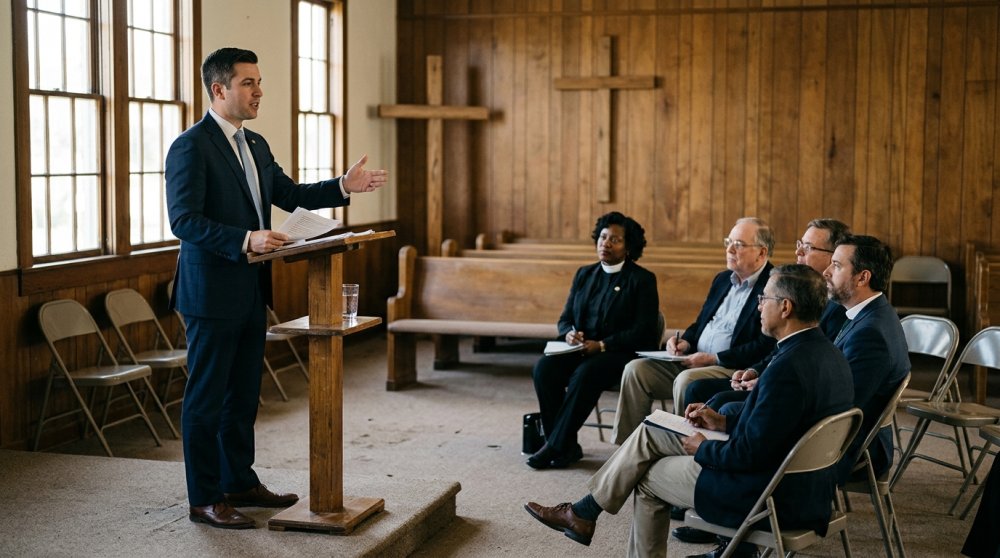
Brian Tome, the founding pastor of Crossroads Church in Cincinnati, is set to resume his teaching responsibilities this weekend after completing a period of suspension. The discipline came after an incident in which he struck an individual with a riding crop during what church leaders described as “inappropriate physical humor.”

The megachurch’s leadership took swift action following the incident, implementing a structured restoration process. This approach reflects biblical principles of accountability while maintaining the possibility of redemption for leaders who acknowledge wrongdoing.

Crossroads Church, known for its contemporary worship style and large congregation, emphasized that the restoration process included pastoral counseling and specific accountability measures. Church leadership worked to balance the need for appropriate discipline with the Christian values of forgiveness and restoration.

The incident raised important questions about appropriate conduct for pastoral leaders and the boundaries of humor in ministry settings. Christian communities across the nation have increasingly focused on establishing clear standards for leadership behavior while maintaining pathways for genuine repentance and restoration.

Under Tome’s leadership, Crossroads has grown into one of the largest churches in the United States, with multiple locations serving thousands of attendees weekly. The church’s response to this situation demonstrates a commitment to accountability structures that many congregations are adopting to ensure pastoral integrity.

The restoration of pastoral leaders remains a delicate balance in evangelical Christianity. Scripture calls for both high standards of conduct and pathways to redemption for those who genuinely repent. Churches must navigate these principles carefully to maintain both integrity and grace.

As Tome returns to his teaching role, the church community will be watching to see how this restoration unfolds. The situation serves as a reminder that even established ministry leaders remain accountable to biblical standards of conduct and to the congregations they serve.

Let us know what you think, please share your thoughts in the comments below.

Continue Reading
Click to comment

Leave a Reply

Your email address will not be published. Required fields are marked *

Faith

How One Woman’s Unwavering Faith Transformed Millions of Lives

Published

on

Faith Facts

  • Dolly Parton rose from poverty in a one-room Tennessee cabin to become one of country music’s most celebrated voices and a philanthropist whose Christian faith defined her generosity
  • Her Imagination Library has given away more than 240 million free books to children worldwide, embodying her belief that God calls His people to serve others
  • Throughout her 80 years, she maintained that faith in Christ made all things possible, even when circumstances suggested otherwise

From the humblest beginnings in the Smoky Mountains of Tennessee, Dolly Parton built a life that stands as a testament to what faith, hard work, and God’s grace can accomplish. Born in 1946 in a one-room cabin, she would go on to touch millions of lives through her music, her acting, and most importantly, her Christ-centered generosity.

Parton never forgot where she came from or who gave her the strength to rise above her circumstances. Her Christian faith wasn’t just a private matter—it was the driving force behind every major decision she made and every life she touched.

Growing up in a family that had little in terms of material wealth, Parton learned early that true riches come from God. Her mother taught her to pray, to believe in the Lord’s provision, and to never lose sight of the blessings that faith brings. These lessons shaped not just her character, but her entire approach to success.

When she became one of country music’s brightest stars, Parton could have easily left her roots behind. Instead, she used her platform to glorify God and serve others. Her Imagination Library, which has distributed more than 240 million free books to children around the world, exemplifies the Biblical principle of loving your neighbor as yourself.

I believe in God. I believe all things are possible through God, she often said, and her life proved it.

Her philanthropy extended far beyond books. During the COVID-19 pandemic, she donated a million dollars to vaccine research at Vanderbilt University. She established scholarship programs for students in her native Sevier County. She supported disaster relief efforts, cancer research, and countless other causes—all driven by her conviction that God blesses us so we can be a blessing to others.

What set Parton apart in an industry often marked by excess and ego was her humility and authenticity. She spoke openly about her faith without apology, yet never used it as a weapon or a marketing tool. Her Christianity was genuine, reflected in her actions far more than her words.

In interviews throughout her life, she credited her success not to her own talents alone, but to God’s plan for her life. She understood that every gift she possessed came from the Creator, and she stewarded those gifts with grace and gratitude.

Her music often reflected her faith, with gospel albums and spiritual themes woven throughout her work. Songs that celebrated family, forgiveness, and hope resonated with audiences because they came from a place of genuine belief. She understood that entertainment could uplift and inspire, not just distract.

Parton’s legacy extends beyond her impressive catalog of hits or her successful business ventures. She leaves behind a blueprint for how Christians can engage culture without compromising their values. She showed that you can be successful, beloved by millions, and still maintain your integrity and faith.

Her impact on literacy through the Imagination Library alone will echo through generations. Millions of children who received books through her program now have opportunities they might never have had otherwise. That’s not just charity—that’s living out the Great Commission to make disciples and transform lives.

As Americans reflect on her passing at age 80, Christians especially should take note of how she lived. She proved that worldly success and godly character are not mutually exclusive. She demonstrated that generosity isn’t about how much you have, but about how willing you are to share what God has given you.

In an era when celebrities often use their platforms to mock traditional values and Christian beliefs, Parton stood firm in her faith without being judgmental or divisive. She loved people well, served them generously, and pointed them toward hope—the kind of hope that can only come from a relationship with Jesus Christ.

Her journey from that one-room cabin to international stardom is an American success story, but more importantly, it’s a testimony to God’s faithfulness. She believed all things were possible through Christ, and her life became living proof of that truth.

Let us know what you think, please share your thoughts in the comments below.
Continue Reading

Faith

Why ‘Christian Values’ Miss the Point Entirely

Published

on

Faith Facts

  • Christian faith centers on a personal relationship with Jesus Christ, not adherence to a political value system
  • Jesus commanded believers to love God and love one another, rejecting the weaponization of virtue for political gain
  • Building a nation on ‘Christian values’ alone is like building a house on sand without the firm foundation of Christ Himself

The phrase “Christian values” has become a staple of political discourse in America, invoked by leaders across the spectrum to justify policies and rally support. But one compelling voice argues that this entire framework misses the essence of what Christianity actually teaches.

George Pitcher challenges the very notion that a country can or should be built on Christian values. His reasoning cuts to the heart of authentic faith versus cultural Christianity.

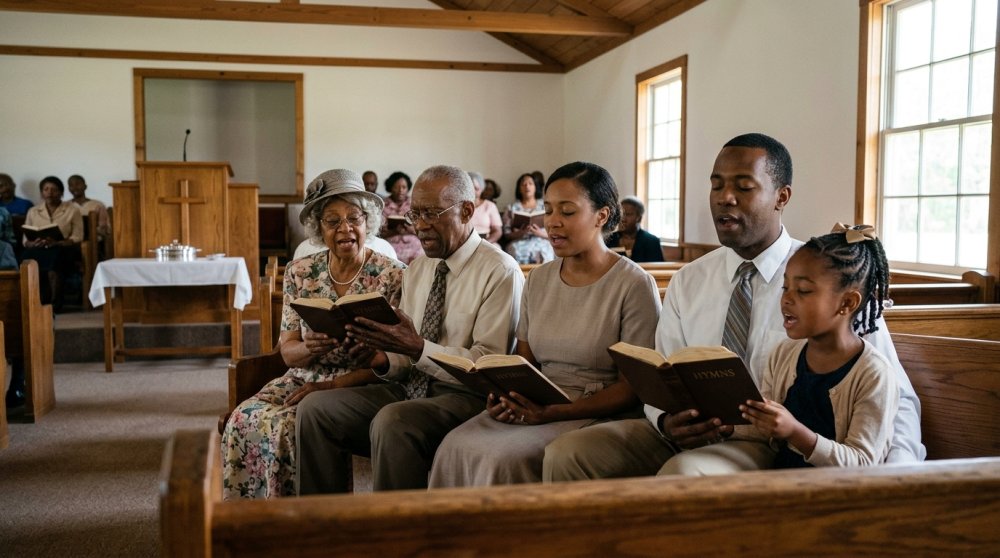
“A country built on Christian values is a house built on sand,” Pitcher contends, drawing directly from Jesus’s parable about building on rock versus sand.

The problem, he explains, isn’t with values themselves—charity, compassion, justice, and integrity are all good things. The problem is treating these values as a standalone system divorced from their source.

When politicians and pundits speak of Christian values, they often reduce Christianity to a moral code or ethical framework that can be applied to governance. But this approach fundamentally misunderstands what Jesus taught and what He calls His followers to do.

Christ didn’t come to establish a value system. He came to reconcile humanity to God through His death and resurrection. His greatest commandments weren’t about values—they were about relationship: love God with all your heart, soul, mind, and strength, and love your neighbor as yourself.

These aren’t abstract principles to be codified into law or campaign slogans. They’re commands rooted in a transformative relationship with the living God. Without that relationship—without Jesus Christ Himself at the center—any attempt to build a society on “Christian values” becomes an exercise in moralism rather than genuine faith.

This distinction matters enormously in our current political climate. When faith becomes primarily about values rather than about Christ, it becomes easy to weaponize those values for political gain. Virtue becomes a cudgel rather than a fruit of the Spirit.

Leaders invoke “Christian values” to justify their positions while ignoring the radical nature of Jesus’s actual teachings. Christ associated with outcasts, challenged the religious establishment, and called His followers to servant leadership rather than power-seeking. These realities often disappear when Christianity is reduced to a values checklist.

The house built on sand isn’t one that lacks moral principles. It’s one that lacks the firm foundation of Christ Himself. Values without a relationship with Jesus can shift with cultural winds, be reinterpreted to suit convenience, or be abandoned entirely when they become politically inconvenient.

This is why Scripture emphasizes that faith in Christ—not adherence to a moral system—is what transforms lives and communities. Paul wrote extensively about how following the law (a value system) couldn’t save anyone. Only grace through faith in Jesus Christ could accomplish what human effort never could.

For Christians genuinely concerned about their nation’s direction, this means focusing less on imposing values and more on living out authentic faith. It means demonstrating Christ’s love in tangible ways, speaking truth with grace, and recognizing that political power cannot accomplish what only the Holy Spirit can achieve in human hearts.

The American church’s effectiveness doesn’t ultimately depend on which party controls Congress or the White House. It depends on whether believers are faithfully following Jesus Christ, making disciples, and allowing God’s love to overflow into their communities through acts of service and compassion.

When Christians confuse values with the Gospel itself, they risk presenting a distorted version of faith to a watching world. Non-believers don’t need another moral system or political ideology. They need the transformative power of a relationship with Jesus Christ.

This doesn’t mean Christians should abandon the public square or stop advocating for what’s right. But it does mean recognizing that our ultimate allegiance is to Christ, not to any political platform or cultural agenda. It means our witness should point people to Jesus, not just to a set of principles.

The call to love God and love one another isn’t a political strategy. It’s a radical reorientation of life around the person of Jesus Christ. That’s the firm foundation that withstands every storm—not a list of values, however noble they may be.

Let us know what you think, please share your thoughts in the comments below.
Continue Reading

Faith

Millions of Faithful Seniors Feel Forgotten by Their Own Churches

Published

on

Faith Facts

  • Churches are increasingly focusing youth ministry resources while overlooking millions of spiritually hungry older adults
  • Senior Christians represent a wealth of wisdom, experience, and spiritual depth that remains largely untapped in modern congregations
  • A growing generation gap in church programming threatens to alienate the very believers who built and sustained these faith communities

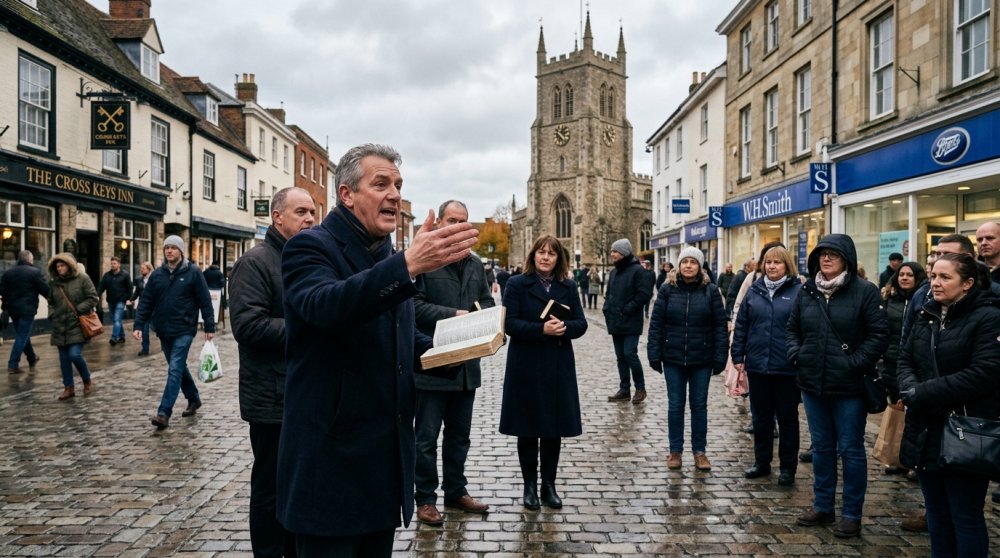
While many churches celebrate renewed spiritual interest among young people, a quiet crisis is unfolding in the pews. Millions of older adults—faithful believers who have served their churches for decades—are being overlooked and underserved by congregations increasingly focused on youth engagement.

The trend reflects a troubling shift in church priorities. As ministries pour resources into attracting younger generations, the spiritual needs of seniors often go unaddressed, creating a generation gap that threatens the very fabric of Christian community.

Alexandra Huggins highlights this critical oversight, pointing to a demographic reality churches can no longer afford to ignore. Older adults represent not just a growing segment of the population, but a treasure trove of spiritual wisdom, life experience, and faithful commitment that could strengthen entire congregations.

The irony is stark: the generation that built church buildings, sustained ministries through difficult times, and passed down the faith now finds itself on the margins of church life. Many seniors report feeling invisible in worship services designed for younger tastes, isolated in small group structures that don’t account for their stage of life, and overlooked in sermon applications that rarely address their unique challenges.

This oversight carries spiritual consequences. Older believers face profound questions about purpose, legacy, suffering, and mortality—themes that demand biblical wisdom and pastoral care. Yet these topics often receive minimal attention compared to marriage prep, parenting classes, and career guidance aimed at younger demographics.

The solution isn’t abandoning youth ministry, but recognizing that faithful stewardship requires serving all generations. Churches that honor their elders create spaces where wisdom flows between generations, where young and old worship together, and where every stage of life receives biblical guidance.

Scripture consistently calls believers to honor the elderly and learn from their experience. Leviticus 19:32 commands, “Rise in the presence of the aged, show respect for the elderly and revere your God.” Proverbs repeatedly points to the value of wisdom that comes with years. Titus 2 envisions older men and women actively mentoring younger believers—a pattern that requires intentional integration across age groups.

The demographic reality makes this even more urgent. As populations age across America, churches that fail to minister effectively to seniors will increasingly struggle to maintain vitality and relevance. More importantly, they will fail in their biblical mandate to shepherd the whole flock.

What would faithful ministry to older adults look like? It starts with recognition—acknowledging seniors in worship, seeking their counsel in church decisions, and celebrating their contributions. It continues with programming that addresses their real needs: Bible studies on suffering and hope, fellowship opportunities that combat isolation, and service projects that channel their gifts and experience.

Most importantly, it requires viewing seniors not as a problem to manage but as a blessing to receive. Their prayers sustain churches. Their giving funds ministries. Their stories testify to God’s faithfulness across decades. Their presence connects younger believers to a heritage of faith that transcends contemporary culture.

Churches that integrate all generations reflect the full body of Christ. They create communities where children learn from grandparents in the faith, where young adults gain perspective from those who’ve walked longer with God, and where seniors find purpose in investing their remaining years in eternal things.

The call to minister faithfully to older adults isn’t about political correctness or demographic strategy. It’s about biblical fidelity. It’s about recognizing that every person, at every age, bears God’s image and deserves care, dignity, and spiritual nourishment.

As churches navigate cultural changes and seek to reach new generations, they must not abandon the faithful who came before. The same Gospel that speaks to searching teenagers offers hope to aging saints facing mortality. The same Spirit that energizes youth groups sustains believers in their final decades. The same Church that welcomes new converts must honor those who’ve served for a lifetime.

Let us know what you think, please share your thoughts in the comments below.
Continue Reading

Trending