Connect with us

Faith

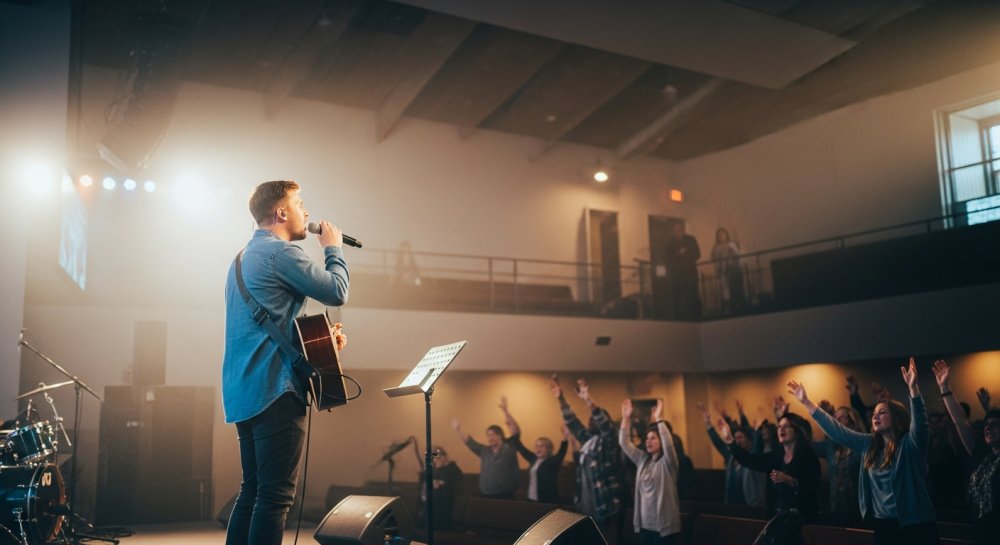
Why This Rapper Says Hip-Hop Belongs in Sunday Morning Worship

Published

on

Faith Facts

  • Christian rapper Trip Lee is advocating for the fusion of hip-hop and traditional praise and worship music in church services
  • The artist believes the integration of syncopated beats and rhythms with spoken word ministry is overdue in American churches
  • Lee’s perspective challenges conventional views about worship music styles while maintaining biblical faithfulness

For years, the intersection of hip-hop and Sunday morning worship has remained largely unexplored in many American churches. But one Christian artist is making the case that this fusion isn’t just appropriate—it’s long overdue.

Trip Lee, a well-known figure in Christian rap, is challenging believers to reconsider their assumptions about what worship music should sound like. While some congregants might struggle to envision syncopated beats and rhythmic spoken word in their Sunday services, Lee sees untapped potential for ministry.

The conversation around musical styles in worship is nothing new for the American church. Throughout history, every generation has grappled with how to honor God through contemporary musical expression while maintaining theological integrity. From organs to guitars, each innovation initially faced resistance before finding acceptance in sanctuaries across the nation.

Hip-hop, as a cultural force, has long been viewed with skepticism by traditional church communities. Yet Christian artists like Lee have spent years demonstrating that the genre can effectively communicate biblical truth and inspire genuine worship when grounded in Scripture and submitted to Christ.

The question isn’t whether God can be glorified through diverse musical styles—Scripture itself commands believers to praise Him with various instruments and methods. Rather, the challenge lies in helping congregations embrace unfamiliar forms of expression without compromising doctrinal soundness.

For many younger believers, particularly those raised in urban communities, hip-hop represents their native musical language. Excluding this form of expression from corporate worship may inadvertently create barriers for those seeking to connect with God through culturally relevant means.

Lee’s advocacy reflects a broader movement within evangelical Christianity to reach diverse communities while maintaining unwavering commitment to biblical authority. The goal isn’t simply to be trendy or culturally relevant, but to remove unnecessary obstacles that might prevent people from encountering the gospel.

As American churches continue navigating questions of cultural engagement, the fusion of hip-hop and traditional worship elements represents one approach to honoring both timeless truth and contemporary expression. The ultimate measure remains whether such music directs hearts toward genuine worship of Jesus Christ.

Let us know what you think, please share your thoughts in the comments below.

Continue Reading
Click to comment

Leave a Reply

Your email address will not be published. Required fields are marked *

Faith

Gen Z’s Spiritual Hunger Opens Door for Gospel Witness

Published

on

Faith Facts

  • Many young people today describe themselves as ‘spiritual but not religious,’ seeking meaning through practices like prayer to ‘the universe’ rather than traditional Christian faith
  • This widespread spiritual openness among Generation Z represents a significant evangelism opportunity for Christian witness and gospel conversations
  • Understanding Gen Z’s spiritual language and practices is essential for effectively sharing the truth of Jesus Christ with this searching generation

A growing number of young Americans describe themselves as spiritual seekers, yet many have never encountered the transformative message of Jesus Christ. This presents both a challenge and an unprecedented opportunity for Christian believers committed to sharing the gospel.

When one believer’s friend revealed she “prayed to the universe,” it highlighted a critical gap in modern evangelism. Generation Z’s spiritual hunger is real—but it’s often misdirected toward vague concepts rather than the living God.

The so-called “Quiet Revival” may not have materialized as many hoped, but the underlying spiritual openness among young people remains undeniable. Rather than dismissing this generation’s search for meaning, faithful Christians must learn to speak their language while pointing them toward biblical truth.

Today’s young adults engage with spirituality through meditation apps, astrology, manifestation practices, and eclectic belief systems. While these pursuits fall short of genuine faith in Christ, they reveal an earnest desire for transcendence and purpose that secular materialism cannot satisfy.

The key to reaching this generation lies in understanding their spiritual vocabulary without compromising the exclusivity of the gospel message. When a young person says they’re “spiritual,” they’re often expressing dissatisfaction with empty religiosity and hunger for authentic encounters with the divine.

Christians can build bridges by acknowledging this spiritual yearning while gently redirecting it toward the One who truly satisfies. The emptiness of praying to an impersonal “universe” becomes apparent when contrasted with a personal relationship with Jesus Christ who hears, loves, and responds.

Effective evangelism to Gen Z requires patience, genuine relationship, and willingness to engage with their questions. This generation values authenticity over institutional authority and personal testimony over abstract theological arguments.

Rather than condemning their spiritual experimentation, believers should view it as evidence of the God-shaped vacuum in every human heart. This longing for connection with something greater than themselves is exactly what Scripture describes—and what only Christ can fulfill.

The mission field is ripe among young people who have rejected traditional church structures but remain spiritually hungry. By meeting them where they are and speaking truth in love, Christians can guide this searching generation from vague spirituality to saving faith in Jesus Christ.

In an age of religious decline, Gen Z’s spiritual openness is a gift from God—an open door for gospel witness that faithful believers must not squander through dismissiveness or irrelevance.

Let us know what you think, please share your thoughts in the comments below.

Continue Reading

Faith

Christian Journalism Honored for Tackling Supreme Court’s Transgender Battle

Published

on

Faith Facts

  • A Christian news podcast won national recognition for an episode featuring Tennessee Attorney General Jonathan Skrmetti discussing the Supreme Court’s biggest transgender case
  • The Religion News Association honored the podcast with second place in audio conversation and commentary at its 77th annual conference
  • The award-winning episode highlighted the intersection of faith, law, and public life in addressing transgender issues affecting children and families

Christian journalism received national recognition this weekend when a faith-focused podcast earned honors for covering one of the most significant religious freedom cases in recent memory. The Religion News Association announced its Excellence in Religion Reporting Contest winners at its 77th annual conference in the Atlanta area, spotlighting journalism that brings biblical values into important cultural conversations.

B.T. Irwin, podcast host and director, and Kenneth Pybus, a freelance correspondent, earned second place in the audio conversation and commentary category. Their winning episode featured an in-depth interview with Tennessee Attorney General Jonathan Skrmetti about his role defending state law in the U.S. Supreme Court’s most significant transgender case to date.

The award-winning episode tackled the intersection of parental rights, medical ethics, and religious liberty as these issues reached America’s highest court. For Christian families concerned about the push to allow minors to undergo life-altering transgender procedures, the podcast provided thoughtful analysis grounded in traditional values.

Bobby Ross Jr., editor-in-chief, accepted the award on behalf of Irwin and Pybus at the awards banquet.

“The greatest joy in receiving this honor with The Christian Chronicle team is knowing that we made something that the people in the pews received as fresh air and light,” Irwin said in a statement read at the ceremony. “On their behalf, thank you for encouraging us to always strive for higher standards.”

The recognition affirms the vital role Christian journalism plays in helping believers understand complex legal and cultural battles through a biblical worldview. Pybus, a professor and chair of communication and journalism at Abilene Christian University in Texas, emphasized this mission in his own statement.

“I’m honored to receive this recognition from the Religion News Association for my podcast interviewing,” Pybus said. “I’m grateful for the opportunity to engage thoughtful discussions where faith connects with law and public life, and I appreciate the colleagues and listeners who make that work meaningful.”

The award arrives as Irwin prepares to conclude his role with the podcast after launching it in January 2023 and producing more than 150 episodes. His work has given Christian audiences access to important conversations often missing from mainstream media coverage.

“Being part of The Christian Chronicle team is one of my all-time favorite experiences,” said Irwin, who will remain in his role through the end of May. “It’s been such an honor and privilege to get to learn from some of the best journalists and most earnest Christians anywhere. And it’s been pure joy to get to meet and serve so many Christians from all over the world and all walks of life. I’m excited to see what The Christian Chronicle does next with new media like the podcast.”

Future plans for the podcast will be announced soon, ensuring that Christian voices continue to provide biblical perspective on the issues shaping American society.

“We’re grateful to Brad for all the hard work and expertise he has put into making the Chronicle’s podcast so relevant to our audience,” Ross said. “We have some exciting plans in the works to keep building and improving our audio journalism efforts.”

The Religion News Association conference also honored Ross with an award for analysis and explanatory reporting for his Weekend Plug-in column, marking the eighth RNA award of his distinguished career in Christian journalism.

Let us know what you think, please share your thoughts in the comments below.
Continue Reading

Faith

Vermont School Receives Settlement After Religious Rights Violated Over Athletic Policy

Published

on

Faith Facts

  • Mid Vermont Christian School received a $566,000 settlement after being banned from state athletic events for refusing to allow their girls’ basketball team to compete against a biological male player
  • The school withdrew from a 2023 tournament when officials required them to face a team with a transgender athlete, citing religious convictions about biological sex
  • Alliance Defending Freedom represented the school, arguing Vermont officials violated constitutional protections of religious exercise and free association

A Vermont Christian school that stood firm on biblical principles regarding biological sex has secured a significant legal victory. Mid Vermont Christian School will receive $566,000 after state officials punished the institution for declining to participate in athletic competitions featuring male athletes on girls’ teams.

The controversy began when the school’s girls’ basketball team faced a choice between competing against a biological male or honoring their faith-based convictions. School leadership chose principle over participation, withdrawing from the state tournament in 2023.

State athletic officials responded by banning the school from future competitions. That decision sparked a federal lawsuit, with Alliance Defending Freedom stepping in to defend the school’s constitutional rights.

The settlement represents more than financial compensation—it’s a recognition that religious schools cannot be coerced into violating deeply held beliefs about human biology and biblical teaching. For families who choose faith-based education, this outcome affirms their right to maintain standards consistent with Scripture.

Vermont’s actions against Mid Vermont Christian School mirror a broader pattern across the nation, where traditional Christian values increasingly face institutional opposition. Schools that teach biological reality and biblical truth about male and female are often targeted for exclusion from public programs and partnerships.

The case underscores fundamental questions about religious liberty in American public life. Can government entities punish religious institutions for maintaining theological positions on human sexuality and gender? This settlement suggests the answer is no.

Alliance Defending Freedom has represented numerous religious schools and organizations facing similar conflicts between government mandates and religious conscience. Their involvement proved crucial in securing this favorable outcome for the Vermont school.

For Christian families, the implications extend beyond athletics. The settlement reinforces that faith-based institutions retain constitutional protections even when their beliefs conflict with prevailing cultural trends regarding gender ideology.

The $566,000 award compensates the school for legal costs and damages resulting from the ban. More importantly, it sends a message to other states considering similar punitive measures against religious schools.

This resolution arrives as debate intensifies nationwide over fairness in women’s sports and the rights of biological males who identify as female to compete against girls. Many states have enacted legislation protecting female athletics, while others have taken Vermont’s approach of forcing participation.

Mid Vermont Christian School’s stand demonstrates that conviction carries consequences—but also that constitutional protections remain available to those willing to defend their faith. The school prioritized biblical truth over athletic competition and ultimately prevailed.

The case also highlights the importance of legal organizations dedicated to defending religious freedom. Without Alliance Defending Freedom’s expertise and resources, schools like Mid Vermont Christian might lack the means to challenge government overreach.

As cultural pressure mounts on Christian institutions to conform to gender ideology, this settlement provides encouragement. Standing firm on biblical teaching about male and female, even at significant cost, can ultimately be vindicated through the legal system.

Let us know what you think, please share your thoughts in the comments below.

Continue Reading

Trending