
Faith
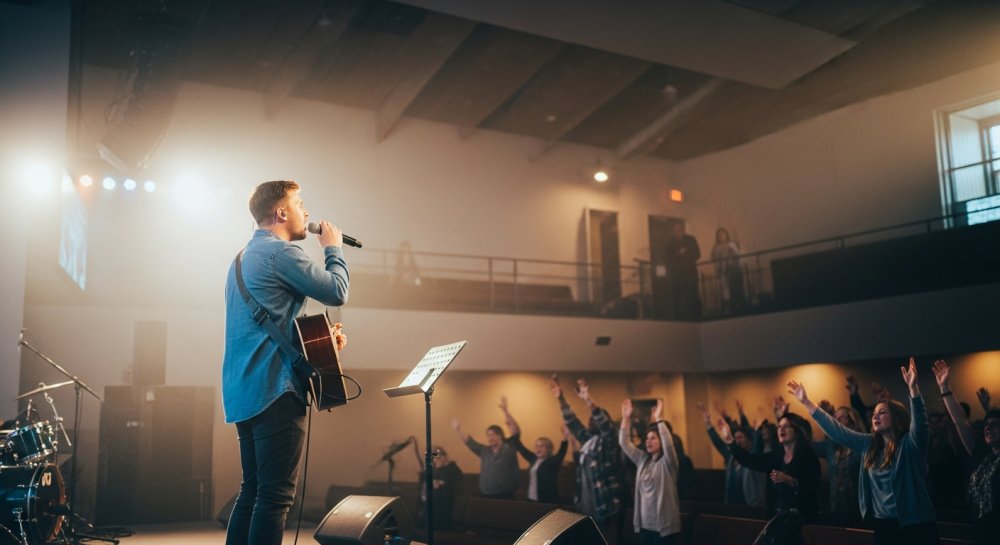
Why This Rapper Says Hip-Hop Belongs in Sunday Morning Worship

Faith Facts
- Christian rapper Trip Lee is advocating for the fusion of hip-hop and traditional praise and worship music in church services
- The artist believes the integration of syncopated beats and rhythms with spoken word ministry is overdue in American churches
- Lee’s perspective challenges conventional views about worship music styles while maintaining biblical faithfulness
For years, the intersection of hip-hop and Sunday morning worship has remained largely unexplored in many American churches. But one Christian artist is making the case that this fusion isn’t just appropriate—it’s long overdue.
Trip Lee, a well-known figure in Christian rap, is challenging believers to reconsider their assumptions about what worship music should sound like. While some congregants might struggle to envision syncopated beats and rhythmic spoken word in their Sunday services, Lee sees untapped potential for ministry.
The conversation around musical styles in worship is nothing new for the American church. Throughout history, every generation has grappled with how to honor God through contemporary musical expression while maintaining theological integrity. From organs to guitars, each innovation initially faced resistance before finding acceptance in sanctuaries across the nation.
Hip-hop, as a cultural force, has long been viewed with skepticism by traditional church communities. Yet Christian artists like Lee have spent years demonstrating that the genre can effectively communicate biblical truth and inspire genuine worship when grounded in Scripture and submitted to Christ.
The question isn’t whether God can be glorified through diverse musical styles—Scripture itself commands believers to praise Him with various instruments and methods. Rather, the challenge lies in helping congregations embrace unfamiliar forms of expression without compromising doctrinal soundness.
For many younger believers, particularly those raised in urban communities, hip-hop represents their native musical language. Excluding this form of expression from corporate worship may inadvertently create barriers for those seeking to connect with God through culturally relevant means.
Lee’s advocacy reflects a broader movement within evangelical Christianity to reach diverse communities while maintaining unwavering commitment to biblical authority. The goal isn’t simply to be trendy or culturally relevant, but to remove unnecessary obstacles that might prevent people from encountering the gospel.
As American churches continue navigating questions of cultural engagement, the fusion of hip-hop and traditional worship elements represents one approach to honoring both timeless truth and contemporary expression. The ultimate measure remains whether such music directs hearts toward genuine worship of Jesus Christ.
Let us know what you think, please share your thoughts in the comments below.


Faith Facts
- Church leaders are rallying around 2033 as the 2,000th anniversary of Christ’s resurrection
- True evangelism must be rooted in Jesus’ example of sacrificial love on the cross
- Authentic Christian witness requires embodied service to those who are suffering, not just broad campaigns
The year 2033 is emerging as a pivotal moment for believers worldwide. Christian leaders across denominations are recognizing this milestone—the 2,000th anniversary of our Lord’s resurrection—as an unprecedented opportunity to renew evangelistic efforts and bring the Gospel to every corner of the earth.
Yet as excitement builds around this historic anniversary, faithful leaders are calling the Church to remember what truly gives our witness power. The authority of Christianity doesn’t flow from clever marketing campaigns or massive coordinated events, but from the cross itself—from Christ’s ultimate act of sacrificial love.
This distinction matters profoundly as we look toward 2033. Large-scale evangelistic initiatives have their place in God’s kingdom work, but they cannot substitute for the kind of personal, sacrificial witness that Jesus modeled. The early Church didn’t transform the Roman Empire through advertising campaigns—they did it through radical love demonstrated to the suffering, the marginalized, and the forgotten.
True biblical evangelism requires Christians to get their hands dirty. It means entering into the pain of broken communities, standing with the persecuted, feeding the hungry, and offering hope to those society has cast aside. This embodied witness—where believers physically demonstrate Christ’s love through action—carries an authenticity that no amount of coordinated messaging can replicate.
As American Christians prepare for this significant anniversary, we face a choice about what kind of evangelism we’ll pursue. Will we rely primarily on broad-spectrum campaigns and digital outreach? Or will we recommit ourselves to the messy, difficult, person-to-person ministry that characterized the early Church and every genuine revival throughout history?
The apostle Paul understood this principle deeply. His letters consistently emphasize that Christian witness flows from suffering alongside others, from reconciliation that breaks down barriers, and from ethical living that demonstrates the transforming power of the Gospel. Paul didn’t just preach Christ—he embodied Christ’s love in tangible, costly ways.
This Pauline model of ministry challenges comfortable Christianity. It calls us beyond our church buildings and social media feeds into genuine relationship with those who are hurting. It requires time, sacrifice, and the willingness to enter into suffering rather than simply observing it from a distance.
The 2033 anniversary offers a remarkable opportunity to refocus global attention on the resurrection—the foundation of our faith and our hope. But if this milestone is to bear lasting fruit, it must inspire more than temporary enthusiasm. It must call forth a generation of believers willing to follow Christ’s example of sacrificial service.
History shows that authentic revivals don’t come from top-down coordination alone. They emerge when ordinary Christians begin living radically obedient lives, when believers prioritize love over comfort, when the Church becomes known not for its political influence or cultural power but for its extraordinary compassion toward the suffering.
As we move toward 2033, may American believers lead the way in this kind of authentic witness. May our evangelism be grounded not in marketing strategies but in the cross. May we demonstrate to a watching world that the Gospel isn’t just a message we proclaim but a reality we embody through sacrificial love.
The resurrection we celebrate in 2033 points to ultimate victory, eternal hope, and the triumph of life over death. Let our witness reflect that same power—not through worldly means, but through the radical, transformative love that can only come from walking in Christ’s footsteps.
Let us know what you think, please share your thoughts in the comments below.
Faith Facts
- As America approaches its 250th anniversary in 2026, two starkly different spiritual movements are vying for the nation’s soul
- Satanist groups are actively working to establish public presence and influence, while Christian leaders are calling for nationwide revival and prayer
- The spiritual battle reflects deeper cultural divisions over America’s founding principles and future direction
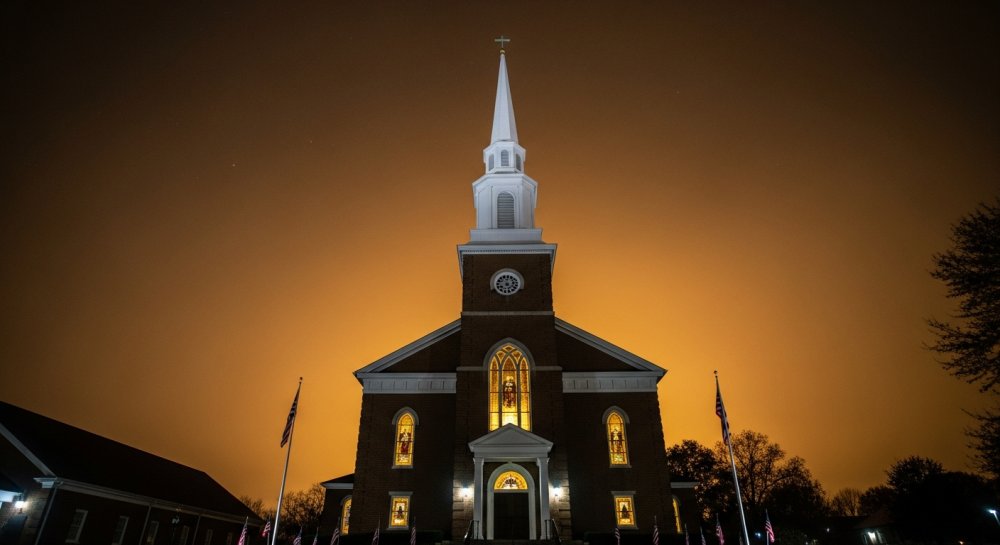
As the United States prepares to mark its 250th anniversary in 2026, a profound spiritual contest is unfolding across the nation. Two radically different visions are competing for America’s future—one rooted in the Christian faith that shaped the nation’s founding, and another actively promoting Satanic ideology in the public square.
The contrast could not be starker. While Christians are organizing prayer movements and calling for national repentance and revival, Satanic organizations are gaining visibility and legal recognition in communities across America.
Satanic groups have become increasingly bold in recent years, demanding equal representation wherever Christian symbols or activities appear in public spaces. They have launched after-school clubs to counter Christian student groups, erected statues on public property, and filed lawsuits asserting religious freedom rights. These efforts represent more than symbolic gestures—they reflect a deliberate strategy to normalize anti-Christian worldviews in American culture.
Meanwhile, Christian leaders are sounding the alarm and mobilizing believers for spiritual warfare. Prayer initiatives are springing up nationwide, with intercessors recognizing that America’s future hangs in the balance. Many see the approaching 250th anniversary as a divine appointment—a moment for the nation to choose between returning to its godly heritage or continuing down a path of moral decline.
The founding fathers, despite their diverse theological views, overwhelmingly acknowledged divine Providence and built American institutions on biblical principles. The Declaration of Independence explicitly references the Creator as the source of human rights. The Constitution’s framers understood that self-governance required a moral people shaped by religious virtue.
That foundation is now under sustained attack. Public schools have systematically removed prayer, Bible reading, and Christian influence while opening doors to alternative spiritualities. Entertainment and media often mock Christianity while celebrating practices the Bible condemns. Government policies increasingly conflict with religious liberty and biblical values on issues from life to family to gender.
Christian conservatives recognize that this is not merely a political battle but a spiritual one. The apostle Paul warned believers that “we do not wrestle against flesh and blood, but against principalities, against powers, against the rulers of the darkness of this age.” This ancient truth has never been more relevant to America’s situation.
History shows that spiritual revivals have repeatedly rescued America from decline. The First Great Awakening in the 1730s-1740s laid spiritual groundwork for American independence. The Second Great Awakening in the early 1800s sparked social reforms and westward expansion. The Prayer Revival of 1857-1858 prepared the nation for the trials of the Civil War.
America’s 250th anniversary presents another such moment. Will this milestone mark a return to the nation’s Christian roots, or will it celebrate a complete transformation into something the founders would not recognize?
The answer will be determined not by politicians or activists alone, but by whether God’s people will humble themselves, pray, seek His face, and turn from wicked ways. Scripture promises that when they do, God will hear from heaven, forgive their sin, and heal their land.
Christians must recognize the urgency of this hour. The satanic revival is aggressive, organized, and determined. It will not succeed through passivity or wishful thinking on the part of believers. Only a genuine Christian revival—marked by repentance, prayer, and bold proclamation of biblical truth—can turn the tide.
The spiritual battle for America’s soul is real, and the stakes have never been higher. As the nation approaches this historic anniversary, every Christian must decide whether to stand on the sidelines or engage in fervent prayer and action for a nationwide awakening.
Let us know what you think, please share your thoughts in the comments below.

Faith Facts
- Many young people today describe themselves as ‘spiritual but not religious,’ seeking meaning through practices like prayer to ‘the universe’ rather than traditional Christian faith
- This widespread spiritual openness among Generation Z represents a significant evangelism opportunity for Christian witness and gospel conversations
- Understanding Gen Z’s spiritual language and practices is essential for effectively sharing the truth of Jesus Christ with this searching generation
A growing number of young Americans describe themselves as spiritual seekers, yet many have never encountered the transformative message of Jesus Christ. This presents both a challenge and an unprecedented opportunity for Christian believers committed to sharing the gospel.
When one believer’s friend revealed she “prayed to the universe,” it highlighted a critical gap in modern evangelism. Generation Z’s spiritual hunger is real—but it’s often misdirected toward vague concepts rather than the living God.
The so-called “Quiet Revival” may not have materialized as many hoped, but the underlying spiritual openness among young people remains undeniable. Rather than dismissing this generation’s search for meaning, faithful Christians must learn to speak their language while pointing them toward biblical truth.
Today’s young adults engage with spirituality through meditation apps, astrology, manifestation practices, and eclectic belief systems. While these pursuits fall short of genuine faith in Christ, they reveal an earnest desire for transcendence and purpose that secular materialism cannot satisfy.
The key to reaching this generation lies in understanding their spiritual vocabulary without compromising the exclusivity of the gospel message. When a young person says they’re “spiritual,” they’re often expressing dissatisfaction with empty religiosity and hunger for authentic encounters with the divine.
Christians can build bridges by acknowledging this spiritual yearning while gently redirecting it toward the One who truly satisfies. The emptiness of praying to an impersonal “universe” becomes apparent when contrasted with a personal relationship with Jesus Christ who hears, loves, and responds.
Effective evangelism to Gen Z requires patience, genuine relationship, and willingness to engage with their questions. This generation values authenticity over institutional authority and personal testimony over abstract theological arguments.
Rather than condemning their spiritual experimentation, believers should view it as evidence of the God-shaped vacuum in every human heart. This longing for connection with something greater than themselves is exactly what Scripture describes—and what only Christ can fulfill.
The mission field is ripe among young people who have rejected traditional church structures but remain spiritually hungry. By meeting them where they are and speaking truth in love, Christians can guide this searching generation from vague spirituality to saving faith in Jesus Christ.
In an age of religious decline, Gen Z’s spiritual openness is a gift from God—an open door for gospel witness that faithful believers must not squander through dismissiveness or irrelevance.
Let us know what you think, please share your thoughts in the comments below.


-

 Self-Reliance1 year ago
Trump’s Bold Move Uncovers Massive Social Security Fraud
-

 Faith1 year ago
New Clues Emerge in Noah’s Ark Mystery
-

 News1 year ago
Governor Walz’s Rhetoric Sparks National Controversy
-

 News1 year ago
Mel Gibson’s ‘The Passion of the Christ’ Sequel Title Announced
-

 Family1 year ago
Texas Lawmaker Targets Furries in Schools
-

 Freedom1 year ago
Maine Lawmaker Challenges Sports Fairness Controversy
-

 Family11 months ago
Canada’s Controversial Policy Sparks Ethical Debate
-
Faith5 months ago
Congress Hears Pleas for Nigerian Christians