
Faith
Why Southern Poverty Law Center’s Collapse Points America Back to Scripture


Faith Facts
- The Southern Poverty Law Center faces mounting credibility issues as its ideological agenda becomes increasingly apparent to mainstream Americans
- The ‘America Reads the Bible’ initiative represents a return to the foundational moral principles that built our nation
- Biblical truth provides the objective standard of justice that partisan organizations cannot offer
As controversies swirl around the Southern Poverty Law Center, a timely reminder emerges: America’s foundation rests not on the shifting sands of political agendas, but on the unchanging truths of Scripture. The exposure of ideological bias within organizations claiming to champion justice underscores why our nation desperately needs a return to biblical principles.
The SPLC, once regarded as a civil rights watchdog, has faced growing criticism for labeling mainstream Christian organizations as “hate groups” while ignoring actual threats. This misuse of moral authority demonstrates what happens when human judgment replaces divine wisdom. Without the objective standard that Scripture provides, justice becomes whatever those in power declare it to be.
This is precisely why initiatives like “America Reads the Bible” matter now more than ever. When Speaker Mike Johnson and others call Americans back to Scripture, they’re not promoting religion for religion’s sake—they’re pointing to the only reliable foundation for true justice, compassion, and equality.
The Bible offers what no human organization can: an unchanging standard of right and wrong that transcends political parties, cultural moments, and personal agendas. It teaches that all people are created in God’s image, that justice must be impartial, and that truth matters more than ideology.
Throughout American history, genuine civil rights progress came not from abandoning biblical principles, but from applying them. Leaders like Martin Luther King Jr. rooted their calls for justice in Scripture, not secular philosophy. They understood that lasting change requires a moral foundation that cannot be shifted by political winds.
Today’s polarized climate shows what happens when that foundation erodes. Organizations weaponize labels like “hate” and “extremism” against those who simply hold traditional Christian views on marriage, family, and human dignity. Meanwhile, actual injustices often go unaddressed because they don’t fit predetermined narratives.
The answer isn’t found in creating more watchdog groups or passing more legislation. It’s found in the same place America’s Founders discovered it: in the Word of God. When citizens read Scripture, they encounter principles that have guided civilization toward justice for millennia.
Biblical literacy provides the discernment Americans need to recognize when organizations claiming moral authority have actually abandoned moral truth. It equips believers to stand firm on principle while extending genuine love to all people. It offers hope that transcends political victories or defeats.
As the credibility of secular institutions continues to crumble under the weight of their own bias, the call to “America Reads the Bible” becomes increasingly prophetic. Our nation doesn’t need more organizations telling us what to think. We need the wisdom that comes from above—wisdom available to anyone who opens Scripture with a humble heart.
The contrast couldn’t be clearer: human institutions fail, political movements fade, and cultural trends shift like sand. But God’s Word remains forever, offering the truth, justice, and hope that every generation desperately needs.
Let us know what you think, please share your thoughts in the comments below.

Faith Facts
- Jesus lost most of His followers after preaching hard truth in John 6, refusing to soften His message to retain the crowd
- Modern metrics of ministry success—attendance numbers, engagement, and growth—would label Christ’s sermon a failure
- Today’s pastors face pressure to compromise biblical teaching to maintain popularity and avoid losing congregants
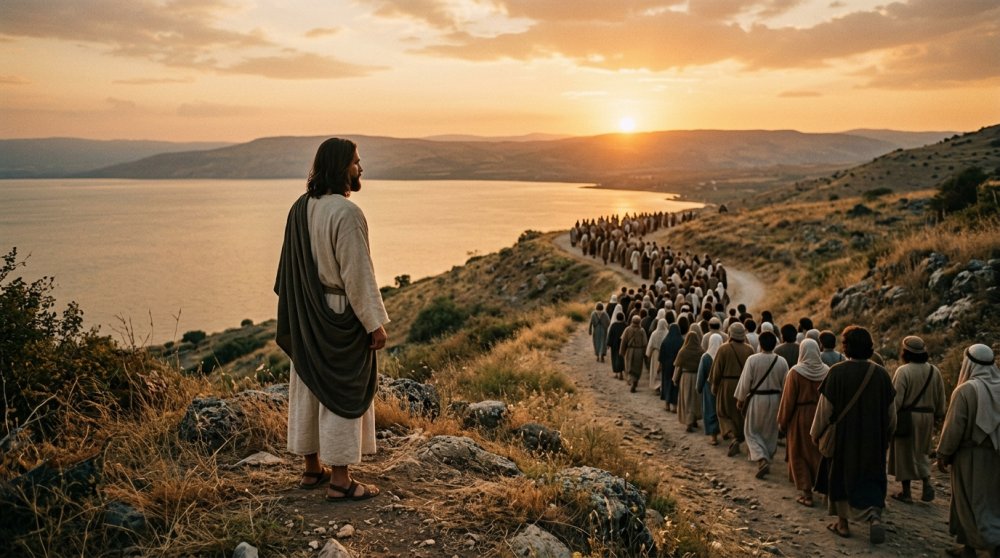
By nearly every contemporary standard used to measure successful ministry, Jesus Christ’s teaching in John 6 would be classified as a complete failure. He stood before thousands of devoted followers, delivered uncompromising truth, and watched as the masses turned and walked away. Yet He never chased after them, never softened His words, never apologized for the offense His message caused.
The question this raises for the modern American church is profound and urgent. In an era dominated by metrics—attendance figures, social media engagement, giving trends, and numerical growth—how many of today’s spiritual leaders would have the courage to preach the same sermon Jesus did?
The Lord had attracted a massive following. These weren’t casual observers; they were people who had witnessed His miracles, experienced His compassion, and sought His presence. But when Christ began teaching about spiritual matters that challenged their comfort and demanded true commitment, the crowd dwindled rapidly.
Scripture records that many of His disciples turned back and no longer walked with Him. They didn’t leave because of scandal or hypocrisy. They left because the truth He spoke was hard to accept, requiring a level of surrender they weren’t willing to give.
Jesus didn’t respond with damage control. He didn’t form a committee to study why people were leaving or hire consultants to make His message more palatable. Instead, He turned to the twelve disciples and asked if they, too, wanted to go.
This stands in stark contrast to much of what passes for ministry leadership today. Pastors are often pressured—by boards, by budgets, by building campaigns—to keep the seats filled and the numbers climbing. The temptation to smooth over difficult biblical teachings, to avoid controversial topics, or to reframe Scripture in ways that won’t offend becomes nearly irresistible.
But faithfulness to God’s Word has never been measured by crowd size. The call to shepherd God’s people isn’t a call to entertainment or to cultural relevance at the expense of truth. It’s a call to proclaim the whole counsel of God, regardless of the cost.
When truth is compromised to preserve popularity, what remains is no longer the Gospel. It becomes a message crafted by human hands to serve human ends—a message that may fill pews but will never transform hearts.
The American church is at a crossroads. Will it follow the example of Christ, who was willing to lose the crowd rather than dilute the truth? Or will it continue down a path where success is defined by numbers on a spreadsheet rather than faithfulness to Scripture?
Pastors who stand firm on biblical teaching today may face criticism, declining attendance, and financial pressure. But they stand in good company—the company of the prophets, the apostles, and Jesus Himself, who knew that genuine ministry is measured not by applause but by obedience to God.
The challenge for every believer is to examine what kind of message we’re willing to hear. Are we following Christ because He affirms our preferences, or because He is the Way, the Truth, and the Life? Are we seeking a comfortable religion, or are we ready to embrace the narrow path that leads to eternal life?
Jesus proved that faithful preaching doesn’t guarantee a full house. But it does guarantee something far more important: the approval of the Father and the transformation of those who have ears to hear.
Let us know what you think, please share your thoughts in the comments below.

Faith Facts
- G3 Church Network announces immediate shutdown following leadership dispute over plagiarism allegations
- Leaders issue public apology to Pastor Tom Buck over allegations they made regarding sermon plagiarism
- Decision reflects broader accountability concerns within Christian ministry networks
A prominent Christian church network has announced it will cease operations immediately following a controversy involving allegations made against a well-known pastor. The G3 Church Network’s leadership issued a statement revealing the organization’s closure after they accused Pastor Tom Buck of regularly plagiarizing sermons, according to a report from the discernment site Protestia.
The network’s leaders have since apologized for making the allegations against Buck. The decision to shut down the entire organization marks a significant development in what has become a contentious situation within Reformed Christian circles.
The closure affects churches and ministries that were part of the G3 network, which had established itself as a voice within conservative evangelical Christianity. The network had previously been known for hosting conferences and connecting like-minded congregations committed to biblical teaching and Reformed theology.
Pastor Tom Buck serves as senior pastor of First Baptist Church in Lindale, Texas, and has been a vocal figure in conservative Christian discussions on social media and in ministry circles. He has consistently advocated for biblical fidelity and doctrinal precision in preaching and teaching.
The allegations of plagiarism in sermon preparation represent serious charges within ministry circles, where originality and proper attribution of ideas are considered matters of integrity. Many pastors draw from various sources in sermon preparation, but ethical standards require proper acknowledgment of borrowed material and original research.
The G3 organization’s decision to completely shut down rather than address the controversy through other means suggests the leadership recognized the severity of making public accusations without sufficient foundation. The apology to Buck indicates the network’s leaders concluded their allegations were unfounded or inadequately substantiated.
This situation highlights the importance of careful discernment and verified facts before making public accusations, especially against Christian leaders. Scripture calls believers to speak truth while also maintaining love and pursuing reconciliation when conflicts arise among brothers and sisters in Christ.
The immediate nature of the shutdown suggests a recognition that the damage to the organization’s credibility and mission could not be easily repaired. For networks built on trust and theological alignment, accusations of ethical failures by member pastors strike at the heart of their purpose and unity.
Questions remain about what led to the initial allegations and what prompted the subsequent apology and organizational shutdown. The situation serves as a reminder that Christian organizations must balance accountability with grace, ensuring that concerns are addressed through proper channels with adequate evidence before becoming public matters.
Churches and ministries formerly affiliated with the G3 network will now need to determine their next steps independently. The closure represents a significant restructuring for congregations that valued the network’s fellowship and resources.
Let us know what you think, please share your thoughts in the comments below.
Faith
Cathedral Desecrated: Archbishop Forced to Apologize After Reality Show Films Baptism of OnlyFans Performer
Faith Facts
- An Australian reality TV show filmed the baptism of an OnlyFans performer inside an Anglican cathedral without proper disclosure of the show’s content.
- The Archbishop of Perth issued an apology after discovering the baptism was used in a streaming series that promotes sex work.
- The Anglican Church is demanding the removal of the cathedral footage and has called for stricter controls on what is filmed in sacred spaces.
The sacred space of an Anglican cathedral in Australia has become the center of a disturbing controversy after a reality television program exploited a baptism ceremony for content that glorifies the sex industry. The incident has prompted an official apology from church leadership and renewed calls for protecting the sanctity of Christian worship spaces.
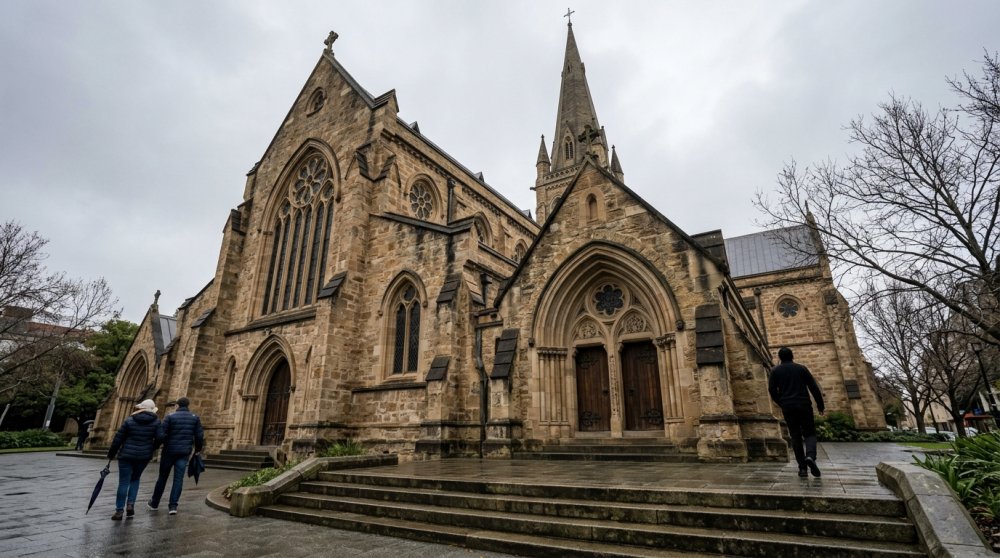
The Archbishop of Perth, Kay Goldsworthy, issued a formal apology after discovering that a baptism performed at St. George’s Cathedral had been filmed and incorporated into a reality show on the Australian streaming platform Binge. The program, which features performers from the adult content website OnlyFans, presented the sacred Christian sacrament as part of entertainment content that normalizes and celebrates sex work.
According to church officials, those involved in arranging the baptism failed to disclose the true nature of the television production. The deception allowed cameras to capture one of Christianity’s most sacred sacraments under false pretenses, turning a moment of spiritual significance into fodder for a show that directly contradicts Christian teaching on human dignity and sexuality.
“I apologize unreservedly to the community for the deep offense and hurt caused,” Archbishop Goldsworthy stated in her public apology.
The Anglican Church has formally requested that Binge remove all footage filmed inside the cathedral. Church leadership emphasized that the cathedral was used without full knowledge of how the content would be framed and presented to audiences, calling the situation a violation of the sacred trust placed in those who seek to use church facilities.
This incident highlights a growing tension between secular media culture and traditional Christian values. The willingness of entertainment companies to exploit religious spaces and ceremonies for content that undermines biblical teaching reveals a troubling disregard for the faith commitments of millions of Christians.
The cathedral baptism controversy comes at a time when many Christian denominations are grappling with how to maintain the integrity of their sacred spaces in an increasingly secular society. While churches have historically opened their doors to seekers and those exploring faith, incidents like this demonstrate the need for greater discernment and stricter protocols.
For traditional Christians, baptism represents a public declaration of faith in Jesus Christ and a commitment to turn away from sin and follow biblical standards of holiness. The appropriation of this sacrament for a show celebrating lifestyles contrary to Christian sexual ethics represents a profound mockery of the faith.
The Australian church has indicated it will implement new measures to prevent similar incidents in the future. These changes will likely include more thorough vetting of requests to film religious ceremonies and clearer guidelines about how such footage may be used.
Critics of the streaming service argue that the deliberate misrepresentation of the baptism’s purpose demonstrates contempt for Christian beliefs and practices. By presenting the sacrament within the context of a show that normalizes sex work, the producers undermined the spiritual significance of the ceremony and used sacred Christian imagery to legitimize behavior that Scripture clearly condemns.
This controversy serves as a reminder of the importance of protecting the sanctity of Christian worship and the need for church leaders to exercise wisdom and discernment when opening their facilities to outside parties. As secular culture becomes increasingly hostile to traditional Christian values, believers must remain vigilant in safeguarding the spaces and practices that form the foundation of their faith.
Let us know what you think, please share your thoughts in the comments below.


-

 Self-Reliance1 year ago
Trump’s Bold Move Uncovers Massive Social Security Fraud
-

 Faith1 year ago
New Clues Emerge in Noah’s Ark Mystery
-

 News1 year ago
Governor Walz’s Rhetoric Sparks National Controversy
-

 News1 year ago
Mel Gibson’s ‘The Passion of the Christ’ Sequel Title Announced
-

 Family1 year ago
Texas Lawmaker Targets Furries in Schools
-

 Freedom1 year ago
Maine Lawmaker Challenges Sports Fairness Controversy
-

 Family1 year ago
Canada’s Controversial Policy Sparks Ethical Debate
-
Faith9 months ago
Congress Hears Pleas for Nigerian Christians