
Family
Why Christian Parents Must Do More Than Rely on Social Media Bans


Faith Facts
- Australia’s new law bans social media access for children under 16, offering temporary relief for Christian families
- Christian parents are called to examine their own digital habits and model healthy technology boundaries
- Biblical parenting requires intentional discipleship beyond government intervention, addressing the spiritual formation of children in a digital age
A new government ban on social media for children under 16 has brought a measure of relief to parents across the nation. For Christian families in particular, this legislation offers a reprieve from the constant pressure to allow young children unfettered access to platforms that often undermine faith and family values. But experts warn that government action alone cannot replace the critical role of Christian parenting in the digital age.
The ban addresses a growing crisis that has left many parents feeling helpless. Social media platforms have increasingly exposed children to content that contradicts biblical teaching, promotes moral confusion, and creates unprecedented mental health challenges. Studies have documented alarming rates of anxiety, depression, and identity struggles among young people immersed in these digital environments.
Yet while celebrating this legislative protection, Christian leaders are urging parents not to view this as a complete solution. The ban may remove one source of spiritual danger, but it does not address the broader challenge of raising children to think critically and biblically about technology.
One of the most pressing concerns involves parental example. Many Christian parents who restrict their children’s screen time nonetheless spend hours daily scrolling through their own devices. This inconsistency sends a powerful message that undermines verbal instruction about priorities and self-control.
“Our children are watching us constantly. If we preach the importance of real relationships and face-to-face conversation while never looking up from our phones, we’re teaching them that our words don’t really matter.”
The call for Christian parents extends beyond simply monitoring what children see online. It requires intentional discipleship that prepares young people to navigate a digital world with wisdom rooted in Scripture. This means teaching discernment, discussing the values embedded in online culture, and creating family practices that prioritize spiritual formation over digital entertainment.
Biblical parenting has always required more than establishing rules and boundaries. It demands active engagement with children’s hearts and minds, pointing them toward Christ in every area of life. In previous generations, parents addressed the cultural challenges of television, music, and peer influence. Today’s challenge involves digital platforms, but the core calling remains unchanged.
The social media ban provides Christian families with valuable time—a window of opportunity to establish healthy patterns before children reach the age when access becomes legal. Parents can use these years to build strong relationships, teach biblical values, and develop the critical thinking skills children will need when they eventually encounter social media.
This preparation includes honest conversations about the techniques platforms use to capture attention and drive engagement. Children need to understand that these technologies are designed to be addictive, exploiting psychological vulnerabilities for profit. Armed with this knowledge and biblical truth about their identity and purpose, young people can approach social media with appropriate skepticism rather than naive trust.
Christian families should also examine how technology has shaped their own household culture. Do devices dominate family meals and gatherings? Have screens replaced conversation and shared activities? Does social media consumption leave less time for prayer, Scripture reading, and church involvement? Addressing these questions honestly can lead to necessary changes that benefit the entire family.
The legislation offers protection, but it cannot instill virtue. It may delay exposure to harmful content, but it cannot build the character needed to resist temptation when exposure eventually comes. These remain the irreplaceable responsibilities of Christian parents committed to raising children who love God and live according to His Word.
Fathers and mothers who embrace this calling will find themselves challenged to grow spiritually alongside their children. Modeling healthy technology use requires self-discipline and sacrifice. It means choosing relationship over convenience, presence over distraction, and eternal values over temporal entertainment.
Churches can support families in this effort by providing resources, teaching, and accountability. Youth ministries should address digital discipleship explicitly, helping young people think biblically about online behavior, content consumption, and the formation of their hearts and minds. Small groups can create space for parents to share struggles and strategies, recognizing that no family faces these challenges alone.
The goal extends beyond merely surviving the digital age. Christian parents are called to raise children who flourish spiritually and emotionally, equipped to engage culture without being conformed to it. This requires more than defensive measures against negative influences. It demands positive formation through consistent biblical teaching, loving discipline, and the modeling of authentic faith.
As the social media ban takes effect, Christian families have been given a gift of time. The question is whether they will use it wisely—not simply to enjoy a temporary respite, but to build the foundations of biblical discipleship that will serve their children throughout their lives. Government can provide protection, but only faithful parents can provide the spiritual formation that ultimately matters most.
Let us know what you think, please share your thoughts in the comments below.


Faith Facts
- Clyde and Gwen Antwine celebrated 70 years of marriage rooted in Christian service and missionary work across Europe and the United States.
- The couple met at a youth camp in Texas and built their relationship on shared faith, mission trips, and a commitment to mentoring young Christians.
- They helped establish a healthy church in Zurich, Switzerland, and continued to serve faithfully at Memorial Road Church of Christ in Oklahoma.
The Antwines first met as teenagers at a two-week encampment at Abilene Christian University. Clyde was 15 years old and sold his FFA prize-winning steer for $40 to attend. That is where he first saw Gwen, then 14, and asked to take her picture.
He carried that photograph in his wallet for five years before they reunited at Abilene Christian during his sophomore year. They married six months later.
“The last day of camp, I worked up the courage to ask her if I could take her picture, and she posed. And I put that picture in my wallet. I didn’t even know her name. I just knew she was pretty.”
After Clyde graduated, the couple boarded a boat for Europe in 1959. They served seven years in Zurich, helping to strengthen a young congregation of the Church of Christ. Their work laid a foundation that still bears fruit today.
Later the Antwines served in the German cities of Augsburg and Munich. After nearly two decades overseas, they returned to the United States. Clyde became missionary in residence at Oklahoma Christian University while Gwen served as office manager for The Christian Chronicle.
“Gwen would get you laughing and see the positive side when things got tough, and Clyde, in his quiet voice, would somehow say the exact words you needed to hear to keep you spiritually grounded.”
Their legacy continues through the many students they mentored for mission work. The Antwines never sought recognition. Their only goal was to prepare others for Kingdom service.
Today, Clyde still carries that original photograph of Gwen from their teenage years. Their story stands as a clear testimony of enduring love, steadfast faith, and lifelong commitment to the Lord’s work.
Let us know what you think, please share your thoughts in the comments below.

Faith Facts
- Ashley Flynn’s family states she “wanted her life to point people to Jesus.”
- She is remembered as a mother of two who “loved Jesus with her whole heart.”
- The case centers on the tragic loss of a Christian wife and mother whose testimony continues to inspire faith.
The family of the late Ashley Flynn is remembering the slain mother of two as someone who “loved Jesus with her whole heart” after her husband Caleb was found guilty of murdering her as the defendant’s family maintains his innocence.
Let us know what you think, please share your thoughts in the comments below.
Faith Facts
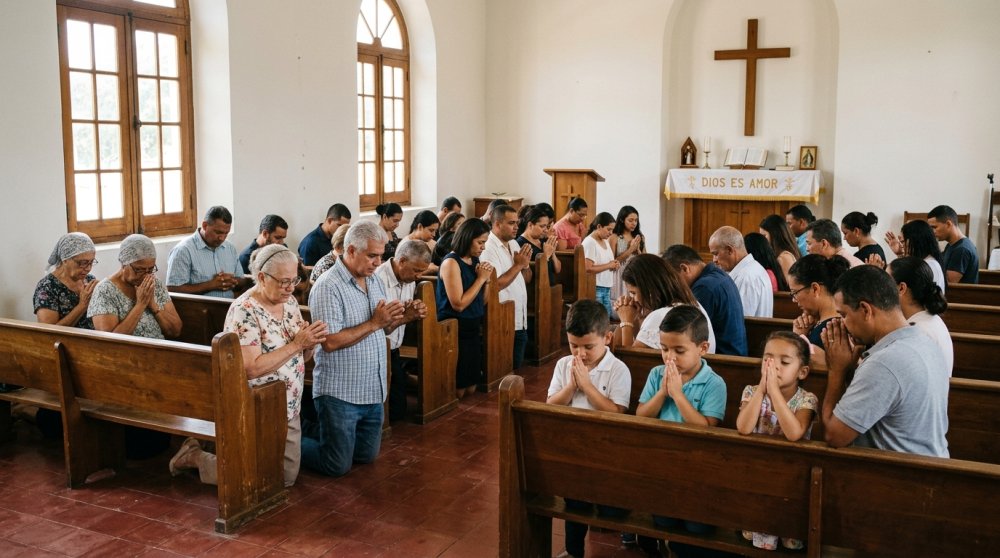
- Christians across Puerto Rico are gathering for six days of prayer for families, churches and the island’s future.
- The island is a U.S. territory located in the Caribbean.
- The multi-day prayer initiative reflects a commitment to faith, family and national values.
Christians across Puerto Rico are gathering this week for six days of prayer for families, churches and the future of the island, a U.S. territory in the Caribbean.
Believers are uniting in churches and communities to seek God’s guidance and blessing over their households and the territory’s future.
Participants are lifting up concerns ranging from family stability and spiritual renewal to economic growth and cultural preservation.
Let us know what you think, please share your thoughts in the comments below.


-

 Self-Reliance2 years ago
Trump’s Bold Move Uncovers Massive Social Security Fraud
-

 Faith2 years ago
New Clues Emerge in Noah’s Ark Mystery
-

 News2 years ago
Governor Walz’s Rhetoric Sparks National Controversy
-

 News2 years ago
Mel Gibson’s ‘The Passion of the Christ’ Sequel Title Announced
-

 Family2 years ago
Texas Lawmaker Targets Furries in Schools
-

 Freedom2 years ago
Maine Lawmaker Challenges Sports Fairness Controversy
-

 Family1 year ago
Canada’s Controversial Policy Sparks Ethical Debate
-
Faith11 months ago
Congress Hears Pleas for Nigerian Christians