
Faith
Why America’s Churches Are Failing Their Pastors Before They Even Begin


Faith Facts
- Many pastors leading large congregations receive zero formal training in institutional management despite overseeing complex budgets, payrolls, and properties
- Modern church leadership requires both spiritual anointing and practical business competence to prevent misconduct and organizational failure
- Churches must invest in comprehensive pastoral training that includes management skills alongside theological education
Across America, faithful pastors are stepping into roles they were never prepared to fill. Men and women called by God to shepherd His flock are suddenly finding themselves managing million-dollar budgets, navigating employment law, overseeing property maintenance, and coordinating extensive social programs.
The calling remains clear, but the training often falls tragically short.
As congregations grow from small gatherings into full-scale institutions, the demands on pastoral leadership multiply exponentially. What begins as a spiritual mission quickly becomes an administrative challenge that would test even seasoned executives. Yet seminary training frequently emphasizes theology and preaching while leaving future pastors woefully unprepared for the practical realities of institutional management.
This gap in preparation carries serious consequences. Without proper training in financial oversight, human resources, legal compliance, and organizational leadership, even the most spiritually gifted pastors can stumble into preventable crises. Financial mismanagement, employment disputes, and governance failures don’t just damage individual churches—they harm the witness of Christ’s body to a watching world.
The solution isn’t to diminish the importance of spiritual calling or theological depth. America’s churches desperately need pastors who know Scripture, preach the Gospel faithfully, and shepherd souls with wisdom and compassion. But anointing alone cannot balance a budget or ensure compliance with employment regulations.
Modern ministry demands a both-and approach: spiritual authority grounded in God’s Word coupled with practical competence in organizational management. Churches must recognize that investing in comprehensive pastoral training isn’t a luxury—it’s a biblical responsibility and a matter of faithful stewardship.
This means equipping pastors with real-world skills in financial management, strategic planning, team leadership, and institutional governance. It means creating mentorship programs where experienced ministry leaders can guide younger pastors through the complex realities of leading growing churches. It means acknowledging that managing God’s resources well requires both prayer and professional development.
The stakes are too high for churches to continue sending pastors into leadership roles without adequate preparation. Every preventable scandal, every financial crisis born of ignorance rather than malice, and every leadership failure rooted in lack of training damages the credibility of the Gospel message we’re called to proclaim.
American Christianity needs pastors who can preach powerful sermons on Sunday and lead effective board meetings on Monday. We need shepherds who understand both the hearts of their people and the balance sheets that support ministry operations. We need spiritual leaders who recognize that honoring God includes managing His resources with excellence and integrity.
The pulpit and the boardroom aren’t opposing forces—they’re complementary callings. By investing seriously in pastoral training that addresses both spiritual formation and institutional competence, churches can raise up leaders equipped to shepherd congregations faithfully and manage ministries wisely.
This isn’t about secularizing the church or reducing pastoral ministry to mere business management. It’s about honoring the full scope of responsibility that comes with leading God’s people in the 21st century. It’s about preventing scandals before they start and ensuring that churches remain credible witnesses in their communities.
Churches that fail to invest in comprehensive pastoral training are setting their leaders up for failure and their congregations up for unnecessary pain. Those willing to make the investment are positioning themselves for sustained, faithful ministry that honors God and serves His people well.
Let us know what you think, please share your thoughts in the comments below.

Faith Facts
- At least seven Christians were killed in a targeted attack on a Greek Orthodox funeral service in Jordan.
- The assault occurred at a church known for peaceful worship and interfaith coexistence in the region.
- The attack highlights the ongoing threat of Islamic extremism to Christian communities worldwide.
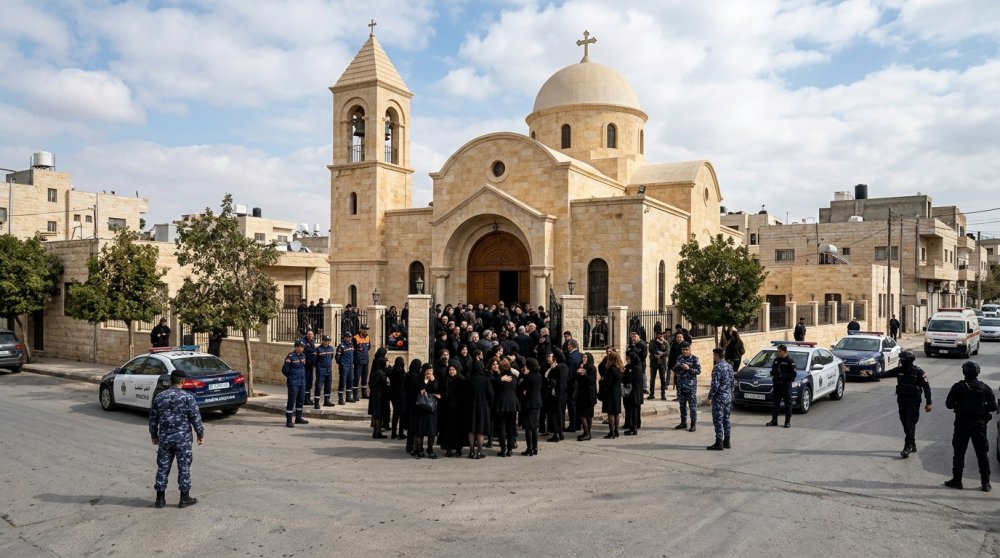
In a rare attack in a country known for peaceful inter-faith coexistence, suspected Islamic extremists attacked a funeral at a Greek Orthodox church in Jordan on Friday (Oct. 23), shooting at least seven people to death and wounding 28 others, according to reports.
The violence interrupted a sacred time of mourning and remembrance, striking at the heart of a Christian community gathered in faith.
Let us know what you think, please share your thoughts in the comments below.
Faith Facts
- God examines the heart rather than outward gestures during worship.
- Scripture teaches that authentic faith is shown through obedience and love, not visible enthusiasm.
- Believers are called to honor every sincere heart that worships in spirit and truth.
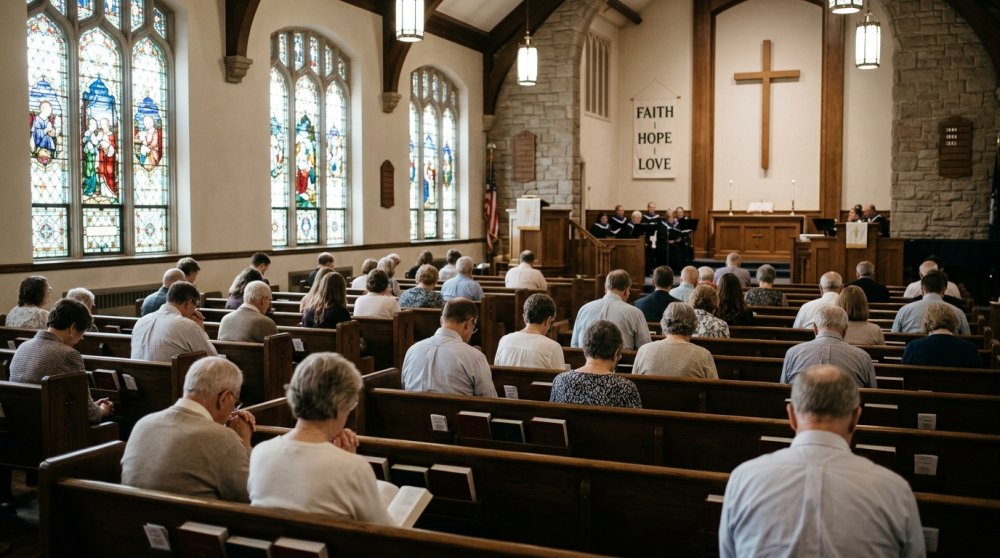
Too often, outward expressions of enthusiasm are mistaken for spiritual maturity. But God looks at the heart, not whether we’re standing, sitting or raising our hands, says Dawn Butler.
“God looks at the heart, not whether we’re standing, sitting or raising our hands,”
Churches across America have seen a growing emphasis on physical expressions during worship. This trend can unintentionally pressure believers who prefer quieter reverence. The result is that some faithful Christians feel judged for their personal style of worship.
“Too often, outward expressions of enthusiasm are mistaken for spiritual maturity.”
True worship flows from a surrendered heart that seeks to honor God in every area of life. Scripture consistently points to inward devotion rather than external performance. When congregations focus on visible actions, they risk overlooking the quiet strength of those who serve faithfully in the background.
Christian liberty allows room for both raised hands and bowed heads. The key is whether each believer approaches the Lord with reverence and sincerity. Families benefit when churches encourage unity over uniformity in worship practices.
“God looks at the heart, not whether we’re standing, sitting or raising our hands.”
Let us know what you think, please share your thoughts in the comments below.

Faith Facts
- The Restoration Movement produced three distinct fellowships by 1906, with Churches of Christ emerging as a conservative, Bible-focused body
- Early 20th-century leaders in Indiana, Tennessee, and Texas held differing convictions on the Holy Spirit, millennial teaching, and church institutions
- The conservative Texas tradition ultimately shaped the doctrinal identity that guided Churches of Christ for much of the twentieth century
A new book from Abilene Christian University Press offers a detailed look at the doctrinal battles that forged the identity of Churches of Christ in the decades after 1906. The volume, the first of three planned works, draws on essays by eight authors who trace how congregations navigated questions of Scripture, worship, and church order.
By the early twentieth century, the Restoration Movement had separated into three distinct groups. Churches of Christ stood apart for their commitment to congregational autonomy and a plain reading of the New Testament.
The collection opens with Daniel Sommer’s 1889 Address and Declaration, which set the tone for separation from the Disciples of Christ. Subsequent chapters highlight the contributions of David Lipscomb and respected African-American leaders such as Preston Taylor, S.W. Womack, and Marshall Keeble.
“Allen and Hicks are to be commended for editing a splendid and illuminating volume. Readers interested in the history of Churches of Christ will eagerly anticipate the next installment in the series.”
Three regional traditions emerged, each with its own convictions. Leaders in Tennessee upheld belief in miraculous divine action and a future millennial kingdom, while Indiana voices favored noninstitutional simplicity and resisted Bible colleges. The Texas tradition, emphasizing the Word alone and strict obedience to positive commands, gradually gained dominance.
Through influential publications like R.L. Whiteside and C.R. Nichol’s Sound Doctrine series and N.B. Hardeman’s Tabernacle Sermons, the Texas perspective reached congregations across the nation. By the 1930s, the Gospel Advocate had become its leading voice.
The book closes with primary source excerpts that allow readers to hear the founders in their own words. Christian families and church libraries will find this careful history both instructive and encouraging for the challenges of today.
Let us know what you think, please share your thoughts in the comments below.


-

 Self-Reliance2 years ago
Trump’s Bold Move Uncovers Massive Social Security Fraud
-

 Faith2 years ago
New Clues Emerge in Noah’s Ark Mystery
-

 News2 years ago
Governor Walz’s Rhetoric Sparks National Controversy
-

 News2 years ago
Mel Gibson’s ‘The Passion of the Christ’ Sequel Title Announced
-

 Family2 years ago
Texas Lawmaker Targets Furries in Schools
-

 Freedom2 years ago
Maine Lawmaker Challenges Sports Fairness Controversy
-

 Family1 year ago
Canada’s Controversial Policy Sparks Ethical Debate
-
Faith11 months ago
Congress Hears Pleas for Nigerian Christians