
Freedom
When Hospitals Claim Full Control Over Life and Death Decisions


Faith Facts
- A Florida wife watched as hospital protocols superseded her husband’s medical rights and family input in 2021
- Christian families face increasing battles over who holds ultimate authority in critical care decisions
- The sanctity of life and family autonomy remain under pressure in modern medical systems
The year 2021 brought an unimaginable nightmare for one Florida family when what should have been routine medical care transformed into a battle over fundamental rights. A healthy 55-year-old man entered a hospital with his wife by his side, trusting the medical system to provide care and respect their family’s wishes.
What followed would expose deep concerns about medical autonomy, patient rights, and the authority families have over their loved ones’ care. For Christian conservatives who cherish the sanctity of life and believe in the God-given authority of family bonds, this case raises urgent questions about the medical establishment’s growing power.
The wife’s testimony reveals a troubling pattern where hospital protocols began overriding family input and patient preferences. In an era when faith-based values increasingly clash with institutional mandates, stories like these remind us that the battle for religious liberty and family rights extends even into hospital rooms.
Traditional American values have always recognized the family as the primary decision-making unit, especially in matters of life and death. Parents make choices for children, spouses advocate for one another, and adult children care for aging parents—all under the understanding that families know their loved ones best and hold their welfare closest to heart.
Yet when institutional policies supersede these time-honored relationships, families find themselves powerless. The question becomes: who holds ultimate authority over a human life when that person cannot speak for themselves? Is it the family, grounded in love and intimate knowledge of the patient’s values? Or is it a medical system operating under standardized protocols?
For people of faith, these questions carry profound weight. We believe every life bears the image of God and deserves protection from conception to natural death. We trust that families, not bureaucracies, should shepherd their loved ones through life’s most vulnerable moments.
This Florida case serves as a stark warning. As medical institutions grow more powerful and protocols more rigid, Christian families must remain vigilant. Advanced directives, medical powers of attorney, and clear documentation of faith-based care preferences become not just prudent—but essential.
The erosion of patient and family rights threatens the very foundation of human dignity. When hospitals claim authority that supersedes spousal bonds and family wisdom, they undermine the natural order that has sustained civilization for millennia.
Faith communities must stand firm in defending the principle that families, not institutions, hold primary authority over their members’ welfare. This means advocating for legal protections, supporting legislative reforms, and ensuring that Christian medical professionals have the freedom to practice according to conscience and their patients’ values.
Stories like this one remind us that eternal vigilance remains the price of liberty—even in hospital corridors. The rights we take for granted can vanish the moment we become most vulnerable, unless we actively protect them through law, policy, and cultural commitment to the sanctity of both life and family.
Let us know what you think, please share your thoughts in the comments below.


Faith Facts
- The Alliance Defending Freedom is a legal ministry defending religious liberty and free speech for Christians and other people of faith.
- Christians have faced increasing debanking due to their biblical beliefs on marriage, gender, and life issues.
- PayPal’s policy change follows years of concerns from conservatives about viewpoint discrimination by financial institutions.
PayPal has removed the terms “hate” and “intolerance” from its acceptable use policy following an objection filed by the Alliance Defending Freedom before a federal banking regulator.
The change comes after ADF raised concerns that PayPal’s previous language could be used to target Christians and conservative organizations for their biblical beliefs.
PayPal’s updated policy now focuses on illegal activities rather than vague moral judgments that critics argued opened the door to viewpoint discrimination.
Conservative leaders have long warned that financial institutions were using subjective terms like “hate” and “intolerance” to justify debanking individuals and ministries that uphold traditional values.
“We are grateful that PayPal has removed this troubling language from its rules,” said an ADF spokesperson. “Vague terms like ‘hate’ and ‘intolerance’ have been weaponized against Christians who simply believe what the Bible teaches about marriage and human sexuality.”
The policy revision represents a win for religious liberty advocates who have argued that financial service companies should not serve as arbiters of moral or political speech.
Many Christian ministries and conservative organizations have reported being denied payment processing services or having accounts frozen over their stances on life, marriage, and gender issues.
ADF’s action before the federal regulator highlighted how such policies could chill free speech and religious exercise by giving private companies broad power to define acceptable beliefs.
The change signals growing pushback against corporate attempts to enforce ideological conformity through financial gatekeeping.
Let us know what you think, please share your thoughts in the comments below.
Faith Facts
- Colorado’s universal preschool program promises a free seat to every 4-year-old yet bars the state’s 34 Catholic preschools from participation.
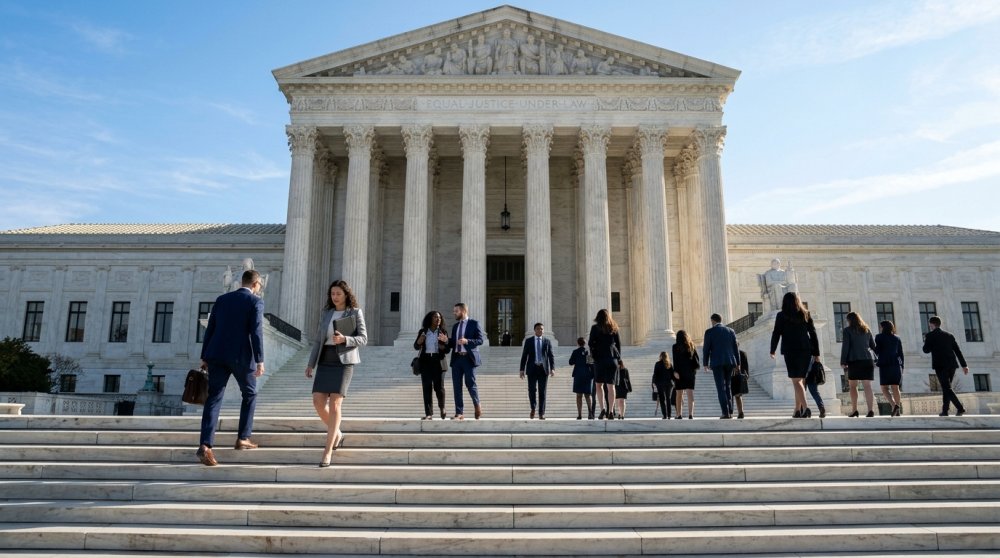
- Justice Brett Kavanaugh pressed state officials for a “win/win” solution during oral arguments before the Supreme Court.
- The case raises fundamental questions about religious liberty and equal treatment under the law for faith-based educational providers.
Colorado lawmakers crafted a universal preschool program that promises every four-year-old a free seat at taxpayer expense. The plan explicitly excludes the state’s 34 Catholic preschools, effectively forcing families who prefer faith-based education to forgo the benefit or leave their convictions at the door.
During oral arguments at the Supreme Court, Justice Brett Kavanaugh pressed Colorado’s attorneys to explain why the state could not accommodate religious providers. He asked whether a “win/win” arrangement was possible that would allow families to choose Catholic schools without losing the public subsidy. The state offered no answer.
Critics argue that the exclusion reflects an unconstitutional hostility toward religion that treats Catholic teaching as equivalent to racism. Supporters of the program maintain that public funds cannot flow to institutions that hold traditional beliefs on marriage, sexuality, and human life.
Christian leaders across the country see the case as another front in the ongoing struggle to preserve religious liberty in education. They note that Catholic schools have long served disadvantaged communities with strong academic and moral formation rooted in biblical principles.
Let us know what you think, please share your thoughts in the comments below.

Faith Facts
- The Bible teaches that the living cannot communicate with the dead.
- Scripture consistently portrays deceptive spirits as demons, not human souls.
- Believers are called to trust God’s Word over human experiences or feelings.
Many Christians are confused when they hear stories about loved ones appearing after death. These accounts often feel real and emotional, yet they clash with what Scripture actually teaches about the afterlife.
Author David Griffiths addresses this tension directly. He argues that the Bible makes a clear distinction between the living and the dead, warning believers not to seek contact with those who have passed on.
“The Bible is clear that the living and the dead cannot communicate,”
Griffiths writes. This teaching protects Christians from spiritual deception that can arise when grief or curiosity opens the door to experiences outside of God’s design.
Instead of viewing ghosts as harmless spirits of the departed, Griffiths presents them as demonic forces seeking to mislead people. This perspective aligns with traditional Christian understanding that places ultimate authority in Scripture rather than personal encounters.
Many families today wrestle with questions about life after death. When loved ones pass, the desire to connect can feel overwhelming, yet Griffiths encourages believers to rest in the promises of Scripture rather than chase after signs or apparitions.
“Read an alternative view here”
Griffiths notes that the culture often promotes ideas that contradict biblical truth. He urges Christians to hold fast to the Word of God as their guide, especially when emotions run high or spiritual experiences feel convincing.
By grounding discussions about the supernatural in Scripture, believers can avoid confusion and remain anchored in the truth that God has revealed. This approach strengthens faith and protects families from teachings that blur the line between good and evil.
Let us know what you think, please share your thoughts in the comments below.


-

 Self-Reliance2 years ago
Trump’s Bold Move Uncovers Massive Social Security Fraud
-

 Faith2 years ago
New Clues Emerge in Noah’s Ark Mystery
-

 News2 years ago
Governor Walz’s Rhetoric Sparks National Controversy
-

 News2 years ago
Mel Gibson’s ‘The Passion of the Christ’ Sequel Title Announced
-

 Family2 years ago
Texas Lawmaker Targets Furries in Schools
-

 Freedom2 years ago
Maine Lawmaker Challenges Sports Fairness Controversy
-

 Family1 year ago
Canada’s Controversial Policy Sparks Ethical Debate
-
Faith12 months ago
Congress Hears Pleas for Nigerian Christians