
Faith
When Hollywood Gets It Wrong About One of Its Own

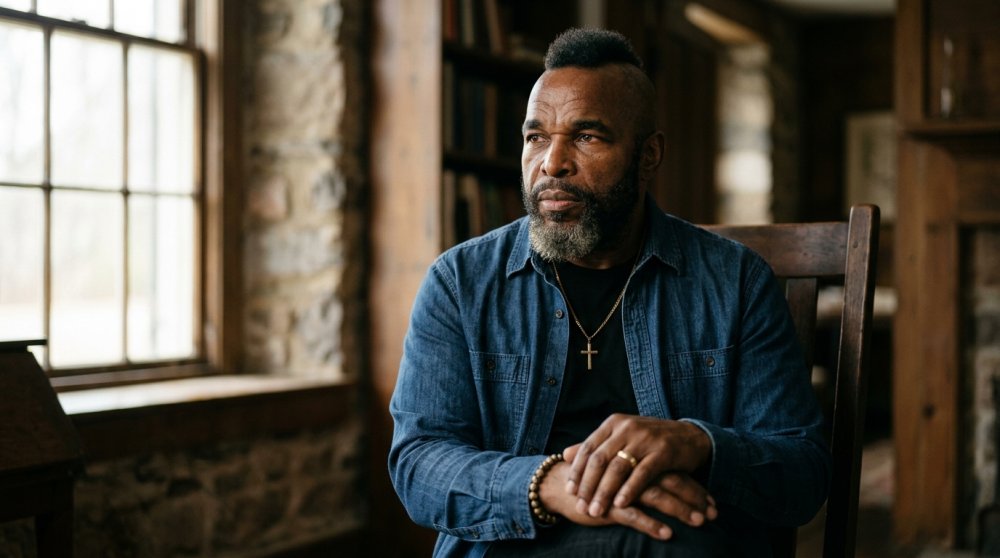
Faith Facts
- Mr T, star of The A-Team and Rocky III, has been a devoted Christian for decades, crediting his faith in Jesus Christ as the foundation of his life and career
- Netflix’s recent documentary about the iconic actor largely ignored his Christian faith, focusing instead on his tough-guy persona and gold chains
- The 72-year-old entertainer has consistently used his platform to share the Gospel and minister to children, viewing his celebrity status as a calling from God
For millions of Americans, Mr T represents more than just a 1980s action hero. Born Lawrence Tureaud in Chicago, the man with the iconic mohawk and gold chains has spent decades using his fame to point people toward Jesus Christ. Yet Hollywood’s latest attempt to tell his story misses what he considers the most important part.
The Netflix documentary about Mr T’s life devotes considerable attention to his tough-guy image, his role as B.A. Baracus in The A-Team, and his memorable appearance alongside Sylvester Stallone in Rocky III. What it largely ignores is the deep Christian faith that has guided him since childhood and shaped every major decision in his remarkable career.
“I pity the fool who doesn’t know Jesus,” Mr T has often said, transforming his famous catchphrase into a Gospel message. This isn’t a recent conversion or publicity stunt—his commitment to Christ runs through his entire life story, from his upbringing in a Christian household to his current ministry work with young people.
Growing up in the rough housing projects of Chicago’s South Side, young Lawrence Tureaud learned about faith from his mother, a devout Christian who raised twelve children after his father left. She instilled in him a reverence for God and a belief that faith could overcome any circumstance, no matter how difficult.
“My mother told me, ‘First, talk to God. God will help you,'” Mr T has recalled in numerous interviews. That advice became his life philosophy, guiding him through poverty, discrimination, and the challenges of breaking into Hollywood as a black actor in the 1970s.
Before finding fame, Mr T worked as a military policeman, a bouncer, and a bodyguard for celebrities including Muhammad Ali, Steve McQueen, and Diana Ross. Even in those years, his faith remained central. He saw his unusual career path not as random chance but as God’s preparation for a larger calling.
When The A-Team made him a household name in 1983, Mr T consciously chose to be a role model for children. He refused roles that conflicted with his Christian values and insisted that his character never use excessive violence or foul language. In an industry known for moral compromise, he drew clear lines based on his beliefs.
“I’m a born-again Christian, and I try to live by God’s word,” he explained in one interview. “I won’t do anything that would embarrass my mother or disappoint God.”
The gold chains that became his trademark also carry spiritual significance that the Netflix documentary overlooks. Mr T initially wore them to reclaim symbols of slavery and oppression. However, after Hurricane Katrina in 2005, he stopped wearing most of his gold jewelry, saying it would be an insult to God to wear it when so many people were suffering. He’s never returned to the excessive display, calling it a spiritual turning point.
His commitment to ministry has been equally serious. For years, Mr T has traveled to churches, youth groups, and schools to share his testimony and encourage young people to follow Christ. He’s produced Christian videos for children and consistently uses his social media platforms to share Scripture and faith-based encouragement.
“I believe God made me famous for a reason,” Mr T has said. “He wants me to reach people, especially kids, and tell them about Jesus.”
The actor’s approach to fame stands in stark contrast to Hollywood’s typical narrative. Rather than seeking glory for himself, he sees his celebrity status as a tool for evangelism. This perspective has shaped how he’s conducted himself throughout his career, choosing family-friendly projects and maintaining a reputation for integrity.
When diagnosed with T-cell lymphoma in 1995, Mr T’s faith became even more public. He credited prayer and God’s grace for his recovery, using the experience to witness about Christ’s healing power. Rather than hiding his vulnerability, he shared his journey openly, demonstrating how Christians face suffering with hope.
Now 72 years old, Mr T remains active in ministry and entertainment, always looking for opportunities to share the Gospel. He’s voiced characters in Christian animated series, appeared at faith-based events, and maintained a consistent testimony that Jesus Christ is Lord.
The Netflix documentary’s failure to adequately address this central aspect of Mr T’s identity reflects a broader problem in how Hollywood tells stories about people of faith. When someone’s Christian beliefs are fundamental to their character and choices, ignoring that faith creates an incomplete and misleading portrait.
For Mr T, the omission isn’t just personally disappointing—it represents a missed opportunity to show how faith in Jesus Christ can transform lives and sustain people through decades of challenges and changes. His story isn’t ultimately about gold chains, mohawks, or tough-guy personas. It’s about a man who has consistently chosen to honor God and point others toward salvation.
In an era when Christian voices are often marginalized in mainstream entertainment, Mr T has never wavered. He’s demonstrated that it’s possible to achieve Hollywood success without compromising biblical values, and that fame can be used for Kingdom purposes rather than self-glorification.
“I’m not perfect, but I serve a perfect God,” he’s often said, embodying the humility that comes from genuine faith. That message—far more than any action sequence or catchphrase—represents the real legacy of Mr T.
Let us know what you think, please share your thoughts in the comments below.


Faith Facts
- Bethel Church has stopped selling The Passion Translation amid plagiarism concerns and theological inaccuracies
- Biblical scholars and apologists have documented significant departures from original Greek and Hebrew texts in The Passion Translation
- Critics warn the translation prioritizes subjective interpretation over faithful rendering of Scripture
A growing number of Christian leaders and biblical scholars are raising serious concerns about The Passion Translation, a modern Bible version that has gained popularity in charismatic circles. The concerns have become significant enough that Bethel Church, a prominent charismatic congregation, recently stopped selling the translation altogether.
The decision came after allegations of plagiarism surfaced and theological questions mounted about the accuracy of the translation. For Christians who hold Scripture as the inspired and authoritative Word of God, these concerns warrant serious attention.
Lack of Proper Credentials
The Passion Translation is primarily the work of one man, Brian Simmons, who claims to have received a divine mandate to produce this version. However, biblical translation requires teams of scholars with extensive training in ancient languages, textual criticism, and theology.
Traditional translations like the King James Version, New International Version, and English Standard Version were produced by committees of dozens of scholars with doctorates in biblical languages and related fields. This safeguards against individual bias and ensures accuracy to the original texts.
Significant Departures from Original Text
Biblical scholars examining The Passion Translation have documented numerous instances where the text departs significantly from what the original Greek and Hebrew actually say. These aren’t minor differences in wording—they represent additions, omissions, and alterations that change the meaning of Scripture.
For example, critics have noted insertions of concepts not present in the original languages, expansion of verses to include interpretations as if they were Scripture itself, and theological slants that reflect charismatic theology rather than what the text actually states. When God’s Word is treated as raw material to be reshaped according to one translator’s vision, the result is no longer faithful translation but interpretation masquerading as Scripture.
Plagiarism Allegations
Recent investigations have uncovered evidence suggesting portions of The Passion Translation may have been copied from other modern translations without proper attribution. If these allegations are substantiated, they represent a serious ethical breach.
The integrity of Bible translation depends not only on linguistic accuracy but also on honesty in the translation process. Christians deserve to know that the Bible they’re reading represents honest scholarship, not borrowed work presented as original.
Theological Concerns
Perhaps most troubling are the theological issues present throughout The Passion Translation. Critics have identified a consistent pattern of the translation imposing charismatic theology onto passages that don’t support such interpretations in the original languages.
This includes amplifying themes of mystical experience, personal prophecy, and emotional encounter in passages where the original text emphasizes doctrine, obedience, and sound teaching. The result is a Bible that tells readers what they might want to hear rather than what God actually said.
The Christian faith rests on the foundation of God’s revealed Word. The apostle Paul warned Timothy to “rightly divide the word of truth” and to guard the deposit of faith entrusted to him.
When a translation departs from accuracy to the original languages, when it elevates one person’s interpretation to the status of Scripture itself, and when it reflects the theological preferences of its translator rather than the inspired text, it fails the basic test of what a Bible translation should be. Believers should approach The Passion Translation with extreme caution and instead rely on translations produced through rigorous scholarship and faithful commitment to accuracy.
For those seeking accessible modern English combined with faithfulness to the original text, well-established translations like the ESV, NIV, NASB, or CSB offer far safer alternatives. The stakes are simply too high to risk a translation that puts personal interpretation above the actual words God inspired.
Let us know what you think, please share your thoughts in the comments below.

Faith Facts
- Christian leaders are debating whether artificial intelligence should be the foundation of ministry or simply a supportive tool
- A new perspective argues AI must remain infrastructure beneath human relationships, not the driving force of discipleship
- The focus of ministry must stay centered on people, community, theological reflection, and human discernment guided by the Holy Spirit
As artificial intelligence continues to reshape nearly every aspect of modern life, Christian ministries face a critical question: Should technology lead our mission, or should it serve the timeless work of building relationships and communities centered on Christ?
A thoughtful opinion piece challenges the concept of “AI-Native ministry,” warning that making artificial intelligence the foundation of church outreach misses the heart of what ministry is called to be. Instead, the perspective advocates for a “ministry with” approach—one where technology remains in its proper place as a tool, not a guide.
The core concern is clear: AI should function as infrastructure underneath a mutual learning ecosystem, not as the focal point or driving force of Christian ministry. When technology becomes the primary lens through which we engage in discipleship, we risk losing sight of what truly matters—people created in the image of God.
This vision for technology in ministry keeps the proper priorities in order. The focus must remain on people, relationships, and communities. It must center on local knowledge that respects the unique needs of each congregation and cultural context. Theological reflection, grounded in Scripture and tradition, cannot be replaced by algorithms. And human discernment—the ability to seek God’s wisdom through prayer, counsel, and the leading of the Holy Spirit—remains irreplaceable.
The debate reflects a broader tension in American church culture. As technology offers ever more sophisticated tools for outreach, administration, and communication, the temptation grows to let efficiency and innovation drive ministry strategy. But the Christian faith has always been fundamentally relational. Jesus invested deeply in twelve disciples. Paul planted churches through personal presence and letters. The early church grew through fellowship, breaking bread together, and bearing one another’s burdens.
AI can certainly assist these efforts. It can help organize data, streamline communication, and provide resources for teaching and discipleship. But it cannot replace the pastor who prays with a family in crisis, the small group that walks through grief together, or the mentor who disciples a younger believer face-to-face.
The call for a human-centered learning ecosystem in ministry acknowledges technology’s benefits while maintaining proper boundaries. It recognizes that the work of the Gospel is ultimately a work of the Spirit, accomplished through faithful people who love God and love their neighbors. Technology can enhance this work, but it cannot substitute for it.
As churches navigate an increasingly digital age, this perspective offers an important corrective. Ministry is not about adopting the latest tools simply because they exist. It’s about faithfully stewarding every resource—including technology—in service of the Great Commission and the Great Commandment.
The wisdom here is rooted in Scripture’s consistent emphasis on relationship. God didn’t send an algorithm to redeem the world; He sent His Son. Jesus didn’t establish a system; He called followers. The Holy Spirit doesn’t operate through code; He works through hearts surrendered to God.
Christian ministry in the 21st century can use AI wisely without being driven by it. The question is not whether technology has a place in the church—it does. The question is whether we will keep technology in its proper place: as a servant of mission, not its master.
Let us know what you think, please share your thoughts in the comments below.

Faith Facts
- The International Mission Board has commissioned RJ and Elayna Locklear, the first Lumbee Native American missionary couple, to serve Canada’s First Nations communities.
- The couple will minister in and around Calgary, Alberta, bringing the Gospel to indigenous communities often overlooked by traditional missionary efforts.
- This historic commissioning represents a powerful bridge between Native American believers and Canada’s First Nations people, demonstrating the universal reach of Christian faith.
In a historic moment for both Native American Christianity and international missions, the International Mission Board has commissioned RJ and Elayna Locklear as its first Lumbee Native American missionary couple. The Locklears have been sent to serve Canada’s First Nations communities in and around Calgary, Alberta, bringing the transformative message of the Gospel to indigenous peoples who have long awaited dedicated Christian ministry.
This groundbreaking commissioning represents more than just another missionary appointment—it signifies a powerful connection between Native American believers and Canada’s First Nations people. The Lumbee tribe, recognized as one of the largest Native American tribes in the eastern United States, has a rich Christian heritage that the Locklears now carry northward across the border.
The assignment to Calgary and surrounding First Nations communities addresses a critical need in modern missions. Indigenous populations in Canada have historically faced significant spiritual and social challenges, with many communities experiencing the devastating effects of generational trauma, substance abuse, and cultural displacement. Christian outreach to these communities has often been limited or ineffective, making the Locklears’ calling all the more significant.
By sending a Native American couple to minister among Canada’s First Nations people, the International Mission Board demonstrates wisdom in cross-cultural missions strategy. The shared indigenous heritage between the Locklears and the communities they will serve provides natural bridges for relationship-building and cultural understanding. This approach reflects biblical principles of reaching people where they are, with messengers who can authentically relate to their experiences.
The commissioning of the Locklears also highlights the growing diversity and strength of American Christian missions. For too long, Native American believers have been underrepresented in international missionary work. This historic appointment not only honors the faith legacy of the Lumbee people but also opens doors for other Native American Christians to answer the Great Commission’s call to all nations.
Calgary, Alberta, serves as a strategic base for the Locklears’ ministry. The city sits in proximity to numerous First Nations reserves and communities, providing access to populations desperately needing hope and spiritual renewal. As they establish their ministry, the couple will face unique challenges—navigating complex cultural dynamics, addressing deep-seated hurts, and building trust within communities that have sometimes been wary of outside religious influence.
Yet the Christian faith has proven time and again that it transcends cultural barriers when presented with genuine love and respect. The Locklears carry with them not just their Lumbee heritage but the timeless truth of Scripture that offers redemption, healing, and purpose to all who believe.
This commissioning arrives at a crucial time when religious freedom and traditional Christian values face increasing pressure in North America. The work of faithful missionaries like the Locklears demonstrates that the Gospel remains the most powerful force for positive transformation in individuals, families, and entire communities. Their ministry will undoubtedly encounter obstacles, but their obedience to God’s calling exemplifies the sacrificial spirit that has always characterized authentic Christian missions.
As the Locklears begin their service among Canada’s First Nations people, they join a long tradition of missionaries who have left comfort and familiarity to share Christ’s love with those who have never heard. Their unique position as Native Americans ministering to fellow indigenous peoples positions them to make an extraordinary impact for the Kingdom of God.
Let us know what you think, please share your thoughts in the comments below.


-

 Self-Reliance1 year ago
Trump’s Bold Move Uncovers Massive Social Security Fraud
-

 Faith1 year ago
New Clues Emerge in Noah’s Ark Mystery
-

 News2 years ago
Governor Walz’s Rhetoric Sparks National Controversy
-

 News1 year ago
Mel Gibson’s ‘The Passion of the Christ’ Sequel Title Announced
-

 Family1 year ago
Texas Lawmaker Targets Furries in Schools
-

 Freedom1 year ago
Maine Lawmaker Challenges Sports Fairness Controversy
-

 Family1 year ago
Canada’s Controversial Policy Sparks Ethical Debate
-
Faith10 months ago
Congress Hears Pleas for Nigerian Christians