
Faith
Four Critical Problems Bible Scholars Find in Popular Passion Translation


Faith Facts
- Bethel Church has stopped selling The Passion Translation amid plagiarism concerns and theological inaccuracies
- Biblical scholars and apologists have documented significant departures from original Greek and Hebrew texts in The Passion Translation
- Critics warn the translation prioritizes subjective interpretation over faithful rendering of Scripture
A growing number of Christian leaders and biblical scholars are raising serious concerns about The Passion Translation, a modern Bible version that has gained popularity in charismatic circles. The concerns have become significant enough that Bethel Church, a prominent charismatic congregation, recently stopped selling the translation altogether.
The decision came after allegations of plagiarism surfaced and theological questions mounted about the accuracy of the translation. For Christians who hold Scripture as the inspired and authoritative Word of God, these concerns warrant serious attention.
Lack of Proper Credentials
The Passion Translation is primarily the work of one man, Brian Simmons, who claims to have received a divine mandate to produce this version. However, biblical translation requires teams of scholars with extensive training in ancient languages, textual criticism, and theology.
Traditional translations like the King James Version, New International Version, and English Standard Version were produced by committees of dozens of scholars with doctorates in biblical languages and related fields. This safeguards against individual bias and ensures accuracy to the original texts.
Significant Departures from Original Text
Biblical scholars examining The Passion Translation have documented numerous instances where the text departs significantly from what the original Greek and Hebrew actually say. These aren’t minor differences in wording—they represent additions, omissions, and alterations that change the meaning of Scripture.
For example, critics have noted insertions of concepts not present in the original languages, expansion of verses to include interpretations as if they were Scripture itself, and theological slants that reflect charismatic theology rather than what the text actually states. When God’s Word is treated as raw material to be reshaped according to one translator’s vision, the result is no longer faithful translation but interpretation masquerading as Scripture.
Plagiarism Allegations
Recent investigations have uncovered evidence suggesting portions of The Passion Translation may have been copied from other modern translations without proper attribution. If these allegations are substantiated, they represent a serious ethical breach.
The integrity of Bible translation depends not only on linguistic accuracy but also on honesty in the translation process. Christians deserve to know that the Bible they’re reading represents honest scholarship, not borrowed work presented as original.
Theological Concerns
Perhaps most troubling are the theological issues present throughout The Passion Translation. Critics have identified a consistent pattern of the translation imposing charismatic theology onto passages that don’t support such interpretations in the original languages.
This includes amplifying themes of mystical experience, personal prophecy, and emotional encounter in passages where the original text emphasizes doctrine, obedience, and sound teaching. The result is a Bible that tells readers what they might want to hear rather than what God actually said.
The Christian faith rests on the foundation of God’s revealed Word. The apostle Paul warned Timothy to “rightly divide the word of truth” and to guard the deposit of faith entrusted to him.
When a translation departs from accuracy to the original languages, when it elevates one person’s interpretation to the status of Scripture itself, and when it reflects the theological preferences of its translator rather than the inspired text, it fails the basic test of what a Bible translation should be. Believers should approach The Passion Translation with extreme caution and instead rely on translations produced through rigorous scholarship and faithful commitment to accuracy.
For those seeking accessible modern English combined with faithfulness to the original text, well-established translations like the ESV, NIV, NASB, or CSB offer far safer alternatives. The stakes are simply too high to risk a translation that puts personal interpretation above the actual words God inspired.
Let us know what you think, please share your thoughts in the comments below.


Faith Facts
- Ahmed Joktan, a Saudi-born evangelist, says a dream led him to Jesus and prompted his conversion from Islam.
- After embracing Christ, Joktan suffered violent persecution for leaving the Islamic faith.
- He now urges Western believers to share the Gospel courageously with their Muslim neighbors.
Saudi-born Christian evangelist Ahmed Joktan is urging believers in the West to proclaim the Gospel without fear after he himself paid a steep price for following Jesus.
Joktan says a dream drew him to Christ and led him to abandon Islam, a decision that triggered a violent assault against him.
“I was attacked because I chose to follow Jesus,” Joktan stated.
Despite the beating he endured, the evangelist insists the cost of obedience is worth it and that American Christians must not shrink from sharing their faith.
“I want to encourage my brothers and sisters in the West to be bold in witnessing to their Muslim neighbors,” Joktan said.
His testimony highlights the stark contrast between the freedom of religion enjoyed in the United States and the harsh reality faced by converts in many Muslim-majority nations.
Family, faith, and the courage to speak truth remain central to Joktan’s message as he travels and ministers across the country.
Let us know what you think, please share your thoughts in the comments below.

Faith Facts
- The Bible records Noah’s Ark as a historical vessel built at God’s command to preserve life during the Flood.
- Archaeologists and geologists continue to study sites in Turkey that some claim match the Ark’s resting place.
- Christians are urged to ground their faith in Scripture rather than unverified discoveries.
Explosive headlines this week announced that Noah’s Ark has been discovered beneath a mountain range in Turkey. The claims have quickly spread across social media and news outlets, stirring both excitement and skepticism among believers.
Chris Sinkinson, a respected Christian author and lecturer, cautions that such announcements often outpace the evidence. He urges fellow believers to remain anchored in Scripture and verified facts rather than sensational reports.
“Christians need to stick to the facts,” Sinkinson stated. His words serve as a timely reminder that faith rests on the unchanging Word of God, not on the latest archaeological headline.
While the possibility of discovering physical remnants of the Ark is intriguing, experts note that conclusive proof remains elusive. Many past claims have failed under closer scientific examination.
Scripture itself provides the foundation for understanding the Flood and God’s covenant with Noah. Believers are reminded that the reliability of the Bible does not depend on locating the physical Ark.
Let us know what you think, please share your thoughts in the comments below.
Faith Facts
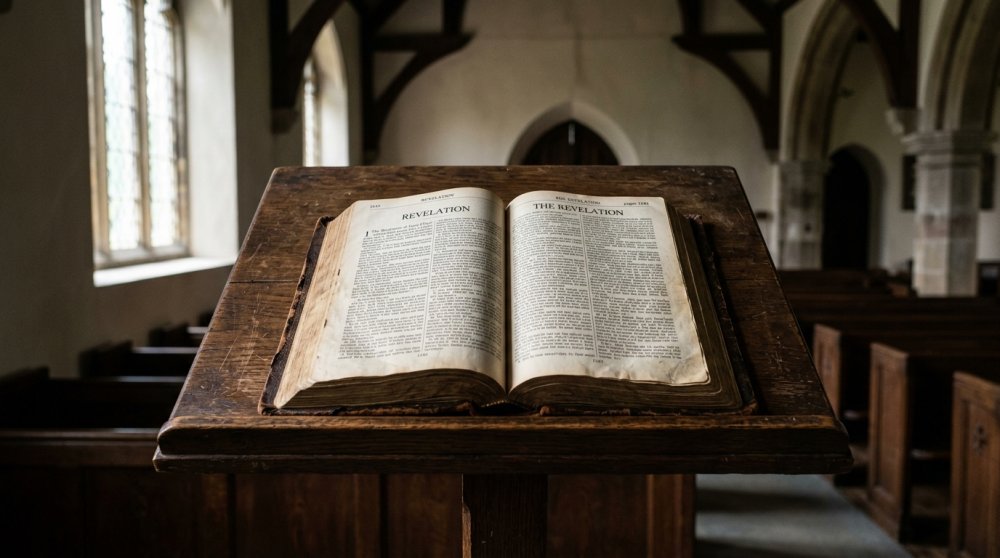
- Revelation chapters 2 and 3 contain direct messages from Jesus to seven churches in Asia Minor, blending commendation with stern rebuke.
- Scripture records that Jesus declares, “I know your works,” underscoring His intimate awareness of both corporate and personal conduct.
- The warnings delivered to these early congregations still apply to contemporary churches that drift into compromise or complacency.
In Revelation 2 and 3, the gentle and lowly Jesus speaks to seven churches with both praise and severe warning.
He knows their works, their compromises and what they can’t see about themselves.
He knows ours, too.
Let us know what you think, please share your thoughts in the comments below.


-

 Self-Reliance2 years ago
Trump’s Bold Move Uncovers Massive Social Security Fraud
-

 Faith1 year ago
New Clues Emerge in Noah’s Ark Mystery
-

 News2 years ago
Governor Walz’s Rhetoric Sparks National Controversy
-

 News2 years ago
Mel Gibson’s ‘The Passion of the Christ’ Sequel Title Announced
-

 Family2 years ago
Texas Lawmaker Targets Furries in Schools
-

 Freedom2 years ago
Maine Lawmaker Challenges Sports Fairness Controversy
-

 Family1 year ago
Canada’s Controversial Policy Sparks Ethical Debate
-
Faith11 months ago
Congress Hears Pleas for Nigerian Christians