
Faith
What This Astronaut Did in Deep Space Left America Speechless


Faith Facts
- Artemis II astronaut Victor Glover delivered an Easter message about love and unity from deeper in space than any human has traveled before
- The crew brought Bibles and Christian music into space, incorporating faith practices throughout their historic lunar mission
- The mission demonstrated how Christian faith and scientific exploration can work together to reveal God’s creation
As the Artemis II crew ventured beyond the boundaries of human exploration, they carried more than scientific instruments and technical equipment. They brought their faith with them, demonstrating to the world that the pursuit of knowledge and devotion to God are not contradictory but complementary callings.
Astronaut Victor Glover, part of the historic crew, seized the profound moment of traveling farther from Earth than any human in history to share a message of eternal significance. On Easter Sunday, from the depths of space, he spoke about love and unity—timeless truths that transcend even the vast distances of the cosmos.
The presence of faith aboard Artemis II extended far beyond a single message. The crew brought physical Bibles into space, ensuring they had access to Scripture during their journey through God’s creation. Christian music filled the spacecraft, providing spiritual encouragement and worship opportunities as the astronauts witnessed the majesty of the heavens firsthand.
This integration of faith and exploration represents a return to the foundations that motivated many of history’s greatest scientific minds. For centuries, Christians have understood that studying the natural world means learning more about the Creator who designed it with perfect precision and breathtaking beauty.
The Artemis II mission stands as a powerful counter-narrative to those who claim faith and science must remain separate. Instead, it shows millions of Americans that exploring the universe can be an act of worship—acknowledging God’s infinite creativity and declaring His glory across the heavens.
Victor Glover’s Easter message from space carried special weight given the extraordinary circumstances. Speaking about love and unity from a vantage point no human had ever reached before, he reminded viewers on Earth that some truths remain constant whether we stand on solid ground or float in the void between Earth and the Moon.
The crew’s openness about their faith practices challenges the secular narrative that has too often dominated discussions of space exploration. Rather than hiding their beliefs or compartmentalizing their spirituality, these astronauts lived out their faith authentically, even—or especially—in one of the most technologically advanced environments humans have ever created.
For Christian families watching the mission unfold, the Artemis II crew provided powerful role models. They demonstrated that excellence in science, engineering, and exploration doesn’t require abandoning faith. Instead, faith can provide the moral foundation and sense of purpose that gives meaning to great achievements.
The decision to bring Bibles and Christian music aboard reflects a broader truth about human nature. No matter how far we travel or how advanced our technology becomes, we remain spiritual beings with needs that transcend the physical realm. The astronauts recognized this reality and prepared accordingly.
This mission also serves as a reminder of America’s heritage as a nation founded on Christian principles. From the earliest days of space exploration, astronauts have acknowledged God’s hand in their achievements and sought His guidance in dangerous endeavors. Artemis II continues that noble tradition.
The contrast between the vastness of space and the intimacy of personal faith creates a powerful testimony. While the crew traveled through the incomprehensible expanse of the cosmos, they maintained connection to eternal truths through prayer, Scripture, and worship—proving that God’s presence knows no boundaries.
As the mission captured international attention, the crew’s faithful witness reached audiences that might never enter a church building. Their example showed watching millions that Christianity isn’t about retreating from the world’s challenges but engaging them fully while maintaining trust in God’s sovereignty.
The Artemis II mission reminds us that the same God who spoke creation into existence invites us to explore and understand what He has made. Every scientific discovery, every technological advancement, and every journey into the unknown can become an opportunity to marvel at divine wisdom and craftsmanship.
Let us know what you think, please share your thoughts in the comments below.

Faith
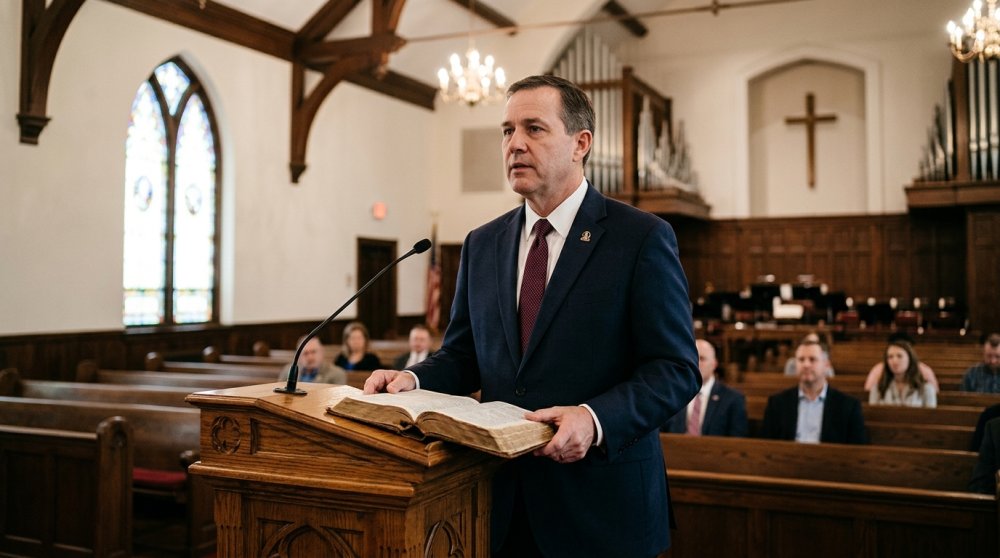
SBC President Calls for Clear Biblical Marriage and Gender Standards in Baptist Faith Statement
Faith Facts
- Southern Baptist Convention President Willy Rice is urging churches to reaffirm biblical teaching on marriage and human sexuality.
- The Baptist Faith & Message serves as the guiding doctrinal statement for millions of Southern Baptists across America.
- Traditional marriage between one man and one woman has long been upheld as God’s design in Scripture.
Southern Baptist Convention President Willy Rice has proposed amending the Baptist Faith & Message to address growing cultural confusion over gender and marriage.
Rice believes the current statement needs stronger language to clearly define marriage as between one man and one woman and to affirm biological sex as determined by God at creation.
The proposal comes as many denominations face pressure to compromise on these foundational issues.
“We need to speak with clarity and conviction in a time when truth is under attack,” Rice said in recent remarks.
The Southern Baptist Convention represents more than 13 million members and is the largest Protestant denomination in the United States.
Supporters of the amendment argue that clear doctrinal language protects churches from legal challenges and cultural drift.
“This is not about politics,” Rice emphasized. “This is about faithfulness to the Word of God.”
Critics within the denomination have pushed for more inclusive language on sexuality, but Rice’s proposal aligns with the majority view of Southern Baptists who affirm biblical standards.
The amendment process would require approval at the annual meeting of messengers from local churches.
Let us know what you think, please share your thoughts in the comments below.
Faith Facts
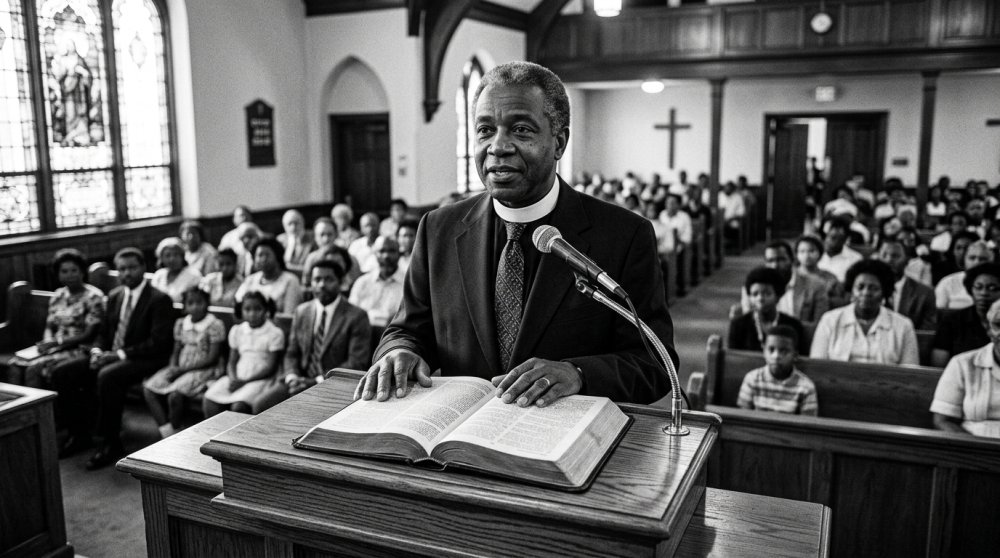
- Pastor Philip Anthony Mitchell warned that biblical illiteracy and cultural Christianity are weakening the Church.
- He identified a growing appetite for soft, comfortable sermons as a threat to spiritual vitality.
- The pastor called believers back to the authority of Scripture and unapologetic truth.
Pastor Philip Anthony Mitchell delivered a sobering assessment of the modern Church. He argued that biblical illiteracy is leaving believers unequipped to stand against cultural pressure.
“The Church is being weakened by a lack of biblical literacy,” Mitchell stated. He warned that many Christians now rely on surface-level knowledge rather than deep engagement with God’s Word.
“We are raising a generation that knows the language of culture better than the language of Scripture,” the pastor said. He urged pastors and parents to prioritize serious Bible study in homes and congregations.
Mitchell also pointed to cultural Christianity as another danger. He explained that many attend services for social comfort rather than genuine transformation through Christ.
“Soft sermons that avoid the hard truths of Scripture are feeding this problem,” Mitchell declared. He stressed that the pulpit must proclaim the full counsel of God without compromise.
The pastor called for a return to preaching that convicts and transforms. He said only the unfiltered Word of God can revive a weakening Church and restore its witness in America.
Let us know what you think, please share your thoughts in the comments below.

Faith Facts
- Michael Porter Jr openly shared the gospel with a Muslim streamer during a live conversation.
- The NBA player spoke with clarity, confidence, and compassion about his Christian faith.
- The exchange highlights the power of respectful witness in a divided culture.
NBA star Michael Porter Jr recently engaged a Muslim streamer named N3on in a candid conversation about faith. The discussion took place in a public online setting where the athlete presented the gospel with both boldness and gentleness. His approach drew attention for its clarity and sincerity.
“The exchange shows how believers can speak truth with both conviction and kindness,” said commentator AJ Gomez. “Michael Porter Jr modeled the kind of evangelism that respects the listener while remaining faithful to Scripture.”
Christian viewers praised the player for using his platform to proclaim the gospel without compromise. The moment stood out in a culture where public expressions of faith often face criticism or ridicule. Porter Jr’s example encouraged many to seek similar opportunities in their own circles.
“It is important for young people to see professional athletes who are unashamed of Jesus,” one observer noted. “This kind of witness can plant seeds that last a lifetime.”
The conversation also reminded believers of the biblical call to be ready to give an answer for the hope within them. With millions watching online, Porter Jr used his influence to point others toward Christ. His tone reflected both the love of God and the truth of His Word.
Let us know what you think, please share your thoughts in the comments below.


-

 Self-Reliance1 year ago
Trump’s Bold Move Uncovers Massive Social Security Fraud
-

 Faith1 year ago
New Clues Emerge in Noah’s Ark Mystery
-

 News2 years ago
Governor Walz’s Rhetoric Sparks National Controversy
-

 News1 year ago
Mel Gibson’s ‘The Passion of the Christ’ Sequel Title Announced
-

 Family2 years ago
Texas Lawmaker Targets Furries in Schools
-

 Freedom2 years ago
Maine Lawmaker Challenges Sports Fairness Controversy
-

 Family1 year ago
Canada’s Controversial Policy Sparks Ethical Debate
-
Faith10 months ago
Congress Hears Pleas for Nigerian Christians