
Faith
What the Bible Says About Our Culture’s Anger Epidemic


Faith Facts
- Scripture has addressed angry mobs and cultural rage since Acts 14, offering timeless wisdom for believers
- The Bible distinguishes between righteous anger and sinful wrath, providing clear guidance for Christians
- Ancient biblical principles remain directly applicable to today’s politically charged and divisive cultural moment
American culture has reached a boiling point. From heated political debates to everyday disagreements about technology and infrastructure, it seems everyone is angry about everything. The rage that dominates social media feeds, cable news, and even family gatherings has become so pervasive that many Christians wonder how to navigate these turbulent waters without compromising their faith or losing their witness.
But this isn’t a new problem. The early church faced similar challenges with angry mobs, political division, and cultural hostility.
In Acts 14, the Apostle Paul encountered violent opposition in Lystra. After healing a lame man, he and Barnabas were first mistaken for gods, then violently attacked by a mob that stoned Paul and dragged him out of the city, leaving him for dead. This dramatic shift from adoration to attempted murder illustrates how quickly human anger can escalate and how believers must remain faithful even when surrounded by rage.
The biblical response to anger begins with understanding its source and purpose. Ephesians 4:26 instructs believers, “Be angry and do not sin; do not let the sun go down on your anger.” This verse acknowledges that anger itself is not inherently sinful — it’s a God-given emotion that can serve righteous purposes.
However, Scripture draws a clear line between righteous indignation and destructive wrath. Jesus Himself displayed anger when He cleansed the temple, overturning tables and driving out those who had turned His Father’s house into a marketplace. His anger was directed at injustice and the desecration of holy things, not at personal slights or political disagreements.
The challenge for Christians today is discerning when anger is justified and when it crosses into sin. James 1:19-20 provides practical guidance: “Know this, my beloved brothers: let every person be quick to hear, slow to speak, slow to anger; for the anger of man does not produce the righteousness of God.” This wisdom is especially relevant in an age where social media rewards immediate, emotional reactions and punishes thoughtful restraint.
Conservative Christians face particular pressure in today’s cultural climate. Traditional values regarding family, life, religious freedom, and national identity are increasingly marginalized or outright attacked in mainstream institutions. It’s natural to feel angry when core beliefs are dismissed or when government policies contradict biblical principles. The question is not whether to feel angry, but how to channel that anger in ways that honor God and advance His kingdom.
Proverbs 29:11 warns, “A fool gives full vent to his spirit, but a wise man quietly holds it back.” This doesn’t mean Christians should remain silent in the face of injustice or compromise their convictions. Rather, it calls for strategic wisdom in how we engage cultural battles. Uncontrolled rage damages our witness and often plays into the hands of those who would paint Christians as hateful or unreasonable.
The biblical model shows believers standing firm on truth while maintaining self-control and grace. Daniel maintained his convictions in Babylon without becoming consumed by anger at the pagan culture around him. Nehemiah confronted injustice with righteous anger but channeled it into constructive action that rebuilt Jerusalem’s walls. Paul reasoned with opponents in the marketplace rather than simply matching their hostility.
For Christians navigating today’s rage-filled culture, several biblical principles provide guidance. First, guard your heart. Proverbs 4:23 reminds us, “Keep your heart with all vigilance, for from it flow the springs of life.” What we consume through media and entertainment shapes our emotional responses. Constant exposure to outrage-driven content will inevitably affect our spirits.
Second, pursue peace without compromising truth. Romans 12:18 instructs, “If possible, so far as it depends on you, live peaceably with all.” This doesn’t mean surrendering biblical values, but it does require us to examine whether our approach to disagreements reflects Christ’s character or merely mirrors the world’s combative spirit.
Third, remember that our battle is spiritual, not merely political or cultural. Ephesians 6:12 clarifies, “For we do not wrestle against flesh and blood, but against the rulers, against the authorities, against the cosmic powers over this present darkness, against the spiritual forces of evil in the heavenly places.” This perspective should fundamentally change how we engage cultural conflicts. Our opponents are not ultimately other human beings, but spiritual forces that blind people to truth.
Fourth, trust God’s sovereignty even when circumstances provoke anger. Psalm 37:8 counsels, “Refrain from anger, and forsake wrath! Fret not yourself; it tends only to evil.” God remains on His throne regardless of election results, court decisions, or cultural trends. While we should engage the political process and work for justice, anxious rage suggests we’ve forgotten who ultimately controls history.
The early church thrived in an environment far more hostile than contemporary America. They faced systematic persecution, legal discrimination, and violent opposition, yet they conquered the Roman Empire not through matching their opponents’ rage, but through faithful witness, sacrificial love, and unwavering commitment to truth. Their example shows that Christianity advances most effectively when believers refuse to adopt the spirit of the age.
This doesn’t mean accepting injustice or remaining passive in the face of evil. Biblical anger motivates action — but action rooted in love for God and neighbor rather than hatred for enemies. When we see children harmed by ideologies that deny biological reality, when religious freedom is threatened, when innocent life is devalued, righteous anger should drive us to prayer, advocacy, and engagement. But that anger must be disciplined by Scripture and directed toward constructive change rather than mere venting.
The difference between righteous anger and sinful wrath often lies in our ultimate goal. Are we seeking to advance God’s kingdom and human flourishing, or are we primarily interested in defeating and humiliating our opponents? Do our words and actions reflect a desire to see people come to faith in Christ, or do they reveal a spirit of vengeance?
As believers, we have access to resources the world lacks. Prayer changes circumstances and softens hearts, including our own. The Holy Spirit produces self-control as part of His fruit in our lives. Scripture provides wisdom that transcends political tribalism and cultural trends. Christian community offers accountability and perspective when our emotions threaten to overwhelm our judgment.
In this age of rage, the church has an opportunity to demonstrate a better way. When we respond to provocation with grace, engage opponents with respect while maintaining truth, and refuse to mirror the world’s anger, we provide a compelling witness to the transforming power of the Gospel. People are desperate for an alternative to the exhausting cycle of outrage that dominates modern life.
The biblical call is clear: be angry when righteousness demands it, but do not sin. Channel that anger into prayer, into action that advances justice, into witness that points people to Christ. Refuse to let rage consume your heart or define your character. Remember that our citizenship is ultimately in heaven, and our hope rests not in political victories but in the certain triumph of God’s kingdom.
Let us know what you think, please share your thoughts in the comments below.

Faith Facts
- Tony Dungy publicly defended the biblical model of monogamous marriage after an Ohio pastor introduced his second wife to the congregation.
- The former NFL coach and longtime Christian voice cited Scripture that presents marriage as a lifelong union between one man and one woman.
- Dungy warned that redefining marriage undermines the family structure God designed for human flourishing.
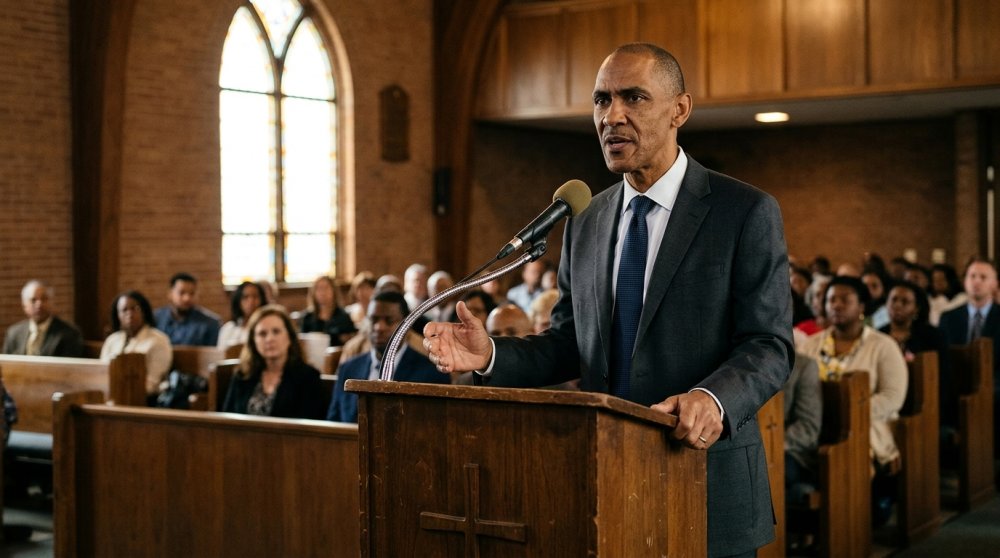
Former NFL coach Tony Dungy pushed back against an Ohio pastor who recently introduced his second wife to his congregation.
Dungy called the action unbiblical and said Scripture consistently upholds monogamy as God’s design for marriage.
“The Bible is very clear on this,” Dungy stated. “From Genesis onward, we see marriage presented as the union of one man and one woman.”
Critics of the pastor’s decision argue that allowing multiple wives contradicts the clear teaching of both the Old and New Testaments.
They point to passages such as Matthew 19 and 1 Timothy 3 that describe marriage in singular terms and set the standard for church leadership.
“God’s design for the family is the foundation of a stable society,” Dungy added. “We cannot rewrite His Word to fit modern preferences.”
Supporters of the pastor’s stance claim cultural context allows for multiple wives, but Dungy rejected that view as selective interpretation.
He urged believers to hold fast to the plain reading of Scripture rather than accommodate shifting cultural trends.
Let us know what you think, please share your thoughts in the comments below.

Faith Facts
- A Christian family in India has been driven from their ancestral home after refusing to renounce their faith in Christ.
- Police allowed over 150 Hindu extremists to attack the family, resulting in severe beatings.
- The family chose to leave rather than deny their Christian beliefs.
A family in India has decided to leave their ancestral home rather than renounce Christ after police allowed a mob of more than 150 Hindu extremists intent on killing them to severely beat them, sources said.
The violent attack highlights the increasing persecution faced by Christians in many parts of India. Such incidents reflect a troubling trend where religious minorities are targeted for their faith.
Despite the pressure to convert or abandon their beliefs, the family stood firm in their commitment to Christ. Their choice to leave their ancestral home demonstrates the depth of their conviction.
Let us know what you think, please share your thoughts in the comments below.
Faith Facts
- Rev. Chris Lee challenges the common belief that ghosts are demonic entities, proposing they may be lost souls instead.
- The pastor maintains his view aligns with Christian understanding of the afterlife and human spirits.
- Traditional Christian teaching holds that the dead are not meant to linger on earth as wandering spirits.
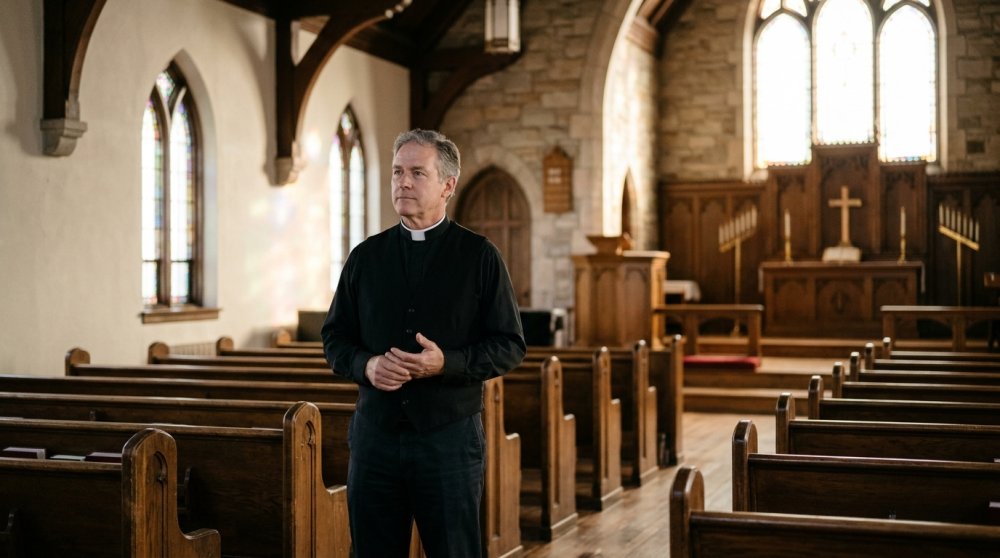
Rev. Chris Lee offers a different perspective on spiritual phenomena that many believers encounter.
While some Christians maintain that any ghostly presence must be demonic in nature, Lee suggests another possibility exists. He believes certain apparitions could represent confused or trapped souls rather than evil spirits seeking to harm the living.
“Some Christians have argued that ghosts are demonic entities. However Rev Chris Lee believes there are good reasons to believe they’re merely trapped, confused or lost souls with no evil intention.”
Lee’s position invites discussion within Christian communities about how believers should understand and respond to reports of supernatural encounters. His view emphasizes compassion toward these spirits rather than immediate fear or rejection.
This perspective stands in contrast to more traditional teachings that discourage any engagement with spirits of the deceased. The pastor suggests these entities may simply be lost and in need of prayer or guidance toward their proper rest.
Let us know what you think, please share your thoughts in the comments below.


-

 Self-Reliance2 years ago
Trump’s Bold Move Uncovers Massive Social Security Fraud
-

 Faith2 years ago
New Clues Emerge in Noah’s Ark Mystery
-

 News2 years ago
Governor Walz’s Rhetoric Sparks National Controversy
-

 News2 years ago
Mel Gibson’s ‘The Passion of the Christ’ Sequel Title Announced
-

 Family2 years ago
Texas Lawmaker Targets Furries in Schools
-

 Freedom2 years ago
Maine Lawmaker Challenges Sports Fairness Controversy
-

 Family1 year ago
Canada’s Controversial Policy Sparks Ethical Debate
-
Faith11 months ago
Congress Hears Pleas for Nigerian Christians