
Faith
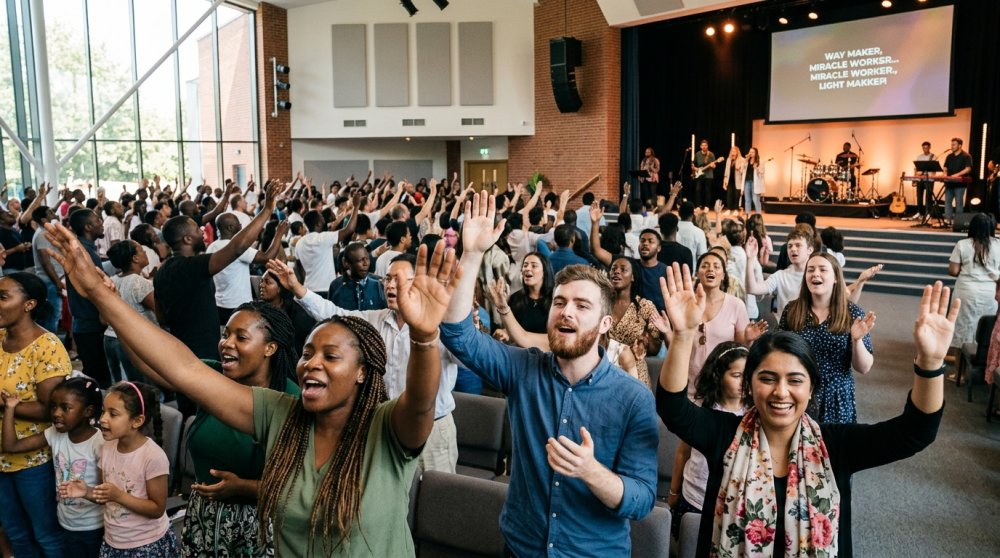
British Evangelicals Defy Trends With Remarkable Growth

Faith Facts
- New survey shows evangelical church attendance and belief are growing in the UK despite overall Christian decline
- Evangelical communities are among the youngest and most diverse segments of British Christianity
- Findings suggest genuine faith commitment is thriving even as nominal Christianity fades
While headlines continue to proclaim the death of Christianity in Britain, a new survey reveals a stunning counter-narrative: evangelical Christianity is not just surviving—it’s growing. The research from the Evangelical Alliance demonstrates that authentic, Bible-believing faith is expanding even as cultural Christianity continues its decline across the United Kingdom.
Peter Lynas of the Evangelical Alliance points to compelling evidence that evangelical communities represent one of the youngest and most vibrant segments of the British church. The findings challenge popular narratives about the inevitable secularization of Western nations and offer encouragement to believers who have remained faithful to traditional Christian teaching.
The survey reveals that while many who identify as Christian in name only are leaving the church, those with genuine evangelical convictions are growing in number. This suggests that committed, Bible-centered faith has a future in Britain, even as watered-down versions of Christianity lose their cultural relevance.
The demographic composition of evangelical churches is particularly noteworthy. Rather than being exclusively white and elderly—as critics often claim—evangelical congregations are attracting younger believers and show remarkable ethnic diversity. This vitality stands in sharp contrast to mainline denominations that have often compromised on biblical teaching in pursuit of cultural acceptance.
The growth of evangelicalism in Britain mirrors similar patterns in other Western nations, where churches that maintain orthodox Christian doctrine and emphasize personal conversion tend to thrive. Meanwhile, denominations that have embraced progressive theology and abandoned traditional biblical positions continue to hemorrhage members.
For American Christians watching the spiritual state of Europe with concern, these findings offer hope. They demonstrate that when the Gospel is preached with clarity and conviction, people still respond. Cultural trends toward secularism are not inevitable or irreversible when the church remains faithful to its calling.
The research also suggests that nominal Christianity—the cultural identification without genuine faith commitment—is finally being stripped away in Britain. While this may appear as decline in overall Christian numbers, it actually represents a clarification: those who remain are increasingly those with authentic faith rather than mere cultural affiliation.
This purification process, though painful, may ultimately strengthen the British church. A smaller but more committed body of believers can often have greater impact than a larger group of nominal adherents. The early church grew rapidly despite being a small minority in a hostile culture, powered by the conviction and dedication of its members.
The youth and diversity of evangelical churches also positions them well for the future. Young believers will carry the faith forward into coming decades, while ethnic diversity ensures that Christianity in Britain will not be dismissed as merely a relic of the white establishment.
For Christian conservatives in America, the British evangelical growth story offers several lessons. First, maintaining biblical orthodoxy is not a barrier to growth but often a catalyst for it. Second, genuine faith commitment matters more than cultural Christianity. Third, demographic trends are not destiny—faithful gospel witness can reverse apparent decline.
As Britain’s evangelical churches continue to grow, they serve as beacons of hope for believers worldwide. They demonstrate that authentic Christianity, rooted in Scripture and transformed lives, remains as powerful and relevant today as it was two thousand years ago.
Let us know what you think, please share your thoughts in the comments below.


Faith Facts
- Jesus teaches that true disciples recognize and follow only His voice, not the voices of strangers or false authorities.
- Sheep in Scripture are not passive but called to live righteously, act justly, and defend truth with courage.
- Faithful believers bear moral responsibility to walk after Christ even when earthly leaders demand conflicting loyalty.
In the Gospel of John, Jesus presents a clear picture of the relationship between the Good Shepherd and His flock. The sheep are not depicted as helpless or unaware.
They actively know the Shepherd’s voice. They distinguish it from every competing sound. They refuse to follow strangers who would lead them astray.
“The sheep are not passive recipients of leadership.”
Instead, Scripture places moral responsibility squarely on the shoulders of the faithful. When shepherds falter or stray from truth, the sheep must still live righteously and act justly.
This calling demands courage in the face of pressure from earthly authorities who seek to pull believers away from Christ. The faithful witness does not bend to demands that contradict God’s Word.
“Sheep carry a responsibility as faithful moral witnesses: to live righteously, act justly, and defend truth with great courage.”
Believers today face the same test. Cultural and institutional voices often compete with the clear teaching of Scripture. The call remains unchanged.
“Walk after Christ even when other authorities demand their loyalty.”
Standing firm requires discernment and the willingness to choose obedience to the Shepherd above the approval of men. The cost may be high, but the reward is eternal.
Let us know what you think, please share your thoughts in the comments below.

Faith Facts
- Three major fantasy franchises are returning within the next 16 months, including Narnia, Lord of the Rings, and Harry Potter.
- Christians have long debated whether these stories support or undermine biblical truth.
- The Church has an opportunity to guide families in discerning entertainment that reflects biblical values.
Three beloved fantasy series are returning to screens and shelves over the next sixteen months. Narnia, Tolkien’s Middle-earth, and the wizarding world of Harry Potter will all make comebacks.
Each of these stories has shaped the imagination of millions of young readers and viewers. They have sparked conversations about good and evil, courage and sacrifice, and the battle between light and darkness.
“The question is not whether these stories will return, but how the Church will respond,”
Some believers have embraced these tales for their clear moral lessons. Others have warned against elements they believe conflict with Scripture.
The Church must decide how to engage with these returning worlds. Parents and pastors have a responsibility to teach discernment rather than avoidance or uncritical acceptance.
“We cannot simply ignore the cultural influence these stories carry,”
Christian families can use these returns as teaching moments. They can discuss biblical truth alongside the themes presented in the stories.
“Let us know what you think, please share your thoughts in the comments below.”

Faith Facts
- Scripture teaches that God is the ultimate owner of every resource and blessing.
- Faithful giving flows from gratitude and trust rather than obligation or guilt.
- Irregular income streams require intentional planning and prayerful discernment.
After years of financial strain a Christian couple now finds their real estate holdings and dividend income producing more than enough to meet their needs.
They are asking a question many believers face once debt is cleared and margins appear: how do we give faithfully when the money arrives in uneven amounts throughout the year.
The couple’s first step was to settle the foundational truth that everything they possess belongs to the Lord.
“God blessed us with plenty,” the husband said. “Now we want to give it away wisely.”
They began by setting aside a percentage of every deposit that arrived in their accounts rather than waiting until year-end to decide what to share.
This practice keeps their giving tied to each blessing as it comes instead of treating generosity as an afterthought once personal spending is finished.
They also chose to support local churches and ministries that preach the full counsel of Scripture and demonstrate clear accountability for the funds they receive.
The wife noted that irregular income once felt like an obstacle to consistent generosity.
“We used to think we couldn’t give until we knew exactly what was coming,” she said. “Now we see each deposit as another opportunity to trust God with the math.”
The couple encourages other believers in similar seasons to begin with prayer, set a percentage, and give from the first dollar rather than the leftovers.
Let us know what you think, please share your thoughts in the comments below.


-

 Self-Reliance2 years ago
Trump’s Bold Move Uncovers Massive Social Security Fraud
-

 Faith1 year ago
New Clues Emerge in Noah’s Ark Mystery
-

 News2 years ago
Governor Walz’s Rhetoric Sparks National Controversy
-

 News2 years ago
Mel Gibson’s ‘The Passion of the Christ’ Sequel Title Announced
-

 Family2 years ago
Texas Lawmaker Targets Furries in Schools
-

 Freedom2 years ago
Maine Lawmaker Challenges Sports Fairness Controversy
-

 Family1 year ago
Canada’s Controversial Policy Sparks Ethical Debate
-
Faith11 months ago
Congress Hears Pleas for Nigerian Christians