Faith
What Really Happens the Moment a Christian Dies
Faith Facts
- Pastor John Piper affirms that believers enter Christ’s presence immediately upon death, rejecting the “soul sleep” doctrine
- The biblical evidence shows consciousness continues after death, with believers experiencing immediate fellowship with Jesus
- This teaching provides comfort and hope to Christian families facing loss and grief
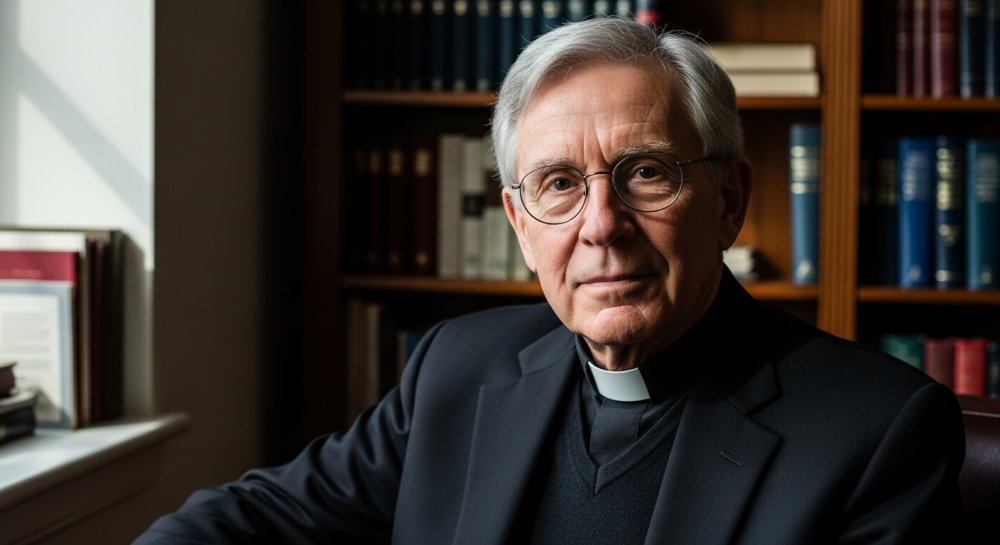
Pastor and theologian John Piper has delivered a powerful message of hope for believers concerned about what happens in the moments after death. In a clear rejection of the “soul sleep” doctrine, Piper emphasized that Christians do not enter an unconscious state but instead are welcomed immediately into the presence of Jesus Christ.
The question of what happens between death and resurrection has puzzled many Christians throughout history. Some have suggested that believers enter a period of unconscious existence, waiting in a sleep-like state until Christ’s return. But Piper’s teaching provides biblical clarity on this crucial matter of faith.
According to the respected pastor, Scripture provides clear evidence that our souls remain conscious and aware after physical death. For believers, this means an immediate transition into the glorious presence of our Savior, not a period of darkness or unknowing.
This understanding carries profound implications for how Christians approach death and grief. Rather than viewing death as a frightening void or period of unconscious waiting, believers can take comfort in knowing their loved ones who died in Christ are already experiencing the joy of His presence.
The doctrine of immediate presence with Christ upon death has been the mainstream Christian teaching for centuries, rooted in biblical passages that describe believers departing to be with the Lord. This view stands in stark contrast to various alternative theories that have emerged over the years.
Piper’s affirmation of this traditional Christian doctrine provides reassurance to families walking through the valley of grief. The knowledge that Christian loved ones are not sleeping unconsciously but are alive and aware in Christ’s presence brings genuine comfort during life’s most difficult moments.
For American Christians navigating an increasingly secular culture that often denies or dismisses life after death entirely, this biblical teaching stands as a beacon of hope. It reminds us that our faith is not wishful thinking but grounded in the promises of God’s Word.
The pastor’s teaching also underscores the importance of sound biblical theology in addressing life’s biggest questions. In an age of confusion and competing voices, returning to Scripture for answers remains the foundation of genuine Christian faith.
Let us know what you think, please share your thoughts in the comments below.
Faith
Former Iranian Refugees Now Ministering to Ukrainian Families in Austria
Faith Facts
- Iranian Christians who fled persecution in their homeland are now serving Ukrainian refugee families displaced by war in Austria
- The Pohlgasse Church of Christ in Vienna conducts services in Farsi for believers from Iran and Afghanistan who converted from Islam despite facing persecution
- Ukrainian refugees receiving ministry from Iranian Christians say the compassion crosses all boundaries when people are united in love and faith
POYSDORF, AUSTRIA — Bags stuffed with candy. Foil-wrapped crepes filled with chicken salad. Children’s Bibles full of colorful illustrations.
Members of a Church of Christ in Vienna pack them all into their cars on a Saturday morning. They drive about an hour north from Austria’s capital to reach this village near the Czech border.
The Christian caravan pulls up to Poysdorfer Hof, a hotel for refugees, and unloads. Inside, a small group of children, most of them Ukrainian, waits eagerly as the church members set up a table of snacks, plastic cups of juice and a coffee bar for the parents.
“I remember what they must feel like,” says Ibrahim, who made the drive from Vienna with his mother, Esmat. So do the other church members, all but one of whom are from Iran.
Eight years ago, Ibrahim was a refugee, too. His father had met a group of Christians while visiting the Middle Eastern nation of Kuwait. His family began worshiping with an underground church in Iran — and caught the attention of the Gasht-e Ershad, the country’s much-feared morality police. Ibrahim fled to Vienna and found the Pohlgasse Church of Christ, which baptized him. Other Iranians followed, though many of their families stayed behind.
Ibrahim is part of a wave of refugees from the Middle East who transformed the Pohlgasse church in the mid-2010s. The Vienna congregation now has a Sunday morning service in Farsi, Iran’s national language, for Christians from Iran and Afghanistan. The church also has an afternoon service in German and English, attended mostly by immigrants from Africa.
Add Ukrainians to the mix. The first wave came to Austria after Russia’s full-scale invasion of Ukraine began four years ago. More Ukrainians followed as Russia’s drone and missile attacks intensified.
Now, both Ukraine and Iran endure daily bombings, and both peoples worry about their loved ones back home. The ongoing conflicts have created humanitarian crises in both regions.
Ibrahim prays for an end to the conflicts. He also thanks God for his new life in Austria, where he works in information technology — and for the opportunity to help fellow refugees.
After years of receiving aid from people of faith, serving the Ukrainians “feels really good,” says Parvin, another Iranian Christian.
“When we support each other, differences don’t matter. In these moments, we are just people helping people, and that’s what matters most.”
‘This Way We Have Hope’
In the hotel’s meeting room, the small group of children quickly becomes a standing-room-only crowd. The Pohlgasse church members come to Poysdorf regularly, and the numbers grow with each visit.
The kids closest to the table put down their snacks and grab copies of a Ukrainian-language children’s Bible produced by Eastern European Mission. They chatter gleefully with each other as they turn the pages. Next time, the church members will have to bring more.
Three Ukrainian women lead a chorus of children in traditional songs, welcoming spring and celebrating Easter. Then Reggy Hiller, the only non-Iranian from the Pohlgasse church, talks about Jesus’ resurrection, the Great Commission and baptism — while doing her best to remember all of the children’s names.
Hiller, the daughter of missionaries Bob and Ruth Hare, is a longtime member and mission worker with the Pohlgasse church. She recently married an Iranian refugee, a musician and guitar instructor who was baptized in 2023.
“Is it good that Jesus was resurrected?” Hiller asks the children.
“Yes! Because otherwise we would just stay dead, and that would be sad. But this way we have hope. We get to see each other again and stay with Jesus. We get to sing a lot up there, too!”
Sasha, 17, and her mother, Alesia, squeeze onto a wooden bench in the corner of the room. They’re from Mykolaiv, a port city and shipbuilding hub in southern Ukraine that’s endured heavy attacks since Russia’s full-scale invasion began in 2022. Sasha’s sister is still in Ukraine. When asked if she’s OK, Sasha says, “Not always. It’s so hard.”
As for the Christians who came to serve them, “I think the Iran people are good, actually,” Sasha says.
“They come here to find a better life, so I understand them.”
Sophia Semeniuk, 20, also grew up in Mykolaiv. She was studying in Germany when the invasion began and remembers crying bitterly when she learned of it. Now she’s taking online courses and earning degrees in psychology and counseling. One day she hopes to return to Ukraine and help the countless people traumatized by the conflict.
“I think it’s good,” she says of the Iranian Christians’ care for the Ukrainians, “and I think that Ukrainians can also be of help to the Iranians.”
She looks forward to the day when she can return the favor, reaching out to Iranians affected by war. When asked if she’s found a church home in Poysdorf, she says no.
“I’m believing in God, but I believe that God is in your heart. God doesn’t have a place because he’s everywhere.”
Dimitri Godunow is on his way to do laundry when he sees the crowd in the hotel’s lobby. He grabs a snack and visits with the Iranian Christians.
On his phone, he pulls up a photo of a charred black apartment building. It once was his home in Kostiantynivka, a city in the predominantly Russian-speaking Donbas region of eastern Ukraine, now on the frontlines of the war.
“This is a completely new life here,” says Godunow, who was an attorney in Ukraine. As the brutal conflict pushed him westward, he encountered suspicion from fellow Ukrainians because of his region’s ties to Russia. And many of the men who leave Ukraine are regarded as traitors by those who remain and join the Ukrainian army, he adds.
But there’s a sense of camaraderie among refugees that crosses geographic barriers, he says. He’s become friends with a Russian family from the republic of Chechnya, which endured more than a decade of bloody conflict in the 1990s and 2000s.
Receiving support from Iranian Christians might have seemed far-fetched a few years ago, but not now.
“For me, this is totally normal,” Godunow says.
“It’s from the heart. There are (no longer) any lines between religions and nationalities. I don’t want to make harm for anybody. I’m open to everybody — Iranians, Indians, Chinese, Americans — if we’re united in love.”
Back amid the crowd of children, Sasha uses the English she knows to translate for her mother, Alesia, who’s eager to show off a tattoo she got a couple of weeks ago. She rolls up her left sleeve as her daughter rolls her eyes. Scrolled across her forearm, in cursive English, are words that seem to sum up the past four years for Ukraine, “Only God knows why.”
What inspired Alisha to have those words immortalized in her flesh? With a teenage smirk, Sasha says, “Only God knows why.”
Laborers Needed
After handing out the chicken salad crepes, the Iranian Christians pack up. Four girls, each holding an orange rose, crowd around Hiller’s car to tell her goodbye. She remembers two of their names — Marina and Adrina.
As Ibrahim drives Hiller and his mother back to Vienna, he reflects on their Ukrainian neighbors, speaking in German as Hiller translates.
“I’m pleasantly surprised by how nice they are,” he says.
“Once you have a friend in them, you always have a friend.”
Hiller, 75, would love to see a Church of Christ planted in Poysdorf. But her schedule is full. That’s also true for Gerhard Krassnig, minister for the Pohlgasse church. As Hiller and the Iranian Christians return to Vienna, Krassnig is headed to Salzburg, near the German border, to visit a Church of Christ there. Missionaries Bill and Marie-Claire McDonough worked with the congregation and studied the Bible with Iranian refugees in western Austria. But the couple recently returned to the U.S.
“The harvest is plentiful,” Hiller says, quoting Jesus’ words to his disciples in Matthew 9:37.
But the laborers — be they Austrian, American, Iranian or Ukrainian — are few, at least for now.
Let us know what you think, please share your thoughts in the comments below.
Faith
Vienna Congregation Shares Communion in Four Languages Across Borders of Conflict
Faith Facts
- The Danube Church of Christ in Vienna gathers believers from Iran, Ukraine, Germany, and America who worship together despite conflicts between their homelands
- An 18-year-old Iranian refugee named Arshia delivered a communion meditation emphasizing that Jesus invites all believers regardless of their past
- Four church members read Ephesians 2:1-10 in their native languages — German, English, Farsi, and Ukrainian — demonstrating the unity found in Christ
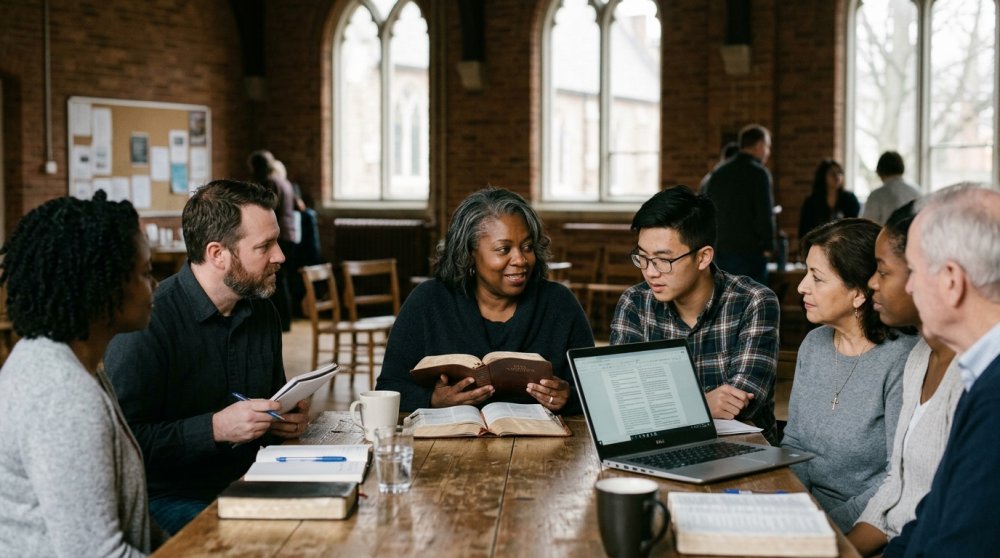
VIENNA — In a small congregation near the heart of Austria’s capital, the Lord’s Supper transcends language barriers and national boundaries. The Danube Church of Christ gathers believers from nations in conflict, united by a common faith that offers new beginnings to all who come.
Arshia, an 18-year-old Iranian Christian who made the perilous journey from his homeland to Vienna two years ago, recently delivered a communion devotional that captured the essence of what brings this diverse body together. Speaking in German while missionary Jake Haskew translated into English, the young believer described communion not merely as remembrance, but as invitation.
“True life begins when we let go of our fear, of our past, and then something new comes,” Arshia said.
He acknowledged the struggle to forget past mistakes and persistent troubling thoughts. But he emphasized that when believers take the bread and wine to remember Jesus’ sacrifice, it carries a profound message.
“It’s as if he’s saying, ‘I know where you are, but regardless, you are still invited,'” Arshia explained.
The congregation recently relocated to a facility in central Vienna, strategically positioned near multiple universities and the city’s U-Bahn subway system. This multinational, multilingual family demonstrates the power of Christ to unite people whose homelands remain divided by earthly conflicts.
During a recent service, four church members illustrated this unity by reading Ephesians 2:1-10 in their native tongues. Stefan Krassnig, a longtime minister in Vienna, read in German.
Jonah Wilcox, a student participating in Oklahoma Christian University’s study abroad program, read in English. Amir, another refugee from Iran, read in Farsi.
Artum Budzhak, an immigrant from Chernivtsi, Ukraine, read in Ukrainian. Together, their voices proclaimed the apostle Paul’s message to the church in Ephesus — that believers once dead in sin have been made alive in Christ.
“But God, because of his great love, made us alive with Christ even when we were dead in transgressions… For we are God’s handiwork, created in Christ Jesus to do good works, which God prepared in advance for us to do,” the passage declares.
After the multilingual Scripture reading, Arshia reflected on its significance.
“I think that tells us everything that we need to know,” he said.
Before the congregation partook of the bread and fruit of the vine, the young Iranian Christian posed challenging questions for his brothers and sisters to consider. “When was your beginning? What did it feel like?”
“Or has it begun? How can we encourage others to start their new beginning?” he asked.
The Danube Church of Christ stands as a living testimony to the reconciling power of the Gospel. In a world marked by division, conflict, and ancient enmities, this small congregation demonstrates that Christ breaks down every wall of hostility.
Their worship — conducted in multiple languages, drawing from multiple nations — reflects the biblical vision of people from every tribe and tongue gathered before the throne of God. It’s a foretaste of the eternal kingdom where earthly divisions cease and all believers share one common identity in Christ.
Let us know what you think, please share your thoughts in the comments below.
Faith
Gibson Completes Filming on Passion Sequel After Two Decades
Faith Facts
- Filming has wrapped on ‘The Resurrection of the Christ,’ Mel Gibson’s sequel to 2004’s ‘The Passion of the Christ’
- The film will be released as a two-part theatrical event in 2027, 23 years after the original
- The Passion of the Christ earned over $600 million worldwide, making it the highest-grossing Christian film in history
After more than two decades of anticipation, Mel Gibson has completed principal photography on “The Resurrection of the Christ,” the highly anticipated follow-up to his groundbreaking 2004 film “The Passion of the Christ.” The completion of filming represents a significant achievement for Gibson, who has spent years developing this project that will explore the most pivotal event in Christian history.
The new film will chronicle the three days between Christ’s crucifixion and His glorious resurrection, bringing to life the biblical accounts that form the foundation of Christian faith. Unlike typical Hollywood sequels, this project has been treated with the same reverence and attention to scriptural accuracy that made the original film resonate so deeply with believers worldwide.
Gibson’s original “Passion of the Christ” became a cultural phenomenon when it was released in 2004, earning over $600 million at the global box office and becoming the highest-grossing Christian film of all time. The film’s unflinching portrayal of Christ’s sacrifice sparked both controversy and deep spiritual awakening among millions of viewers who were moved by its authentic depiction of the Gospel accounts.
“The Resurrection of the Christ” will be released as a two-part theatrical event in 2027, allowing Gibson to fully explore the profound theological and historical significance of Christ’s victory over death. This extended format demonstrates the filmmaker’s commitment to doing justice to the most important story ever told, rather than compromising the narrative for commercial considerations.
The 23-year gap between the original film and its sequel reflects Gibson’s dedication to getting every detail right. In an era when Hollywood often rushes sequels into production to capitalize on financial success, Gibson has taken the time necessary to ensure this project honors the biblical text and serves the Christian community with integrity.
For American Christians who have waited patiently for this continuation of the Gospel story, the completion of filming brings hope that a new generation will encounter the transformative power of Christ’s resurrection on the big screen. The original film demonstrated that there is a massive audience hungry for authentic Christian content that doesn’t water down the truth or apologize for the faith.
As our culture continues to drift further from its Christian moorings, Gibson’s commitment to bringing Scripture to life in cinematic form serves as a powerful reminder that the Gospel message remains as relevant and necessary today as it was 2,000 years ago. The resurrection of Jesus Christ is not merely a historical event—it is the cornerstone of our faith and the source of eternal hope for all who believe.
Let us know what you think, please share your thoughts in the comments below.
-
Self-Reliance1 year agoTrump’s Bold Move Uncovers Massive Social Security Fraud
-

Faith1 year agoNew Clues Emerge in Noah’s Ark Mystery
-

News1 year agoGovernor Walz’s Rhetoric Sparks National Controversy
-

News1 year agoMel Gibson’s ‘The Passion of the Christ’ Sequel Title Announced
-

Family1 year agoTexas Lawmaker Targets Furries in Schools
-

Freedom1 year agoMaine Lawmaker Challenges Sports Fairness Controversy
-

Family12 months agoCanada’s Controversial Policy Sparks Ethical Debate
-
Faith5 months ago
Congress Hears Pleas for Nigerian Christians