
Faith
Former Iranian Refugees Now Ministering to Ukrainian Families in Austria

Faith Facts
- Iranian Christians who fled persecution in their homeland are now serving Ukrainian refugee families displaced by war in Austria
- The Pohlgasse Church of Christ in Vienna conducts services in Farsi for believers from Iran and Afghanistan who converted from Islam despite facing persecution
- Ukrainian refugees receiving ministry from Iranian Christians say the compassion crosses all boundaries when people are united in love and faith
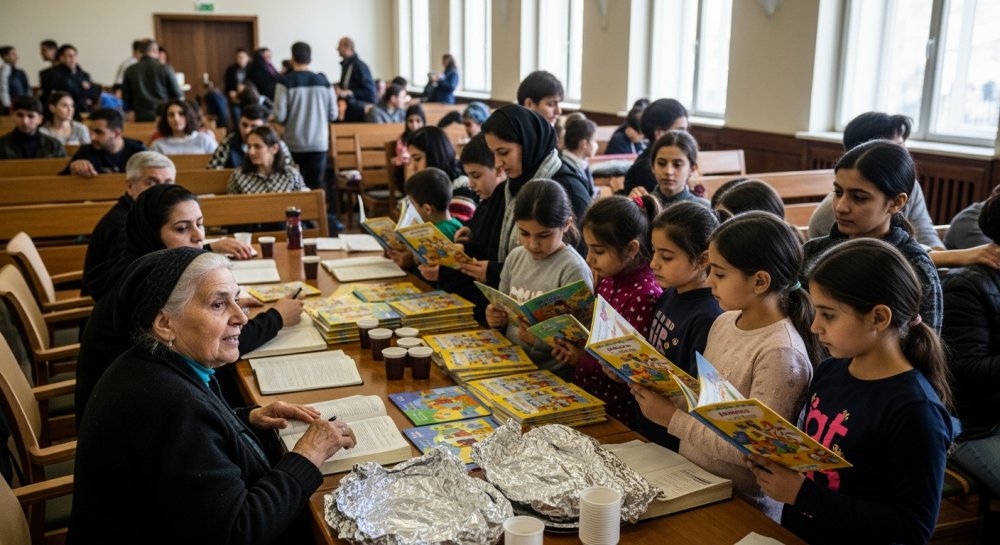
POYSDORF, AUSTRIA — Bags stuffed with candy. Foil-wrapped crepes filled with chicken salad. Children’s Bibles full of colorful illustrations.
Members of a Church of Christ in Vienna pack them all into their cars on a Saturday morning. They drive about an hour north from Austria’s capital to reach this village near the Czech border.
The Christian caravan pulls up to Poysdorfer Hof, a hotel for refugees, and unloads. Inside, a small group of children, most of them Ukrainian, waits eagerly as the church members set up a table of snacks, plastic cups of juice and a coffee bar for the parents.
“I remember what they must feel like,” says Ibrahim, who made the drive from Vienna with his mother, Esmat. So do the other church members, all but one of whom are from Iran.
Eight years ago, Ibrahim was a refugee, too. His father had met a group of Christians while visiting the Middle Eastern nation of Kuwait. His family began worshiping with an underground church in Iran — and caught the attention of the Gasht-e Ershad, the country’s much-feared morality police. Ibrahim fled to Vienna and found the Pohlgasse Church of Christ, which baptized him. Other Iranians followed, though many of their families stayed behind.
Ibrahim is part of a wave of refugees from the Middle East who transformed the Pohlgasse church in the mid-2010s. The Vienna congregation now has a Sunday morning service in Farsi, Iran’s national language, for Christians from Iran and Afghanistan. The church also has an afternoon service in German and English, attended mostly by immigrants from Africa.
Add Ukrainians to the mix. The first wave came to Austria after Russia’s full-scale invasion of Ukraine began four years ago. More Ukrainians followed as Russia’s drone and missile attacks intensified.
Now, both Ukraine and Iran endure daily bombings, and both peoples worry about their loved ones back home. The ongoing conflicts have created humanitarian crises in both regions.
Ibrahim prays for an end to the conflicts. He also thanks God for his new life in Austria, where he works in information technology — and for the opportunity to help fellow refugees.
After years of receiving aid from people of faith, serving the Ukrainians “feels really good,” says Parvin, another Iranian Christian.
“When we support each other, differences don’t matter. In these moments, we are just people helping people, and that’s what matters most.”
‘This Way We Have Hope’
In the hotel’s meeting room, the small group of children quickly becomes a standing-room-only crowd. The Pohlgasse church members come to Poysdorf regularly, and the numbers grow with each visit.
The kids closest to the table put down their snacks and grab copies of a Ukrainian-language children’s Bible produced by Eastern European Mission. They chatter gleefully with each other as they turn the pages. Next time, the church members will have to bring more.
Three Ukrainian women lead a chorus of children in traditional songs, welcoming spring and celebrating Easter. Then Reggy Hiller, the only non-Iranian from the Pohlgasse church, talks about Jesus’ resurrection, the Great Commission and baptism — while doing her best to remember all of the children’s names.
Hiller, the daughter of missionaries Bob and Ruth Hare, is a longtime member and mission worker with the Pohlgasse church. She recently married an Iranian refugee, a musician and guitar instructor who was baptized in 2023.
“Is it good that Jesus was resurrected?” Hiller asks the children.
“Yes! Because otherwise we would just stay dead, and that would be sad. But this way we have hope. We get to see each other again and stay with Jesus. We get to sing a lot up there, too!”
Sasha, 17, and her mother, Alesia, squeeze onto a wooden bench in the corner of the room. They’re from Mykolaiv, a port city and shipbuilding hub in southern Ukraine that’s endured heavy attacks since Russia’s full-scale invasion began in 2022. Sasha’s sister is still in Ukraine. When asked if she’s OK, Sasha says, “Not always. It’s so hard.”
As for the Christians who came to serve them, “I think the Iran people are good, actually,” Sasha says.
“They come here to find a better life, so I understand them.”
Sophia Semeniuk, 20, also grew up in Mykolaiv. She was studying in Germany when the invasion began and remembers crying bitterly when she learned of it. Now she’s taking online courses and earning degrees in psychology and counseling. One day she hopes to return to Ukraine and help the countless people traumatized by the conflict.
“I think it’s good,” she says of the Iranian Christians’ care for the Ukrainians, “and I think that Ukrainians can also be of help to the Iranians.”
She looks forward to the day when she can return the favor, reaching out to Iranians affected by war. When asked if she’s found a church home in Poysdorf, she says no.
“I’m believing in God, but I believe that God is in your heart. God doesn’t have a place because he’s everywhere.”
Dimitri Godunow is on his way to do laundry when he sees the crowd in the hotel’s lobby. He grabs a snack and visits with the Iranian Christians.
On his phone, he pulls up a photo of a charred black apartment building. It once was his home in Kostiantynivka, a city in the predominantly Russian-speaking Donbas region of eastern Ukraine, now on the frontlines of the war.
“This is a completely new life here,” says Godunow, who was an attorney in Ukraine. As the brutal conflict pushed him westward, he encountered suspicion from fellow Ukrainians because of his region’s ties to Russia. And many of the men who leave Ukraine are regarded as traitors by those who remain and join the Ukrainian army, he adds.
But there’s a sense of camaraderie among refugees that crosses geographic barriers, he says. He’s become friends with a Russian family from the republic of Chechnya, which endured more than a decade of bloody conflict in the 1990s and 2000s.
Receiving support from Iranian Christians might have seemed far-fetched a few years ago, but not now.
“For me, this is totally normal,” Godunow says.
“It’s from the heart. There are (no longer) any lines between religions and nationalities. I don’t want to make harm for anybody. I’m open to everybody — Iranians, Indians, Chinese, Americans — if we’re united in love.”
Back amid the crowd of children, Sasha uses the English she knows to translate for her mother, Alesia, who’s eager to show off a tattoo she got a couple of weeks ago. She rolls up her left sleeve as her daughter rolls her eyes. Scrolled across her forearm, in cursive English, are words that seem to sum up the past four years for Ukraine, “Only God knows why.”
What inspired Alisha to have those words immortalized in her flesh? With a teenage smirk, Sasha says, “Only God knows why.”
Laborers Needed
After handing out the chicken salad crepes, the Iranian Christians pack up. Four girls, each holding an orange rose, crowd around Hiller’s car to tell her goodbye. She remembers two of their names — Marina and Adrina.
As Ibrahim drives Hiller and his mother back to Vienna, he reflects on their Ukrainian neighbors, speaking in German as Hiller translates.
“I’m pleasantly surprised by how nice they are,” he says.
“Once you have a friend in them, you always have a friend.”
Hiller, 75, would love to see a Church of Christ planted in Poysdorf. But her schedule is full. That’s also true for Gerhard Krassnig, minister for the Pohlgasse church. As Hiller and the Iranian Christians return to Vienna, Krassnig is headed to Salzburg, near the German border, to visit a Church of Christ there. Missionaries Bill and Marie-Claire McDonough worked with the congregation and studied the Bible with Iranian refugees in western Austria. But the couple recently returned to the U.S.
“The harvest is plentiful,” Hiller says, quoting Jesus’ words to his disciples in Matthew 9:37.
But the laborers — be they Austrian, American, Iranian or Ukrainian — are few, at least for now.
Let us know what you think, please share your thoughts in the comments below.

Faith Facts
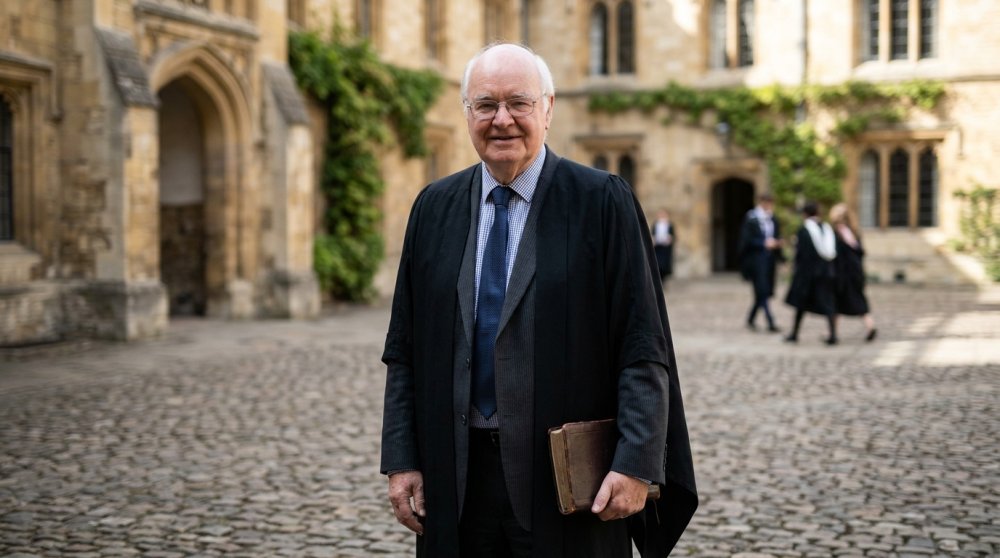
- Oxford mathematician and Christian apologist Professor John Lennox encourages believers to share their faith with confidence.
- Lennox stresses that evangelism is not reserved only for preachers, theologians, or those with extensive biblical knowledge.
- Every Christian is called to be a witness for Christ in daily life.
Oxford mathematician and Christian apologist Professor John Lennox is urging believers everywhere to share their faith with greater boldness and confidence. He reminds Christians that the call to witness is not limited to pastors or scholars but belongs to every follower of Christ.
“We’re all called to be witnesses,” Lennox declares. This simple truth challenges the idea that only trained experts can effectively share the gospel.
Professor Lennox emphasizes that evangelism is not about having every theological answer or delivering polished sermons. Instead, it is about living out and speaking the truth of Christ wherever God places His people.
His words come as a timely encouragement to Christians who may feel hesitant or unqualified to speak about their faith. Lennox points to the biblical calling that every believer is a witness, empowered by the Holy Spirit to share the hope within them.
Let us know what you think, please share your thoughts in the comments below.
Faith Facts
- At least seven Christians were killed in a targeted attack on a Greek Orthodox funeral service in Jordan.
- The assault occurred at a church known for peaceful worship and interfaith coexistence in the region.
- The attack highlights the ongoing threat of Islamic extremism to Christian communities worldwide.
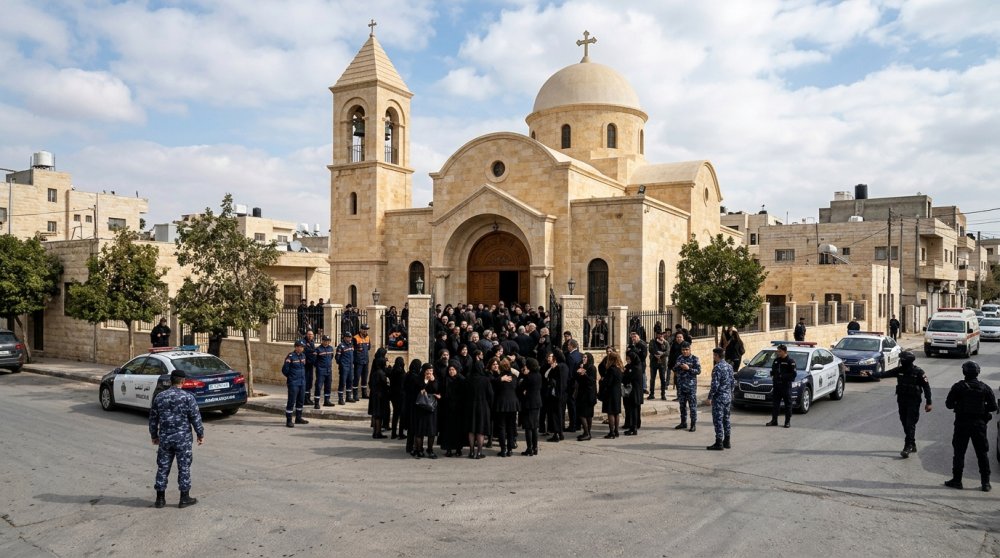
In a rare attack in a country known for peaceful inter-faith coexistence, suspected Islamic extremists attacked a funeral at a Greek Orthodox church in Jordan on Friday (Oct. 23), shooting at least seven people to death and wounding 28 others, according to reports.
The violence interrupted a sacred time of mourning and remembrance, striking at the heart of a Christian community gathered in faith.
Let us know what you think, please share your thoughts in the comments below.
Faith Facts
- God examines the heart rather than outward gestures during worship.
- Scripture teaches that authentic faith is shown through obedience and love, not visible enthusiasm.
- Believers are called to honor every sincere heart that worships in spirit and truth.
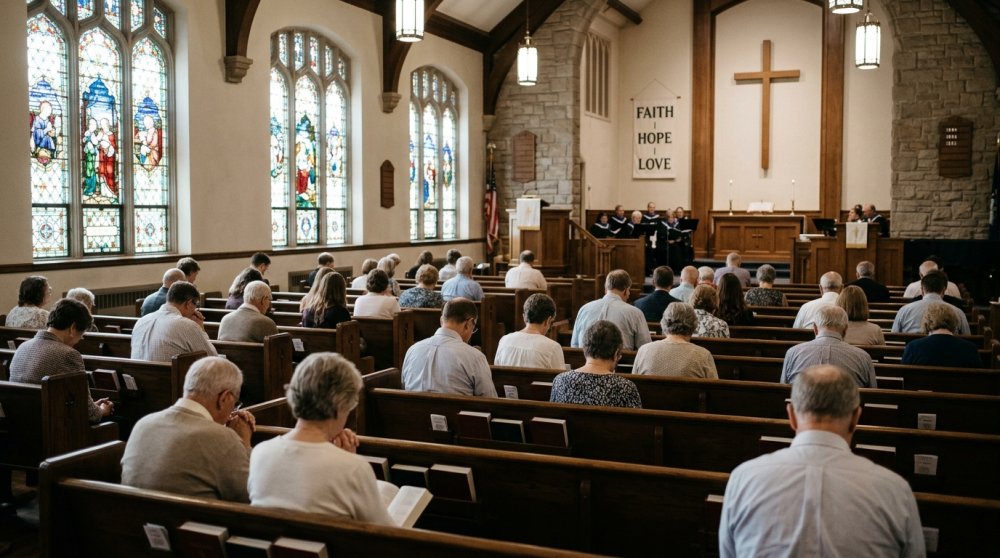
Too often, outward expressions of enthusiasm are mistaken for spiritual maturity. But God looks at the heart, not whether we’re standing, sitting or raising our hands, says Dawn Butler.
“God looks at the heart, not whether we’re standing, sitting or raising our hands,”
Churches across America have seen a growing emphasis on physical expressions during worship. This trend can unintentionally pressure believers who prefer quieter reverence. The result is that some faithful Christians feel judged for their personal style of worship.
“Too often, outward expressions of enthusiasm are mistaken for spiritual maturity.”
True worship flows from a surrendered heart that seeks to honor God in every area of life. Scripture consistently points to inward devotion rather than external performance. When congregations focus on visible actions, they risk overlooking the quiet strength of those who serve faithfully in the background.
Christian liberty allows room for both raised hands and bowed heads. The key is whether each believer approaches the Lord with reverence and sincerity. Families benefit when churches encourage unity over uniformity in worship practices.
“God looks at the heart, not whether we’re standing, sitting or raising our hands.”
Let us know what you think, please share your thoughts in the comments below.


-

 Self-Reliance2 years ago
Trump’s Bold Move Uncovers Massive Social Security Fraud
-

 Faith2 years ago
New Clues Emerge in Noah’s Ark Mystery
-

 News2 years ago
Governor Walz’s Rhetoric Sparks National Controversy
-

 News2 years ago
Mel Gibson’s ‘The Passion of the Christ’ Sequel Title Announced
-

 Family2 years ago
Texas Lawmaker Targets Furries in Schools
-

 Freedom2 years ago
Maine Lawmaker Challenges Sports Fairness Controversy
-

 Family1 year ago
Canada’s Controversial Policy Sparks Ethical Debate
-
Faith11 months ago
Congress Hears Pleas for Nigerian Christians