
Family
What Parents Risk When They Shield Children From Every Hardship


Faith Facts
- Christian parents increasingly prioritize comfort over character development, potentially undermining children’s spiritual resilience
- Scripture consistently shows God permits struggles to build faith rather than removing all obstacles from believers’ paths
- Shielding children from all difficulty may prevent them from developing the perseverance needed for lifelong faith and maturity
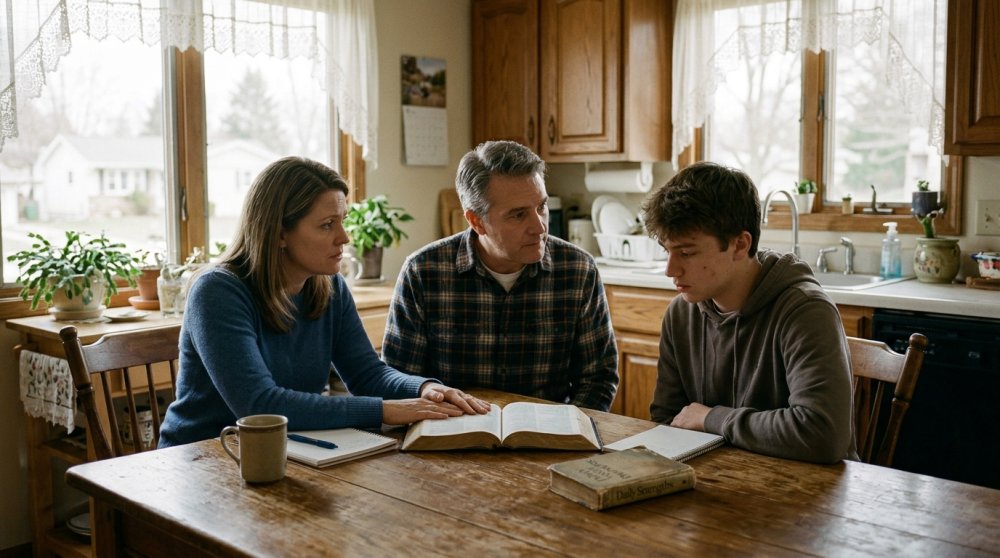
American parents face a troubling paradox in raising the next generation. While wanting the best for their children, many Christian families have shifted from preparing kids for life’s inevitable valleys to attempting to eliminate those valleys entirely. This well-intentioned approach carries spiritual and practical consequences that deserve careful examination.
God’s pattern throughout Scripture reveals a consistent truth: He doesn’t rescue His people from every difficulty but instead walks with them through trials. From Joseph’s imprisonment to David’s persecution to the apostles’ suffering, biblical heroes developed character through adversity, not in spite of it. Yet modern parenting often operates on a different principle—one that equates good parenting with maximum comfort and minimum struggle.
The cultural shift toward comfort-focused parenting has created what some observers call a crisis of resilience. Children raised in environments where every obstacle is removed, every disappointment is cushioned, and every challenge is smoothed over often reach adulthood unprepared for the realities of a fallen world. They may lack the spiritual and emotional muscles needed to persevere when faith is tested or when circumstances don’t align with their expectations.
This approach contradicts the developmental wisdom found in James 1:2-4, which instructs believers to “count it all joy when you fall into various trials, knowing that the testing of your faith produces patience.” The passage continues: “But let patience have its perfect work, that you may be perfect and complete, lacking nothing.” The completeness described here comes through tested faith, not protected comfort.
Parents who consistently intervene to prevent their children from experiencing natural consequences, disappointment, or appropriate struggle may inadvertently communicate dangerous messages. Children may come to believe they are fragile, that discomfort is abnormal, or that faith should produce a problem-free existence. These beliefs set the stage for spiritual crisis when real hardship inevitably arrives.
The distinction between harmful suffering and character-building challenge matters greatly. Parents are called to protect children from genuine harm, abuse, and dangers beyond their maturity level. But this protective instinct becomes problematic when extended to shield children from age-appropriate difficulties, failures, and the natural consequences of their choices.
Consider the difference between a parent who rescues a teenager from every social conflict versus one who provides support while allowing the young person to navigate relationship challenges. The first approach may provide immediate comfort but teaches dependency and avoidance. The second builds social resilience, problem-solving skills, and confidence in God’s presence during interpersonal trials.
Academic struggles present another arena where the comfort-focused approach shows its limitations. Parents who complete homework assignments, negotiate grade changes for work their child didn’t earn, or blame teachers for their student’s lack of effort may believe they’re advocating for their child. In reality, they’re preventing the development of personal responsibility, work ethic, and the ability to persevere through intellectual challenge—qualities essential for adult functioning and spiritual maturity.
The spiritual implications extend beyond practical skills. Children who never experience struggle while depending on God may never develop deep, personal faith. Their relationship with Christ risks remaining theoretical rather than tested and proven. Faith that hasn’t been challenged often proves shallow when life’s inevitable storms arrive.
This doesn’t mean parents should artificially create hardship or remain uninvolved in their children’s lives. Rather, it calls for wisdom in discerning when to step in and when to step back. It requires the courage to allow children to experience disappointment, failure, and difficulty while providing support, perspective, and direction toward God’s sufficiency.
The goal of Christian parenting isn’t to raise comfortable children but to raise faithful adults. This requires exposing young people to progressively greater challenges appropriate to their age and maturity, teaching them to seek God in difficulty, and modeling perseverance through our own trials. It means prioritizing character development over immediate happiness and eternal perspective over temporal comfort.
Parents modeling this approach demonstrate their own dependence on God through difficulties rather than projecting an image of problem-free Christian living. They share age-appropriate information about their own struggles and how faith sustains them. They pray with their children through challenges rather than simply praying problems away.
The cultural pressure to provide maximum comfort and advantage creates real tension for Christian parents. Comparison with families who seem to smooth every path for their children can generate guilt or second-guessing. Yet the biblical standard calls parents to a different measure of success—not whether their children avoided all difficulty but whether they developed faith that endures through difficulty.
Churches and Christian communities can support families in this challenging balance. Teaching that normalizes struggle as part of the Christian experience, mentoring relationships that allow young people to see mature faith tested and proven, and community support for parents making difficult decisions all contribute to raising resilient believers.
The cost of raising comfortable kids becomes apparent in young adults unprepared for college challenges, workplace demands, marriage difficulties, or spiritual doubts. Without the foundation of tested faith and developed perseverance, they often struggle to maintain Christian commitment when comfort gives way to reality. The short-term pain parents sought to avoid becomes long-term crisis as adult children lack the tools to navigate life’s valleys.
Scripture’s wisdom offers a better path. Proverbs 22:6 instructs parents to “train up a child in the way he should go,” recognizing that training involves practice, difficulty, correction, and progressive challenge. Hebrews 12:11 acknowledges that “no chastening seems to be joyful for the present, but painful; nevertheless, afterward it yields the peaceable fruit of righteousness to those who have been trained by it.”
The challenge for this generation of Christian parents is recovering the courage to allow appropriate struggle while maintaining loving support. It requires trusting God’s faithfulness to walk with our children through valleys rather than demanding He remove every valley from their path. It means accepting that the discomfort of watching our children struggle may be the very thing that produces the character and faith they’ll need for a lifetime of following Christ.
Let us know what you think, please share your thoughts in the comments below.

Faith Facts
- Scripture teaches parents to train up a child in the way he should go (Proverbs 22:6).
- The Bible repeatedly warns believers to guard their hearts and minds against corrupting influences (Proverbs 4:23).
- Christian families are called to set their minds on what is pure, lovely, and of good report (Philippians 4:8).
Christian authors are urging parents to think carefully about the entertainment their children consume. As millions of gamers prepare for the release of “Grand Theft Auto VI,” these leaders warn that video games featuring graphic violence and sexual immorality can influence how young people understand right and wrong.
Parents are reminded that their responsibility to shepherd their children’s hearts does not end when a new console is unboxed. The upcoming title continues the long-running series known for pushing boundaries of violent and sexual content. Many believers are asking whether such entertainment can be reconciled with a Christian home.
“The line between fantasy and reality is thinner than many parents realize,”
one author noted. Another warned that repeated exposure to graphic material can desensitize young hearts to sin and erode biblical convictions over time.
Christian families are being encouraged to consider alternatives that reinforce rather than undermine the values they teach at home. Discussions around the dinner table and family devotions can help children develop discernment about the media they encounter.
Let us know what you think, please share your thoughts in the comments below.

Faith Facts
- Wes Huff’s three-year-old daughter spent two nights in hospital after multiple seizures before returning home.
- The Canadian Christian apologist publicly credited God’s care during the family’s health trial.
- Traditional Christian teaching emphasizes trusting God through family illness and hardship.
Canadian Christian apologist Wes Huff has given an update on his young daughter’s recovery. The three-year-old spent two nights in the hospital after suffering multiple seizures. She has now returned home.
“We are so grateful to be home and to see her smiling again,” Huff stated.
Friends and supporters across Canada and the United States have lifted the family in prayer. Many have shared messages of encouragement, reminding the Huffs of God’s promise in Psalm 46:1 that He is “our refuge and strength, a very present help in trouble.”
“The outpouring of prayer has been overwhelming,” Huff added.
Throughout the ordeal, the family leaned on Scripture and church community. This approach reflects a long-standing Christian tradition of turning to faith and fellowship when facing medical uncertainty.
Let us know what you think, please share your thoughts in the comments below.
Faith Facts
- Scripture calls parents to train up children in the way they should go, yet also warns against casting pearls before swine when relationships become destructive.
- Christian teaching emphasizes both honoring father and mother and the reality that adult children may choose rebellion or reconciliation.
- Traditional American values uphold the God-given right of individuals to steward their property according to conscience and biblical principle.
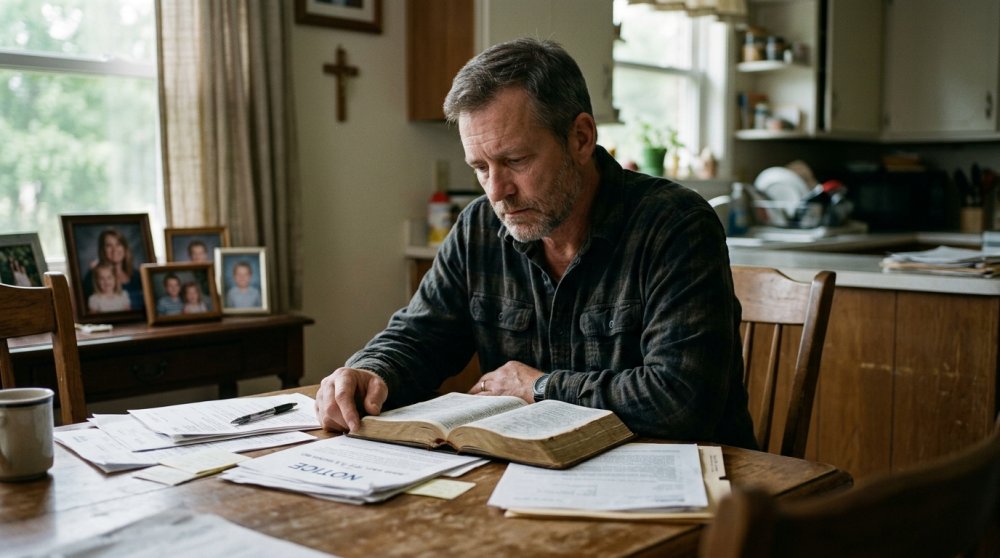
The pain of family estrangement cuts deep into the heart of any believing parent. When a once-close child refuses contact, holidays turn hollow and phone calls go unanswered. Many mothers and fathers wrestle silently with grief that never receives a funeral.
Financial questions quickly surface once emotional wounds are acknowledged. Parents wonder whether an estranged adult child still deserves the inheritance that once seemed certain. Some quietly begin the difficult process of updating wills and trusts to reflect current realities.
Christian counselors often urge families to seek biblical mediation before making permanent legal changes. Reconciliation remains the goal whenever safety allows, yet repeated rejection sometimes leaves parents with no other choice.
“Honor your father and your mother” remains a commandment, yet Scripture also records painful examples of adult children who turned against their parents. The tension between these truths requires prayerful wisdom rather than easy answers.
Legal experts note that competent adults possess the freedom to distribute assets according to their own convictions. Removing a child from an estate plan does not require public explanation, though families should document decisions carefully to avoid future contests.
Some parents choose to leave a modest token amount to an estranged child rather than omit them entirely. This approach may reduce legal challenges while still honoring the principle that inheritance represents both blessing and responsibility.
Others direct resources toward grandchildren or ministries that reflect their lifelong values. Such decisions allow parents to continue supporting what they believe honors God even when direct family relationships have fractured.
Financial advisors recommend reviewing beneficiary designations on retirement accounts, life insurance policies, and payable-on-death accounts. These documents often override wills and require separate attention when family circumstances change.
Ultimately, Christian parents facing estrangement must balance compassion with accountability. They can extend grace while recognizing that repeated patterns of rejection may warrant difficult but necessary boundaries in both relationship and resources.
Let us know what you think, please share your thoughts in the comments below.


-

 Self-Reliance2 years ago
Trump’s Bold Move Uncovers Massive Social Security Fraud
-

 Faith2 years ago
New Clues Emerge in Noah’s Ark Mystery
-

 News2 years ago
Governor Walz’s Rhetoric Sparks National Controversy
-

 News2 years ago
Mel Gibson’s ‘The Passion of the Christ’ Sequel Title Announced
-

 Family2 years ago
Texas Lawmaker Targets Furries in Schools
-

 Freedom2 years ago
Maine Lawmaker Challenges Sports Fairness Controversy
-

 Family1 year ago
Canada’s Controversial Policy Sparks Ethical Debate
-
Faith12 months ago
Congress Hears Pleas for Nigerian Christians