
Family
What Parents Risk When They Shield Children From Every Hardship


Faith Facts
- Christian parents increasingly prioritize comfort over character development, potentially undermining children’s spiritual resilience
- Scripture consistently shows God permits struggles to build faith rather than removing all obstacles from believers’ paths
- Shielding children from all difficulty may prevent them from developing the perseverance needed for lifelong faith and maturity
American parents face a troubling paradox in raising the next generation. While wanting the best for their children, many Christian families have shifted from preparing kids for life’s inevitable valleys to attempting to eliminate those valleys entirely. This well-intentioned approach carries spiritual and practical consequences that deserve careful examination.
God’s pattern throughout Scripture reveals a consistent truth: He doesn’t rescue His people from every difficulty but instead walks with them through trials. From Joseph’s imprisonment to David’s persecution to the apostles’ suffering, biblical heroes developed character through adversity, not in spite of it. Yet modern parenting often operates on a different principle—one that equates good parenting with maximum comfort and minimum struggle.
The cultural shift toward comfort-focused parenting has created what some observers call a crisis of resilience. Children raised in environments where every obstacle is removed, every disappointment is cushioned, and every challenge is smoothed over often reach adulthood unprepared for the realities of a fallen world. They may lack the spiritual and emotional muscles needed to persevere when faith is tested or when circumstances don’t align with their expectations.
This approach contradicts the developmental wisdom found in James 1:2-4, which instructs believers to “count it all joy when you fall into various trials, knowing that the testing of your faith produces patience.” The passage continues: “But let patience have its perfect work, that you may be perfect and complete, lacking nothing.” The completeness described here comes through tested faith, not protected comfort.
Parents who consistently intervene to prevent their children from experiencing natural consequences, disappointment, or appropriate struggle may inadvertently communicate dangerous messages. Children may come to believe they are fragile, that discomfort is abnormal, or that faith should produce a problem-free existence. These beliefs set the stage for spiritual crisis when real hardship inevitably arrives.
The distinction between harmful suffering and character-building challenge matters greatly. Parents are called to protect children from genuine harm, abuse, and dangers beyond their maturity level. But this protective instinct becomes problematic when extended to shield children from age-appropriate difficulties, failures, and the natural consequences of their choices.
Consider the difference between a parent who rescues a teenager from every social conflict versus one who provides support while allowing the young person to navigate relationship challenges. The first approach may provide immediate comfort but teaches dependency and avoidance. The second builds social resilience, problem-solving skills, and confidence in God’s presence during interpersonal trials.
Academic struggles present another arena where the comfort-focused approach shows its limitations. Parents who complete homework assignments, negotiate grade changes for work their child didn’t earn, or blame teachers for their student’s lack of effort may believe they’re advocating for their child. In reality, they’re preventing the development of personal responsibility, work ethic, and the ability to persevere through intellectual challenge—qualities essential for adult functioning and spiritual maturity.
The spiritual implications extend beyond practical skills. Children who never experience struggle while depending on God may never develop deep, personal faith. Their relationship with Christ risks remaining theoretical rather than tested and proven. Faith that hasn’t been challenged often proves shallow when life’s inevitable storms arrive.
This doesn’t mean parents should artificially create hardship or remain uninvolved in their children’s lives. Rather, it calls for wisdom in discerning when to step in and when to step back. It requires the courage to allow children to experience disappointment, failure, and difficulty while providing support, perspective, and direction toward God’s sufficiency.
The goal of Christian parenting isn’t to raise comfortable children but to raise faithful adults. This requires exposing young people to progressively greater challenges appropriate to their age and maturity, teaching them to seek God in difficulty, and modeling perseverance through our own trials. It means prioritizing character development over immediate happiness and eternal perspective over temporal comfort.
Parents modeling this approach demonstrate their own dependence on God through difficulties rather than projecting an image of problem-free Christian living. They share age-appropriate information about their own struggles and how faith sustains them. They pray with their children through challenges rather than simply praying problems away.
The cultural pressure to provide maximum comfort and advantage creates real tension for Christian parents. Comparison with families who seem to smooth every path for their children can generate guilt or second-guessing. Yet the biblical standard calls parents to a different measure of success—not whether their children avoided all difficulty but whether they developed faith that endures through difficulty.
Churches and Christian communities can support families in this challenging balance. Teaching that normalizes struggle as part of the Christian experience, mentoring relationships that allow young people to see mature faith tested and proven, and community support for parents making difficult decisions all contribute to raising resilient believers.
The cost of raising comfortable kids becomes apparent in young adults unprepared for college challenges, workplace demands, marriage difficulties, or spiritual doubts. Without the foundation of tested faith and developed perseverance, they often struggle to maintain Christian commitment when comfort gives way to reality. The short-term pain parents sought to avoid becomes long-term crisis as adult children lack the tools to navigate life’s valleys.
Scripture’s wisdom offers a better path. Proverbs 22:6 instructs parents to “train up a child in the way he should go,” recognizing that training involves practice, difficulty, correction, and progressive challenge. Hebrews 12:11 acknowledges that “no chastening seems to be joyful for the present, but painful; nevertheless, afterward it yields the peaceable fruit of righteousness to those who have been trained by it.”
The challenge for this generation of Christian parents is recovering the courage to allow appropriate struggle while maintaining loving support. It requires trusting God’s faithfulness to walk with our children through valleys rather than demanding He remove every valley from their path. It means accepting that the discomfort of watching our children struggle may be the very thing that produces the character and faith they’ll need for a lifetime of following Christ.
Let us know what you think, please share your thoughts in the comments below.

Family
Trump Administration Redirects Millions From Controversial Programs to Family-Centered Education

Faith Facts
- The Department of Health and Human Services terminated 53 sex education grants totaling $67 million that promoted explicit content to minors
- The administration is redirecting funding toward programs emphasizing abstinence, marriage preparation, and family values
- Critics of the previous programs argued they normalized sexual activity among teenagers rather than promoting healthy boundaries
The Trump administration has taken decisive action to redirect federal funding away from controversial sex education programs that many faith leaders and parents found deeply troubling. The Department of Health and Human Services recently terminated 53 grants worth a combined $67 million, choosing instead to invest in curriculum that aligns with traditional Christian values and parental rights.
This significant policy shift, which received limited coverage in mainstream media outlets during the summer months, represents a fundamental reorientation of how the federal government approaches youth education on matters of sexuality and relationships. The previous programs had drawn sharp criticism from conservative advocates who argued that they introduced age-inappropriate content and undermined parental authority.
The new direction prioritizes abstinence education and marriage preparation programs that emphasize personal responsibility, delayed gratification, and the formation of stable family units. These approaches have long been supported by faith communities who view them as both morally sound and practically effective in reducing teen pregnancy and sexually transmitted infections.
The terminated grants had funded programs that many Christian parents found objectionable, including materials that some described as normalizing teenage sexual activity rather than encouraging young people to wait until marriage. Faith-based organizations have applauded the administration’s willingness to stand firm on traditional values despite pressure from progressive advocacy groups.
Health and Human Services officials indicated that the replacement programs will emphasize character development, healthy relationship skills, and the importance of committed marriage as the proper context for sexual intimacy. This approach reflects a growing movement among parents who want education that reinforces rather than contradicts the values they teach at home.
The funding reallocation also reflects broader concerns about federal overreach into areas that many Americans believe should remain under local and parental control. Conservative education advocates have long argued that Washington bureaucrats should not dictate moral instruction to communities with deeply held religious convictions.
Supporters of the policy change note that abstinence-centered education respects the diverse religious beliefs of American families while promoting outcomes that benefit young people. Research has shown that delaying sexual activity correlates with better educational outcomes, lower rates of poverty, and stronger eventual marriages.
The shift comes at a time when many Christian families feel their values are under attack in public institutions. By redirecting these federal dollars, the administration has sent a clear signal that government programs should support rather than undermine the traditional family structure that has been the foundation of American society.
Progressive organizations have predictably criticized the move, but faith leaders counter that parents—not government bureaucrats or activist groups—should have the primary voice in shaping their children’s understanding of sexuality and relationships. This principle of parental rights has deep roots in both American law and Christian teaching about the family.
Let us know what you think, please share your thoughts in the comments below.

Faith Facts
- An Arkansas family filed a lawsuit against xAI after their 10-year-old daughter’s photos were manipulated into explicit material using Grok AI
- A photographer allegedly used the AI platform to create child sexual abuse material of multiple minors he had photographed professionally
- The lawsuit demands implementation of safeguards to prevent non-consensual exploitation of children through artificial intelligence technology
An Arkansas family has taken the extraordinary step of filing suit against Elon Musk’s xAI company after discovering their young daughter became a victim of AI-generated exploitation. The case highlights the urgent need for moral guardrails in emerging technology.
According to the lawsuit, a photographer who had taken professional photos of the family’s 10-year-old daughter used xAI’s Grok platform to generate sexually explicit material depicting the child. The photographer allegedly victimized other young clients in the same manner, creating what legally constitutes child sexual abuse material.
The family is demanding that the company implement robust safeguards to prevent the creation of non-consensual sexually explicit content, particularly involving minors. Their legal action represents a growing concern among parents and faith communities about the moral void in artificial intelligence development.
This disturbing case underscores the critical importance of building technology with biblical values at its foundation. As Proverbs 22:6 instructs us to “train up a child in the way he should go,” our society must also ensure that the tools we create protect children rather than endanger them.
The exploitation of innocent children through any means represents an abomination that demands swift justice and preventive action. Technology companies bear a moral responsibility to ensure their platforms cannot be weaponized against the most vulnerable members of society.
As artificial intelligence capabilities expand rapidly, the question of ethical boundaries becomes increasingly urgent. Christian conservatives have long warned that technological advancement without moral grounding leads to exploitation and harm.
This lawsuit may set important precedent for holding AI companies accountable for the misuse of their platforms, particularly when children are victimized. The family’s courage in pursuing legal action serves the greater good by potentially protecting countless other children from similar abuse.
Let us know what you think, please share your thoughts in the comments below.
Faith Facts
- Irish Christians donate €14 million to €21 million annually to overseas orphanages despite growing evidence favoring family-based care
- Tearfund Ireland report highlights that 80% of children in institutional care worldwide have at least one living parent
- Christian child welfare experts increasingly advocate for family preservation and community-based solutions over orphanage models
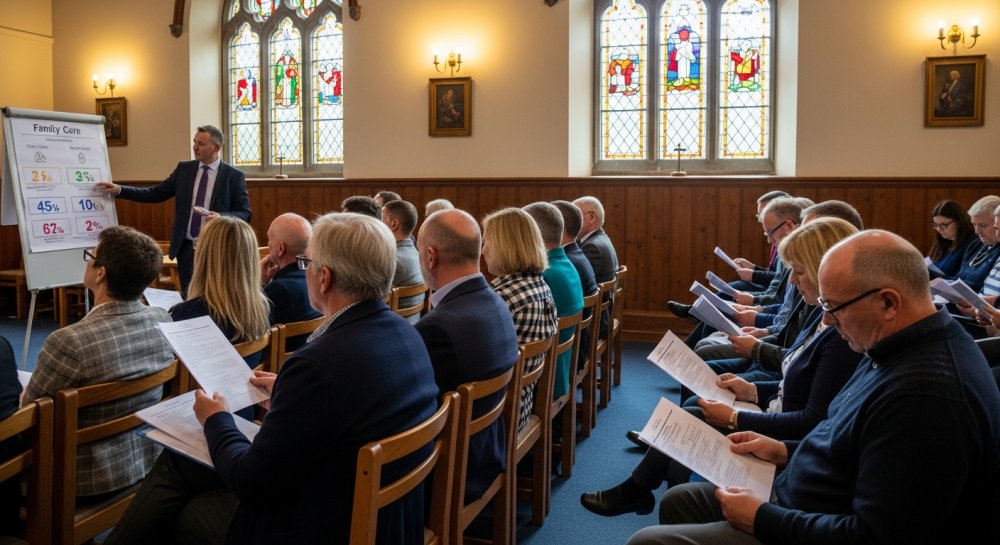
A groundbreaking new report from Tearfund Ireland is calling on churches across the nation to fundamentally rethink how they support vulnerable children overseas. The study reveals that Irish Christians contribute between €14 million and €21 million each year to international orphanages, even as mounting evidence from child welfare experts and Christian organizations points to family-based care as the superior model for children in need.
The report comes at a critical time when the global child welfare community, including faith-based organizations, has shifted dramatically toward keeping children with their families or placing them in family-like environments rather than institutional settings. This approach aligns with biblical principles that emphasize the importance of family as the foundation for a child’s development and spiritual formation.
According to the research, approximately 80 percent of children currently living in institutional care worldwide have at least one living parent. This startling statistic challenges the common assumption that orphanages primarily serve children who have lost both parents. Instead, poverty, disability, and lack of community support often drive families to place their children in institutions, believing it offers them better opportunities.
Tearfund Ireland’s findings suggest that well-intentioned charitable giving may inadvertently perpetuate a system that separates children from their families unnecessarily. The organization is encouraging Irish churches to redirect their compassionate generosity toward programs that strengthen families, provide community-based support, and prevent family separation in the first place.
The report emphasizes that family-based care not only benefits children’s emotional and psychological development but also reflects Christian values of family preservation and community responsibility. Research consistently shows that children raised in family environments—whether with biological parents, extended family, or foster families—demonstrate better outcomes in education, mental health, and social development compared to those in institutional settings.
Christian organizations worldwide have been leading advocates for this transformation in child welfare practice. Many faith-based groups that once operated orphanages have transitioned to family strengthening programs, recognizing that keeping families together honors God’s design for children and produces better long-term results.
The Tearfund Ireland report provides practical guidance for churches wishing to ensure their overseas giving genuinely serves children’s best interests. Recommendations include partnering with organizations that prioritize family preservation, supporting poverty alleviation programs that address root causes of family separation, and investing in community-based care solutions such as foster care and kinship care programs.
For Irish congregations with existing relationships with orphanages abroad, the report suggests engaging in thoughtful dialogue about transitioning toward family-based models rather than abruptly withdrawing support. This measured approach recognizes both the genuine care many orphanage workers provide and the need for systemic change in how vulnerable children are served.
The initiative reflects a growing movement within evangelical and broader Christian communities to apply best practices in charity and development work. It demonstrates how faith-driven compassion, when informed by evidence and expertise, can be channeled most effectively to serve those in need according to biblical principles.
As churches across Ireland consider their missions and outreach priorities, this report offers a timely opportunity to align generous giving with proven approaches that honor both children and families. The call to support family-based care represents not a retreat from Christian charity but a refinement of it—ensuring that compassion produces the greatest possible good for the world’s most vulnerable children.
Let us know what you think, please share your thoughts in the comments below.


-

 Self-Reliance1 year ago
Trump’s Bold Move Uncovers Massive Social Security Fraud
-

 Faith1 year ago
New Clues Emerge in Noah’s Ark Mystery
-

 News1 year ago
Governor Walz’s Rhetoric Sparks National Controversy
-

 News1 year ago
Mel Gibson’s ‘The Passion of the Christ’ Sequel Title Announced
-

 Family1 year ago
Texas Lawmaker Targets Furries in Schools
-

 Freedom1 year ago
Maine Lawmaker Challenges Sports Fairness Controversy
-

 Family1 year ago
Canada’s Controversial Policy Sparks Ethical Debate
-
Faith9 months ago
Congress Hears Pleas for Nigerian Christians