Faith
What One Renowned Evangelist Wishes He Could Tell His Younger Self
Faith Facts
- Biblical wisdom cannot be acquired quickly but is forged through years of faithful experience and spiritual growth
- Though we cannot change our past, we can share hard-earned spiritual insights with the next generation of believers
- Godly counsel passed down through generations strengthens the church and preserves Christian values in society
The pursuit of godly wisdom has always been a lifelong journey, not a destination reached overnight. As Scripture reminds us in Proverbs, “The fear of the Lord is the beginning of wisdom, and knowledge of the Holy One is understanding.”
We live in an age where instant gratification has become the norm, yet spiritual maturity cannot be rushed or manufactured. It comes only through walking closely with the Lord through seasons of testing, trial, and triumph.
While none of us can turn back the clock to speak to our younger selves, we carry a sacred responsibility to mentor the young people God has placed in our paths. The wisdom we’ve gained through decades of faithful living—the lessons learned from both victories and failures—holds immeasurable value for those just beginning their journey.
This intergenerational transfer of biblical wisdom has always been God’s design for His church. From Moses to Joshua, from Paul to Timothy, the pattern is clear: older believers are called to invest in younger ones, passing down not just knowledge but lived experience rooted in God’s unchanging truth.
In today’s cultural climate, where traditional Christian values are under constant assault and young people face unprecedented pressures, this mentoring role becomes even more critical. Our youth need guides who can point them to timeless truth rather than trendy philosophies.
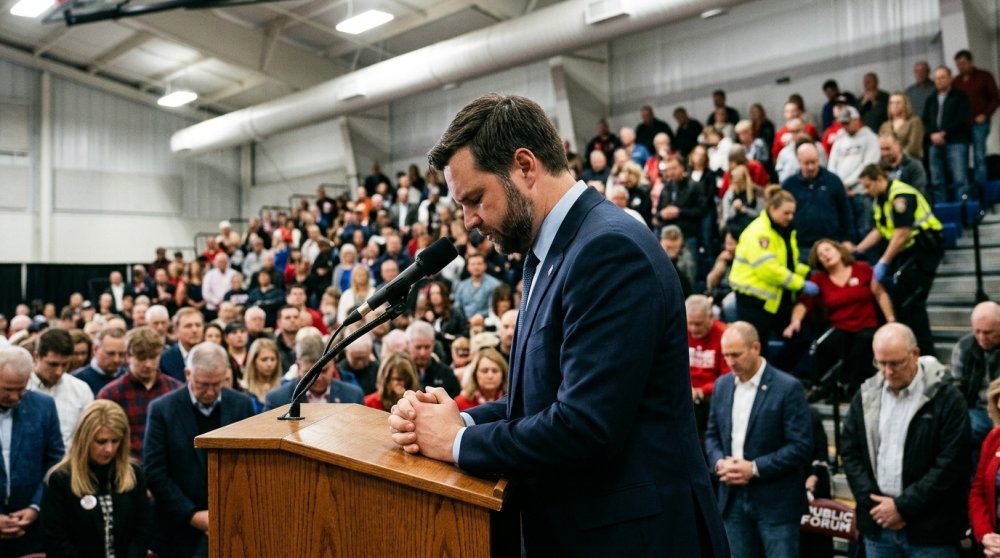
The counsel of seasoned believers—those who have weathered storms, remained faithful through cultural shifts, and seen God’s faithfulness in every season—carries a weight that no amount of education or social media influence can replicate. This is wisdom on par with that of Solomon, tested and proven through real-world application.
As American Christians, we must prioritize investing in the next generation, ensuring that our children and grandchildren don’t have to learn every hard lesson from scratch. The preservation of our faith, our families, and our freedoms depends on our willingness to share what we’ve learned.
Let us know what you think, please share your thoughts in the comments below.
Faith
Somali Woman Hospitalized After Family Attack Over Christian Faith
Faith Facts
- A 22-year-old Christian woman is recovering in a hospital in Somalia’s Lower Juba Region after being beaten by Muslim family members for her faith in Christ.
- The violent attack represents ongoing persecution faced by Christian converts in Somalia, where Islamic extremism dominates and religious freedom is severely restricted.
- The incident highlights the courage of believers who face grave danger for following Jesus in hostile regions.
A young Christian woman is fighting for recovery after a brutal assault that has once again exposed the dangers facing believers in one of the world’s most hostile nations for Christianity.
The 22-year-old woman remains hospitalized in Somalia’s Lower Juba Region, suffering from serious injuries sustained when her own Muslim relatives attacked her for embracing Jesus Christ. Sources close to the situation have confirmed the attack stemmed directly from her decision to convert to Christianity.
Somalia ranks among the most dangerous countries in the world for Christians, where converting from Islam can result in family violence, social ostracism, or even death. The nation operates under strict Islamic law, and al-Shabaab militants continue to target Christians throughout the country.
Despite these threats, believers like this young woman demonstrate remarkable courage in standing firm in their faith. Her story serves as a sobering reminder of the price many Christians pay globally simply for professing the name of Jesus.
The Lower Juba Region, where the attack occurred, has long been a stronghold for Islamic extremists who view Christianity as a threat to their religious dominance. Christian converts in the area often must worship in complete secrecy to avoid detection by family members or militant groups.
American Christians enjoy unprecedented religious freedom, yet believers around the world face beatings, imprisonment, and death for their faith. This young woman’s suffering should inspire prayer and action from the global Church.
As she recovers from her injuries, she joins countless other persecuted believers who have chosen to follow Christ despite knowing the potential consequences. Her witness stands as a testament to the transformative power of the Gospel, even in the darkest corners of the world.
Let us know what you think, please share your thoughts in the comments below.
Faith
Reality Star Turned Mayoral Candidate Credits God for Surprising Political Rise
Faith Facts
- Spencer Pratt, known from reality TV show “The Hills,” is running for mayor of Los Angeles and has publicly credited God for his newfound political calling.
- Pratt has spoken openly about his Christian faith multiple times throughout his campaign, marking a dramatic shift from his former reality TV persona.
- The candidate has emphasized prayer, divine guidance, and Christian values as central to his mayoral campaign and vision for Los Angeles.
Spencer Pratt, the former reality television personality best known for his appearances on “The Hills,” is making waves in the Los Angeles mayoral race with a campaign centered on faith and traditional values. The candidate has emerged as an unexpected contender, openly attributing his political aspirations to divine calling.
Throughout his campaign, Pratt has broken from his previous public image to speak candidly about his Christian faith. His willingness to publicly acknowledge God’s role in his life represents a refreshing departure from the typical secular political discourse that dominates California politics.
On multiple occasions, Pratt has shared how prayer and faith have guided his decision to enter public service. The candidate has described feeling called by God to step into this new role, seeking to bring Christian principles to city leadership during a time when Los Angeles faces unprecedented challenges including homelessness, crime, and economic uncertainty.
Pratt’s transformation from reality TV personality to faith-focused political candidate demonstrates the power of redemption and renewal. His public testimony about relying on God’s guidance resonates with voters who are hungry for authentic leadership rooted in timeless values rather than political expediency.
The mayoral candidate has emphasized that his faith isn’t just personal but will inform his policy decisions and vision for the city. He has spoken about the need for moral clarity in addressing Los Angeles’s most pressing problems, arguing that solutions must be grounded in principles that honor human dignity and strengthen families.
His campaign represents a growing movement of Christians who are refusing to be silent in the public square. By openly discussing his faith journey, Pratt is demonstrating that religious conviction and public service are not mutually exclusive but rather complementary callings.
Pratt’s willingness to give glory to God publicly, even in a political environment that often marginalizes religious expression, shows courage and conviction. His approach stands in stark contrast to politicians who hide their faith or relegate it to private life.
As the race continues, Pratt’s faith-centered campaign offers Los Angeles voters an alternative to the failed policies and secular worldview that have contributed to the city’s current crisis. Whether he ultimately wins or not, his bold witness is already making an impact by normalizing faith-based leadership in the public arena.
Let us know what you think, please share your thoughts in the comments below.
Faith
How One Greek Church Reaches Thousands by Simply Opening Its Doors
Faith Facts
- The Glyfada Church of Christ in Athens holds nine services weekly in five languages to reach refugees from around the world
- Greece serves as Europe’s gateway for hundreds of thousands of refugees annually from Africa, the Middle East, and war-torn nations
- Ministers focus on rapid discipleship, knowing many refugees will relocate within months, preparing them to join churches across Europe
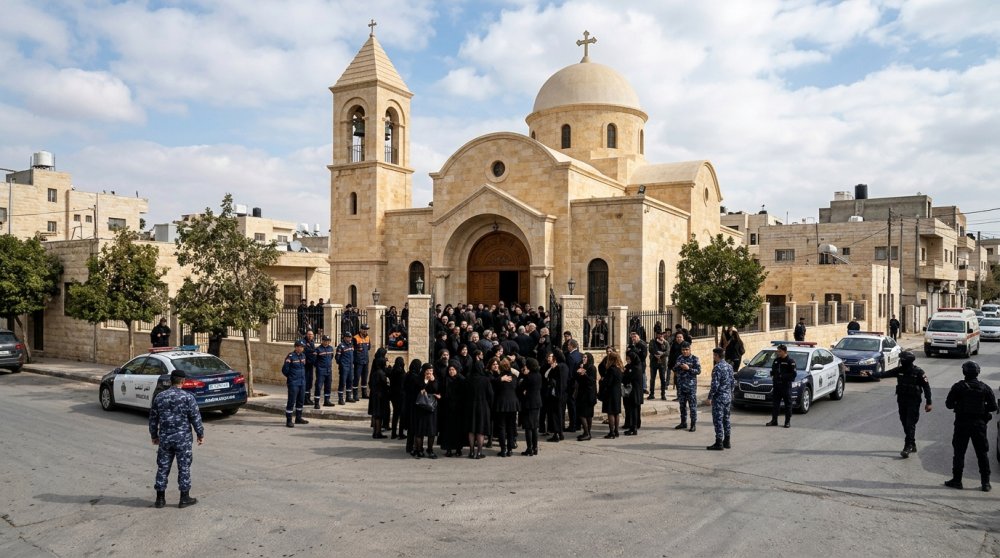
ATHENS, GREECE — Jesus commanded His followers to “go and make disciples of all nations” (Matthew 28:19). But in this ancient European capital with deep biblical roots, the nations are coming to them — often as refugees fleeing persecution and war.
Known as a bridge to Europe, Greece has become the most accessible entry point for refugees from Africa and the Middle East. Hundreds of thousands of people of different nationalities pass through the country each year, presenting Churches of Christ with an unprecedented opportunity to share the Gospel with people from closed nations.
The Glyfada Church of Christ adapted to this influx by offering nine services during the week in five languages: Greek, Russian, English, Farsi and Albanian. While some refugees stay in Athens for years, others remain only for months, forcing ministers and missionaries to completely rethink their approach to evangelism and discipleship.
“You’re going to think about, ‘I have this short time so I need to be prepared,'” said Ebrahim Fatahi, a member who helps lead the Farsi and Greek services.
“How to approach them, how to bring them to the church, how to teach them enough that they can understand what is the plan of salvation, to be saved. Then when they leave, to tell them it’s important to be part of the church and then find them a church in other parts of Europe.”
Fatahi himself arrived in Greece in 2017 through Samos Island as a refugee from Iran. Through worshiping and now ministering at the Glyfada congregation, he has witnessed firsthand the dramatic shifts in refugee populations. When Fatahi started worshiping with the church, anywhere from 80 to 150 people attended the Farsi-speaking service.
Attendance — and the general population of Farsi-speaking refugees in Athens — decreased in 2019 partially because many refugees from the 2015 European migrant crisis received papers to move to other countries. Today, Fatahi said, the average attendance at the Farsi service is between 30 and 40 members.
When refugees who become Christians leave for other countries, it is a bittersweet experience for the preachers at Glyfada. They do not witness firsthand the continued growth of new believers, but they do hear reports about what those Christians are accomplishing when they settle in other nations.
“It’s a joy, and it’s sad, and sometimes it’s strange,” Fatahi said.
Overcoming Challenges and Change
Missionaries Keith and Tricia Young, who worship at the Glyfada congregation, learned to adapt to the flow of refugees through Athens when they arrived in October 2021. The couple expected to work exclusively with Farsi-speaking refugees, but when they arrived, there were large numbers of Ukrainian refugees because of the Russia-Ukraine conflict.
The Youngs adapted and began working with the Ukrainian refugees at the church. They later connected with nonprofit Hellenic Ministries and began serving Farsi-speaking refugees in the community.
“We never dreamed that we’d be working with the Ukrainian outreach and the Farsi,” Tricia said.
“The Ukrainian outreach has taken off so much with so many people being baptized and starting to learn more about Jesus.”
The couple attends the Greek, Russian/Ukrainian and Farsi-speaking worship services but acknowledged it has been difficult for all the small groups to feel like one unified congregation. However, Young said that since the COVID-19 pandemic, leaders have encouraged interaction between the ethnic groups, and there is more crossover now. The smallest group at Glyfada is actually the Greek population, but Young said this gives the church more opportunities to evangelize.
“It gives the ministers here other audiences that might be more receptive,” Young said.
“The refugee population has been the most receptive, especially the Iranian population. They were unhappy with what they had at home and they’re looking for something better.”
Tricia Young, who teaches the children’s class during the Farsi service, said some of the children were especially receptive to the Bible lessons because they could personally relate to the stories of displacement and seeking refuge.
“It was traumatic for them when we talked about Jesus. This is the story they know, having to travel, going to Egypt to be in a safe place. They knew that story. It was their story, too.”
The Ebb and Flow of Refugees
The refugees with whom Fatahi and the Youngs work represent a fraction of the hundreds of thousands of people seeking refuge in Greece. According to the International Rescue Committee, there are 214,000 refugees and 20,000 asylum-seekers in the country this year.
Major world events directly influence the number of refugees — and the countries from which they primarily come. Fatahi first witnessed the effects of the 2015 European migrant crisis, when over 821,000 refugees arrived in Europe through Greece.
A few years later, when the COVID-19 pandemic hit, Athens Institute for Education and Research President Gregory T. Papanikos said the government implemented strict border controls, temporarily reducing the flow of refugees and migrants. Next, the Ukrainian refugee population in Greece increased dramatically with the escalation of the Russia-Ukraine war. Papanikos wrote in an October 2022 paper that the Greek government welcomed large numbers of Ukrainian refugees — about 32,600 arrived from January to May 2022 alone.
However, that meant the number of refugees accepted from other countries decreased proportionally. One of the most recent world conflicts that could affect refugees in Greece is the war between Iran and joint U.S.-Israeli forces. However, data from the Ministry of Migration in Asylum does not indicate a significant increase in Iranian refugees yet.
“To my knowledge, there is no clear evidence of (Iranian outmigration because of the war) or at least no official record,” Papanikos said.
“Current reports from international organizations suggest that, despite significant internal displacement within Iran, there has not been a major cross-border exodus so far.”
Leonid Ivanov, Hellenic Ministries’ director of compassion ministry, has served with the nonprofit since 2017 and also observed the flow of refugees through working in the community. Ivanov, who came to Athens as a refugee from eastern Ukraine, said he remembered the years when refugees in Athens were primarily Farsi-speaking, and the nonprofit served over 500 meals daily. Then, he said, the majority were African refugees, and today, there are many Ukrainian refugees.
“The most rewarding (thing) about ministering to the refugee community is to see the transformation in the lives of refugees. Of course, I mean first the spiritual transformation. … It’s great to see how Muslims become Christian. It’s good to see how people can integrate into society, into Athens.”
Whether refugees choose to stay in Greece, like Fatahi, or if they only remain for a few months, the ministers at Glyfada serve however they can — by helping with housing accommodations, food distribution and, most importantly, sharing the Gospel of Jesus Christ.
“Here, they find fellowship,” Glyfada minister Dino Roussos said.
“It’s not just salvation for eternity, which is the most important, but while we’re on this earth, we need to have good fellowship and a good place. This is a refuge for those who are hurting and trying to find the truth.”
Let us know what you think, please share your thoughts in the comments below.
-
Self-Reliance1 year agoTrump’s Bold Move Uncovers Massive Social Security Fraud
-

Faith1 year agoNew Clues Emerge in Noah’s Ark Mystery
-

News1 year agoGovernor Walz’s Rhetoric Sparks National Controversy
-

News1 year agoMel Gibson’s ‘The Passion of the Christ’ Sequel Title Announced
-

Family1 year agoTexas Lawmaker Targets Furries in Schools
-

Freedom1 year agoMaine Lawmaker Challenges Sports Fairness Controversy
-

Family1 year agoCanada’s Controversial Policy Sparks Ethical Debate
-
Faith6 months ago
Congress Hears Pleas for Nigerian Christians