
Faith
What Christian Parents Are Quietly Preparing For This June


Faith Facts
- Christian parents face increasing pressure during June as schools and public institutions promote ideologies contrary to Biblical teaching on gender and sexuality
- Many families report feeling forced to choose between participating in public celebrations that conflict with their faith or facing social ostracism and accusations of intolerance
- The cultural push during pride month creates a false binary that dismisses the Christian call to love all people while upholding God’s design for human sexuality
Each June, many Christian parents find themselves carrying a weight that few people fully understand. As rainbow flags appear on storefronts, government buildings, and classroom doors, faithful families navigate an increasingly challenging landscape where their deeply held beliefs are portrayed as hateful rather than rooted in Scripture and love.
The tension is real and growing. Christian parents want to raise children who show kindness and respect to every person, recognizing that all are made in the image of God.
Yet they also seek to teach their sons and daughters what the Bible says about God’s design for marriage, family, and human identity. These are not competing values—they flow from the same source of faith. But the culture insists on presenting them as mutually exclusive.
During pride month, this false choice becomes especially pronounced. Schools host celebrations that frame traditional Christian teaching as discrimination. Corporations flood social media with messaging that equates affirmation of LGBTQ ideology with basic human decency.
Parents who quietly decline to participate, or who seek to opt their children out of certain activities, often face sharp criticism—not just from strangers, but sometimes from neighbors, extended family, and even fellow churchgoers who have absorbed the prevailing cultural narrative.
The reality is that Christian parents are not opposed to people. They are committed to truth—the truth revealed in God’s Word about who we are, why we were created, and how we are called to live. This commitment does not stem from fear or hatred, but from a desire to honor the One who made us and knows what is best for human flourishing.
Yet the public conversation rarely makes space for this perspective. Instead, Christians are presented with a binary: either celebrate pride month in full, or be labeled as bigots. This is the false choice—one that ignores the possibility of loving people while disagreeing with the ideologies being promoted.
Faithful parents can and do love their neighbors, including those who identify as LGBTQ. They can teach their children to treat everyone with dignity and respect. But they should not be forced to affirm beliefs that contradict Scripture in order to prove that love.
The Bible offers a third way—one that transcends the culture’s either/or framework. It calls believers to speak the truth in love, to stand firm in conviction while showing grace, and to trust that God’s ways are higher than the world’s ways. This is not an easy path, especially in a month where the pressure to conform is relentless.
Christian families navigating June need support, not judgment. They need churches that equip them with biblical clarity and courage. They need communities of faith that affirm their right to raise their children according to their convictions without being shamed or sidelined.
And they need the reminder that faithfulness to God sometimes means standing apart from the crowd—even when that crowd is loud, powerful, and insistent. The false choice dissolves when parents realize they are not called to choose between love and truth. They are called to embody both, grounded in the unchanging character of God.
Let us know what you think, please share your thoughts in the comments below.

Faith Facts
- A Christian columnist experienced sudden doubt about his salvation after years of defending eternal security doctrine
- A sermon questioning the authenticity of believers’ faith triggered an unexpected spiritual crisis
- The believer ultimately found reassurance by returning to biblical truth about God’s unchanging promises
For years, one faithful Christian writer had confidently defended the doctrine of eternal security in his work. He understood the biblical promises of salvation and had helped others find assurance in Christ’s finished work on the cross. Yet in just a few minutes, a single sermon left him questioning everything he thought he knew about his own standing before God.
The sermon raised pointed questions about whether certain believers were truly saved at all. The message suggested that some who consider themselves Christians might not actually have genuine faith. For someone who had spent years studying and writing about assurance of salvation, the experience proved unexpectedly destabilizing.
This spiritual shaking illustrates a trap that ensnares many sincere believers: the “not a real Christian” doubt. When confronted with messages that question the authenticity of faith, even mature Christians can find themselves in turmoil. The enemy of our souls delights in sowing seeds of doubt about our relationship with Christ.
The columnist’s experience reveals an important truth about the Christian walk. Intellectual knowledge of doctrine, even years of defending biblical truth, does not make us immune to spiritual attack. Our feelings and circumstances can sometimes overwhelm what we know to be true from Scripture.
However, the story doesn’t end in doubt and confusion. The believer found his way back to solid ground by returning to the unchanging promises of God’s Word. The foundation of our salvation rests not on our performance, our feelings, or even our perfect understanding, but on Christ’s completed work and God’s faithful character.
Scripture is clear that those who have genuinely placed their faith in Jesus Christ are secure in Him. The Apostle Paul wrote that nothing can separate us from the love of God in Christ Jesus. Jesus Himself declared that no one can snatch His sheep from His hand. These promises stand firm regardless of our emotional state or momentary doubts.
The experience serves as a reminder that all Christians must guard their hearts and minds. We must test every teaching against Scripture, even messages delivered from the pulpit. Well-meaning preachers can sometimes emphasize certain truths in ways that inadvertently undermine the assurance God wants His children to have.
For believers struggling with similar doubts, the path forward involves returning to the basics of the gospel. Salvation comes through faith in Christ alone, not through our works or our ability to maintain perfect confidence. When doubts arise, we must cling to God’s promises rather than our fluctuating feelings.
This columnist’s vulnerability in sharing his struggle provides encouragement to other Christians facing similar battles. Doubt does not equal unbelief, and questions do not disqualify us from God’s family. Even strong believers can experience seasons of uncertainty while their faith remains genuine and secure.
The Christian life requires ongoing vigilance against teachings that would rob us of the peace and assurance Christ purchased for us. We must build our lives on the solid rock of Scripture, not on the shifting sands of human opinion or emotional experience.
Let us know what you think, please share your thoughts in the comments below.
Faith Facts
- Church members often struggle when pastoral leadership doesn’t respond to their sincere counsel or concerns
- Biblical wisdom teaches that submission to spiritual authority requires discernment, prayer, and trust in God’s sovereign plan
- Understanding the proper relationship between congregation members and pastoral leadership strengthens church unity and spiritual growth
Every faithful church member has faced this difficult moment. You’ve brought a concern before your pastor with genuine care, bathed it in prayer, and offered thoughtful counsel. Yet weeks pass, and nothing changes. The advice goes unheeded, the concern unaddressed. What does this mean for your relationship with church leadership, and how should a believer respond?
This common experience touches on fundamental questions about authority, humility, and the nature of the local church. It can test our patience, challenge our understanding of leadership, and even threaten our commitment to the body of believers we call home.
The Bible provides clear guidance about spiritual authority within the church. Hebrews 13:17 instructs believers to “obey your leaders and submit to them, for they are keeping watch over your souls, as those who will have to give an account.” This doesn’t mean pastors are infallible or that every decision they make is beyond question. Rather, it establishes a structure where leadership carries both authority and accountability before God.
When your counsel goes unheeded, the first response should be self-examination and prayer. Consider whether your advice was truly biblical, whether it was offered in the right spirit, and whether it aligned with the church’s mission and values. Sometimes what we perceive as wisdom may simply reflect personal preference rather than scriptural mandate.
Pastors bear tremendous responsibility for the spiritual welfare of their congregations. They must weigh countless voices, discern God’s direction, and make decisions that affect the entire body. Your perspective, while valuable, represents one voice among many that leadership must consider in prayer and consultation with fellow elders or pastoral staff.
There are, however, legitimate times when pastoral decisions warrant further action. If the issue involves clear biblical error, moral compromise, or abuse of authority, Scripture provides pathways for accountability. Matthew 18 outlines a process for addressing sin within the church that can apply to leadership when necessary. Many churches also have elder boards, denominational structures, or congregational governance that provides checks on pastoral authority.
Yet in most cases, when counsel goes unheeded on matters of preference or strategy, the godly response is trust and patience. God sovereignly places leaders in their positions, and He is fully capable of directing them without our intervention. Our role is to pray faithfully for our pastors, support their ministry, and trust that God will guide His church.
This doesn’t mean suppressing genuine concerns or abandoning critical thinking. Rather, it means submitting our wisdom to God’s providence and recognizing that church leadership often involves information and considerations we may not fully understand. Pastors wrestle with personnel issues, financial constraints, theological nuances, and timing factors that may not be apparent to the broader congregation.
If you find yourself consistently at odds with your church’s direction, it may indicate either a need for deeper conversation with leadership or possibly that God is redirecting you to another fellowship. Not every disagreement signals departure, but persistent, fundamental conflicts over doctrine or direction sometimes reflect genuine incompatibility rather than simple misunderstanding.
The unity of the church remains paramount. Paul’s letters repeatedly emphasize the importance of believers maintaining peace and pursuing common purpose. When we’ve offered counsel in good faith and it’s been declined, we honor God by maintaining unity, continuing to serve, and entrusting outcomes to His sovereign care.
Remember that your pastors face spiritual warfare, carry heavy burdens, and need your prayers more than your correction. Behind every leadership decision lies hours of prayer, study, and counsel that congregation members rarely witness. The grace we hope to receive in our own areas of responsibility is the same grace we should extend to those who shepherd God’s flock.
Ultimately, Jesus Christ is the head of His church, and He builds it according to His purposes. When our wisdom goes unheeded by human leaders, we can trust that our perfect Leader sees all, knows all, and works all things together for the good of those who love Him and are called according to His purpose.
Let us know what you think, please share your thoughts in the comments below.
Faith Facts
- Rebel militants backed by Islamic extremist groups killed a Christian pastor in Sudan’s South Kordofan state on July 24
- The attack occurred in the Nuba Mountains region, an area known for ongoing persecution of Christians
- Additional church members were abducted during the same militant raid
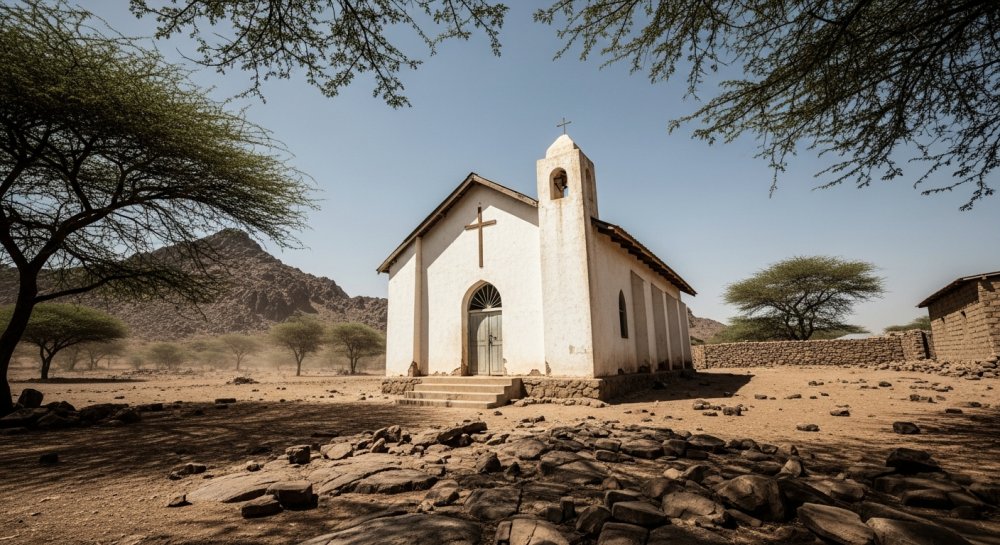
Islamic extremist-backed militants executed a Christian pastor and abducted several others in a violent raid in Sudan’s Nuba Mountains region. The attack, which took place in South Kordofan state, represents the latest assault on religious freedom in a region where Christians have faced systematic persecution.
Local church sources confirmed the martyrdom of the pastor, whose faithfulness to the Gospel cost him his life at the hands of rebel forces aligned with radical Islamic groups. The brutal killing underscores the dangerous reality facing Christian communities throughout Sudan, where believers continue to worship despite threats to their safety and lives.
The Nuba Mountains have long been a battleground where Christians face violence and oppression from forces seeking to impose Islamic law and eliminate Christian presence. Believers in the region demonstrate extraordinary courage, maintaining their witness for Christ even as they endure kidnappings, executions, and forced displacement.
This attack follows a pattern of religious persecution that has plagued Sudan for decades, with Christian pastors and church leaders frequently targeted for their refusal to abandon their faith. The abduction of additional church members during the raid raises urgent concerns about their welfare and the need for international intervention to protect religious minorities.
The persecution of Christians in Sudan demands the attention and prayers of believers worldwide. American Christians must remain vigilant in advocating for our brothers and sisters facing martyrdom and standing firm in support of religious freedom as a fundamental human right that transcends borders.
Let us know what you think, please share your thoughts in the comments below.


-

 Self-Reliance1 year ago
Trump’s Bold Move Uncovers Massive Social Security Fraud
-

 Faith1 year ago
New Clues Emerge in Noah’s Ark Mystery
-

 News1 year ago
Governor Walz’s Rhetoric Sparks National Controversy
-

 News1 year ago
Mel Gibson’s ‘The Passion of the Christ’ Sequel Title Announced
-

 Family1 year ago
Texas Lawmaker Targets Furries in Schools
-

 Freedom1 year ago
Maine Lawmaker Challenges Sports Fairness Controversy
-

 Family1 year ago
Canada’s Controversial Policy Sparks Ethical Debate
-
Faith8 months ago
Congress Hears Pleas for Nigerian Christians