
News
What Awaits Iran After the Regime Falls

Faith Facts
- Iran’s Christian population has grown exponentially through underground house churches despite severe persecution, with estimates ranging from 800,000 to over one million believers.
- The Islamic Republic’s brutal enforcement of religious law has paradoxically driven many Iranians away from Islam, with surveys suggesting up to 60% of young Iranians have rejected the faith.
- Iranian Christians face imprisonment, torture, and execution for their faith, yet the church continues to flourish in secret, representing one of the fastest-growing Christian movements worldwide.
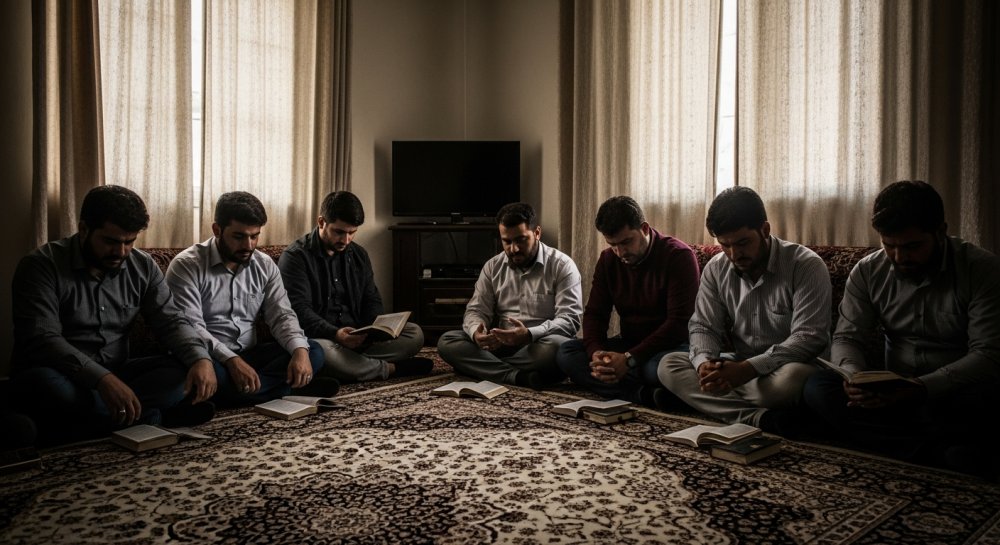
As Iran’s Islamic regime shows signs of instability, American policymakers may be unprepared for the religious transformation quietly taking place beneath the surface of one of the world’s most oppressive theocracies. Decades of harsh religious enforcement have produced an unexpected result: a generation turning away from Islam and, in many cases, turning toward Christianity.
The Islamic Republic has ruled Iran with an iron fist since 1979, imposing strict Sharia law and brutally suppressing religious freedom. Yet this very oppression has sparked a spiritual rebellion that could reshape the Middle East. Underground house churches have multiplied across the nation, operating in secret to avoid the regime’s violent persecution.
“Iran is experiencing one of the fastest-growing Christian movements in the world,” according to multiple religious freedom organizations tracking persecution in the region. These conversions happen despite the very real threat of imprisonment, torture, and death for apostasy from Islam.
Young Iranians in particular have grown disillusioned with the regime’s violent interpretation of Islam. Forced religiosity has backfired spectacularly, with surveys indicating that a majority of Iranians under 40 have privately abandoned the faith that the government attempts to impose through fear and violence.
The Christian population in Iran, though difficult to measure due to security concerns, is estimated to have grown from perhaps 100,000 in the 1970s to between 800,000 and 1.5 million today. Most of these believers worship in secret house churches, risking everything to gather in Christ’s name.
This growth represents a profound irony: the regime’s attempt to create a pure Islamic state has instead pushed many Iranians into the arms of Christianity. Former Muslims describe their conversions as both spiritual awakenings and acts of resistance against an oppressive government that has conflated religious devotion with political submission.
American foreign policy has long operated under the assumption that Iran is a uniformly Muslim nation with little religious diversity. This misconception could prove costly if regime change comes. A post-Islamic Republic Iran might look very different from what Washington expects—more pluralistic, more Christian, and potentially more aligned with Western values of religious freedom.
The persecution of Iranian Christians remains severe. Believers caught gathering for worship face lengthy prison sentences in notorious facilities where torture is routine. Church leaders have been executed. Yet the church grows stronger, demonstrating the timeless truth that the blood of martyrs is the seed of the church.
Religious minorities beyond Christians have also suffered under the regime. Baha’is, Zoroastrians, Jews, and Sunni Muslims all face varying degrees of discrimination and persecution in a nation that claims religious legitimacy while denying basic religious freedom to its own citizens.
The United States has a strategic interest in understanding Iran’s changing religious landscape. When the regime eventually falls—whether through internal collapse, popular uprising, or external pressure—the nation that emerges may be far more receptive to American values and alliances than current policy assumes.
Iranian Christians have demonstrated remarkable courage and faith in the face of unimaginable persecution. Their testimony and their numbers suggest that Iran’s future may not be defined by the radical Islam that has characterized the past four decades, but by a spiritual hunger for truth and freedom that transcends political boundaries.
The transformation of Iran from an Islamic theocracy to a potentially post-Islamic society would represent one of the most significant geopolitical and spiritual shifts of our time. American Christians should be praying for their persecuted brothers and sisters in Iran, and American policymakers should be preparing for an Iran that looks nothing like the one they’ve studied for the past 45 years.
Let us know what you think, please share your thoughts in the comments below.

Faith Facts
- Scripture teaches that true joy and purpose come from a relationship with God, not from worldly circumstances or cultural trends.
- Strong families built on biblical principles provide the foundation for children to thrive emotionally and spiritually.
- Christian communities have historically offered young people meaning, belonging, and moral direction during uncertain times.
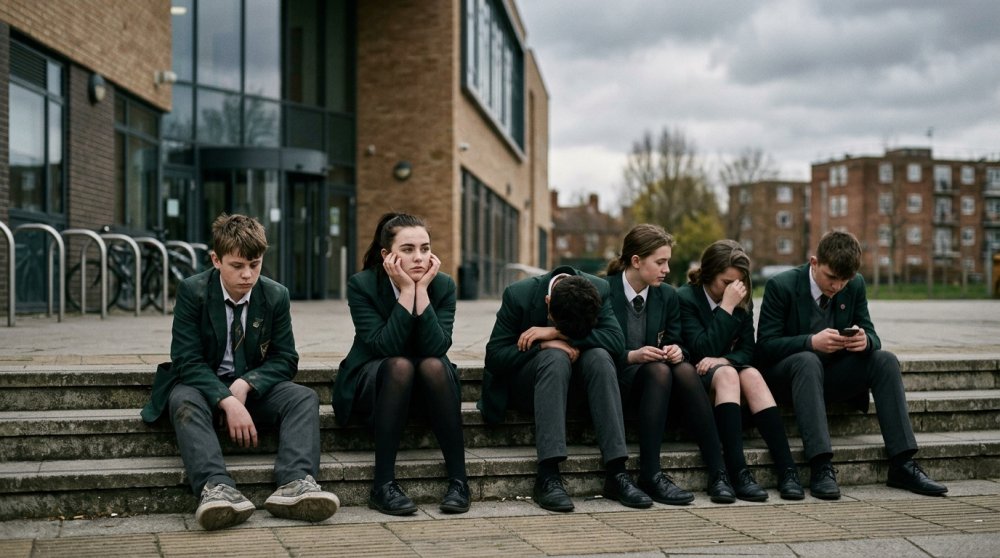
A new European study shows teenagers in Britain scoring the lowest in life satisfaction among 29 nations for the second consecutive year.
The findings point to deeper cultural and spiritual struggles facing young people in a nation that has steadily moved away from its Christian heritage.
Many families no longer attend church or pass on biblical values that once anchored daily life and identity.
“The fear of the Lord is the beginning of wisdom, and knowledge of the Holy One is understanding,” Proverbs 9:10 reminds believers.
Without a moral compass rooted in Scripture, adolescents are left to navigate confusion about identity, purpose, and relationships.
Traditional two-parent households have declined sharply in Britain, removing the stability that once helped children develop resilience and hope.
Christian leaders warn that secular education and entertainment promote self-focus over service, contributing to widespread dissatisfaction.
“Train up a child in the way he should go, and when he is old he will not depart from it,” Proverbs 22:6 instructs parents.
The survey results serve as a wake-up call for families and churches to reclaim their role in shaping the next generation.
Let us know what you think, please share your thoughts in the comments below.
News
Federal Investigation Targets Massachusetts School District Over Secret Transgender Transition and Parental Exclusion

Faith Facts
- The Department of Education is investigating a Massachusetts school district accused of socially transitioning a teenager without parental consent.
- Parents say school officials attempted to remove their daughter from their home after they objected on religious grounds.
- The case highlights growing tension between federal education policy and the rights of faith-based families.
The United States Department of Education has opened an investigation into a Massachusetts school district after reports surfaced that officials secretly socially transitioned a trans-identified girl and later sought to remove her from her Catholic parents’ custody.
The parents had objected to the school’s actions in part because of their deeply held religious beliefs.
“We are concerned that the school district may have violated federal law by interfering with parental rights and potentially discriminating against parents based on their religious beliefs,”
a Department of Education spokesperson stated.
The investigation focuses on whether the district violated Title IX and parental rights protections under federal law.
According to the complaint, school staff began using a new name and pronouns for the girl without notifying her parents and allegedly coordinated with state agencies to place her in foster care after the parents refused to affirm the transition.
Advocates for parental rights argue this case represents a dangerous overreach by public institutions into family life and religious freedom.
“No school should ever hide critical information from parents or use government power to punish families for living according to their faith,”
said a spokesperson for a national parental rights organization.
The Department of Education’s probe comes amid increasing national debate over how schools should handle gender identity issues and the role of parents in those decisions.
Let us know what you think, please share your thoughts in the comments below.
Faith Facts
- The grand jury affirmed that justice requires credible evidence before bringing charges against any person.
- The ruling protects the presumption of innocence, a principle rooted in biblical justice.
- Families and communities are encouraged to seek truth while trusting God’s ultimate judgment in all matters of life and death.
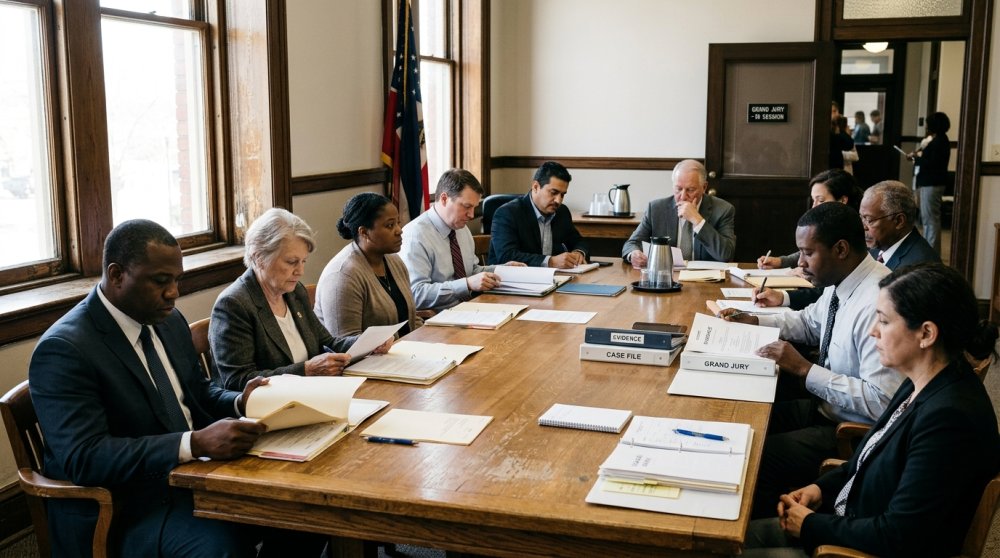
A Mississippi grand jury has determined there is not enough evidence to bring criminal charges in the death of 18-year-old Nolan Wells.
The panel, described as racially diverse, examined the circumstances surrounding the young man’s passing on Horn Island and concluded that the evidence does not support a criminal case at this time.
“If credible evidence comes to light in the future that suggests Mr. Wells’ death was non-accidental,” the grand jury stated, “the case should be revisited.”
The decision allows the family and community to grieve without the added burden of unfounded accusations.
“If credible evidence comes to light in the future that suggests Mr. Wells’ death was non-accidental,” the grand jury stated, “the case should be revisited.”
Christian teaching emphasizes the value of every human life and the necessity of truth.
The grand jury’s restraint reflects a commitment to due process and the protection of the innocent until proven guilty.
Let us know what you think, please share your thoughts in the comments below.


-

 Self-Reliance1 year ago
Trump’s Bold Move Uncovers Massive Social Security Fraud
-

 Faith1 year ago
New Clues Emerge in Noah’s Ark Mystery
-

 News2 years ago
Governor Walz’s Rhetoric Sparks National Controversy
-

 News1 year ago
Mel Gibson’s ‘The Passion of the Christ’ Sequel Title Announced
-

 Family2 years ago
Texas Lawmaker Targets Furries in Schools
-

 Freedom2 years ago
Maine Lawmaker Challenges Sports Fairness Controversy
-

 Family1 year ago
Canada’s Controversial Policy Sparks Ethical Debate
-
Faith10 months ago
Congress Hears Pleas for Nigerian Christians