
News
What Awaits Iran After the Regime Falls

Faith Facts
- Iran’s Christian population has grown exponentially through underground house churches despite severe persecution, with estimates ranging from 800,000 to over one million believers.
- The Islamic Republic’s brutal enforcement of religious law has paradoxically driven many Iranians away from Islam, with surveys suggesting up to 60% of young Iranians have rejected the faith.
- Iranian Christians face imprisonment, torture, and execution for their faith, yet the church continues to flourish in secret, representing one of the fastest-growing Christian movements worldwide.
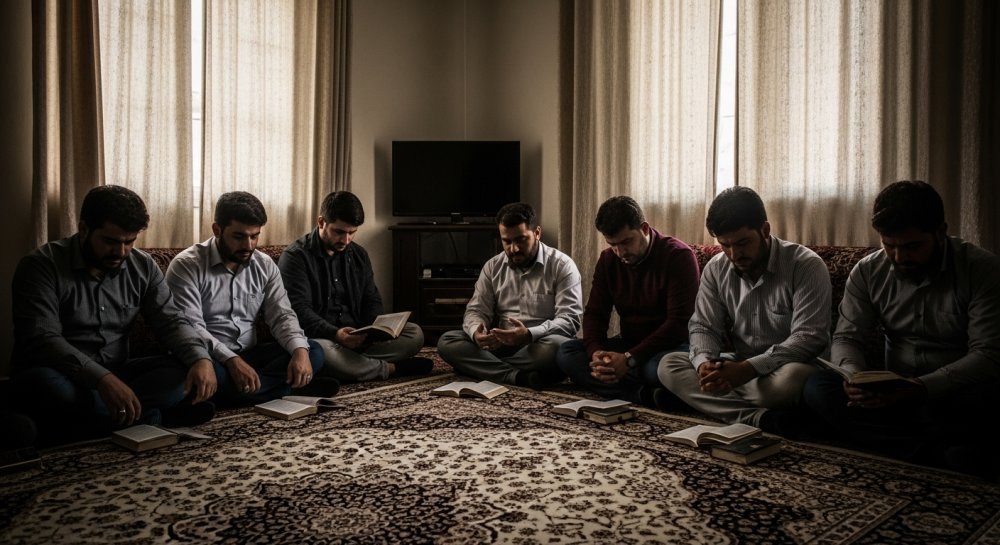
As Iran’s Islamic regime shows signs of instability, American policymakers may be unprepared for the religious transformation quietly taking place beneath the surface of one of the world’s most oppressive theocracies. Decades of harsh religious enforcement have produced an unexpected result: a generation turning away from Islam and, in many cases, turning toward Christianity.
The Islamic Republic has ruled Iran with an iron fist since 1979, imposing strict Sharia law and brutally suppressing religious freedom. Yet this very oppression has sparked a spiritual rebellion that could reshape the Middle East. Underground house churches have multiplied across the nation, operating in secret to avoid the regime’s violent persecution.
“Iran is experiencing one of the fastest-growing Christian movements in the world,” according to multiple religious freedom organizations tracking persecution in the region. These conversions happen despite the very real threat of imprisonment, torture, and death for apostasy from Islam.
Young Iranians in particular have grown disillusioned with the regime’s violent interpretation of Islam. Forced religiosity has backfired spectacularly, with surveys indicating that a majority of Iranians under 40 have privately abandoned the faith that the government attempts to impose through fear and violence.
The Christian population in Iran, though difficult to measure due to security concerns, is estimated to have grown from perhaps 100,000 in the 1970s to between 800,000 and 1.5 million today. Most of these believers worship in secret house churches, risking everything to gather in Christ’s name.
This growth represents a profound irony: the regime’s attempt to create a pure Islamic state has instead pushed many Iranians into the arms of Christianity. Former Muslims describe their conversions as both spiritual awakenings and acts of resistance against an oppressive government that has conflated religious devotion with political submission.
American foreign policy has long operated under the assumption that Iran is a uniformly Muslim nation with little religious diversity. This misconception could prove costly if regime change comes. A post-Islamic Republic Iran might look very different from what Washington expects—more pluralistic, more Christian, and potentially more aligned with Western values of religious freedom.
The persecution of Iranian Christians remains severe. Believers caught gathering for worship face lengthy prison sentences in notorious facilities where torture is routine. Church leaders have been executed. Yet the church grows stronger, demonstrating the timeless truth that the blood of martyrs is the seed of the church.
Religious minorities beyond Christians have also suffered under the regime. Baha’is, Zoroastrians, Jews, and Sunni Muslims all face varying degrees of discrimination and persecution in a nation that claims religious legitimacy while denying basic religious freedom to its own citizens.
The United States has a strategic interest in understanding Iran’s changing religious landscape. When the regime eventually falls—whether through internal collapse, popular uprising, or external pressure—the nation that emerges may be far more receptive to American values and alliances than current policy assumes.
Iranian Christians have demonstrated remarkable courage and faith in the face of unimaginable persecution. Their testimony and their numbers suggest that Iran’s future may not be defined by the radical Islam that has characterized the past four decades, but by a spiritual hunger for truth and freedom that transcends political boundaries.
The transformation of Iran from an Islamic theocracy to a potentially post-Islamic society would represent one of the most significant geopolitical and spiritual shifts of our time. American Christians should be praying for their persecuted brothers and sisters in Iran, and American policymakers should be preparing for an Iran that looks nothing like the one they’ve studied for the past 45 years.
Let us know what you think, please share your thoughts in the comments below.

Faith Facts
- Christian teachings emphasize the value of hard work and responsible stewardship of resources.
- Scripture calls believers to care for the next generation and protect the family unit.
- Traditional family values include the right to secure housing and a stable livelihood.
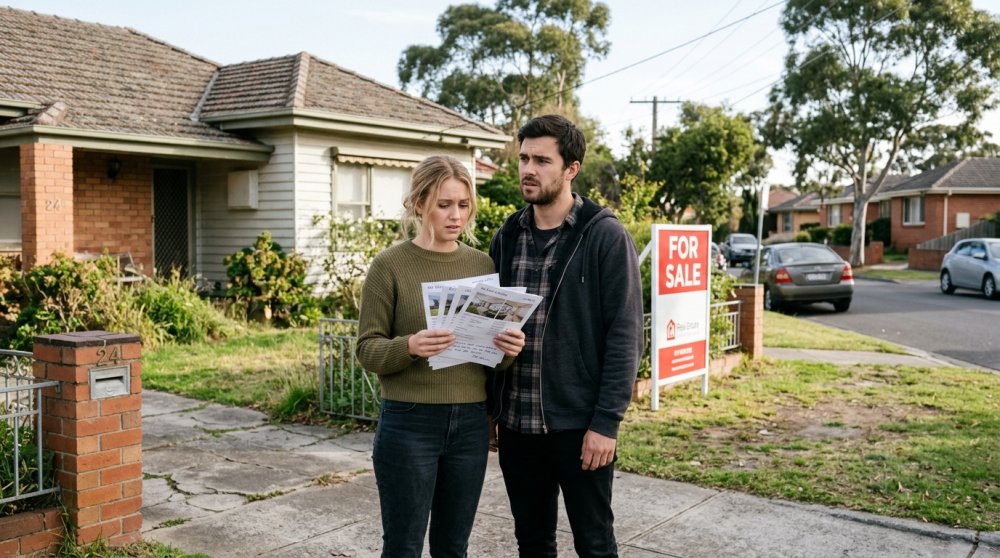
Young Australians are expressing record levels of worry about the cost of living and housing affordability, according to a new report from Mission Australia. The nonprofit’s annual youth survey has reached its 25-year milestone and continues to highlight the challenges facing the nation’s younger generation.
The survey shows that financial pressures are weighing heavily on young people across the country. Rising costs for essentials and the difficulty of securing affordable housing are now at the forefront of their concerns.
“Cost of living and housing are the top concerns of young Australians, according to a new survey from Mission Australia, which is marking 25 years of its annual youth survey.”
These findings reflect broader economic trends that affect families and individuals striving to maintain stability. As traditional values place strong emphasis on home and family, the ability to afford housing remains a central concern for many households.
The Mission Australia survey provides valuable insight into the priorities of young Australians and the pressures they face in today’s economy. Addressing these concerns will require thoughtful policy approaches that uphold the values of family, freedom, and personal responsibility.
Let us know what you think, please share your thoughts in the comments below.
Faith Facts
- The Hillview Church of Christ in Birmingham, Alabama, recognized six military veterans with certificates, lapel pins, and silver dollars during a Veterans Day celebration rooted in Scripture’s call to honor those who serve.
- The Silver Point West End Church of Christ in Tennessee, a cornerstone of Black Churches of Christ history, marked over a century of faithful witness with a homecoming that drew believers from across the nation and even South Africa.
- Abilene Christian University alumnus Wendell Edwards received the Womack Award at the university’s Sports Hall of Fame Dinner for his distinguished career in Christian broadcasting.
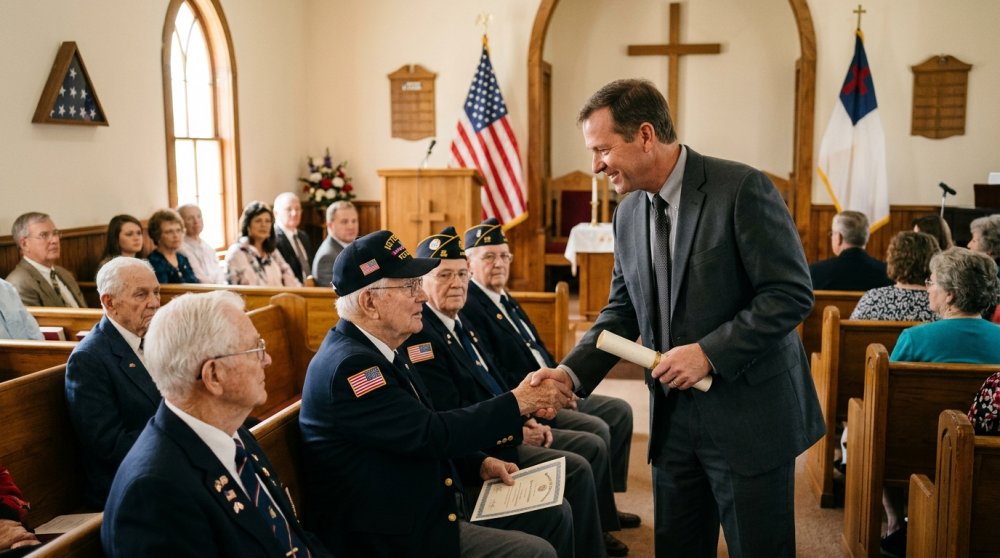
Small congregations across America continue to show gratitude for the men and women who have worn the uniform. The Hillview Church of Christ in Birmingham set aside a full Sunday to lift up six veterans who once served their country.
Each veteran received a certificate of recognition, an American flag lapel pin, and a special silver dollar. Minister Paul Cockrell preached morning and afternoon lessons that tied the Christian life to the imagery of a good soldier and the banner of the cross.
“We are thankful for every man and woman who has served, and we were glad to have the chance to say so together,” Cockrell said.
Farther north, another faithful congregation marked an even longer legacy. The Silver Point West End Church of Christ perched on a hill east of Nashville celebrated more than one hundred years of gospel witness.
Ninety guests gathered for cemetery memorials, history programs, gospel singing, and shared meals. Speaker Christopher Jackson reminded the crowd that God instructed Joshua to carry twelve stones across the Jordan as a lasting testimony.
“I thought … it would be good to grab 12 facts about Silver Point’s history … as a reminder of the power of God,” Jackson told guests.
Among those honored facts was the pioneering work of G.P. Bowser, who founded a Christian school at Silver Point around 1909. His ninety-five-year-old granddaughter, Charlotte Holt Fuller, traveled from South Africa to attend the reunion.
“It’s really great to … come back and just have a reunion … for the good old days,” Fuller said.
Across the nation, faithful believers continue to receive recognition for lives lived in service to both God and country. Abilene Christian University honored alumnus Wendell Edwards with the Womack Award at its Sports Hall of Fame Dinner for his work as evening anchor for Eyewitness News in Rockford, Illinois.
These stories remind Christians that quiet faithfulness in local churches and public witness in the broader culture both advance the kingdom of God.
Let us know what you think, please share your thoughts in the comments below.
Faith Facts
- Josh Howerton, senior pastor of Lakepointe Church in Dallas, gave $1,000 to Samuel Sey’s GiveSendGo campaign after Sey was deported to Canada.
- Sey, a Canadian-born Christian blogger, was arrested by ICE last month and removed from the United States.
- Howerton and his wife Jana publicly supported the campaign, underscoring a commitment to defend fellow believers facing government pressure.
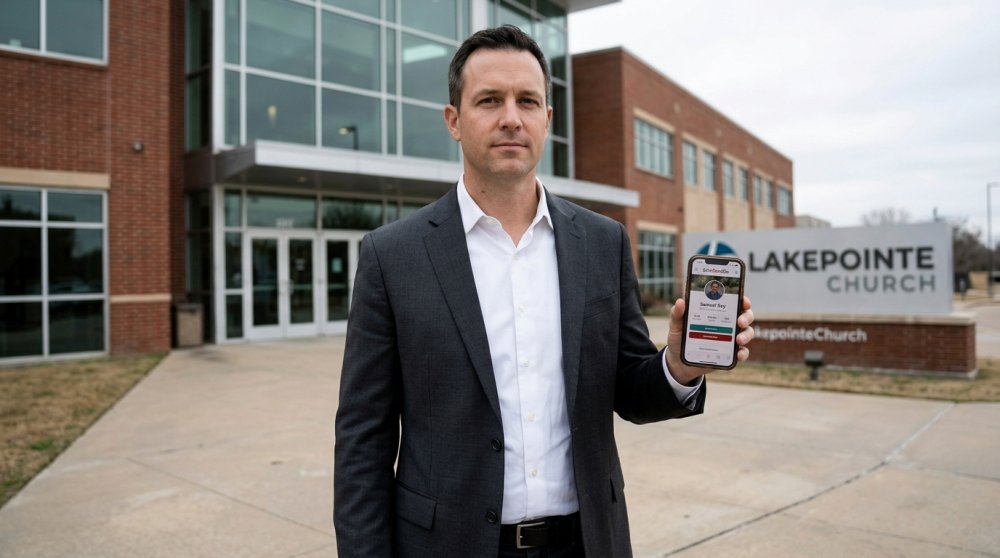
Josh Howerton, senior pastor of the Dallas-area Lakepointe Church, quietly stepped forward with a $1,000 gift to a GiveSendGo crowdfunding effort launched for Christian blogger Samuel Sey. The donation places the pastor among those supporting a fellow believer who was detained and later deported by ICE last month.
Sey, who was born in Canada, had been living and writing in the United States before immigration authorities took him into custody. His removal has sparked concern among Christians who view the arrest as part of a wider pattern of pressure on voices that defend biblical truth.
Howerton’s willingness to lead with both his name and his resources reflects the kind of bold faith many believers long to see in their pastors. The couple’s public support sends a clear signal that standing with the persecuted is not optional for those who follow Christ.
Let us know what you think, please share your thoughts in the comments below.


-

 Self-Reliance2 years ago
Trump’s Bold Move Uncovers Massive Social Security Fraud
-
 Faith2 years ago
New Clues Emerge in Noah’s Ark Mystery
-
 News2 years ago
Governor Walz’s Rhetoric Sparks National Controversy
-
 News2 years ago
Mel Gibson’s ‘The Passion of the Christ’ Sequel Title Announced
-

 Family2 years ago
Texas Lawmaker Targets Furries in Schools
-

 Freedom2 years ago
Maine Lawmaker Challenges Sports Fairness Controversy
-

 Family2 years ago
Canada’s Controversial Policy Sparks Ethical Debate
-
Faith12 months ago
Congress Hears Pleas for Nigerian Christians