
Faith
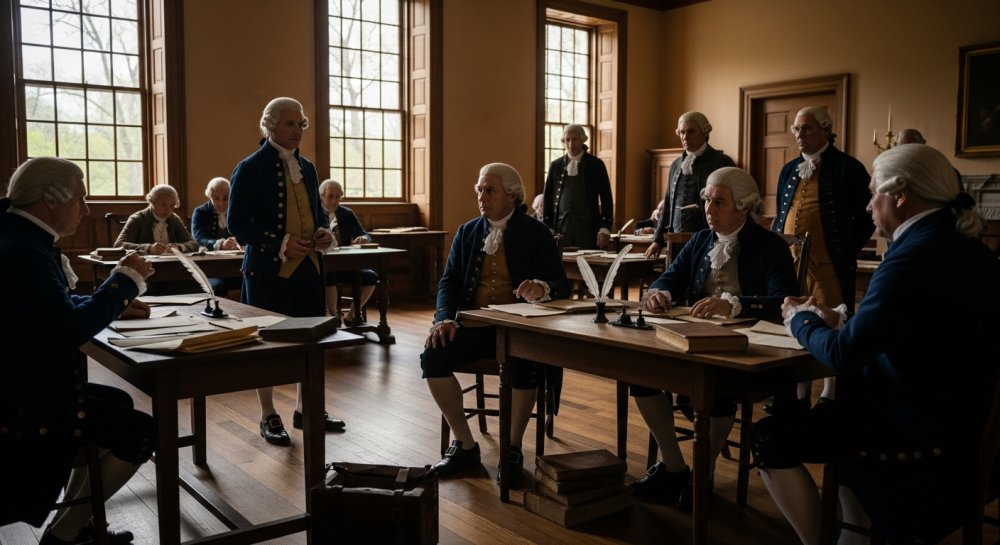
What America’s Founders Really Believed About Jesus Christ

Faith Facts
- America’s Founding Fathers held diverse religious beliefs ranging from orthodox Christianity to Deism, yet all acknowledged divine providence in the nation’s founding
- Key founders like George Washington, John Adams, and Thomas Jefferson had varying relationships with traditional Christian doctrine, particularly regarding Christ’s divinity
- The religious landscape of Revolutionary America included devout believers, rational Christians, and Enlightenment-influenced deists who reshaped traditional faith through reason
The question of America’s spiritual foundation has never been more relevant than today. As our nation grapples with questions of religious liberty and the role of faith in public life, understanding what our Founding Fathers actually believed about Jesus Christ offers crucial insight into the American experiment.
While it’s clear the Founders acknowledged God’s hand in establishing this nation, their personal convictions about Christ varied dramatically. Some embraced traditional Christian orthodoxy with fervor, while others approached faith through the lens of Enlightenment rationalism.
George Washington, the father of our country, attended Episcopal services regularly and spoke frequently of divine providence. Yet he carefully avoided using Christ’s name in public addresses and private correspondence, preferring terms like “the Almighty” or “Providence.” His personal faith remains a subject of historical debate, though his public actions supported the church.
John Adams, our second president, grew up in the Congregationalist tradition but later embraced Unitarianism. He rejected the Trinity and Christ’s divinity, yet maintained a deep respect for Christian moral teaching and the Bible’s wisdom. Adams believed religion essential for maintaining public virtue and ordered liberty.
Thomas Jefferson took rationalism further, creating his own version of the Gospels that removed miracles and supernatural elements. Jefferson admired Jesus as a moral teacher but denied His divine nature, resurrection, and atoning sacrifice. His “Jefferson Bible” reflected Deist principles that sought to strip Christianity of what he viewed as corruptions.
In stark contrast, founders like John Jay, Samuel Adams, and Patrick Henry held firmly to orthodox Christian beliefs. John Jay, the first Chief Justice, was a devout Episcopalian who served as president of the American Bible Society. He advocated for Christian influence in government and society without hesitation.
Patrick Henry, famous for “Give me liberty or give me death,” was an evangelical Christian who fought to preserve religious freedom while promoting Christian values. He understood that the moral foundation necessary for self-government came from biblical truth.
Benjamin Franklin presents perhaps the most complex case. Raised in Puritan Boston, he drifted toward Deism in youth but later acknowledged the importance of Christian virtue. Near the end of the Constitutional Convention, Franklin called for prayer, recognizing that human wisdom alone could not forge a lasting republic.
The Founding generation understood that faith and freedom were intertwined. Even those who questioned traditional Christian doctrines recognized that biblical morality provided the ethical framework necessary for republican government. They knew that without virtuous citizens, no constitution could preserve liberty.
What united these diverse believers was not theological uniformity but shared conviction that rights come from the Creator, not government. Whether they personally embraced Christ’s divinity or not, they built a system acknowledging God’s authority over human affairs.
This diversity of belief among the Founders actually strengthens rather than weakens the case for America’s Christian heritage. They created a nation where orthodox believers and rational theists could coexist, united by commitment to transcendent truth and natural law grounded in divine creation.
The real question isn’t whether every Founder was an evangelical Christian by today’s standards. The question is whether they recognized God’s sovereignty, human sinfulness, and the need for virtue rooted in religious truth. On these points, the historical record speaks clearly.
Today’s secular revisionists who claim America was founded as a purely secular nation ignore the overwhelming evidence that our Founders saw divine providence at work. Even the most rationalist among them acknowledged that faith must undergird freedom.
Understanding the Founders’ diverse yet God-centered worldviews helps us navigate modern debates about faith’s role in the public square. They showed us that religious conviction and political liberty aren’t enemies but essential partners in the American experiment.
Let us know what you think, please share your thoughts in the comments below.


Faith Facts
- The Bible records Noah’s Ark as a historical vessel built at God’s command to preserve life during the Flood.
- Archaeologists and geologists continue to study sites in Turkey that some claim match the Ark’s resting place.
- Christians are urged to ground their faith in Scripture rather than unverified discoveries.
Explosive headlines this week announced that Noah’s Ark has been discovered beneath a mountain range in Turkey. The claims have quickly spread across social media and news outlets, stirring both excitement and skepticism among believers.
Chris Sinkinson, a respected Christian author and lecturer, cautions that such announcements often outpace the evidence. He urges fellow believers to remain anchored in Scripture and verified facts rather than sensational reports.
“Christians need to stick to the facts,” Sinkinson stated. His words serve as a timely reminder that faith rests on the unchanging Word of God, not on the latest archaeological headline.
While the possibility of discovering physical remnants of the Ark is intriguing, experts note that conclusive proof remains elusive. Many past claims have failed under closer scientific examination.
Scripture itself provides the foundation for understanding the Flood and God’s covenant with Noah. Believers are reminded that the reliability of the Bible does not depend on locating the physical Ark.
Let us know what you think, please share your thoughts in the comments below.
Faith Facts
- Revelation chapters 2 and 3 contain direct messages from Jesus to seven churches in Asia Minor, blending commendation with stern rebuke.
- Scripture records that Jesus declares, “I know your works,” underscoring His intimate awareness of both corporate and personal conduct.
- The warnings delivered to these early congregations still apply to contemporary churches that drift into compromise or complacency.
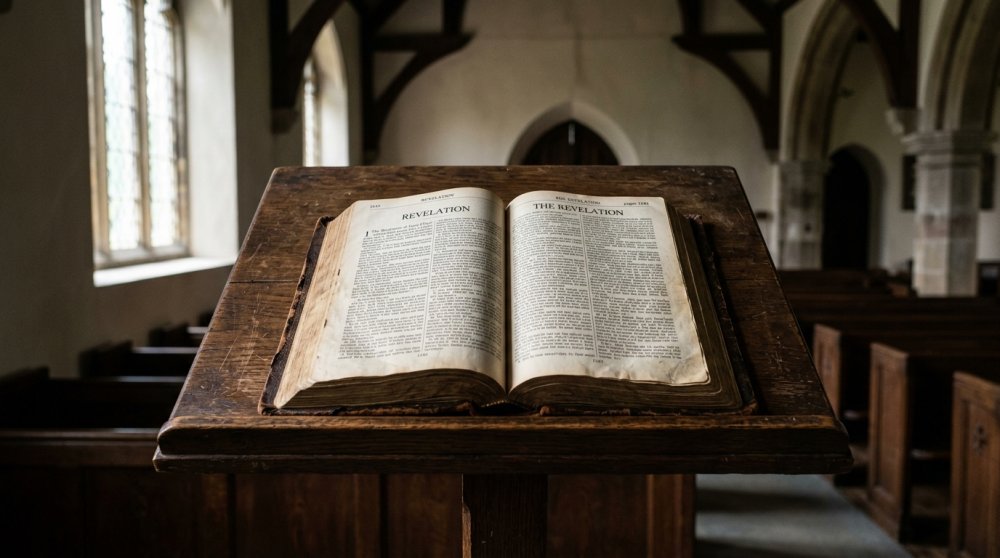
In Revelation 2 and 3, the gentle and lowly Jesus speaks to seven churches with both praise and severe warning.
He knows their works, their compromises and what they can’t see about themselves.
He knows ours, too.
Let us know what you think, please share your thoughts in the comments below.

Faith Facts
- Professional wrestler Samoa Joe has publicly encouraged Christians to give a portion of their income to the local church.
- Joe described his decision to tithe as one of his “greatest decisions.”
- The call to tithe reflects the biblical principle of returning the firstfruits of one’s labor to God.
Professional wrestler Samoa Joe is using his platform to point believers toward faithful giving. He recently shared that his commitment to tithing remains one of the most important choices he has made.
Joe described the practice as both a spiritual discipline and a source of blessing in his life. His public encouragement comes at a time when many families are weighing how to honor God with their finances amid rising costs and economic uncertainty.
“One of my greatest decisions was to tithe,”
The wrestler’s testimony underscores the biblical call found in Malachi 3:10, where God invites His people to bring the whole tithe into the storehouse. For Christian audiences, Joe’s words serve as a reminder that generosity is not limited to pastors or ministry professionals.
His straightforward challenge to tithe resonates with believers who see financial stewardship as an act of worship rather than mere obligation. In an industry often marked by self-promotion, Joe’s public stand for biblical giving offers a refreshing counter-example.
Let us know what you think, please share your thoughts in the comments below.


-

 Self-Reliance2 years ago
Trump’s Bold Move Uncovers Massive Social Security Fraud
-

 Faith1 year ago
New Clues Emerge in Noah’s Ark Mystery
-

 News2 years ago
Governor Walz’s Rhetoric Sparks National Controversy
-

 News2 years ago
Mel Gibson’s ‘The Passion of the Christ’ Sequel Title Announced
-

 Family2 years ago
Texas Lawmaker Targets Furries in Schools
-

 Freedom2 years ago
Maine Lawmaker Challenges Sports Fairness Controversy
-

 Family1 year ago
Canada’s Controversial Policy Sparks Ethical Debate
-
Faith11 months ago
Congress Hears Pleas for Nigerian Christians