
News
Vice President Vance Defends Faith and Freedom in Budapest Appearance


Faith Facts
- Vice President J.D. Vance publicly shared his Christian faith and warned against communist ideology during a speech in Budapest, Hungary
- Vance appeared in support of Prime Minister Viktor Orban’s re-election campaign, rallying conservative values
- The speech addressed threats to Western civilization and the importance of traditional values in modern governance
Vice President J.D. Vance delivered a powerful address in Budapest, Hungary this week, championing Christian values and warning against the dangers of communist and far-left ideology. The speech came as Vance rallied support for Prime Minister Viktor Orban’s re-election campaign before a crowd of Hungarian conservatives.
During his remarks, Vance openly shared his love of Jesus Christ, grounding his political philosophy in Christian faith. The Vice President drew connections between traditional Christian values and the preservation of Western civilization, emphasizing the foundational role of faith in maintaining free societies.
Vance issued stern warnings about the resurgence of communist thinking and the creep of far-left ideology into Western institutions. He highlighted the dangers these movements pose to religious freedom, family values, and national sovereignty—core principles that resonate with both Hungarian and American conservative audiences.
The Vice President’s appearance alongside Prime Minister Orban signals strong American support for leaders who prioritize traditional values and resist progressive cultural pressures. Orban has become a prominent figure among global conservatives for his defense of Christian heritage and national identity.
Vance’s Budapest speech represents a continuation of his commitment to articulating a foreign policy rooted in shared values rather than abstract globalist principles. By standing with Orban, the Vice President demonstrated solidarity with European leaders facing similar cultural and political challenges as American conservatives.
The address also touched on the importance of defending Western civilization against ideological threats. Vance emphasized that the preservation of freedom requires vigilance against systems that have historically led to oppression and the suppression of religious liberty.
Prime Minister Orban has faced criticism from left-leaning European Union officials for his traditional stances on family, immigration, and national sovereignty. Vance’s public support provides encouragement to conservatives worldwide who feel increasingly marginalized by international institutions.
The Vice President’s willingness to speak boldly about his Christian faith on the international stage marks a refreshing departure from politicians who shy away from religious conviction in public discourse. His Budapest appearance demonstrates that faith and freedom remain inseparable in the American conservative vision.
Let us know what you think, please share your thoughts in the comments below.

Faith Facts
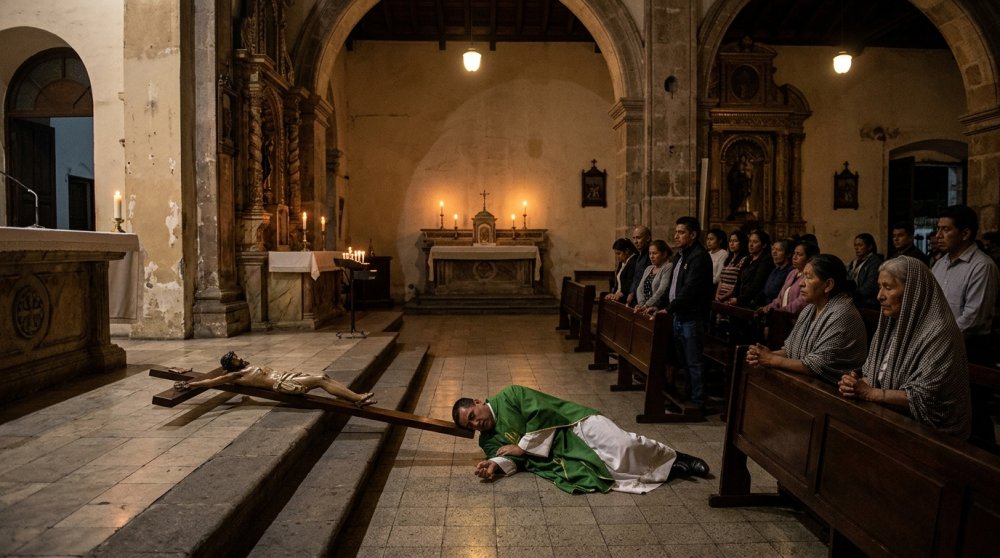
- The priest was celebrating Mass when a crucifix fell on him, killing him instantly.
- The incident occurred during a livestreamed evening service in Guayaquil, Ecuador.
- The faithful gathered in the church witnessed the tragedy in real time.
A priest in Guayaquil, Ecuador, has died after a crucifix fell on him during an evening Mass on Saturday. The incident happened while the priest was celebrating the liturgy in front of the congregation. The Mass was being livestreamed, allowing many viewers to witness the tragic event as it unfolded.
Let us know what you think, please share your thoughts in the comments below.
Faith Facts
- Malcolm Guite is a poet, priest, and Cambridge University scholar who draws on Christian literary tradition to address cultural questions.
- Guite identifies a crisis of masculinity and imagination in contemporary society and points to classic Christian-influenced literature as a remedy.
- King Arthur, as portrayed in British legend, embodies the chivalric virtues of courage, service, and self-sacrifice that align with biblical manhood.
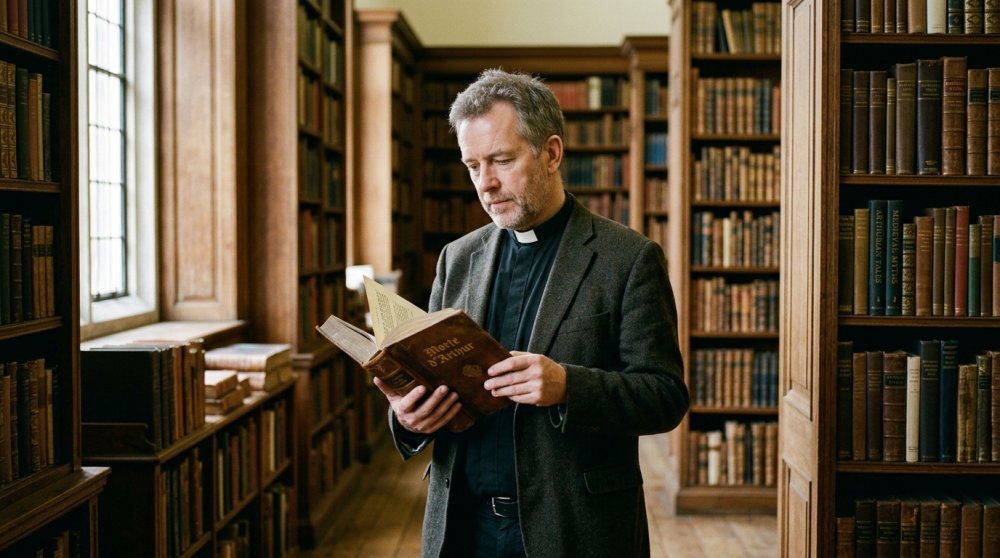
British poet, priest and Cambridge University scholar Malcolm Guite believes society is facing a crisis of masculinity and imagination, and he’s turning to one of literature’s oldest heroes to help address it: King Arthur.
Guite argues that the legendary king provides a compelling image of ordered strength and sacrificial leadership rooted in the Christian heritage of the West.
“King Arthur offers an antidote to toxic masculinity,” Guite stated in a recent interview.
The scholar notes that Arthur’s knights were trained not merely in combat but in courtesy, justice, and the defense of the weak, virtues he believes are needed again.
Guite connects the Arthurian ideal to the broader Christian story, suggesting that recovering a sense of noble purpose can counter both cultural confusion and moral decline.
“We need stories that teach boys and men how to wield strength in service of others rather than for domination,” he explained.
Let us know what you think, please share your thoughts in the comments below.
Faith Facts
- Pastor Adam Hamilton is running for the U.S. Senate as a Democrat in Kansas.
- Hamilton stated that Christians do not need to believe in the virgin birth of Jesus Christ.
- The virgin birth is a foundational doctrine affirmed in Scripture and upheld by the historic Christian church.
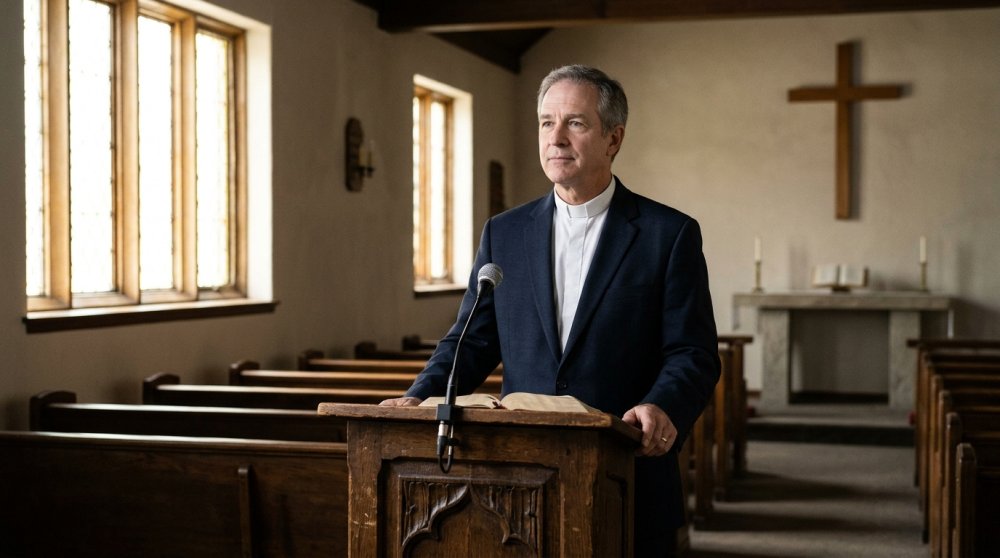
Former pastor and current Democrat Senate candidate Adam Hamilton is drawing criticism after a video interview surfaced in which he stated that belief in the virgin birth of Jesus is not required for Christians.
The remarks challenge the clear teaching of Scripture and the longstanding confessions of the Christian faith that affirm the miraculous conception of Christ by the Holy Spirit.
“Christians don’t have to believe in the virgin birth of Jesus,” Hamilton said during the interview.
Conservative believers across Kansas and the nation are expressing concern that a candidate who once served as a pastor would publicly question such a core biblical truth while seeking elected office.
Scripture is unambiguous on this matter, declaring in Isaiah 7:14 that “the virgin shall conceive and bear a son,” and in Matthew 1:23 that this prophecy was fulfilled in Mary.
Let us know what you think, please share your thoughts in the comments below.


-

 Self-Reliance2 years ago
Trump’s Bold Move Uncovers Massive Social Security Fraud
-

 Faith2 years ago
New Clues Emerge in Noah’s Ark Mystery
-

 News2 years ago
Governor Walz’s Rhetoric Sparks National Controversy
-

 News2 years ago
Mel Gibson’s ‘The Passion of the Christ’ Sequel Title Announced
-

 Family2 years ago
Texas Lawmaker Targets Furries in Schools
-

 Freedom2 years ago
Maine Lawmaker Challenges Sports Fairness Controversy
-

 Family1 year ago
Canada’s Controversial Policy Sparks Ethical Debate
-
Faith11 months ago
Congress Hears Pleas for Nigerian Christians