
Faith
UK Evangelicals Unveil Bold New Strategy for Reaching Spiritually Hungry Youth


Faith Facts
- The Evangelical Alliance UK has launched ‘Ethos,’ a digital initiative targeting spiritually curious young adults
- Leaders report increasing openness to faith among younger generations in the United Kingdom
- The platform seeks to meet young people where they are in their spiritual journey through digital engagement
Christian leaders in the United Kingdom are responding to what they describe as a growing spiritual hunger among young adults with a new digital outreach platform called ‘Ethos.’ The Evangelical Alliance UK launched the initiative to connect with a generation increasingly open to questions of faith and meaning.
The new platform represents a strategic shift in how evangelical Christians are engaging with younger demographics in an increasingly secular culture. Alliance leaders say they are observing a notable change in how young people approach spiritual matters, with many expressing curiosity about faith despite growing up outside traditional church settings.
The ‘Ethos’ initiative aims to meet spiritually curious young adults in the digital spaces where they already spend their time. Rather than waiting for young people to come to church buildings, the platform brings biblical truth and Christian community to them through online channels and digital content.
This approach reflects a broader recognition among Christian ministries that effective evangelism in the 21st century requires innovation and cultural relevance. The platform is designed to answer the deep questions about purpose, identity, and meaning that resonate with a generation often characterized by anxiety, loneliness, and a search for authentic community.
The Evangelical Alliance’s observation about rising spiritual openness among youth stands in contrast to declining church attendance statistics in the UK. This suggests that while institutional Christianity may be struggling, the fundamental human need for spiritual connection and truth remains strong among younger generations.
For American Christians watching these developments, the UK initiative offers insights into creative approaches for reaching the unchurched and spiritually curious. As Western nations face similar cultural challenges, strategies that effectively communicate timeless biblical truth in culturally relevant ways become increasingly valuable.
The launch of ‘Ethos’ demonstrates that Christian leaders are not retreating in the face of secularization but are instead finding new and innovative ways to proclaim the Gospel. This kind of missional creativity is essential for fulfilling the Great Commission in every generation and cultural context.
Let us know what you think, please share your thoughts in the comments below.

Faith Facts
- Many modern churches have reduced Christianity to a smaller version of the full Gospel message
- The diminished teaching doesn’t necessarily contain false doctrine, but leaves out essential biblical truths
- Church leaders are called to restore the complete counsel of Scripture to their congregations
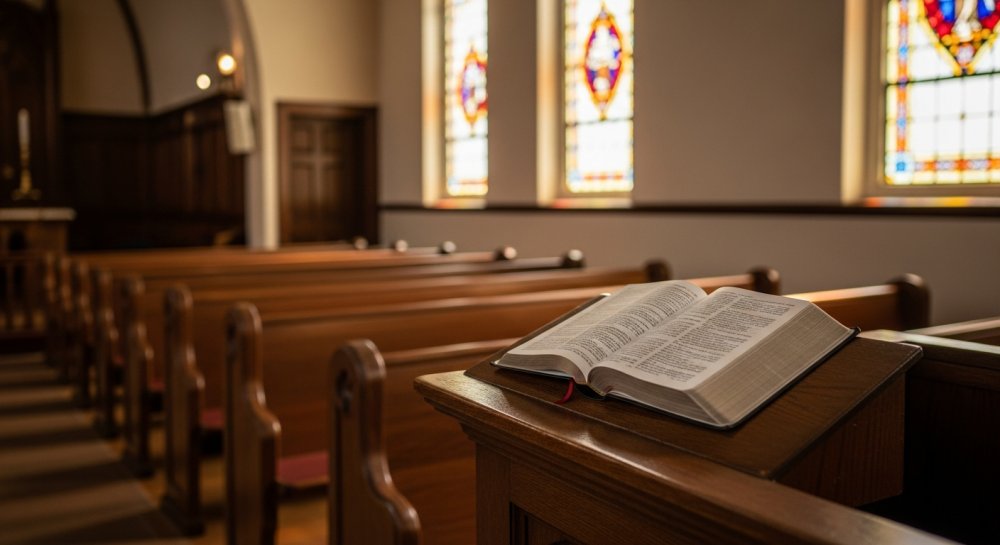
Across America, a troubling pattern has emerged in our houses of worship. Christianity itself hasn’t changed, but what’s being preached from many pulpits has. The faith that transformed civilizations and shaped our nation’s founding is being presented in a form that’s drastically smaller than what Scripture actually reveals.
This reduction isn’t always about heresy or outright false teaching. The problem is more subtle and perhaps more dangerous because of it. Churches are preaching truth—just not the whole truth. Believers are getting a portion of the Gospel when God intended them to receive the fullness of His revelation.
When churches shrink the Gospel, they rob believers of the complete biblical worldview that addresses every area of life. The Christian faith speaks to family, government, culture, morality, work, and citizenship. Yet many congregations have confined their teaching to personal salvation and emotional comfort, leaving believers unprepared to live out their faith in a hostile culture.
Our founders understood that a nation built on biblical principles required citizens who knew those principles thoroughly. They recognized that Christianity wasn’t just about individual souls but about shaping righteous communities and just governance. Today’s truncated Gospel often fails to equip believers for this comprehensive calling.
The apostle Paul warned against this very tendency. He told the Ephesian elders that he had not shrunk back from declaring “the whole counsel of God.” That complete message includes not just grace and love, but also holiness, judgment, repentance, and the Lordship of Christ over all creation.
When churches present only the comfortable parts of Scripture—forgiveness without repentance, grace without holiness, heaven without hell—they create spiritually malnourished Christians. These believers may be saved, but they lack the robust faith needed to stand firm when their values are challenged, their freedoms threatened, or their families attacked.
The solution requires courage from church leadership. Pastors must commit to preaching the full counsel of Scripture, even when it contradicts cultural trends or makes people uncomfortable. Sunday school teachers need to ground children in biblical truth, not watered-down stories. Small groups should wrestle with Scripture’s hard passages, not just its encouraging ones.
American Christianity at its best has always been comprehensive—addressing spiritual, moral, social, and civic responsibilities. The Great Awakening didn’t just fill church pews; it sparked social reform and inspired the principles of liberty that birthed our nation. That same comprehensive Gospel is needed today.
Believers deserve the whole Gospel. They need to hear about sin and salvation, judgment and mercy, faith and works, individual responsibility and corporate witness. They need teaching that equips them to raise godly families, engage their culture, defend truth, and preserve freedom.
The church’s mission isn’t to shrink the Gospel to fit modern sensibilities. Our calling is to proclaim the timeless, complete message of Scripture and trust the Holy Spirit to transform hearts, families, and nations. Only when we present Christianity in its fullness will we see the spiritual awakening our country desperately needs.
Let us know what you think, please share your thoughts in the comments below.
Faith Facts
- The Museum of the Bible debuts “A General’s Prayer,” a one-person play exploring George Washington’s prayer life during the Revolutionary War
- The production reveals Washington’s private spiritual struggles and his dependence on faith during America’s darkest hours
- The play premieres as America celebrates its 250th anniversary, reminding citizens of the nation’s foundational Christian heritage
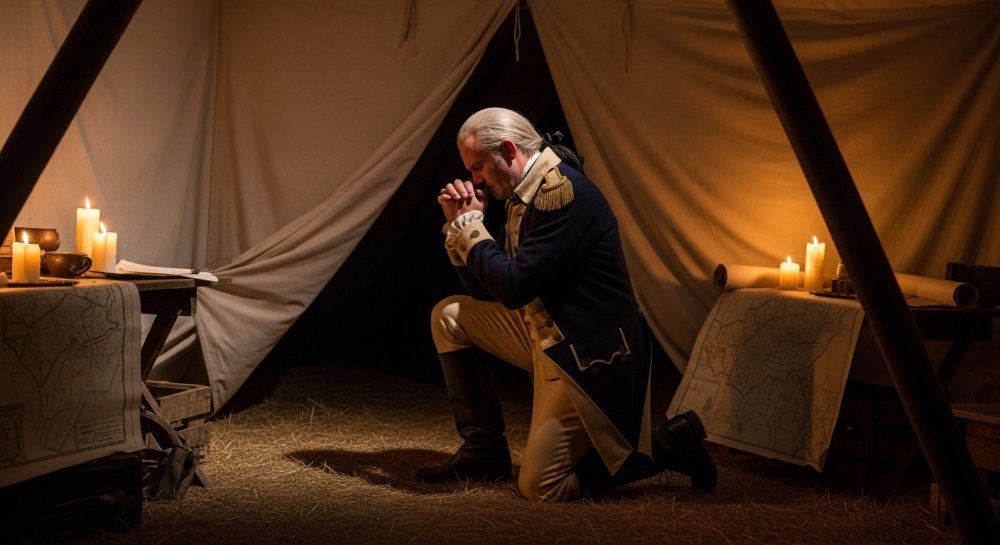
As our nation celebrates its 250th anniversary, Americans are being offered a rare glimpse into the spiritual life of the father of our country. The Museum of the Bible has unveiled a powerful new production that brings George Washington’s private prayer life and faith struggles to center stage during the most perilous moments of the American Revolution.
“A General’s Prayer” is a one-person theatrical presentation that takes audiences behind the scenes of the Revolutionary War. The production focuses on Washington’s personal relationship with God during the times when the survival of the fledgling nation hung in the balance.
This timely presentation serves as a crucial reminder of the Christian foundations upon which America was built. While modern revisionist historians often attempt to diminish or erase the faith of our Founding Fathers, this production brings documented historical truth back into focus.
The play reveals how Washington turned to prayer in his most desperate hours, seeking divine guidance and strength. His dependence on God during the Revolutionary War stands as a testament to the role of faith in establishing American independence and freedom.
The Museum of the Bible’s decision to premiere this production during America’s 250th anniversary celebrations is particularly significant. It offers a counter-narrative to the secular rewriting of American history that has become commonplace in educational and cultural institutions.
For Christian conservatives who understand that America’s greatness stems from its biblical foundations, “A General’s Prayer” represents an important cultural moment. The production demonstrates that our first president was not the deist that liberal academics often portray, but rather a man who understood his need for God’s intervention.
Washington’s example of humble dependence on prayer during national crisis offers a powerful lesson for contemporary America. As our nation faces its own challenges and divisions, the story of Washington’s faith provides both inspiration and instruction.
The theatrical format allows audiences to experience Washington’s spiritual journey in an intimate way, revealing the human struggles behind the legend. This personal approach makes the Father of Our Country more relatable while highlighting the timeless power of faith in overcoming seemingly impossible obstacles.
By showcasing Washington’s prayer life, the Museum of the Bible is preserving and promoting the historical truth about America’s Christian heritage. This serves as an antidote to the attempts by secular forces to sanitize religion from our nation’s founding story.
Let us know what you think, please share your thoughts in the comments below.
Faith Facts
- A growing number of Protestant pastors report their congregations are becoming more racially diverse, reflecting organic changes in American church communities
- Despite increased diversity, pastors are less likely than a decade ago to view intentional diversity efforts as mandatory for every church
- The shift suggests churches are experiencing natural demographic changes while maintaining focus on their primary spiritual mission
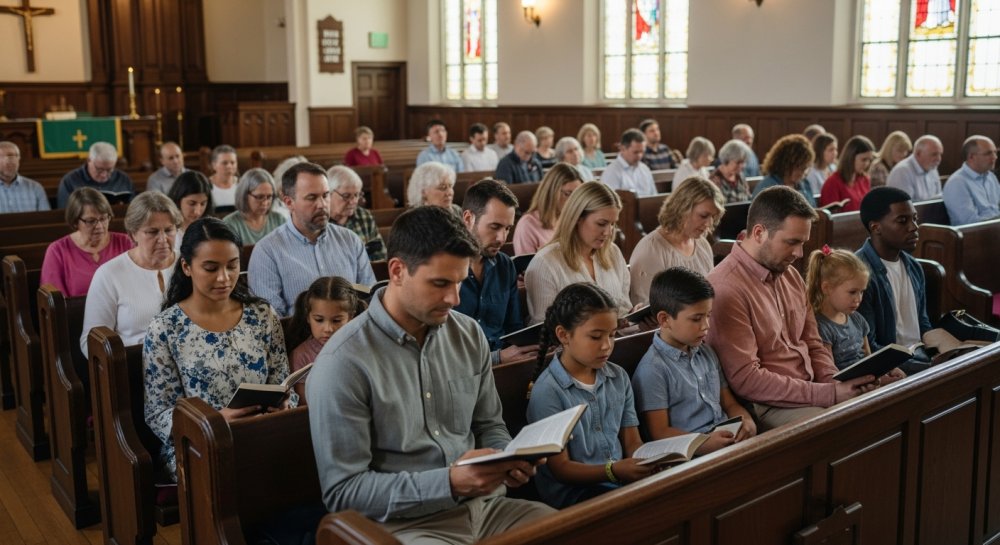
American Protestant churches are experiencing a quiet transformation in their racial composition, according to new survey data that reveals a complex picture of how congregations are evolving in the 21st century. More pastors are reporting increased diversity in their pews, even as attitudes about actively pursuing diversity as a goal have shifted over the past decade.
The findings suggest that many churches are becoming more racially diverse through natural demographic shifts and genuine community building rather than through mandate or external pressure. This organic growth in diversity appears to be happening alongside a renewed emphasis on the primary mission of the church: proclaiming the Gospel and ministering to souls regardless of background.
The survey data indicates that while Protestant pastors recognize and welcome the increasing diversity within their congregations, they are simultaneously less inclined to embrace the idea that every church must intentionally strive for racial diversity as a programmatic goal. This represents a notable shift from attitudes measured nearly a decade ago, when national conversations about race dominated the cultural landscape.
The change in perspective may reflect a maturing understanding among church leaders that authentic community and fellowship transcend superficial demographic targets. Rather than viewing diversity as an end goal in itself, many pastors appear to be focusing on creating welcoming environments where all people can encounter Christ and grow in faith together.
This approach aligns with traditional Christian teaching that emphasizes the unity of all believers in Christ, where divisions of race, ethnicity, and social status are transcended by shared faith. The Apostle Paul wrote that in Christ “there is neither Jew nor Gentile, neither slave nor free, nor is there male and female, for you are all one in Christ Jesus.”
The data suggests American churches are finding their own path forward on matters of community composition—one that honors both the biblical call to welcome all people and the practical realities of local ministry contexts. Each congregation serves unique communities with distinct needs, and a one-size-fits-all approach to diversity may not serve the Gospel mission effectively.
As Protestant churches continue to navigate cultural changes and demographic shifts in American society, these findings indicate that many are experiencing natural diversification while maintaining focus on their core spiritual purpose. The evolution appears to be happening not through forced programs but through faithful ministry that attracts people from various backgrounds seeking truth and community.
Let us know what you think, please share your thoughts in the comments below.


-

 Self-Reliance1 year ago
Trump’s Bold Move Uncovers Massive Social Security Fraud
-

 Faith1 year ago
New Clues Emerge in Noah’s Ark Mystery
-

 News1 year ago
Governor Walz’s Rhetoric Sparks National Controversy
-

 News1 year ago
Mel Gibson’s ‘The Passion of the Christ’ Sequel Title Announced
-

 Family1 year ago
Texas Lawmaker Targets Furries in Schools
-

 Freedom1 year ago
Maine Lawmaker Challenges Sports Fairness Controversy
-

 Family1 year ago
Canada’s Controversial Policy Sparks Ethical Debate
-
Faith8 months ago
Congress Hears Pleas for Nigerian Christians