
Faith
Three Simple Pledges That Changed a Generation of Christian Children

Faith Facts
- Three foundational pledges once shaped the faith and patriotism of Christian children across America
- The pledges to the American flag, the Christian flag, and the Bible formed a daily ritual in many churches and Christian schools
- These simple declarations reinforced allegiance to God, country, and Scripture in the hearts of young believers
As believers grow older, certain memories resurface with renewed meaning and purpose. For many Christian Americans who came of age in traditional church settings, three simple pledges formed the foundation of their early faith formation—declarations that intertwined love of God, love of country, and reverence for Scripture.
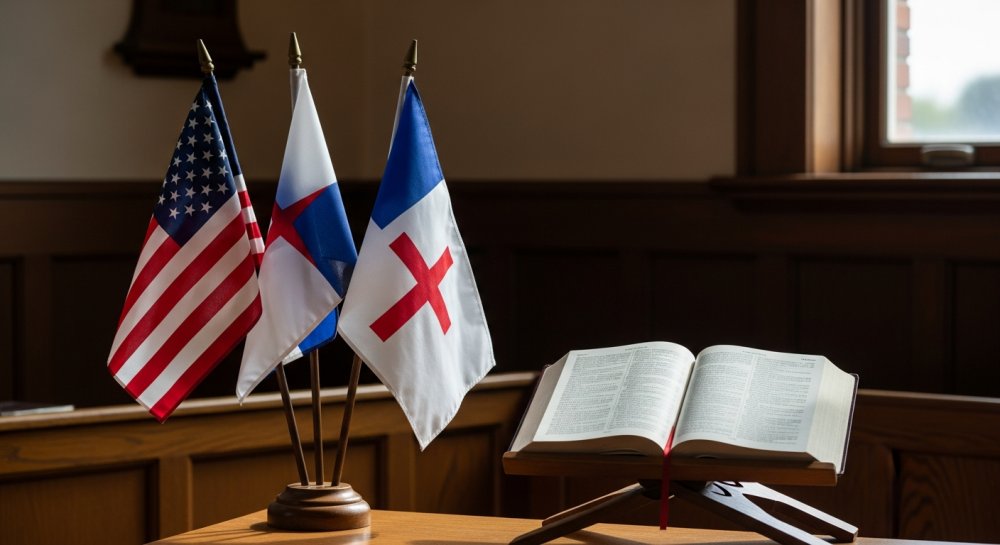
These pledges to the American flag, the Christian flag, and the Bible were once commonplace in Sunday school classrooms, Christian schools, and Vacation Bible School programs across the nation. They represented a holistic approach to raising children who understood their dual citizenship—as Americans and as members of God’s kingdom.
The Pledge of Allegiance to the American flag remains the most widely recognized, affirming commitment to “one nation under God, indivisible, with liberty and justice for all.” This declaration acknowledges America’s founding principles and the divine providence that established this nation.
The Pledge to the Christian flag, less familiar to younger generations, declared: “I pledge allegiance to the Christian flag and to the Savior for whose kingdom it stands. One Savior, crucified, risen, and coming again, with life and liberty for all who believe.” This pledge centered children’s hearts on Christ and His eternal kingdom.
The Pledge to the Bible completed the trio: “I pledge allegiance to the Bible, God’s Holy Word. I will make it a lamp unto my feet and a light unto my path. I will hide its words in my heart that I might not sin against God.” This commitment emphasized Scripture as the ultimate authority for faith and practice.
Together, these three pledges formed a comprehensive framework for Christian discipleship. They taught children to honor their nation while remembering their higher calling, to respect earthly authority while submitting to divine sovereignty, and to value freedom while embracing the truth that sets us free.
In an era when many public institutions have removed God from the classroom and faith from public life, these pledges remind us of a different time—when faith, family, and freedom were openly celebrated together. They represent a heritage worth preserving and passing down to the next generation.
The simple act of reciting these pledges instilled values that shaped character, reinforced biblical truth, and fostered genuine patriotism rooted in gratitude to God. For many believers, these words became more than mere recitation—they became guiding principles that directed life decisions and strengthened faith through challenges.
As American Christians seek to raise children with strong faith foundations in an increasingly secular culture, revisiting these pledges offers a time-tested approach to teaching both spiritual devotion and civic responsibility. They serve as reminders that our allegiance to Christ does not diminish our love for country, but rather calls us to be salt and light within it.
Let us know what you think, please share your thoughts in the comments below.

Faith Facts
- Joaquín Rodríguez, a minister at La Guaira Church of Christ, died of a heart attack after three straight days helping earthquake victims in Venezuela
- Twin earthquakes of 7.2 and 7.5 magnitude killed at least 1,700 people and devastated coastal Venezuela on June 24
- Christian nonprofits including Healing Hands International and One Kingdom are organizing relief efforts for the crisis-stricken nation
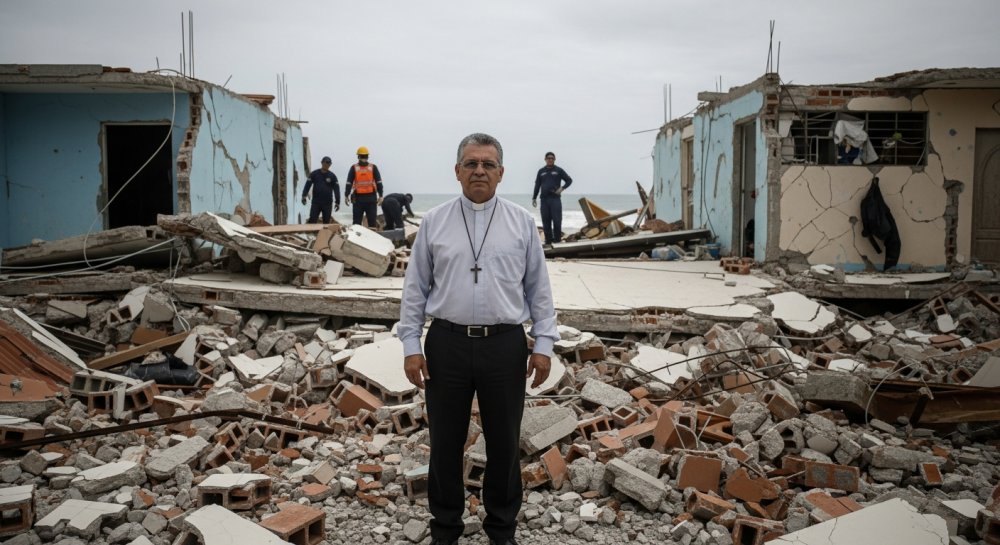
The devastating earthquakes that struck Venezuela last week continue to exact a heavy toll — now claiming the life of a dedicated minister who gave everything to help survivors.
Joaquín Rodríguez, a minister and leader at the La Guaira Church of Christ in coastal Venezuela, suffered a fatal heart attack after working three consecutive days in the aftermath of the June 24 disasters. The twin earthquakes measured 7.2 and 7.5 magnitude, killing at least 1,700 people and injuring thousands more.
Germán Chirinos, a minister in Falcón state in northwest Venezuela, described Rodríguez’s final hours.
“He was helping others and looking for survivors. Some brothers told me that they prayed together with him, and while he was driving, he died.”
La Guaira state sustained massive damage from the back-to-back quakes. At least four members of the La Guaira church are among the dead, Chirinos confirmed.
Chirinos remembered Rodríguez as a man of deep faith and servant leadership.
“He was a humble man with a big heart. [He was] very concerned and committed to the church in La Guaira.”
In Venezuela’s capital, Caracas, at least two church members also perished. Minister H. Jose Silencio painted a grim picture of conditions on the ground.
“The situation is critical. There are many dead, many injured and many missing. Many people have died in the rubble, and many survivors are left without hope.”
Christian nonprofits are mobilizing to bring relief to the beleaguered nation. Healing Hands International, One Kingdom, and Great Cities Missions — ministries associated with Churches of Christ — are collecting funds and organizing relief shipments for Venezuela, which has endured severe economic and political crises over the past decade.
Despite overwhelming loss, Christians across Venezuela are turning to Scripture for strength and comfort. Carlos León, a minister in San Antonio de los Altos, said believers are finding peace even amid profound suffering.
“In spite of the situation so difficult that we’re living through, we have a peace that passes all understanding. There’s sadness because of the pain people are suffering, that our brothers and sisters are suffering, and for the loss. There’s mourning, but there’s hope of something beyond.”
For León, the earthquakes call to mind the Old Testament prophet Elijah’s experience in 1 Kings, Chapter 19. When Elijah was overcome with grief, God told him to leave the cave where he had sought refuge.
“An earthquake appeared, but God wasn’t there in either the earthquake or the hurricane-force winds, but rather God was in the peaceful and gentle whisper that gives us peace, that gives us confidence,” León said.
The Venezuelan minister emphasized that Christians are called not to offer easy answers during times of suffering, but to provide genuine comfort and presence.
“Listen to victims and pray with them, pray or listen to them, cry with them and be there … be there serving them, so they feel our love and our empathy.”
Chirinos expressed gratitude for the global Christian community’s response.
“The whole congregation, nationally and worldwide, are together in this trying to help any way they can. So thanks to God and to all of you.”
Let us know what you think, please share your thoughts in the comments below.
Faith Facts
- Church elder Juan Lázaro pivoted his Sunday sermon to address devastating earthquakes in Venezuela, focusing on Romans 8 and God’s sovereignty over suffering
- The Church of Christ on Teruel Street in Madrid is 80% Latin American immigrants, with 15-20 Venezuelan members among the congregation
- Over 1,700 people perished in the Venezuelan earthquakes, including members of Churches of Christ, as the tragedy strikes close to home for Spanish congregations
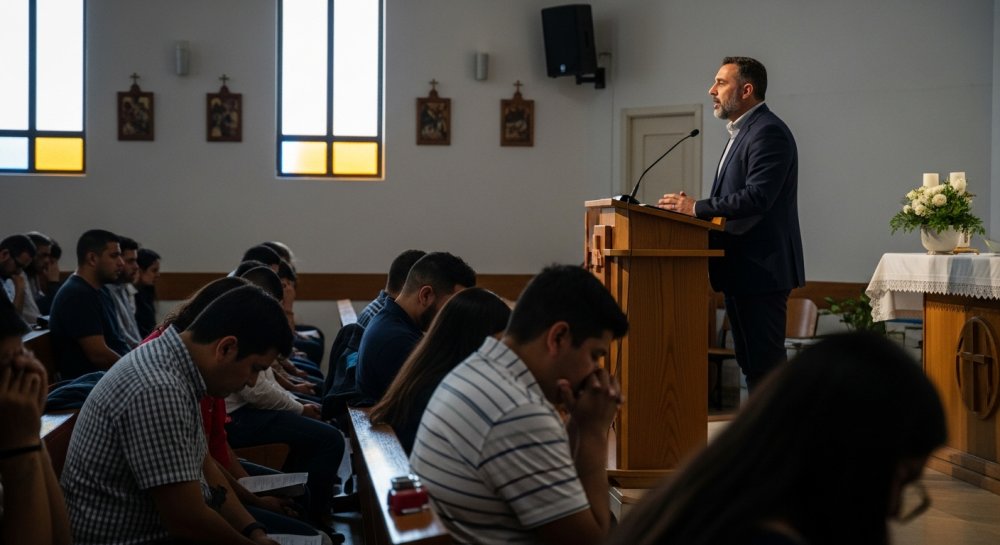
Juan Lázaro had already prepared his Sunday message when back-to-back earthquakes devastated Venezuela. So the elder of the Church of Christ on Teruel Street in Madrid decided to pivot from the New Testament’s call to evangelize to its affirmation that even life’s blows point to God’s glory.
“I want you to adopt a biblical perspective toward understanding the reason things happen,” Lázaro told the congregation in Spain’s capital, basing his sermon on Romans 8. “Don’t judge by human standards — instead, try to have God’s perspective on what happens in your life, your world, your moment in time.”
Although the South American nation of Venezuela is some 4,390 miles away from Spain, it feels much closer at Teruel Street, which could be called the mother congregation for Churches of Christ in Spain. While Spain was once the colonizer of the Americas, in recent decades the human flow across the Atlantic has reversed, with Latin Americans immigrating to the country for greater economic opportunities.
Lázaro said that the Teruel Street congregation has 15 to 20 Venezuelan members, along with immigrants from Colombia, Ecuador, Peru, Bolivia, Argentina, Guatemala and El Salvador. He estimates that 80 percent of the church is from Latin America.
In his sermon, Lázaro urged the congregation to take comfort in Paul’s assurance that the world and its suffering are moving toward redemption.
“What happens is not outside God’s control. God has sovereign control over events, circumstances and people,” he said.
And God is no stranger to suffering.
“The God of the Christian faith is not a God who takes it on himself to explain ‘why’ — why our Venezuelan brothers and sisters have died,” Lázaro said.
Rather, the leader argued, “he is a God who accompanies us with a view toward the pain that has entered human history.” Jesus was a “man of sorrows” who “suffered every kind of brokenness.”
For Venezuelans living in Spain, “distance does not lessen the pain we feel when tragedy strikes our homeland,” said Pedro Andrade, a longtime church planter in Venezuela who recently moved with his wife, Luisa, to Vigo, Spain. The couple works with the growing population of Venezuelans arriving in the port city.
“What makes this situation especially difficult is the feeling of helplessness,” Andrade said. In the past, he and his wife participated directly in disaster response, alongside Churches of Christ across Venezuela. “Today, being so far away, we cannot respond in the same way, and that reality weighs heavily on our hearts.”
Members of Churches of Christ are among the 1,700-plus souls that perished in the quakes. As the Andrades mourn the losses, they find comfort in passages including Psalm 34:18: “The Lord is near to the brokenhearted and saves those who are crushed in spirit.”
“Yet even in the midst of loss, we trust that God continues to work according to his purpose,” Pedro Andrade said. “We pray that those who have survived, those who witnessed these events and those whose lives have been spared will reflect on the fragility of life and seek the hope that is found in Christ. … This is a time for the church to demonstrate compassion, generosity and the selfless agape love that reflects the character of our Savior.”
Back in Madrid, Lázaro spoke of the tremendous changes Spain has undergone since Spanish author and evangelist Juan Antonio Monroy, now in his 90s, helped establish the Teruel Street congregation in the 1960s. Protestant Christians at the time felt threatened by Spain’s powerful Catholic Church, with its historic influence on Spanish society. Now 16 Churches of Christ meet in Spain, including five in Madrid.
Monroy later became a pioneering evangelist in Cuba, working with the Herald of Truth ministry. The Teruel Street leader sees today’s immigrant church members as a gift.
“From the perspective of the churches and people of faith, the fact that people from Spanish America have come has enriched Spain from a religious, economic and cultural perspective,” Lázaro said. “The presence of these brothers and sisters … is serving as a great blessing because they come with excitement … and get closely involved in the work of the church.”
Let us know what you think, please share your thoughts in the comments below.
Faith Facts
- A new Christian healing center in the Sahel region provides trauma recovery for persecuted believers
- The center focuses on Christ-centered healing of mind, body, spirit, and soul
- Survivors of persecution are responding with forgiveness and a desire to share the Gospel with their abusers
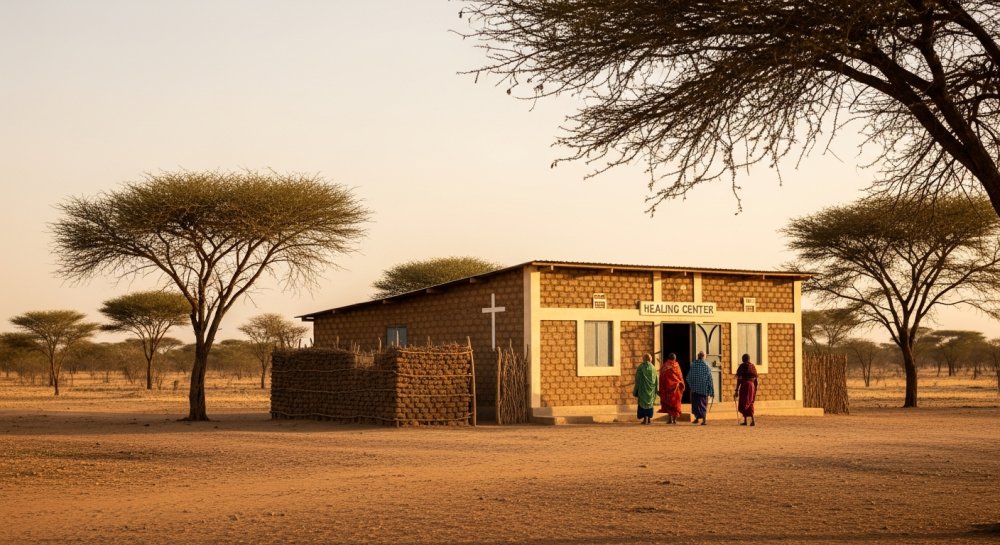
In one of the world’s most dangerous regions for Christians, a beacon of hope has emerged for believers enduring persecution and abuse. The Sahel—a vast semi-arid region stretching across Africa from Senegal to Sudan—has become increasingly hostile to Christian communities in recent years.
A newly established healing center is now offering traumatized believers a pathway to recovery, placing Jesus Christ at the center of the healing process. The facility provides comprehensive care that addresses the full scope of trauma—mental, physical, spiritual, and emotional.
The center’s approach differs from secular trauma care by recognizing that true wholeness comes through faith in Christ. Survivors receive counseling, medical care, and biblical teaching designed to restore what violence and persecution have damaged.
Perhaps most remarkably, those who find healing at the center are demonstrating the transformative power of the Gospel in an unexpected way. Rather than harboring bitterness toward those who harmed them, healed believers are expressing a desire to share the love of Christ with their former persecutors.
This Christ-like response mirrors Jesus’ own words from the cross: “Father, forgive them, for they know not what they do.” The willingness of persecution survivors to extend grace to their abusers stands as powerful testimony to the genuine nature of their healing.
The Sahel region has experienced escalating violence against Christians, with Islamic extremist groups gaining ground in countries including Mali, Burkina Faso, and Niger. Churches have been burned, believers killed, and entire communities displaced.
Despite these challenges, the establishment of this healing center demonstrates that the Church continues to advance even in places where faith carries a tremendous cost. The center represents not just a place of physical refuge, but a demonstration that Christ’s power to heal and restore transcends even the most severe trauma.
The ministry serves as a reminder that where darkness seems overwhelming, God continues to work through His people to bring light, hope, and redemption.
Let us know what you think, please share your thoughts in the comments below.


-

 Self-Reliance1 year ago
Trump’s Bold Move Uncovers Massive Social Security Fraud
-

 Faith1 year ago
New Clues Emerge in Noah’s Ark Mystery
-

 News1 year ago
Governor Walz’s Rhetoric Sparks National Controversy
-

 News1 year ago
Mel Gibson’s ‘The Passion of the Christ’ Sequel Title Announced
-

 Family1 year ago
Texas Lawmaker Targets Furries in Schools
-

 Freedom1 year ago
Maine Lawmaker Challenges Sports Fairness Controversy
-

 Family1 year ago
Canada’s Controversial Policy Sparks Ethical Debate
-
Faith7 months ago
Congress Hears Pleas for Nigerian Christians