
Faith
Spanish Churches Rally as Venezuelan Earthquake Survivors Flee to Europe

Faith Facts
- Church elder Juan Lázaro pivoted his Sunday sermon to address devastating earthquakes in Venezuela, focusing on Romans 8 and God’s sovereignty over suffering
- The Church of Christ on Teruel Street in Madrid is 80% Latin American immigrants, with 15-20 Venezuelan members among the congregation
- Over 1,700 people perished in the Venezuelan earthquakes, including members of Churches of Christ, as the tragedy strikes close to home for Spanish congregations
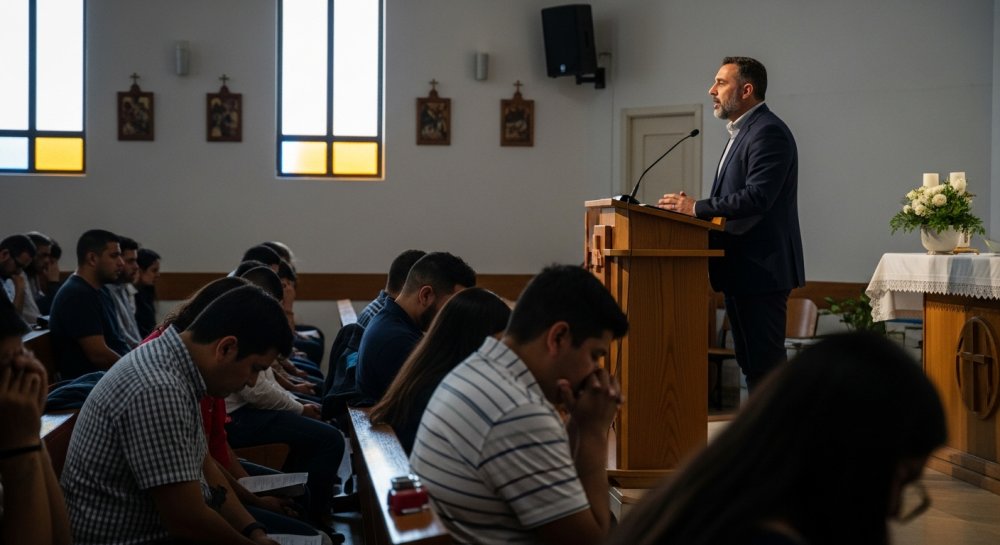
Juan Lázaro had already prepared his Sunday message when back-to-back earthquakes devastated Venezuela. So the elder of the Church of Christ on Teruel Street in Madrid decided to pivot from the New Testament’s call to evangelize to its affirmation that even life’s blows point to God’s glory.
“I want you to adopt a biblical perspective toward understanding the reason things happen,” Lázaro told the congregation in Spain’s capital, basing his sermon on Romans 8. “Don’t judge by human standards — instead, try to have God’s perspective on what happens in your life, your world, your moment in time.”
Although the South American nation of Venezuela is some 4,390 miles away from Spain, it feels much closer at Teruel Street, which could be called the mother congregation for Churches of Christ in Spain. While Spain was once the colonizer of the Americas, in recent decades the human flow across the Atlantic has reversed, with Latin Americans immigrating to the country for greater economic opportunities.
Lázaro said that the Teruel Street congregation has 15 to 20 Venezuelan members, along with immigrants from Colombia, Ecuador, Peru, Bolivia, Argentina, Guatemala and El Salvador. He estimates that 80 percent of the church is from Latin America.
In his sermon, Lázaro urged the congregation to take comfort in Paul’s assurance that the world and its suffering are moving toward redemption.
“What happens is not outside God’s control. God has sovereign control over events, circumstances and people,” he said.
And God is no stranger to suffering.
“The God of the Christian faith is not a God who takes it on himself to explain ‘why’ — why our Venezuelan brothers and sisters have died,” Lázaro said.
Rather, the leader argued, “he is a God who accompanies us with a view toward the pain that has entered human history.” Jesus was a “man of sorrows” who “suffered every kind of brokenness.”
For Venezuelans living in Spain, “distance does not lessen the pain we feel when tragedy strikes our homeland,” said Pedro Andrade, a longtime church planter in Venezuela who recently moved with his wife, Luisa, to Vigo, Spain. The couple works with the growing population of Venezuelans arriving in the port city.
“What makes this situation especially difficult is the feeling of helplessness,” Andrade said. In the past, he and his wife participated directly in disaster response, alongside Churches of Christ across Venezuela. “Today, being so far away, we cannot respond in the same way, and that reality weighs heavily on our hearts.”
Members of Churches of Christ are among the 1,700-plus souls that perished in the quakes. As the Andrades mourn the losses, they find comfort in passages including Psalm 34:18: “The Lord is near to the brokenhearted and saves those who are crushed in spirit.”
“Yet even in the midst of loss, we trust that God continues to work according to his purpose,” Pedro Andrade said. “We pray that those who have survived, those who witnessed these events and those whose lives have been spared will reflect on the fragility of life and seek the hope that is found in Christ. … This is a time for the church to demonstrate compassion, generosity and the selfless agape love that reflects the character of our Savior.”
Back in Madrid, Lázaro spoke of the tremendous changes Spain has undergone since Spanish author and evangelist Juan Antonio Monroy, now in his 90s, helped establish the Teruel Street congregation in the 1960s. Protestant Christians at the time felt threatened by Spain’s powerful Catholic Church, with its historic influence on Spanish society. Now 16 Churches of Christ meet in Spain, including five in Madrid.
Monroy later became a pioneering evangelist in Cuba, working with the Herald of Truth ministry. The Teruel Street leader sees today’s immigrant church members as a gift.
“From the perspective of the churches and people of faith, the fact that people from Spanish America have come has enriched Spain from a religious, economic and cultural perspective,” Lázaro said. “The presence of these brothers and sisters … is serving as a great blessing because they come with excitement … and get closely involved in the work of the church.”
Let us know what you think, please share your thoughts in the comments below.

Faith Facts
- Frank Turek wakes each morning and ends each evening thinking of Charlie Kirk.
- One year after witnessing the assassination of the conservative activist, Turek continues his commitment to share the Gospel on college campuses.
- The loss of Charlie Kirk has strengthened Turek’s resolve to defend biblical truth among young people.
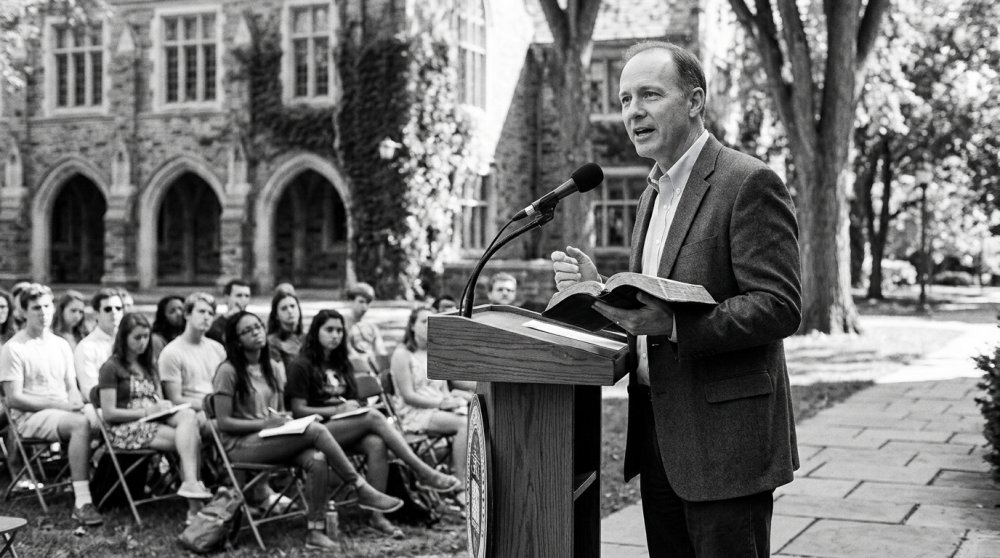
Christian apologist Frank Turek has carried the memory of Charlie Kirk with him every single day since witnessing the conservative activist’s assassination at Utah Valley University. The grief remains real, yet so does his steadfast determination to keep proclaiming the Gospel.
Each morning when he wakes and each night before he sleeps, Turek’s first and last thoughts return to Kirk. The loss of a friend and fellow defender of truth has left a deep mark, but it has not silenced his mission.
“The first person I think of when I wake up is Charlie.”
Turek’s ongoing work on college campuses reflects a commitment to the same values Kirk championed. He continues reaching students with biblical truth, refusing to let tragedy silence the message of Christ.
Let us know what you think, please share your thoughts in the comments below.
Faith Facts
- Scripture shows God pairing leaders such as Moses with Joshua, David with Jonathan, and Paul with Barnabas and Timothy.
- Jesus sent the seventy-two disciples out in pairs, modeling shared leadership rather than isolation.
- Healthy Christian leaders are called to build friendships that strengthen their walk with Christ and service to others.
Leadership brings heavy responsibility whether you run a business, shepherd a congregation or coach a youth team. Decisions rest on your shoulders and burdens often feel uniquely yours.
Many leaders quietly admit that the role can feel lonely. Yet loneliness does not have to become isolation that harms both the leader and the people served.
“Leadership will always have moments of loneliness. That comes with the territory. But that doesn’t have to mean isolation.”
Throughout the Bible, God provides companions for those He calls to lead. These relationships offer wisdom, encouragement and accountability that solitary leadership cannot supply.
“Build deep friendships with fellow leaders. No leader feels like they have time for this. Yet few leaders make it to the finish line healthy without it.”
Leaders are encouraged to take two practical steps. First, seek a coach or mentor who is a few steps ahead and willing to share honest insight and guidance.
Regular meetings with such a mentor can help a leader recognize blind spots, set growth goals and stay faithful when the fire of service begins to fade.
Second, build deep friendships with other leaders who share the same values and challenges. These relationships offer laughter, correction, prayer and perspective that refresh the soul.
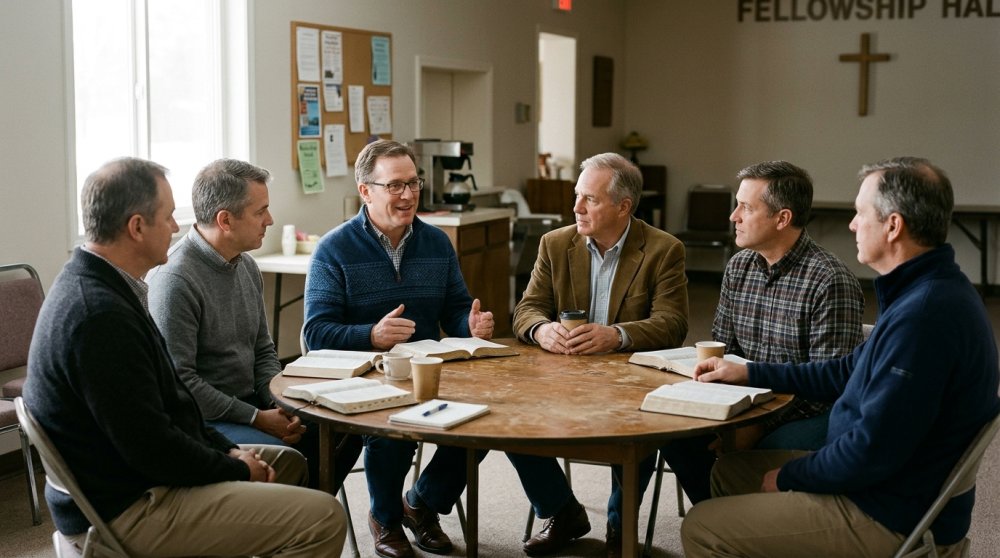
For more than twenty years, one minister has walked alongside six fellow leaders from Texas, Oklahoma and California. They meet weekly by video, attend conferences together and retreat each year for three days of honest conversation and prayer.
The investment of time and travel has strengthened each man’s ministry and personal walk with the Lord. Distance and busy schedules require intentionality, yet the spiritual return far outweighs the cost.
Christian leaders are urged to pray for the right companions, take the initiative to reach out and keep showing up even when the effort feels awkward at first. The people entrusted to their care deserve leaders who remain spiritually and emotionally healthy.
Let us know what you think, please share your thoughts in the comments below.
Faith Facts
- God’s design for human sexuality is rooted in marriage between one man and one woman.
- Scripture teaches that our bodies are temples of the Holy Spirit and should be honored accordingly.
- Christian teaching holds that sexual expression outside of biblical marriage leads to spiritual harm.
New legislation targeting extreme violent pornography marks a step toward protecting families from harmful content.
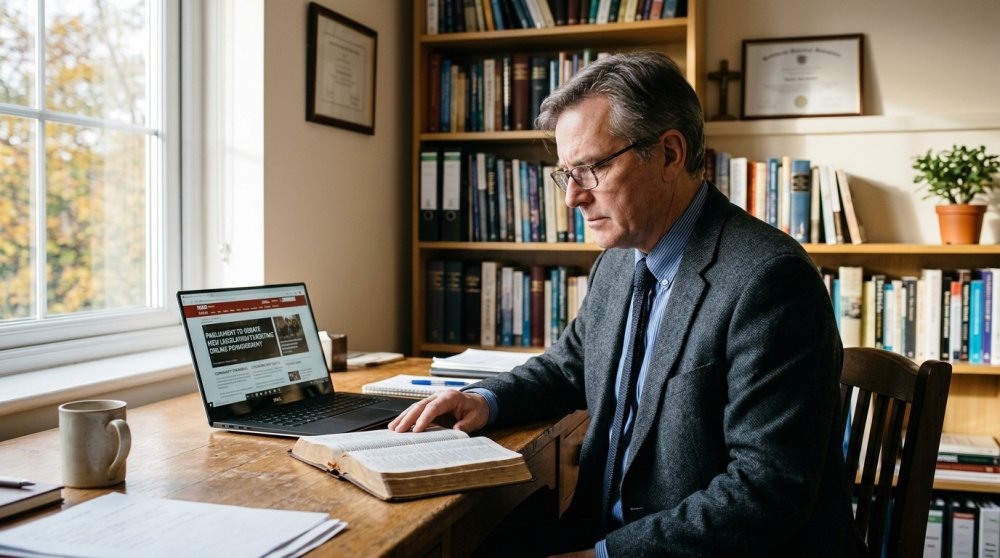
James Mildred, a Christian commentator, welcomes the criminalization of violent pornographic material while calling for broader restrictions.
“New legislation will criminalise some of the most extreme forms of violent pornography.”
Mildred argues that partial restrictions fail to address the deeper moral concerns surrounding all pornography.
The Christian perspective emphasizes that pornography in any form contradicts God’s intended purpose for human sexuality.
“James Mildred welcomes the change, but argues that God’s design for sex means porn should be banned altogether.”
This position reflects traditional Christian teaching that sexual intimacy belongs exclusively within the covenant of marriage.
Let us know what you think, please share your thoughts in the comments below.


-

 Self-Reliance2 years ago
Trump’s Bold Move Uncovers Massive Social Security Fraud
-

 Faith2 years ago
New Clues Emerge in Noah’s Ark Mystery
-

 News2 years ago
Governor Walz’s Rhetoric Sparks National Controversy
-

 News2 years ago
Mel Gibson’s ‘The Passion of the Christ’ Sequel Title Announced
-

 Family2 years ago
Texas Lawmaker Targets Furries in Schools
-

 Freedom2 years ago
Maine Lawmaker Challenges Sports Fairness Controversy
-

 Family1 year ago
Canada’s Controversial Policy Sparks Ethical Debate
-
Faith11 months ago
Congress Hears Pleas for Nigerian Christians