
Faith
Three Moments That Shaped Christian Ministry Around the World

Faith Facts
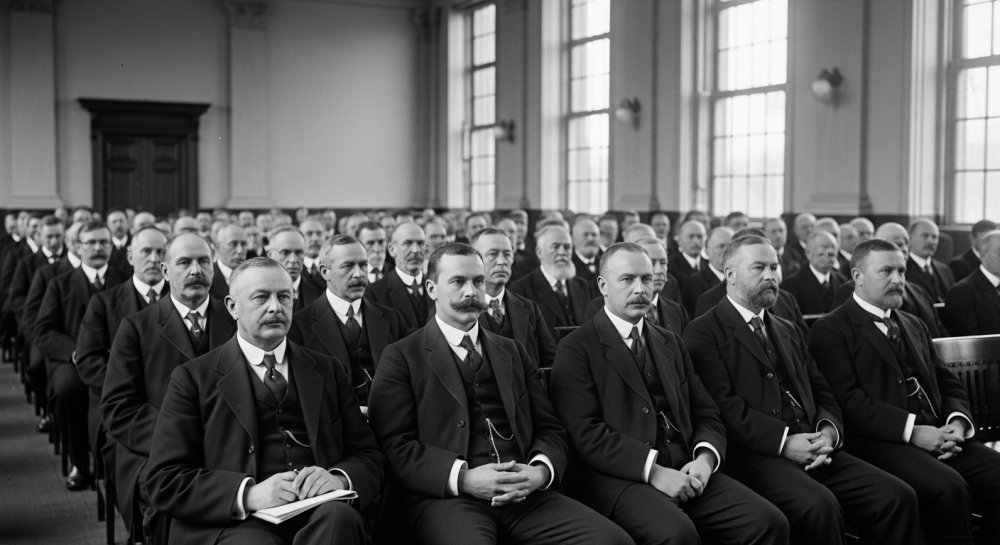
- The YMCA held its first-ever world conference this week in history, uniting Christian leaders across continents to advance youth ministry globally
- V.S. Azariah was born this week in Christian history, later becoming India’s first native Anglican bishop and a pioneering voice for indigenous church leadership
- Thomas Fuller, renowned English church historian and chaplain, passed away during this week in Christian history, leaving behind influential works on ecclesiastical history
Throughout the centuries, God has raised up faithful servants who have shaped the course of Christian ministry worldwide. This week marks the anniversaries of three significant events that demonstrate how the Holy Spirit has worked through devoted believers to advance the Gospel and strengthen the Body of Christ across cultural and geographic boundaries.
These historical moments remind us that faithful obedience to God’s calling can have ripple effects that transform nations and generations.
YMCA’s First World Conference
The Young Men’s Christian Association convened its inaugural world conference during this week in history, bringing together Christian leaders from multiple nations to discuss strategies for reaching young people with the Gospel. The gathering represented a pivotal moment in the organization’s evolution from local ministry to global movement.
Founded on biblical principles and committed to developing Christian character in young men, the YMCA had already established a strong presence in communities across Europe and North America. This first world conference solidified the organization’s international vision and created a framework for coordinated Christian outreach that would impact millions of young people in the decades to come.
The conference participants understood that cultivating spiritual formation in youth required intentional programming, dedicated facilities, and trained leaders who could model Christ-like character. Their commitment to these principles helped the YMCA become one of the most recognizable Christian organizations worldwide, though its mission has shifted considerably in recent decades from its evangelical foundations.
Birth of V.S. Azariah
Vedanayakam Samuel Azariah was born this week in Christian history in the South Indian state of Tamil Nadu. Raised in a Christian family, Azariah would become a transformative figure in the Anglican Church and a powerful advocate for indigenous church leadership in India.
In 1912, Azariah made history by becoming the first Indian bishop in the Anglican Communion, serving as Bishop of Dornakal. His appointment represented a significant milestone in breaking down colonial barriers within church leadership and demonstrated that the Gospel transcends cultural boundaries.
Throughout his episcopal ministry, Bishop Azariah emphasized evangelism, social reform, and the development of indigenous Christian leadership. He challenged Western missionaries to share authority with local believers and worked tirelessly to build a truly Indian expression of Anglican Christianity that honored both biblical orthodoxy and cultural context.
His legacy continues to inspire Christians in India and throughout the Global South who seek to lead churches that are both faithful to Scripture and relevant to their own cultural contexts.
Death of Thomas Fuller
Thomas Fuller, the distinguished English church historian and chaplain, passed away during this week in Christian history. Fuller served as a chaplain in the Royalist army during the English Civil War and remained faithful to the Anglican tradition throughout the tumultuous Commonwealth period.
Fuller is best remembered for his historical works, particularly “The Church History of Britain,” which chronicled the development of Christianity in England from ancient times through his own era. His writings combined meticulous research with engaging narrative style, making church history accessible to ordinary readers while maintaining scholarly rigor.
As a minister during one of England’s most divisive periods, Fuller demonstrated how Christians can maintain theological convictions while extending grace to those with different perspectives. His writings reflected both a deep love for the historic Christian faith and a charitable spirit toward those who disagreed with him on secondary matters.
Fuller’s commitment to preserving and communicating the story of God’s work in history serves as a model for Christians today who seek to understand how the Lord has guided His church through trials and triumphs across the centuries.
Let us know what you think, please share your thoughts in the comments below.


Faith Facts
- Actress Danica McKellar credits Candace Cameron Bure with leading her to a personal relationship with Jesus Christ.
- McKellar is best known for her childhood role as Winnie Cooper on the beloved family series “The Wonder Years.”
- Bure, a committed believer, has consistently used her platform to point others toward faith and traditional values.
Danica McKellar opened up about the meaningful influence of her longtime friend Candace Cameron Bure in her journey toward faith. The two former child stars developed a friendship that extended far beyond their early careers in Hollywood.
McKellar explained that Bure was the one who introduced her to Jesus in a personal way. Their shared history in the entertainment industry gave McKellar a trusted voice to hear when spiritual matters came up.
“Wonder Years” actress Danica McKellar shares how fellow child star Candace Cameron Bure helped bring her to Jesus.
McKellar has spoken openly about her growing faith and the importance of surrounding herself with fellow believers. She has described how that friendship helped anchor her during seasons of change and uncertainty.
The story reflects a pattern seen among many in Hollywood who quietly seek truth and community outside the spotlight. For McKellar, that path led her straight to the feet of Jesus through the faithful witness of a friend.
Let us know what you think, please share your thoughts in the comments below.

Faith Facts
- Danica McKellar credits Candace Cameron Bure with leading her to Christ four years ago.
- McKellar now views her acting career through a faith-centered lens.
- She seeks roles that reflect her Christian values and convictions.
Actress Danica McKellar has opened up about the moment she found faith in Christ. She credits longtime friend and fellow former child star Candace Cameron Bure for guiding her on that journey four years ago.
McKellar shared that her new relationship with Jesus has transformed the way she sees her career and the projects she now chooses to pursue. Instead of simply chasing roles for fame or success, she is now more intentional about the stories she tells on screen.
“It’s been Jesus this whole time”
McKellar’s transformation reflects a deeper commitment to living out her faith both on and off the screen. She has expressed gratitude for the spiritual mentorship she received from Bure, whose own public witness as a believer has long been a steady presence in Hollywood.
The actress says her faith has redefined her purpose, helping her to focus on projects that align with her Christian convictions rather than simply accepting work based on popularity or financial gain.
Let us know what you think, please share your thoughts in the comments below.
Faith Facts
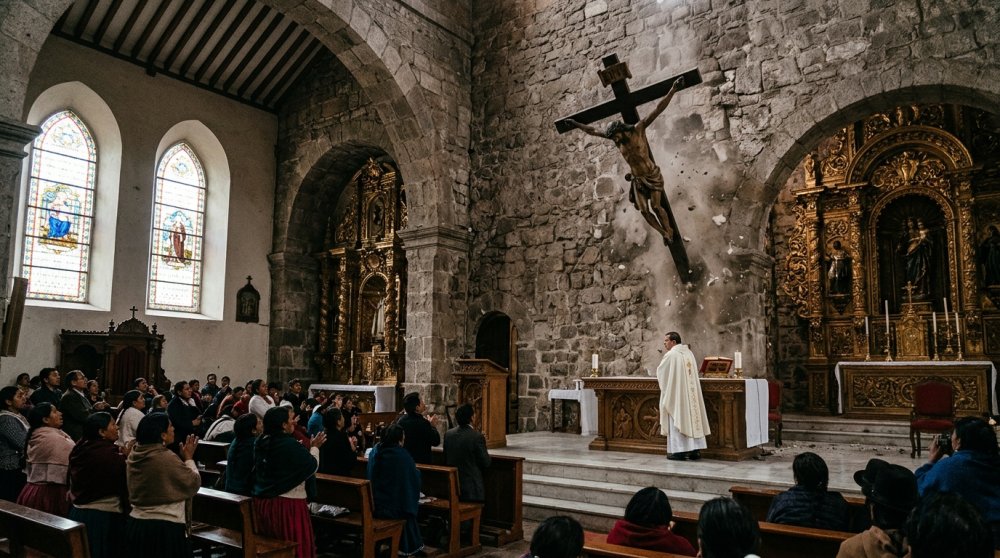
- A priest in Ecuador died during a church service when a large crucifix fell from the wall.
- Kenny Kinglesmith addresses unbelieving friends in an open letter about hope in Jesus amid suffering.
- Christian believers continue to place their trust in Christ even when tragedy strikes inside the sanctuary.
The sudden death of a priest while leading worship has shaken believers across Ecuador. Questions about suffering and divine purpose are rising again.
Kenny Kinglesmith has written an open letter to friends who do not believe. He explains why his hope in Jesus remains firm despite the pain.
“In the face of inexplicable suffering, I still choose to place my hope in Jesus.”
Many Christians are wrestling with how a loving God could allow such a loss inside His house. The event has prompted renewed reflection on the mystery of suffering.
Kinglesmith does not offer easy answers. Instead he points to the cross itself, where Christ endured the ultimate injustice yet brought redemption.
“I still choose to place my hope in Jesus.”
The tragedy has become a moment for believers to examine their own trust in God. It is also an opportunity to demonstrate compassion to those who question.
Kinglesmith urges Christians to live out their faith openly. He believes the witness of steadfast hope can speak louder than arguments.
“In the face of inexplicable suffering, I still choose to place my hope in Jesus.”
Let us know what you think, please share your thoughts in the comments below.


-

 Self-Reliance2 years ago
Trump’s Bold Move Uncovers Massive Social Security Fraud
-

 Faith2 years ago
New Clues Emerge in Noah’s Ark Mystery
-

 News2 years ago
Governor Walz’s Rhetoric Sparks National Controversy
-

 News2 years ago
Mel Gibson’s ‘The Passion of the Christ’ Sequel Title Announced
-

 Family2 years ago
Texas Lawmaker Targets Furries in Schools
-

 Freedom2 years ago
Maine Lawmaker Challenges Sports Fairness Controversy
-

 Family1 year ago
Canada’s Controversial Policy Sparks Ethical Debate
-
Faith11 months ago
Congress Hears Pleas for Nigerian Christians