
Faith
This Popular Sports Show Accidentally Reveals What’s Missing in Modern Churches


Faith Facts
- The hit show Ted Lasso models biblical discipleship principles through coaching relationships that mirror Christ’s investment in his followers
- Modern church culture often emphasizes personal growth over the biblical mandate to make disciples who make disciples
- True Christian maturity is measured not by what we know, but by how effectively we pass our faith to the next generation
A surprising source of spiritual wisdom has emerged from an unlikely place: a comedy series about an American football coach leading a British soccer team. As the show enters its fourth season with the launch of Richmond FC’s women’s team, believers are finding powerful parallels between the mentoring on screen and the Great Commission’s call to make disciples.
The comparison isn’t about entertainment—it’s about a fundamental shift in how we view spiritual maturity. Contemporary Christian culture has drifted toward self-improvement, treating faith like a personal development program rather than a transformative relationship meant to be shared.
The difference matters enormously for the future of the Church in America. When we focus exclusively on becoming “the best version of ourselves,” we miss the essential biblical pattern: Jesus didn’t just teach people—He invested in disciples who would invest in others.
Ted Lasso’s character consistently pours himself into his players, not just to win games but to develop their character and potential. He celebrates their growth and equips them to lead others. This mirrors the apostle Paul’s instruction to Timothy: “The things you have heard me say in the presence of many witnesses entrust to reliable people who will also be qualified to teach others.”
The blessings God gives us—spiritual gifts, biblical knowledge, life experience, financial resources—aren’t meant to end with us. They’re meant to flow through us to others, creating a multiplication effect that spreads the Gospel across generations.
American churches have become exceptionally good at gathering crowds for worship services and Bible studies. We’ve built impressive programs for spiritual consumption. But are we equally committed to spiritual reproduction? Are we intentionally raising up the next generation of faithful believers who will do the same?
The early church turned the world upside down not through sophisticated programs but through ordinary believers who had been with Jesus and couldn’t help but share what they’d received. They understood that discipleship wasn’t a program—it was a lifestyle of walking alongside others in faith.
This approach requires something our culture resists: time, vulnerability, and genuine investment in others’ spiritual lives. It means older women teaching younger women, as Titus commands. It means fathers discipling their children in the faith, not outsourcing spiritual formation to Sunday school. It means seasoned believers mentoring new Christians beyond the church building.
The self-focused spirituality of our age produces consumers, not disciples. It creates audiences, not armies of faithful witnesses. When the goal is personal fulfillment rather than kingdom multiplication, the Gospel stops advancing.
True biblical maturity isn’t measured by how much Bible knowledge we’ve accumulated or how polished our theology sounds. It’s measured by whether we’re faithfully passing the faith to others who will pass it to others still.
Jesus demonstrated this perfectly. He could have spent His entire earthly ministry preaching to massive crowds. Instead, He invested deeply in twelve men, who invested in others, who changed the world. This is God’s design for spiritual multiplication, and it remains His method today.
The question for every Christian isn’t just “Am I growing?” but “Who am I growing?” Not just “What am I learning?” but “Who am I teaching?” Not just “How is God blessing me?” but “How am I blessing others with what God has given me?”
Churches that embrace this discipleship model will look different. Small groups won’t just study Scripture together—they’ll intentionally equip members to lead future groups. Sunday schools won’t just teach children—they’ll train parents to be the primary spiritual educators. Youth programs won’t just entertain teenagers—they’ll prepare young people to share their faith and mentor peers.
This shift requires humility from church leaders who must resist building ministries around themselves and instead raise up others who might eventually surpass them. It requires patience from congregants who must value long-term multiplication over immediate results.
The Great Commission doesn’t say “make converts” or “grow audiences.” It says “make disciples”—followers of Jesus who obey His commands and teach others to do the same. This is the biblical standard, and anything less falls short of Christ’s vision for His Church.
When we pass on our faith intentionally and sacrificially, we participate in something eternal. We become links in an unbroken chain stretching back to the apostles and forward to Christ’s return. We ensure that the next generation inherits not just information about God but a living, vibrant relationship with Him.
The lessons from a fictional soccer coach serve as an unexpected reminder of timeless biblical truth: the measure of success isn’t personal achievement but faithful stewardship of what we’ve received by passing it to others.
Let us know what you think, please share your thoughts in the comments below.


Faith Facts
- Danica McKellar credits Candace Cameron Bure with leading her to Christ four years ago.
- McKellar now views her acting career through a faith-centered lens.
- She seeks roles that reflect her Christian values and convictions.
Actress Danica McKellar has opened up about the moment she found faith in Christ. She credits longtime friend and fellow former child star Candace Cameron Bure for guiding her on that journey four years ago.
McKellar shared that her new relationship with Jesus has transformed the way she sees her career and the projects she now chooses to pursue. Instead of simply chasing roles for fame or success, she is now more intentional about the stories she tells on screen.
“It’s been Jesus this whole time”
McKellar’s transformation reflects a deeper commitment to living out her faith both on and off the screen. She has expressed gratitude for the spiritual mentorship she received from Bure, whose own public witness as a believer has long been a steady presence in Hollywood.
The actress says her faith has redefined her purpose, helping her to focus on projects that align with her Christian convictions rather than simply accepting work based on popularity or financial gain.
Let us know what you think, please share your thoughts in the comments below.
Faith Facts
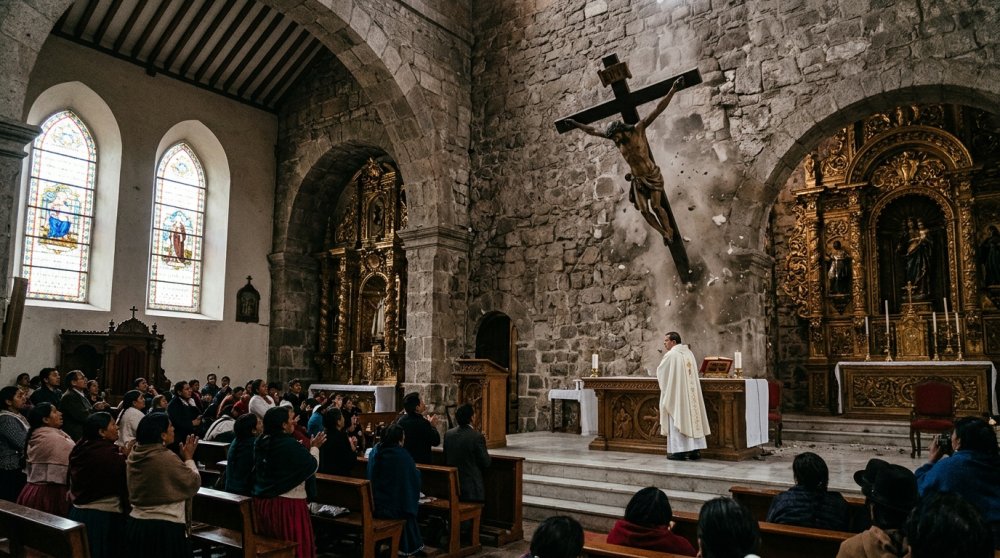
- A priest in Ecuador died during a church service when a large crucifix fell from the wall.
- Kenny Kinglesmith addresses unbelieving friends in an open letter about hope in Jesus amid suffering.
- Christian believers continue to place their trust in Christ even when tragedy strikes inside the sanctuary.
The sudden death of a priest while leading worship has shaken believers across Ecuador. Questions about suffering and divine purpose are rising again.
Kenny Kinglesmith has written an open letter to friends who do not believe. He explains why his hope in Jesus remains firm despite the pain.
“In the face of inexplicable suffering, I still choose to place my hope in Jesus.”
Many Christians are wrestling with how a loving God could allow such a loss inside His house. The event has prompted renewed reflection on the mystery of suffering.
Kinglesmith does not offer easy answers. Instead he points to the cross itself, where Christ endured the ultimate injustice yet brought redemption.
“I still choose to place my hope in Jesus.”
The tragedy has become a moment for believers to examine their own trust in God. It is also an opportunity to demonstrate compassion to those who question.
Kinglesmith urges Christians to live out their faith openly. He believes the witness of steadfast hope can speak louder than arguments.
“In the face of inexplicable suffering, I still choose to place my hope in Jesus.”
Let us know what you think, please share your thoughts in the comments below.
Faith Facts
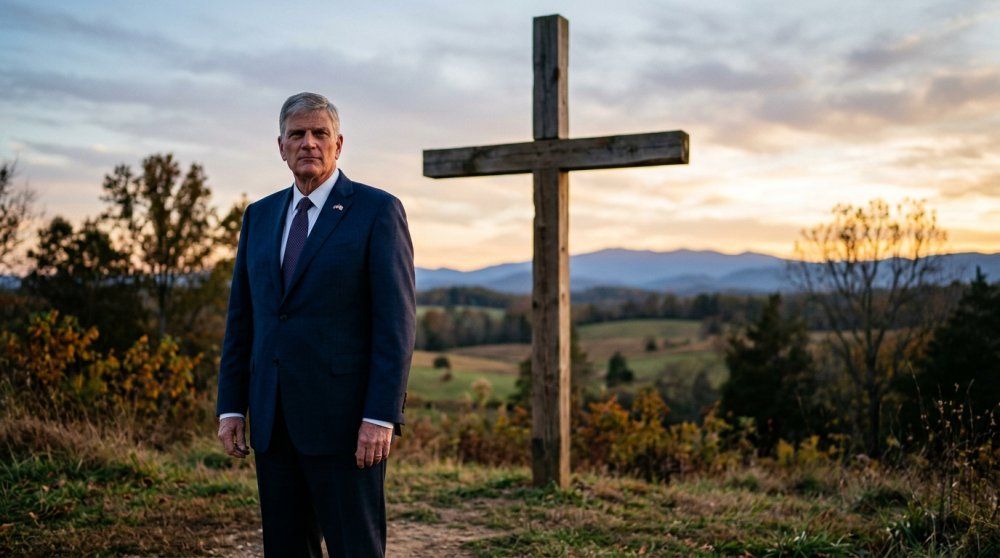
- Franklin Graham was raised in the shadow of his father Billy Graham, one of the most influential Christian leaders of the twentieth century.
- He has publicly stated that he never tried to become Billy Graham and instead sought to follow the distinct path God set before him.
- The younger Graham has carried the Gospel message across the globe through Samaritan’s Purse and the Billy Graham Evangelistic Association while maintaining a clear Christian conservative witness.
Franklin Graham recently opened up about the challenges of growing up in the household of the twentieth century’s most renowned evangelist. He explained that being the son of Billy Graham carried both a tremendous blessing and a heavy weight of expectations.
Despite the public scrutiny and inevitable comparisons, Graham made a deliberate choice early in life. He decided he would not attempt to replicate his father’s ministry or persona in any way.
“I never try to be Billy Graham,”
he said. This statement reflects the conviction that God equips each believer for a unique assignment rather than a copy of someone else’s.
Graham’s own ministry has grown into a powerful force for the Gospel through both the Billy Graham Evangelistic Association and the international relief work of Samaritan’s Purse. His approach has been marked by direct, unapologetic proclamation of biblical truth on issues ranging from religious liberty to the sanctity of life and traditional marriage.
“I never try to be Billy Graham,”
he reiterated, underscoring that his calling has always been to serve the Lord faithfully in the time and culture where God has placed him.
Today Franklin Graham continues to lead large-scale evangelistic events across the United States and around the world. He remains a steady voice for Christian values at a time when many pulpits have grown silent on cultural matters.
Let us know what you think, please share your thoughts in the comments below.


-

 Self-Reliance2 years ago
Trump’s Bold Move Uncovers Massive Social Security Fraud
-

 Faith2 years ago
New Clues Emerge in Noah’s Ark Mystery
-

 News2 years ago
Governor Walz’s Rhetoric Sparks National Controversy
-

 News2 years ago
Mel Gibson’s ‘The Passion of the Christ’ Sequel Title Announced
-

 Family2 years ago
Texas Lawmaker Targets Furries in Schools
-

 Freedom2 years ago
Maine Lawmaker Challenges Sports Fairness Controversy
-

 Family1 year ago
Canada’s Controversial Policy Sparks Ethical Debate
-
Faith11 months ago
Congress Hears Pleas for Nigerian Christians