
Faith
Why a Growing UFO Obsession Could Lead Christians Astray


Faith Facts
- Christian leaders warn that humanity’s fascination with UFOs reflects ancient spiritual temptations rather than genuine scientific inquiry
- The desire to uncover hidden knowledge and cross divine boundaries mirrors the serpent’s temptation in Genesis
- Believers are urged to find certainty in Scripture and God’s revelation rather than in occult speculation and extraterrestrial phenomena
As government disclosures about unidentified aerial phenomena continue to make headlines, Christian leaders are sounding an alarm about spiritual dangers lurking beneath the surface. The renewed cultural fascination with UFOs and potential extraterrestrial life isn’t simply a matter of scientific curiosity—it may represent one of humanity’s oldest and most dangerous spiritual temptations.
Writer and Christian commentator James Cary argues that our modern preoccupation with UFOs and the unexplained echoes the very first temptation in the Garden of Eden. The serpent’s promise to Eve—”you will be like God, knowing good and evil”—represents humanity’s persistent desire to access hidden knowledge and cross boundaries that the Creator has established for our protection.
“This fascination is not new, but part of humanity’s oldest temptation: the desire to know what is hidden, cross boundaries God has set and seek certainty anywhere but in Him,” Cary explains.
The warning comes at a critical time when increasing numbers of Americans report belief in extraterrestrial visitation and government conspiracy theories surrounding UFO phenomena. Some Christian theologians express concern that major “disclosure” events could create confusion among believers who haven’t grounded their worldview firmly in biblical truth.
Throughout Church history, Christians have consistently faced the temptation to seek hidden or esoteric knowledge outside of God’s revealed Word. From Gnostic heresies in the early centuries to modern New Age movements, the pattern remains consistent: a rejection of God’s sufficient revelation in favor of secret wisdom available only to spiritual elites.
The UFO phenomenon carries particular spiritual risks because it blends scientific-sounding language with fundamentally occult themes. Many UFO encounters and alleged “alien abduction” experiences share striking similarities with demonic manifestations and occult spiritual experiences documented throughout history. Researchers have noted that many who claim contact with extraterrestrial beings report messages that contradict biblical teaching and promote spiritual deception.
Christian apologists emphasize that believers must exercise discernment when evaluating extraordinary claims. While God certainly could have created life elsewhere in the universe, the Bible’s redemptive narrative centers on Earth and humanity’s unique relationship with the Creator. Any phenomena that draw people away from Christ and biblical authority should be viewed with suspicion, regardless of how they present themselves.
The desire for certainty and control drives much of humanity’s fascination with the paranormal and unexplained. Rather than resting in faith and trusting God’s wisdom in revealing only what we need to know, modern people—including Christians—can become obsessed with uncovering every mystery and secret.
Scripture consistently warns against seeking forbidden knowledge through occult means, including divination, mediumship, and consorting with spiritual entities outside God’s authority. Deuteronomy 18:10-12 explicitly condemns these practices, and the New Testament confirms that spiritual forces of darkness actively work to deceive humanity.
Cary urges Christians to remember that God has given us everything we need for life and godliness through knowledge of Christ (2 Peter 1:3). While healthy curiosity about creation is natural and good, believers must guard against the pride that demands answers to every question and the anxiety that cannot rest without complete understanding.
The path forward for Christians requires balancing openness to genuine scientific discovery with spiritual wisdom and discernment. Believers should neither dismiss all unusual phenomena as necessarily demonic nor uncritically accept every extraordinary claim. Instead, we must test all things against Scripture and hold fast to what is good (1 Thessalonians 5:21).
As cultural fascination with UFOs and the paranormal continues to grow, the Church has an opportunity to point people toward the true source of hope and certainty. Rather than seeking hidden knowledge or spectacular signs, Christians find their confidence in the God who has revealed Himself fully in Jesus Christ—the same yesterday, today, and forever.
Let us know what you think, please share your thoughts in the comments below.

Faith Facts
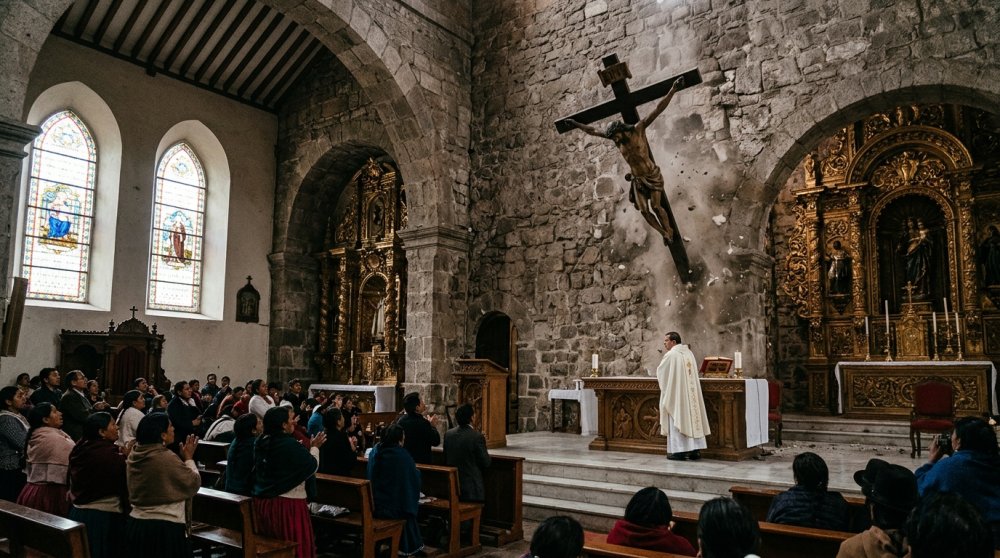
- A priest in Ecuador died during a church service when a large crucifix fell from the wall.
- Kenny Kinglesmith addresses unbelieving friends in an open letter about hope in Jesus amid suffering.
- Christian believers continue to place their trust in Christ even when tragedy strikes inside the sanctuary.
The sudden death of a priest while leading worship has shaken believers across Ecuador. Questions about suffering and divine purpose are rising again.
Kenny Kinglesmith has written an open letter to friends who do not believe. He explains why his hope in Jesus remains firm despite the pain.
“In the face of inexplicable suffering, I still choose to place my hope in Jesus.”
Many Christians are wrestling with how a loving God could allow such a loss inside His house. The event has prompted renewed reflection on the mystery of suffering.
Kinglesmith does not offer easy answers. Instead he points to the cross itself, where Christ endured the ultimate injustice yet brought redemption.
“I still choose to place my hope in Jesus.”
The tragedy has become a moment for believers to examine their own trust in God. It is also an opportunity to demonstrate compassion to those who question.
Kinglesmith urges Christians to live out their faith openly. He believes the witness of steadfast hope can speak louder than arguments.
“In the face of inexplicable suffering, I still choose to place my hope in Jesus.”
Let us know what you think, please share your thoughts in the comments below.

Faith Facts
- Franklin Graham was raised in the shadow of his father Billy Graham, one of the most influential Christian leaders of the twentieth century.
- He has publicly stated that he never tried to become Billy Graham and instead sought to follow the distinct path God set before him.
- The younger Graham has carried the Gospel message across the globe through Samaritan’s Purse and the Billy Graham Evangelistic Association while maintaining a clear Christian conservative witness.
Franklin Graham recently opened up about the challenges of growing up in the household of the twentieth century’s most renowned evangelist. He explained that being the son of Billy Graham carried both a tremendous blessing and a heavy weight of expectations.
Despite the public scrutiny and inevitable comparisons, Graham made a deliberate choice early in life. He decided he would not attempt to replicate his father’s ministry or persona in any way.
“I never try to be Billy Graham,”
he said. This statement reflects the conviction that God equips each believer for a unique assignment rather than a copy of someone else’s.
Graham’s own ministry has grown into a powerful force for the Gospel through both the Billy Graham Evangelistic Association and the international relief work of Samaritan’s Purse. His approach has been marked by direct, unapologetic proclamation of biblical truth on issues ranging from religious liberty to the sanctity of life and traditional marriage.
“I never try to be Billy Graham,”
he reiterated, underscoring that his calling has always been to serve the Lord faithfully in the time and culture where God has placed him.
Today Franklin Graham continues to lead large-scale evangelistic events across the United States and around the world. He remains a steady voice for Christian values at a time when many pulpits have grown silent on cultural matters.
Let us know what you think, please share your thoughts in the comments below.
Faith Facts
- James Talarico is a member of the Presbyterian Church (U.S.A.)
- Rev. Jim Rigby serves as Talarico’s longtime pastor
- Talarico describes his Senate campaign as a form of ministry
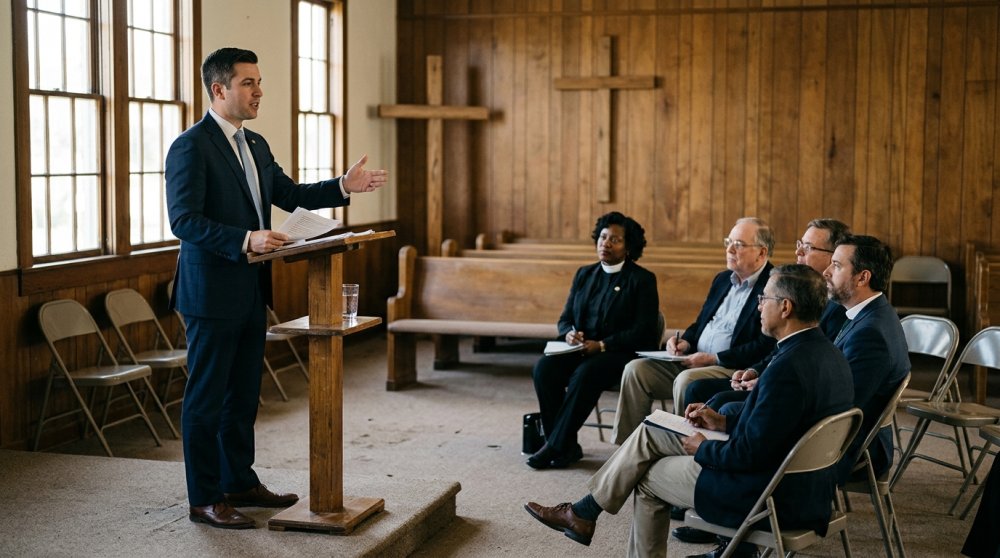
Democratic Texas state Rep. James Talarico addressed a gathering of faith leaders on Monday evening. The lawmaker shared how his pastor encouraged him to seek higher office.
Talarico credited the Rev. Jim Rigby with shaping his decision to run for the U.S. Senate. He presented the campaign as an extension of his Christian calling.
“A form of ministry.”
The PCUSA pastor reportedly framed political service as a faithful response to God’s calling. Talarico embraced this view in his remarks to the audience.
The Presbyterian Church (U.S.A.) has long maintained a progressive stance on social and political issues. Talarico’s comments align with that denominational direction.
Texas voters will soon weigh whether this interpretation of ministry resonates with their understanding of Christian citizenship. The race promises to test competing visions of faith and public service.
Let us know what you think, please share your thoughts in the comments below.


-

 Self-Reliance2 years ago
Trump’s Bold Move Uncovers Massive Social Security Fraud
-

 Faith2 years ago
New Clues Emerge in Noah’s Ark Mystery
-

 News2 years ago
Governor Walz’s Rhetoric Sparks National Controversy
-

 News2 years ago
Mel Gibson’s ‘The Passion of the Christ’ Sequel Title Announced
-

 Family2 years ago
Texas Lawmaker Targets Furries in Schools
-

 Freedom2 years ago
Maine Lawmaker Challenges Sports Fairness Controversy
-

 Family1 year ago
Canada’s Controversial Policy Sparks Ethical Debate
-
Faith11 months ago
Congress Hears Pleas for Nigerian Christians