
Faith
These Nashville Churches Found the Secret to Ending Senior Isolation


Faith Facts
- Nashville churches are pioneering new senior ministries that transform older adults from passive recipients into active servants of God’s kingdom
- The Sunny Day Club at Harpeth Hills Church provides respite care for memory loss patients while giving senior volunteers renewed purpose in ministry
- Churches across denominations are collaborating through the Intentional Older Adult Ministry to share ideas and combat the epidemic of senior loneliness affecting 1 in 3 Americans over 50
NASHVILLE, TENN. — “I’m part of the irrelevance.”
Those words, from an older adult at the Harpeth Hills Church of Christ, stopped Robyn Arab in her tracks. As director of the church’s Resource Center on Aging, Arab had spent years promoting resources and working alongside seniors.
But it surprised her that a church member with a lifetime of faith and service could believe they no longer mattered.
With 57 million baby boomers in the U.S. as of 2024, churches are facing a new challenge: how to keep older adults active and valued in God’s work. “The spirit of God is just as actively at work in someone who’s 80 years old as someone who’s eight years old,” said Jason Thompson, executive minister for the Harpeth Hills church.
Across Nashville, churches are rethinking senior ministry by expanding beyond traditional care. Instead of viewing seniors solely as recipients, congregations are creating programs that enable seniors to serve others, build relationships and rediscover God’s purpose in their lives.
‘They’re just as needed as the youth’
At Harpeth Hills, the Resource Center for Aging has developed programs designed to meet seniors and their families where they are. The center originated in 2007, when former minister James Vandiver wanted to provide a space for seniors that was more meaningful than “loading up the van and seeing the leaves.”
Vandiver brought Arab on board as a contractor in 2011, and 12 years later, Arab took over the center. Today, the program offers a range of unique services, including education, family counseling, frozen meals and respite care.
Among the most attended programs is the Sunny Day Club, a weekly three-hour gathering designed for seniors experiencing the early stages of memory loss, including Alzheimer’s disease and various forms of dementia.
Each Thursday morning, volunteers arrive at the church around 10:30 a.m. for an overview of the day’s activities before participants’ arrival. The schedule includes many activities tailored for people managing memory loss, balancing faith-based elements with physical activities like a ring toss game.
As seniors and their caregivers walk through the door, volunteers greet them with smiles and hugs, reminding them they are not forgotten.
“I see God opening those doors,” Arab said.
“He is helping more people find a purpose and letting them know they’re just as needed as the youth.”
The caregivers who drop off attendees also receive something rare when caring for a loved one — time.
For families, the impact of the Sunny Day Club extends far beyond the handful of hours their loved ones spend at Harpeth Hills. Helper and retired nurse Inez Stubblefield recalled one family member who returned to the gym after months away because of the time the program freed up.
“You can’t imagine what three hours of free time means to their loved ones,” she said.
The church members serving at the Sunny Day Club are often the same people the ministry supports. Through leading devotions or being a “helper” who offers companionship, these volunteers are finding purpose by serving others.
“It’s very rewarding,” said Stubblefield.
“The volunteers that continue to show up — it’s in their heart.”
For Harpeth Hills, the ministry reflects a broader belief that older adults are not simply people to minister to. They are members of the church family who still have gifts to give.
“It’s a genius of a ministry because it’s a win, win, win,” Thompson said.
“The volunteers win. The recipients win. The caregivers win.”
‘There’s something for everybody to do’
At churches across Nashville, senior ministry is becoming about more than meeting basic needs. It is about helping older adults discover that God still has work for them.
Just 15 minutes from Harpeth Hills, Brentwood Hills Church of Christ has embraced an older-adult ministry of its own. Senior adult minister Terry Booker believes that God’s purpose for someone is often rediscovered through service to others, both inside and outside the church.
“Some older adults have always helped others,” he said.
“They’re not willing to be helped. When you ask them to serve you, you’re encouraging them.”
Booker said the goal of the senior ministry isn’t just to keep people busy, but to help them recognize that God is still calling them to serve.
“What we’re trying to find is not what you want your purpose to be,” he said.
“But, what God wants your purpose to be.”
A person’s sense of purpose can become increasingly important, especially later in life. In a 2024 University of Michigan study of Americans aged 50 to 80, 1 in 3 seniors reported feeling lonely.
Churches hope that meaningful opportunities to serve and build community within the church can help counter that isolation while reminding older adults that they remain a key part of the church’s mission alongside the next generation.
“There’s something for everybody to do,” Arab said.
“You can hold a baby, you can serve food, you can direct kids here and there.”
‘Church is a family’
As more congregations look to expand senior ministries, Christian leaders among numerous denominations in Nashville are looking beyond their own walls for fresh ideas.
One example that has spurred conversations among various churches in Music City is the Intentional Older Adult Ministry, a group of Christian leaders who meet monthly to discuss challenges facing senior ministries in the area. The meetings, which Arab used to lead, provide church leaders with a forum to discuss new program ideas and bring in experts to share information that can inform others.
“So people hear the information and can then take it to their congregation as needed. Presbyterians typically attend, Baptist people are there, Methodists,” Booker said.
“We do have some government people from here attend, on occasion, and both profit and nonprofit organizations.”
These exchanges of ideas and information have also allowed churches to see how ideas developed in one congregation can inspire new ministry in another.
At Brentwood Baptist Church, Ben Davis is adapting one of the church’s most familiar ministries for everyone, from the youngest to the oldest: Adult Vacation Bible School.
“We’re just taking a concept that’s made for kids, and now we’re going to have it for senior adults,” Davis said.
“It’s still Vacation Bible School. It’s just Vacation Bible School for seniors.”
With all of the hallmarks of the summer staple, including snacks, songs of praise and fun activities, efforts like a VBS for adults continue to bear fruit for church leaders across Nashville.
The success of programs within Middle Tennessee reflects a belief that older adults remain a generation called to serve God.
“I believe church is a family,” Booker said.
“The church believes that we are a family, so we need to step up and help them.”
Let us know what you think, please share your thoughts in the comments below.

Faith Facts
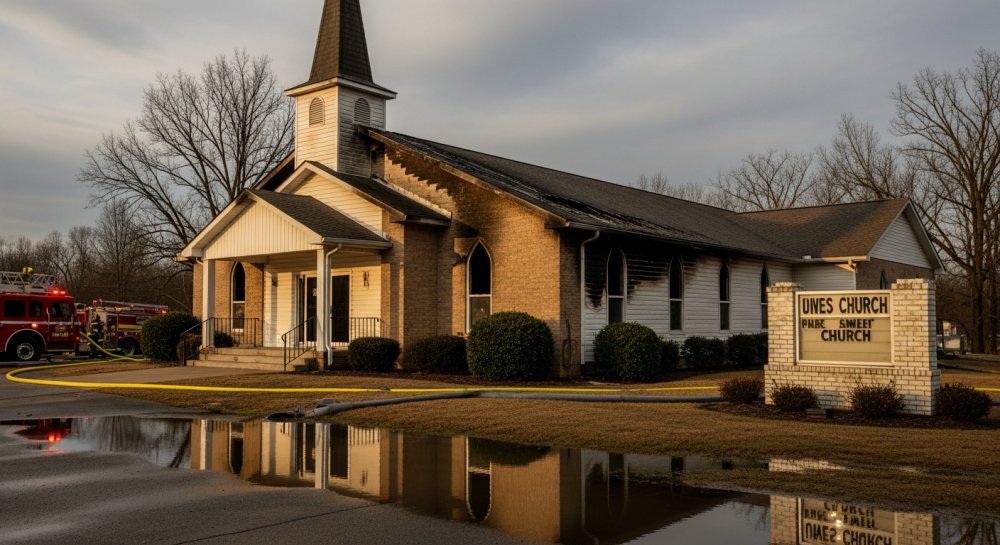
- A Tennessee church known for giving away free gas to hundreds of commuters earlier this year has suffered a devastating fire on their property.
- Despite the significant damage, church leaders maintain their ministry will continue, declaring the fire ‘didn’t stop the word.’
- The congregation demonstrated Christ’s love through practical generosity by providing free gasoline to struggling families during difficult economic times.
A Tennessee congregation that made headlines for their generous outreach to the community is now facing a significant trial of their own. The church, which blessed hundreds of families with free gasoline during a time of economic hardship, has suffered severe fire damage to their property.
Earlier this year, the church captured hearts across the nation when they opened their doors and their wallets to help commuters struggling with high gas prices. The ministry initiative provided tangible relief to families dealing with the burden of inflation and rising fuel costs, embodying the Biblical principle of loving your neighbor in action.
Now, the church that gave so freely finds itself in need. The fire caused substantial damage to the church property, though details about the extent of the destruction and the cause of the blaze are still emerging. What remains unshaken, however, is the faith and determination of the congregation.
Church leaders responded to the devastating loss with remarkable resolve, stating that the fire “didn’t stop the word.” This declaration reflects a deep commitment to their mission and ministry that transcends physical buildings and material loss.
The church’s response exemplifies the resilience that comes from faith rooted in Christ rather than circumstances. Their witness reminds believers that the Church is not a building but a body of believers united in purpose and calling.
This trial comes as a test for a congregation that has already demonstrated extraordinary generosity. Their earlier gas giveaway wasn’t just charity—it was an expression of Christian love that met people at their point of need, building bridges between the church and community.
The incident serves as a reminder that even those who minister to others face their own valleys. Yet it also presents an opportunity for the broader Christian community to rally around these faithful servants, returning the blessing they so freely gave to others.
As this Tennessee church rebuilds, their testimony stands as an encouragement to believers everywhere: faith perseveres through fire, ministry continues through trials, and God’s Word cannot be stopped by any earthly circumstance.
Let us know what you think, please share your thoughts in the comments below.

Faith Facts
- Prime Minister Andy Burnham has pledged to address the ongoing adult social care crisis in the United Kingdom
- Christian charity leader Stephen Hammersley warns the Church cannot wait for government action to care for elderly congregants and community members
- The promise represents a major policy shift, but faith-based organizations continue to be essential in meeting the spiritual and practical needs of seniors
The United Kingdom’s new Prime Minister Andy Burnham made headlines this week with a bold commitment to overhaul the nation’s struggling adult social care system. While the announcement has been met with cautious optimism across the political spectrum, Christian leaders are reminding believers that government action alone cannot address the deeper crisis facing elderly citizens.
Stephen Hammersley, chief executive of Pilgrims’ Friend Society, a Christian organization dedicated to serving older adults, applauded Burnham’s recognition of the problem but emphasized that the Church has a biblical mandate that transcends political promises. “We welcome any serious effort to improve care for our elderly population,” Hammersley stated. “However, the body of Christ has always been called to care for the vulnerable, especially widows and the aging, regardless of what policies emerge from Westminster.”
The adult social care system in Britain has faced mounting pressure for years, with underfunding, workforce shortages, and an aging population creating what many experts describe as a perfect storm. Families across the nation have struggled to find adequate, affordable care for elderly relatives, while care workers themselves face challenging conditions and low wages.
Burnham’s pledge to “end the drought” in social care signals a recognition at the highest levels of government that the current system is unsustainable. Yet the details of how such reform would be implemented and funded remain unclear. For Christians, this uncertainty underscores the importance of grassroots ministry and community support networks that don’t depend on government budgets or political cycles.
“Scripture is clear about our responsibility to honor and care for the elderly,” Hammersley continued. “In Leviticus 19:32, we’re told to ‘stand up in the presence of the aged, show respect for the elderly and revere your God.’ This isn’t optional for believers — it’s a core expression of our faith.”
Churches across the United Kingdom have long been at the forefront of caring for seniors, from visiting programs and meal deliveries to offering fellowship and spiritual support that institutional care often cannot provide. These ministries become even more critical as families become geographically dispersed and traditional support structures weaken.
The challenge facing Christian communities is not just about physical care but addressing the epidemic of loneliness and isolation that affects millions of elderly people. While government programs can provide healthcare and financial assistance, they cannot replace the personal connection, spiritual encouragement, and sense of belonging that faith communities uniquely offer.
Hammersley’s organization, Pilgrims’ Friend Society, operates care homes and retirement housing with an explicitly Christian ethos, demonstrating how faith-based approaches can complement secular services. “We’ve seen firsthand how integrating spiritual care with physical care transforms lives,” he explained. “Residents don’t just receive assistance with daily tasks — they’re part of a community centered on Christ, where they’re valued as image-bearers of God, not just recipients of services.”
The call for churches to step up comes at a time when many congregations are already stretched thin, facing their own resource constraints and demographic challenges. Yet Christian leaders argue that caring for the elderly shouldn’t be seen as an additional burden but as central to the Church’s mission and identity.
“When we care for older believers, we’re honoring those who built the faith communities we now enjoy,” Hammersley noted. “We’re also modeling for younger generations what it means to live out the gospel in practical ways. And we’re preparing for our own later years, creating the kind of communities we hope will care for us.”
While Burnham’s commitment to reforming social care is encouraging, the timeline and effectiveness of government action remain uncertain. Political promises, even well-intentioned ones, often face obstacles in implementation, funding disputes, and changing priorities. This reality makes the Church’s independent action all the more vital.
Christian organizations are encouraged to evaluate how they can expand or improve ministries to seniors, whether through formal care arrangements, volunteer visiting programs, intergenerational activities, or advocacy for better policies. Individual believers can also make a difference by regularly checking on elderly neighbors, inviting isolated seniors to family gatherings, or simply offering the gift of unhurried conversation and companionship.
The intersection of faith and social care policy also presents opportunities for Christians to influence public discourse with biblical values. Advocating for care systems that respect human dignity, support family involvement, and recognize the spiritual dimensions of wellbeing reflects a Christian worldview that can enrich secular policy debates.
As the Burnham government begins to flesh out its social care agenda, believers have reason to hope for meaningful improvements while recognizing that no government program can fully replace the compassionate, Christ-centered care that the Church is called to provide. The challenge ahead requires both celebrating political progress and redoubling efforts at the local church level to ensure no elderly person is forgotten or neglected.
Let us know what you think, please share your thoughts in the comments below.

Faith Facts
- African missionary leader Joshua Bogunjoko addressed thousands at the Arise Asia 2026 Congress in Manila, challenging perceptions about Africa’s role in global evangelism
- Bogunjoko emphasized the biblical principle of perseverance through sacrifice, stating Christians always have something to give as long as they have life
- The message centered on Africa’s spiritual legacy and the call for Asian believers to embrace joyful perseverance in spreading the Gospel despite hardship
When Joshua Bogunjoko took the stage at the Arise Asia 2026 Congress in Manila on July 30, he didn’t begin with platitudes or comfortable greetings. Instead, he posed a direct challenge to the thousands gathered before him.
“When you hear the word Africa, what comes to your mind first?” Bogunjoko asked the participants.
The question hung in the air, forcing attendees to confront their preconceptions about a continent often defined by Western media through images of poverty and struggle. But Bogunjoko’s message would turn those assumptions on their head.
The African mission leader came bearing a counter-cultural truth that cuts against modern comfort Christianity. His declaration—”As long as we have blood, we have something to give”—echoed the sacrificial call that has defined faithful witnesses throughout church history.
This wasn’t abstract theology. Bogunjoko spoke from the lived experience of African Christians who understand persecution, deprivation, and the cost of discipleship in ways many Western believers cannot fathom.
The Arise Asia Congress represents a gathering of believers committed to advancing the Great Commission across the Asian continent. In a region where Christianity often exists under threat—from communist governments, radical Islamic persecution, and hostile Hindu nationalism—the call to joyful perseverance isn’t optional.
Bogunjoko’s message challenged Asian Christians to look beyond material resources and embrace the biblical truth that God equips those He calls. The reference to blood wasn’t merely metaphorical—it spoke to the reality that faithful witness may cost everything.
This perspective stands in stark contrast to the prosperity gospel that has infected too many churches worldwide. Instead of promising health and wealth, Bogunjoko called believers to the ancient path: taking up the cross daily, counting the cost, and finding joy in sacrifice for the Kingdom.
Africa’s explosive Christian growth over the past century demonstrates the power of this committed faith. While Europe’s churches empty and American Christianity battles compromise, African believers have multiplied through persecution and poverty, proving that the Gospel thrives when believers embrace sacrifice rather than comfort.
The timing of this message carries particular significance. As Asia becomes the focal point of 21st-century missions—with China’s underground church, India’s persecuted believers, and Southeast Asia’s unreached peoples—the call to perseverance through hardship resonates with urgent relevance.
Bogunjoko’s challenge to Asian Christians draws from deep biblical wells. From the prophets who faced rejection and death, to the apostles who counted suffering as joy, to the martyrs whose blood became the seed of the church—Scripture consistently elevates sacrifice over safety.
This message also carries prophetic weight for American believers comfortable in their freedoms. As cultural hostility toward biblical Christianity increases in the West, the example of African and Asian perseverance offers both warning and inspiration.
The “joy of perseverance” Bogunjoko proclaimed isn’t masochistic suffering—it’s the deep satisfaction of faithfulness, the peace that surpasses understanding, and the crown of life promised to those who endure. It’s the same joy that enabled early Christians to sing hymns in prison and face lions with confidence.
As the Arise Asia Congress continued, Bogunjoko’s words set a tone far removed from comfortable Western Christianity. His call echoed the words of missionary Jim Elliot: “He is no fool who gives what he cannot keep to gain what he cannot lose.”
For Asian believers facing uncertain futures under hostile regimes and cultures, this message provided both challenge and comfort: You have enough. As long as you have life, you have something to give for the Gospel. And that sacrifice brings joy that the world cannot understand or take away.
Let us know what you think, please share your thoughts in the comments below.


-

 Self-Reliance1 year ago
Trump’s Bold Move Uncovers Massive Social Security Fraud
-

 Faith1 year ago
New Clues Emerge in Noah’s Ark Mystery
-

 News1 year ago
Governor Walz’s Rhetoric Sparks National Controversy
-

 News1 year ago
Mel Gibson’s ‘The Passion of the Christ’ Sequel Title Announced
-

 Family1 year ago
Texas Lawmaker Targets Furries in Schools
-

 Freedom1 year ago
Maine Lawmaker Challenges Sports Fairness Controversy
-

 Family1 year ago
Canada’s Controversial Policy Sparks Ethical Debate
-
Faith8 months ago
Congress Hears Pleas for Nigerian Christians