
Faith
The Silent Crisis: Why Your Neighbor Doesn’t Know Your Church Exists

Faith Facts
- Many local churches remain virtually unknown to their surrounding communities despite decades of presence on the same corner
- Christian congregations are facing a visibility crisis that prevents them from fulfilling the Great Commission effectively
- Church leaders are being called to rethink their approach to community engagement and Gospel outreach in an increasingly disconnected society
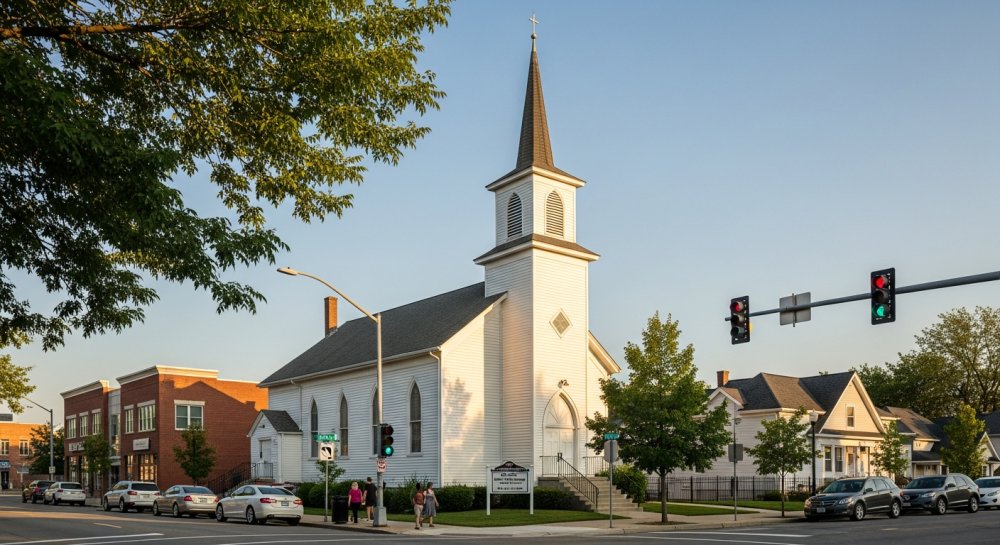
Across America, a troubling reality confronts the faithful: churches that have stood as pillars in their neighborhoods for generations are somehow invisible to the very people they were called to serve. The building may be visible, the sign may be posted, but the mission remains hidden from view.
This isn’t a problem of physical presence. These congregations occupy real estate, maintain their properties, and gather weekly for worship.
Yet something fundamental has shifted in how the American church connects with its community. In an age where visibility seems effortless—where businesses advertise on every platform and causes trend on social media—too many houses of God remain anonymous to their neighbors. The disconnect raises a critical question for believers committed to the Great Commission: How can we share the transforming power of Christ with people who don’t even know we’re here?
The challenge isn’t new, but it has intensified. Previous generations could rely on cultural Christianity and community tradition to draw people through their doors. Today’s reality demands intentionality. Churches can no longer assume that simply opening their doors on Sunday morning constitutes effective witness to a watching world.
For pastors and church leaders, this represents both a wake-up call and an opportunity. The Gospel hasn’t changed, but the methods of sharing it must evolve to reach an increasingly unchurched population. Traditional approaches that worked when America was more culturally Christian no longer suffice in a post-Christian landscape.
The solution begins with honest assessment. Church leaders must ask themselves hard questions: Does our community know what we believe? Do our neighbors understand that they’re welcome? Are we actively serving the practical needs around us, or have we become an insular social club?
Visibility in the modern context means more than a building and a sign. It requires deliberate community engagement—serving in schools, supporting local businesses, addressing real needs with the love of Christ. It means Christians must be salt and light beyond the four walls of their sanctuary.
Social media and digital presence matter, but they cannot replace authentic relationships. The most effective witness remains person-to-person, neighbor-to-neighbor, life-to-life. When church members actively live out their faith in their workplaces, neighborhoods, and civic spaces, the entire congregation becomes visible.
Some churches have embraced this challenge with remarkable results. They’ve moved beyond simply inviting people to church and started bringing the church to the people—hosting community meals, offering practical assistance, creating spaces where the unchurched feel welcomed rather than judged.
This isn’t about compromising biblical truth or watering down the Gospel. It’s about remembering that Jesus himself went to where people were. He met them in their need, spoke to their circumstances, and demonstrated the Father’s love before calling them to repentance and new life.
The American church stands at a crossroads. We can continue operating as we always have, content with our insider culture while the world passes by unaware. Or we can reclaim our calling as ambassadors of Christ, determined to make Him known in every neighborhood, on every corner, to every person God has placed within our reach.
For churches willing to step out from behind their stained glass and into their communities, the harvest remains plentiful. People are spiritually hungry, searching for meaning, longing for authentic connection. They’re looking for hope in a troubled world. The question is whether they know where to find it.
The crisis of invisibility is ultimately a crisis of mission. When churches hide in plain sight, they fail to fulfill the purpose for which they exist. The remedy requires courage, creativity, and a willingness to prioritize Gospel advancement over institutional comfort.
Our communities need to know we’re here—not because we want to fill pews, but because we serve a Savior who transforms lives and offers hope that this broken world desperately needs.
Let us know what you think, please share your thoughts in the comments below.

Faith Facts
- At least seven Christians were killed in a targeted attack on a Greek Orthodox funeral service in Jordan.
- The assault occurred at a church known for peaceful worship and interfaith coexistence in the region.
- The attack highlights the ongoing threat of Islamic extremism to Christian communities worldwide.
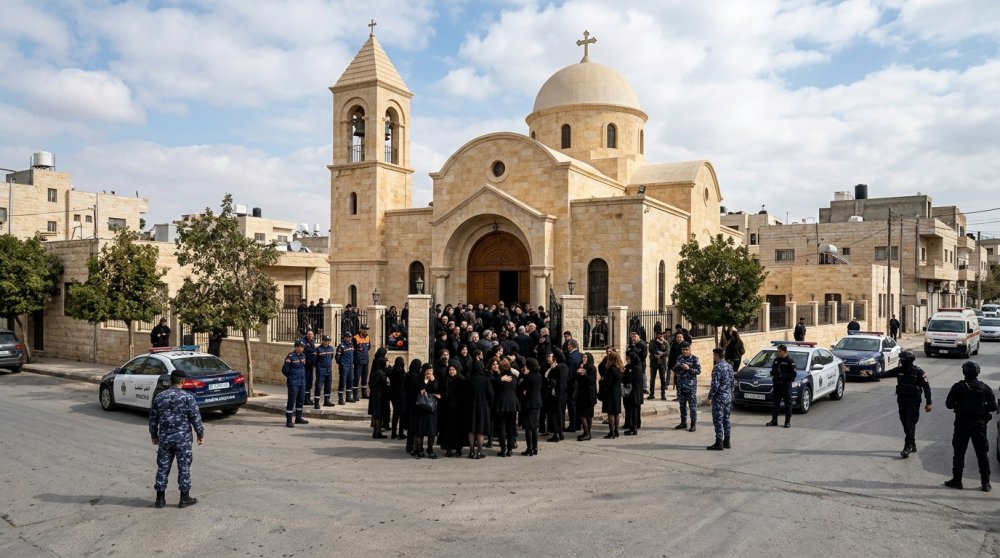
In a rare attack in a country known for peaceful inter-faith coexistence, suspected Islamic extremists attacked a funeral at a Greek Orthodox church in Jordan on Friday (Oct. 23), shooting at least seven people to death and wounding 28 others, according to reports.
The violence interrupted a sacred time of mourning and remembrance, striking at the heart of a Christian community gathered in faith.
Let us know what you think, please share your thoughts in the comments below.
Faith Facts
- God examines the heart rather than outward gestures during worship.
- Scripture teaches that authentic faith is shown through obedience and love, not visible enthusiasm.
- Believers are called to honor every sincere heart that worships in spirit and truth.
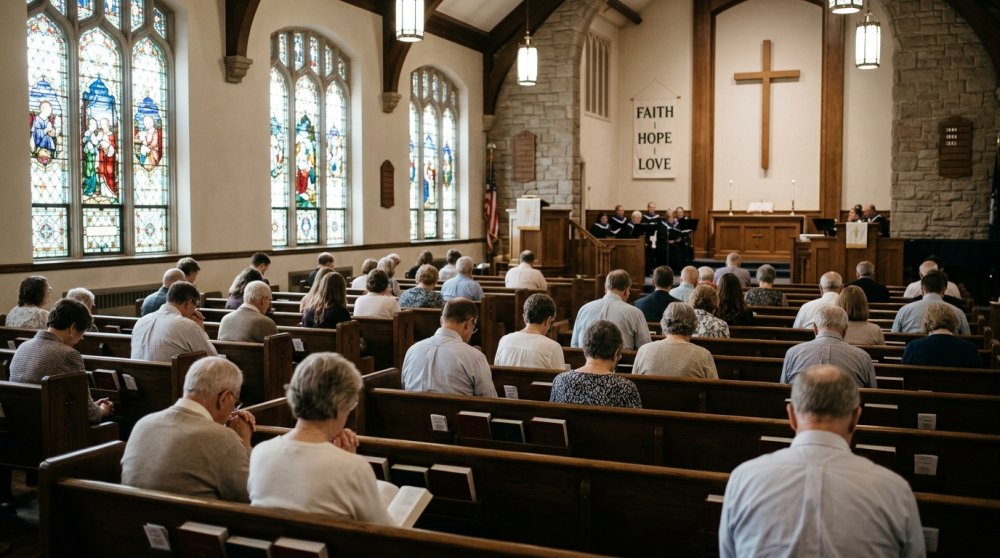
Too often, outward expressions of enthusiasm are mistaken for spiritual maturity. But God looks at the heart, not whether we’re standing, sitting or raising our hands, says Dawn Butler.
“God looks at the heart, not whether we’re standing, sitting or raising our hands,”
Churches across America have seen a growing emphasis on physical expressions during worship. This trend can unintentionally pressure believers who prefer quieter reverence. The result is that some faithful Christians feel judged for their personal style of worship.
“Too often, outward expressions of enthusiasm are mistaken for spiritual maturity.”
True worship flows from a surrendered heart that seeks to honor God in every area of life. Scripture consistently points to inward devotion rather than external performance. When congregations focus on visible actions, they risk overlooking the quiet strength of those who serve faithfully in the background.
Christian liberty allows room for both raised hands and bowed heads. The key is whether each believer approaches the Lord with reverence and sincerity. Families benefit when churches encourage unity over uniformity in worship practices.
“God looks at the heart, not whether we’re standing, sitting or raising our hands.”
Let us know what you think, please share your thoughts in the comments below.

Faith Facts
- The Restoration Movement produced three distinct fellowships by 1906, with Churches of Christ emerging as a conservative, Bible-focused body
- Early 20th-century leaders in Indiana, Tennessee, and Texas held differing convictions on the Holy Spirit, millennial teaching, and church institutions
- The conservative Texas tradition ultimately shaped the doctrinal identity that guided Churches of Christ for much of the twentieth century
A new book from Abilene Christian University Press offers a detailed look at the doctrinal battles that forged the identity of Churches of Christ in the decades after 1906. The volume, the first of three planned works, draws on essays by eight authors who trace how congregations navigated questions of Scripture, worship, and church order.
By the early twentieth century, the Restoration Movement had separated into three distinct groups. Churches of Christ stood apart for their commitment to congregational autonomy and a plain reading of the New Testament.
The collection opens with Daniel Sommer’s 1889 Address and Declaration, which set the tone for separation from the Disciples of Christ. Subsequent chapters highlight the contributions of David Lipscomb and respected African-American leaders such as Preston Taylor, S.W. Womack, and Marshall Keeble.
“Allen and Hicks are to be commended for editing a splendid and illuminating volume. Readers interested in the history of Churches of Christ will eagerly anticipate the next installment in the series.”
Three regional traditions emerged, each with its own convictions. Leaders in Tennessee upheld belief in miraculous divine action and a future millennial kingdom, while Indiana voices favored noninstitutional simplicity and resisted Bible colleges. The Texas tradition, emphasizing the Word alone and strict obedience to positive commands, gradually gained dominance.
Through influential publications like R.L. Whiteside and C.R. Nichol’s Sound Doctrine series and N.B. Hardeman’s Tabernacle Sermons, the Texas perspective reached congregations across the nation. By the 1930s, the Gospel Advocate had become its leading voice.
The book closes with primary source excerpts that allow readers to hear the founders in their own words. Christian families and church libraries will find this careful history both instructive and encouraging for the challenges of today.
Let us know what you think, please share your thoughts in the comments below.


-

 Self-Reliance2 years ago
Trump’s Bold Move Uncovers Massive Social Security Fraud
-

 Faith2 years ago
New Clues Emerge in Noah’s Ark Mystery
-

 News2 years ago
Governor Walz’s Rhetoric Sparks National Controversy
-

 News2 years ago
Mel Gibson’s ‘The Passion of the Christ’ Sequel Title Announced
-

 Family2 years ago
Texas Lawmaker Targets Furries in Schools
-

 Freedom2 years ago
Maine Lawmaker Challenges Sports Fairness Controversy
-

 Family1 year ago
Canada’s Controversial Policy Sparks Ethical Debate
-
Faith11 months ago
Congress Hears Pleas for Nigerian Christians