
Family
The Sacred Covenant Every Christian Mother Carries


Faith Facts
- Mother’s Day celebrates one of the clearest earthly reflections of God’s sacrificial and unconditional love
- Christian mothers embody the biblical virtues of endurance, sacrifice, and generosity in their daily devotion to family
- This annual celebration honors women who faithfully stand as spiritual guardians and nurturers of the next generation
Mother’s Day represents far more than a simple greeting card holiday. It stands as a sacred acknowledgment of one of God’s most powerful expressions of love made visible in the world.
For Christian families across America, this day carries profound spiritual weight. It recognizes the reflection of divine character embodied in mothers who pour out their lives in service to their children.
The love demonstrated by faithful mothers mirrors the sacrificial nature of Christ’s own love for His church. It is patient when tested, enduring through sleepless nights and difficult seasons. It gives without counting the cost, offering time, energy, and resources with open hands.
This type of love doesn’t waver based on circumstance or convenience. Christian mothers who stand firm in their calling demonstrate a covenant commitment that reflects the unchanging faithfulness of our Heavenly Father.
The generosity shown by these women extends beyond material provision. They invest wisdom, prayer, guidance, and godly example into the lives entrusted to their care. They shape not just behaviors, but hearts and souls for eternity.
In an age when the value of motherhood is often minimized or redefined, Mother’s Day serves as a counter-cultural declaration. It affirms the irreplaceable significance of women who embrace their God-given role with courage and conviction.
These mothers deserve more than one day of recognition. Yet this annual observance provides a collective moment for families and communities to express gratitude for the tireless work that often goes unnoticed throughout the year.
As we celebrate Mother’s Day, we honor not just individual women, but the divine design for family that has sustained civilization and transmitted faith across generations. We acknowledge that strong mothers build strong families, and strong families build strong nations rooted in biblical truth.
The enduring love of a Christian mother points beyond herself to the eternal love of God. In her faithfulness, patience, and self-sacrifice, she becomes a living sermon that her children can witness every single day.
Let us know what you think, please share your thoughts in the comments below.


Faith Facts
- Clyde and Gwen Antwine celebrated 70 years of marriage rooted in Christian service and missionary work across Europe and the United States.
- The couple met at a youth camp in Texas and built their relationship on shared faith, mission trips, and a commitment to mentoring young Christians.
- They helped establish a healthy church in Zurich, Switzerland, and continued to serve faithfully at Memorial Road Church of Christ in Oklahoma.
The Antwines first met as teenagers at a two-week encampment at Abilene Christian University. Clyde was 15 years old and sold his FFA prize-winning steer for $40 to attend. That is where he first saw Gwen, then 14, and asked to take her picture.
He carried that photograph in his wallet for five years before they reunited at Abilene Christian during his sophomore year. They married six months later.
“The last day of camp, I worked up the courage to ask her if I could take her picture, and she posed. And I put that picture in my wallet. I didn’t even know her name. I just knew she was pretty.”
After Clyde graduated, the couple boarded a boat for Europe in 1959. They served seven years in Zurich, helping to strengthen a young congregation of the Church of Christ. Their work laid a foundation that still bears fruit today.
Later the Antwines served in the German cities of Augsburg and Munich. After nearly two decades overseas, they returned to the United States. Clyde became missionary in residence at Oklahoma Christian University while Gwen served as office manager for The Christian Chronicle.
“Gwen would get you laughing and see the positive side when things got tough, and Clyde, in his quiet voice, would somehow say the exact words you needed to hear to keep you spiritually grounded.”
Their legacy continues through the many students they mentored for mission work. The Antwines never sought recognition. Their only goal was to prepare others for Kingdom service.
Today, Clyde still carries that original photograph of Gwen from their teenage years. Their story stands as a clear testimony of enduring love, steadfast faith, and lifelong commitment to the Lord’s work.
Let us know what you think, please share your thoughts in the comments below.

Faith Facts
- Ashley Flynn’s family states she “wanted her life to point people to Jesus.”
- She is remembered as a mother of two who “loved Jesus with her whole heart.”
- The case centers on the tragic loss of a Christian wife and mother whose testimony continues to inspire faith.
The family of the late Ashley Flynn is remembering the slain mother of two as someone who “loved Jesus with her whole heart” after her husband Caleb was found guilty of murdering her as the defendant’s family maintains his innocence.
Let us know what you think, please share your thoughts in the comments below.
Faith Facts
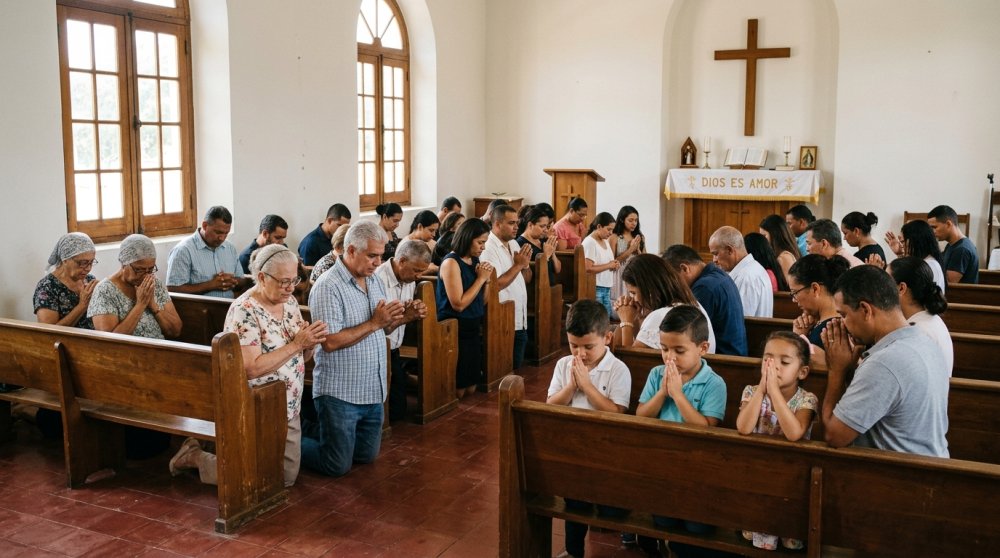
- Christians across Puerto Rico are gathering for six days of prayer for families, churches and the island’s future.
- The island is a U.S. territory located in the Caribbean.
- The multi-day prayer initiative reflects a commitment to faith, family and national values.
Christians across Puerto Rico are gathering this week for six days of prayer for families, churches and the future of the island, a U.S. territory in the Caribbean.
Believers are uniting in churches and communities to seek God’s guidance and blessing over their households and the territory’s future.
Participants are lifting up concerns ranging from family stability and spiritual renewal to economic growth and cultural preservation.
Let us know what you think, please share your thoughts in the comments below.


-

 Self-Reliance2 years ago
Trump’s Bold Move Uncovers Massive Social Security Fraud
-

 Faith2 years ago
New Clues Emerge in Noah’s Ark Mystery
-

 News2 years ago
Governor Walz’s Rhetoric Sparks National Controversy
-

 News2 years ago
Mel Gibson’s ‘The Passion of the Christ’ Sequel Title Announced
-

 Family2 years ago
Texas Lawmaker Targets Furries in Schools
-

 Freedom2 years ago
Maine Lawmaker Challenges Sports Fairness Controversy
-

 Family1 year ago
Canada’s Controversial Policy Sparks Ethical Debate
-
Faith11 months ago
Congress Hears Pleas for Nigerian Christians