
Faith
The Forgotten Christian Discipline That Could Transform America


Faith Facts
- Modern Christian culture has become obsessed with immediate results and visible success, mirroring secular society’s demand for instant gratification
- Scripture consistently shows God’s timeline operates across generations, not quarterly reports or election cycles
- True biblical faithfulness often requires commitment to work whose rewards may not be seen in our lifetime
In an era defined by instant gratification and measurable outcomes, the church faces a crisis of patience. Derek Hughes challenges believers to reconsider whether our pursuit of quick wins has caused us to abandon one of Christianity’s most powerful disciplines: slow, generational faithfulness.
American Christianity has increasingly adopted the metrics of corporate culture and political campaigns. We measure success in attendance numbers, quarterly giving reports, and election results. But this obsession with immediate, visible outcomes may be causing us to miss God’s deeper work.
“We’ve forgotten how to plant trees under whose shade we’ll never sit,” Hughes observes. The wisdom of this perspective challenges the modern church’s tendency to prioritize programs that produce quick conversions over discipleship that shapes families for generations.
Throughout Scripture, God’s timeline consistently spans generations rather than news cycles. Abraham received promises he never saw fulfilled. Moses led a people to a land he could only glimpse from a distance. The prophets spoke of a Messiah they would never meet in their earthly lifetimes.
This biblical pattern stands in stark contrast to contemporary Christian culture’s demand for immediate validation. Social media has intensified this tendency, creating an environment where ministry success is measured in likes, shares, and viral moments rather than transformed lives and faithful obedience.
The consequences of this shift are profound. When churches focus exclusively on rapid growth and visible results, they often sacrifice depth for breadth. Discipleship programs give way to entertainment strategies. Formation of character becomes secondary to production of content.
“The question isn’t whether God is working,” Hughes notes. “The question is whether we have the patience to participate in work whose completion we may never witness.”
This challenge extends beyond individual congregations to the broader Christian witness in American culture. Conservative Christians often express frustration that cultural transformation doesn’t happen quickly enough, that elections don’t immediately reverse decades of secular drift.
But cultural renewal has never operated on election cycles. The great revivals of American history didn’t emerge from political campaigns but from faithful families, persistent prayer movements, and Christians committed to long-term presence in their communities.
Consider the abolitionist movement. Christians who opposed slavery in the early 1800s didn’t live to see emancipation. Those who laid the groundwork for the Civil Rights movement began their work generations before the 1960s victories. Lasting change required generational commitment.
The same principle applies to contemporary challenges facing Christian families and communities. Rebuilding a culture of life, strengthening marriage, protecting religious freedom—these battles won’t be won in a single election cycle or through one viral campaign.
Hughes points to the cathedral builders of medieval Europe as a model. These craftsmen dedicated their entire lives to structures they knew they wouldn’t see completed. Their children and grandchildren would continue the work. The cathedral wasn’t primarily about efficiency or immediate results—it was about offering their best work to God’s glory across generations.
This perspective doesn’t mean abandoning urgency or neglecting immediate needs. The gospel always demands present-tense obedience. But it does mean recognizing that some of God’s most important work happens slowly, beneath the surface, beyond the metrics we can measure.
For Christian parents, this means understanding that raising children in the faith isn’t about producing perfect teenagers or viral testimony videos. It’s about faithfully teaching, modeling, and praying—trusting that seeds planted today may bear fruit in their children’s children.
For churches, it means investing in discipleship processes that may not fill the sanctuary next month but will produce mature believers who can lead the next generation. It means valuing the faithful Sunday school teacher who has served for decades over the celebrity pastor who draws crowds but builds no lasting foundation.
The early church understood this principle. They planted churches knowing persecution might destroy them. They made disciples knowing many would face martyrdom. They preserved Scripture and doctrine for generations they would never meet. Their faithfulness wasn’t measured by quarterly growth but by covenant commitment.
“Perhaps the most counter-cultural witness Christians can offer today,” Hughes suggests, “is simply refusing to abandon commitments when results aren’t immediately visible.”
In a society that discards whatever doesn’t produce instant results, staying faithful to difficult work becomes itself a testimony. It demonstrates belief in a God whose timeline exceeds our comprehension, whose purposes outlast our plans.
This doesn’t mean being passive or fatalistic. Biblical faithfulness always involves active obedience, bold proclamation, and energetic service. But it means coupling that energy with patience, recognizing that we’re participants in a story much larger than our individual lifetimes.
The challenge for American Christians is whether we can resist our culture’s obsession with immediate results long enough to do work that matters for eternity. Can we commit to teaching our children truths they may not fully appreciate until they have children of their own? Can we build institutions and communities designed to serve generations we’ll never meet?
The answer to that question may determine whether the Christian witness in America continues to shallow itself through pursuit of quick wins or deepens through rediscovery of slow, faithful, generational commitment.
Let us know what you think, please share your thoughts in the comments below.

Faith Facts
- Scripture commands believers to pray for all leaders, even those they did not choose.
- God remains sovereign over every election outcome and earthly authority.
- Despair over politics distracts from the Christian duty to intercede in faith.
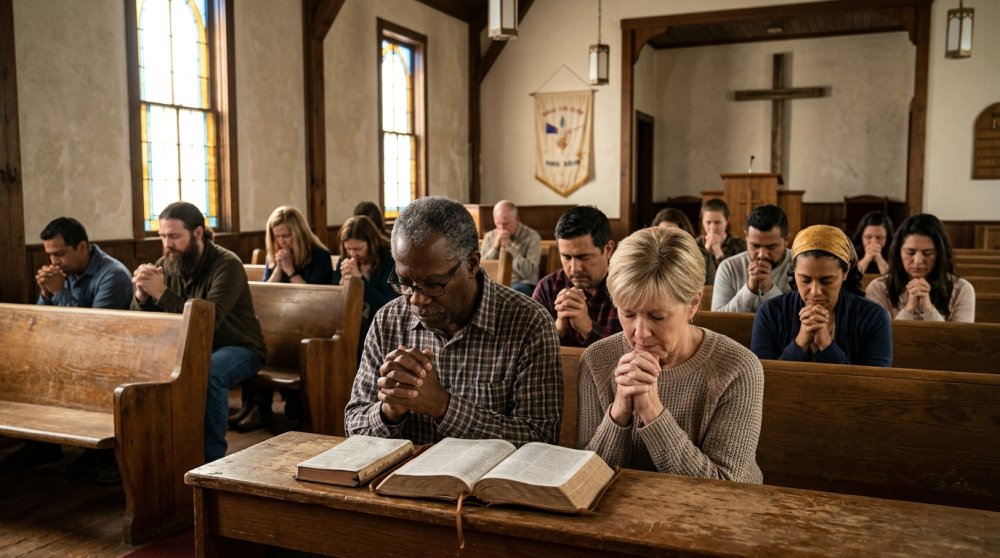
This year’s midterm results left many conservative Christians discouraged. Yet Scripture gives clear direction for moments like these.
Believers are called to pray for every leader placed in authority, regardless of personal preference or political outcome. Despair over election results shifts focus away from the power of prayer and the sovereignty of God.
“I urge, then, first of all, that petitions, prayers, intercession and thanksgiving be made for all people—for kings and all those in authority, that we may live peaceful and quiet lives in all godliness and holiness.”
The verse from 1 Timothy 2 reminds Christians that prayer is not optional but essential. It is the primary response to political disappointment, not anger or withdrawal.
Trusting God’s providence means recognizing that no election result surprises or thwarts His plan. The same Lord who ordains leaders also calls His people to intercede on their behalf.
Despair weakens witness and clouds the Christian’s responsibility to remain steadfast in prayer. Faithful intercession upholds both the nation and the Church in turbulent times.
Let us know what you think, please share your thoughts in the comments below.
Faith Facts
- Scripture teaches that giving flows from a heart of obedience and gratitude rather than a guarantee of earthly riches.
- God’s Word promises eternal rewards and spiritual growth to those who give cheerfully, not material wealth.
- Christian stewardship emphasizes using resources to honor God and bless others above personal financial gain.
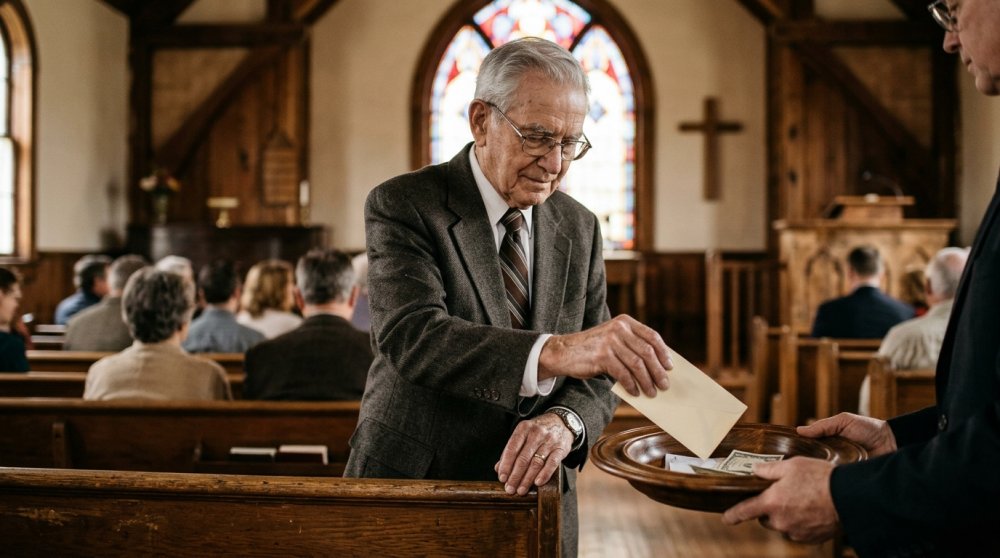
Many modern voices claim that generous giving is a sure path to greater financial prosperity. Yet Scripture offers a different and deeper promise. It points believers toward spiritual richness and eternal reward rather than a guaranteed boost to bank accounts.
Generosity is presented in the Bible as an act of worship. It reflects trust in God’s provision and a willingness to place His kingdom above personal comfort. This perspective shifts the focus from accumulating wealth to stewarding what has already been entrusted.
“Scripture doesn’t promise that giving will make us financially rich. It promises something better.”
Christian teaching consistently reminds believers that true wealth is found in a right relationship with God. While financial blessings may follow faithful stewardship, they are never presented as the primary motivation for giving. The emphasis remains on eternal impact and spiritual maturity.
Churches across the nation continue to encourage members to practice generosity as an expression of faith. Families that tithe and give sacrificially often report deeper contentment and stronger community ties. These outcomes align with the biblical call to store up treasures in heaven rather than on earth.
Let us know what you think, please share your thoughts in the comments below.
Faith Facts
- Actor Jim Caviezel says Jesus physically appeared to him more than twenty years ago while he was deciding whether to portray Christ in Mel Gibson’s 2004 film.
- Caviezel credits the encounter with giving him the courage to accept the role in The Passion of the Christ despite the physical risks involved.
- The actor’s testimony highlights how divine guidance can strengthen believers facing difficult decisions in their calling.
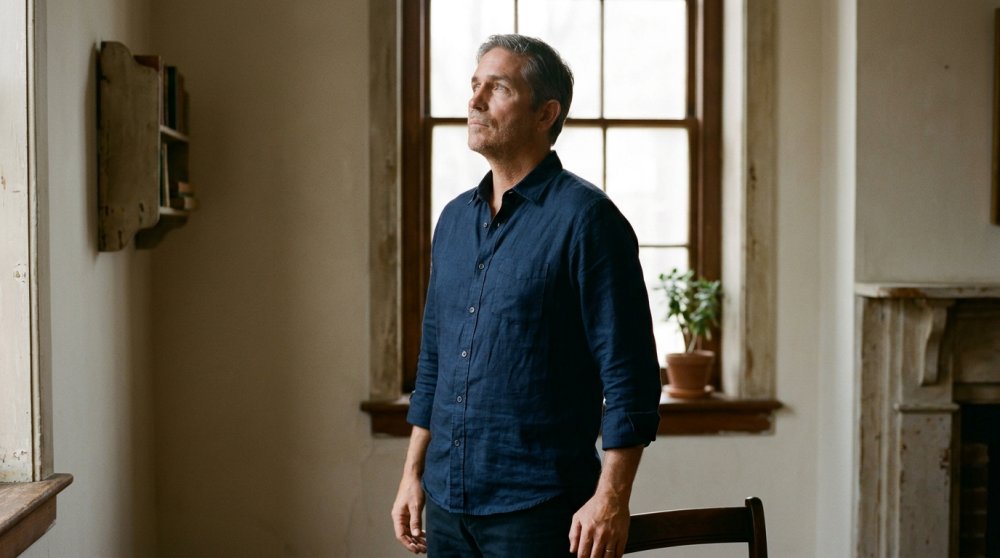
Jim Caviezel says Jesus Christ physically appeared to him while he was still weighing the offer to play the Savior in Mel Gibson’s upcoming movie. The actor made the claim during a recent interview, recalling the moment that changed his mind about the role.
The encounter came more than twenty years ago, just before Caviezel signed on to star in The Passion of the Christ. He described feeling a clear divine presence that gave him the peace and conviction he needed to move forward.
“I don’t have anybody else.” Jim Caviezel recalls the moment he says Jesus appeared at the foot of his bed before taking on his role in The Passion of the Christ. Full episode out Tuesday on YouTube, Spotify, and Apple Podcasts. https://t.co/cY1Vtek4mv
— Sean Hannity ???????? (@seanhannity) November 8, 2026
“I was asked to play Jesus Christ,” Caviezel said. “And I said, ‘I can’t do it.’ And then Jesus appeared to me.”
That supernatural moment settled the question for the actor. Caviezel went on to portray Christ in the film, which went on to become one of the most watched and discussed Christian movies of its time.
“He appeared to me,” Caviezel repeated, underscoring the personal nature of the visitation. The actor has often spoken about the spiritual preparation required for such a role and the physical toll it took on his body.
His testimony serves as an encouragement to believers that God still speaks and leads His people in clear ways when they seek His will. Caviezel’s account reminds Christians that obedience to a divine calling may require stepping out in faith even when the path looks difficult.
Let us know what you think, please share your thoughts in the comments below.


-

 Self-Reliance2 years ago
Trump’s Bold Move Uncovers Massive Social Security Fraud
-

 Faith2 years ago
New Clues Emerge in Noah’s Ark Mystery
-

 News2 years ago
Governor Walz’s Rhetoric Sparks National Controversy
-

 News2 years ago
Mel Gibson’s ‘The Passion of the Christ’ Sequel Title Announced
-

 Family2 years ago
Texas Lawmaker Targets Furries in Schools
-

 Freedom2 years ago
Maine Lawmaker Challenges Sports Fairness Controversy
-

 Family1 year ago
Canada’s Controversial Policy Sparks Ethical Debate
-
Faith12 months ago
Congress Hears Pleas for Nigerian Christians