
Faith
The Dangerous Illusion of the Spiritual Buffet


Faith Facts
- Modern culture encourages picking and choosing spiritual elements from different religions like items from a menu
- Colossians teaches that Christ cannot be reduced to one option among many philosophical choices
- True Christianity requires complete surrender to Jesus Christ, not selective adoption of convenient teachings
In today’s relativistic culture, faith has become a buffet. Many Americans treat spirituality like a custom meal plan — take mindfulness from Buddhism, borrow virtue ethics from Stoicism, add a dash of meaning from Christianity. It sounds enlightened, even humble. But this approach hides a fundamental problem: someone still has to play god and decide which pieces make the cut.
The Bible’s book of Colossians directly confronts this exact issue. Written to believers facing pressure to blend Christianity with popular philosophies of their day, Paul’s letter delivers a clear message: Christ is not a choice among options. He is the choice that defines all reality.
When we treat Jesus as one ingredient in our personalized spiritual recipe, we fundamentally misunderstand who He claimed to be. Christ didn’t present Himself as a helpful teacher offering useful tips alongside Buddha, Confucius, or Marcus Aurelius. He declared Himself as the image of the invisible God, the one in whom all things hold together, the fullness of deity in bodily form.
The spiritual buffet approach reveals something troubling about our hearts. We want the comfort of religion without the cost of surrender. We desire the benefits of faith without bowing to a King. We seek purpose and peace, but only on our own terms.
Colossians dismantles this illusion. If Christ truly is who He says He is — the Creator and Sustainer of all things — then He cannot be reduced to a helpful philosophy or a comforting perspective. He is either Lord of all, or not Lord at all.
The modern marketplace of ideas promotes tolerance and personal choice as the highest virtues. But Christianity has never fit comfortably in that framework. Jesus Himself said He is the way, the truth, and the life — not “a way” among many valid paths. That exclusivity offends contemporary sensibilities, but it remains central to authentic Christian faith.
When we pick and choose from various spiritual traditions, we’re not being open-minded. We’re being our own ultimate authority. We’re placing ourselves above these traditions, judging which parts align with our preferences and which we’ll discard. That’s not humility — it’s the oldest sin in the book, the desire to be like God, determining good and evil for ourselves.
Colossians calls believers to recognize the supremacy of Christ in all things. This means submitting our intellect, our will, our choices to Him — not selecting which of His teachings we’ll accept. It means recognizing that we don’t stand above Scripture, editing it to match our cultural moment. Instead, we stand under it, allowing God’s Word to edit us.
America was founded on principles of religious freedom, and that freedom remains precious. But freedom to choose our beliefs doesn’t mean all choices lead to truth. We’re free to believe the earth is flat, but that doesn’t make it so. Similarly, we’re free to construct our own customized spirituality, but that doesn’t make it true or salvific.
The Gospel offers something far better than a customizable spirituality. It offers rescue from our slavery to self and sin. It offers forgiveness we could never earn. It offers a relationship with the God who made us and knows us completely. But these gifts come as a package deal with the Giver — we cannot separate Christ’s benefits from His lordship.
For Christian families navigating this cultural moment, Colossians provides essential guidance. Our children are growing up in a world that treats all beliefs as equally valid personal preferences. We must teach them that Christianity makes exclusive truth claims because Christ makes exclusive truth claims. We’re not offering one lifestyle brand among many — we’re proclaiming the truth about reality itself.
This doesn’t mean Christians should be arrogant or dismissive toward other worldviews. We should engage respectfully with different perspectives, understanding them accurately before responding. But respect for people doesn’t require treating all ideas as equally true. Love means offering people the truth that can actually set them free, not affirming them in bondage to lies.
The spiritual buffet promises freedom and fulfillment, but it delivers neither. It leaves us as our own ultimate authority, which is a crushing burden. It provides no objective truth to ground our lives, no external standard to guide our choices, no hope that extends beyond our own limited perspectives and temporary existence.
Christ offers something infinitely better. He offers Himself — not as one option among many, but as the source and summit of all truth, beauty, and goodness. He invites us not to sample Him alongside other options, but to surrender everything to Him and discover that in losing our lives, we find them. That’s not on the menu of customizable spirituality. That’s the feast that satisfies forever.
Let us know what you think, please share your thoughts in the comments below.

Faith Facts
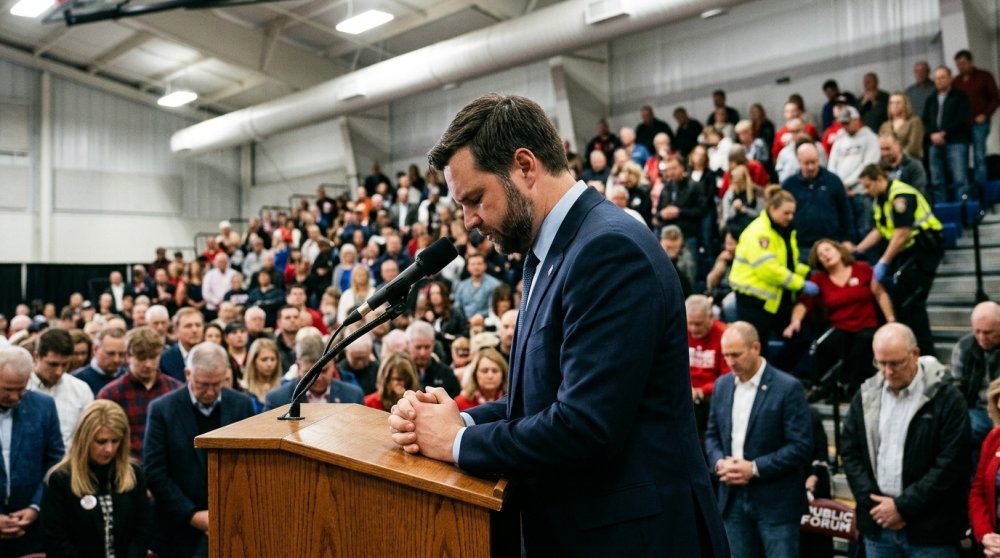
- Vice President JD Vance led rally attendees in reciting the Lord’s Prayer when a woman collapsed nearby.
- The moment highlighted the continued presence of Christian faith in American public life and political gatherings.
- Vance personally left the stage to check on the woman after leading the prayer.
Vice President JD Vance paused a Nebraska campaign rally to lead the crowd in the Lord’s Prayer after a woman collapsed in the audience.
The incident took place during a live event where Vance addressed supporters and addressed policy issues.
“Pray as the Lord taught us to pray,” Vance said before leading the audience in the traditional prayer.
After finishing the prayer, Vance stepped down from the stage and made his way into the stands to personally check on the woman who had collapsed.
The spontaneous act of faith and compassion drew praise from attendees who witnessed the moment.
Let us know what you think, please share your thoughts in the comments below.
Faith Facts
- Oxford mathematician and Christian apologist Professor John Lennox encourages believers to share their faith with confidence.
- Lennox stresses that evangelism is not reserved only for preachers, theologians, or those with extensive biblical knowledge.
- Every Christian is called to be a witness for Christ in daily life.
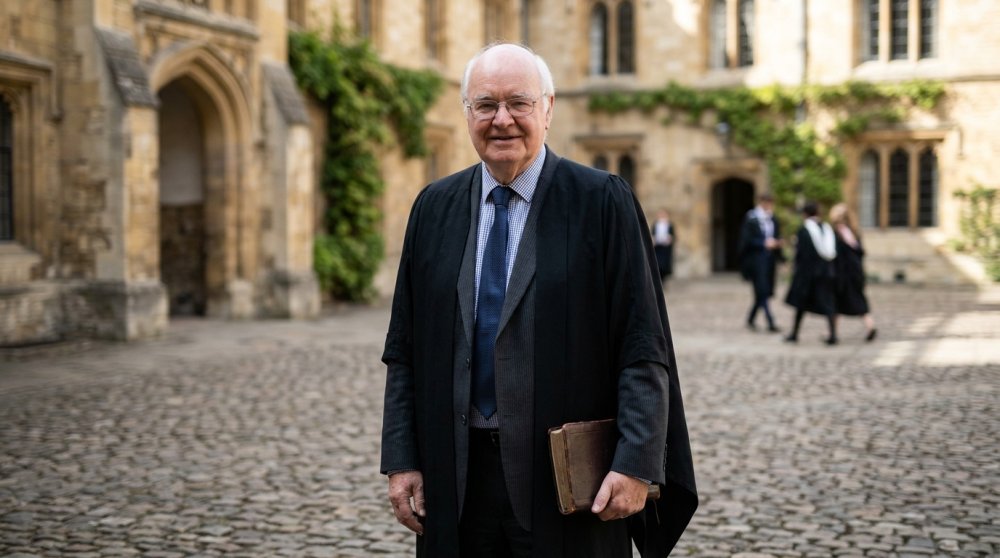
Oxford mathematician and Christian apologist Professor John Lennox is urging believers everywhere to share their faith with greater boldness and confidence. He reminds Christians that the call to witness is not limited to pastors or scholars but belongs to every follower of Christ.
“We’re all called to be witnesses,” Lennox declares. This simple truth challenges the idea that only trained experts can effectively share the gospel.
Professor Lennox emphasizes that evangelism is not about having every theological answer or delivering polished sermons. Instead, it is about living out and speaking the truth of Christ wherever God places His people.
His words come as a timely encouragement to Christians who may feel hesitant or unqualified to speak about their faith. Lennox points to the biblical calling that every believer is a witness, empowered by the Holy Spirit to share the hope within them.
Let us know what you think, please share your thoughts in the comments below.
Faith Facts
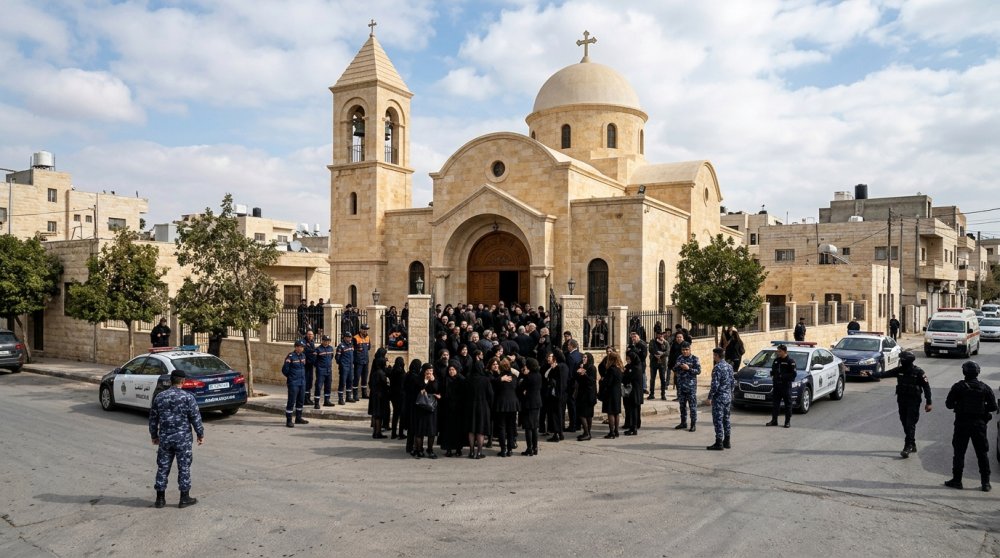
- At least seven Christians were killed in a targeted attack on a Greek Orthodox funeral service in Jordan.
- The assault occurred at a church known for peaceful worship and interfaith coexistence in the region.
- The attack highlights the ongoing threat of Islamic extremism to Christian communities worldwide.
In a rare attack in a country known for peaceful inter-faith coexistence, suspected Islamic extremists attacked a funeral at a Greek Orthodox church in Jordan on Friday (Oct. 23), shooting at least seven people to death and wounding 28 others, according to reports.
The violence interrupted a sacred time of mourning and remembrance, striking at the heart of a Christian community gathered in faith.
Let us know what you think, please share your thoughts in the comments below.


-

 Self-Reliance2 years ago
Trump’s Bold Move Uncovers Massive Social Security Fraud
-

 Faith2 years ago
New Clues Emerge in Noah’s Ark Mystery
-

 News2 years ago
Governor Walz’s Rhetoric Sparks National Controversy
-

 News2 years ago
Mel Gibson’s ‘The Passion of the Christ’ Sequel Title Announced
-

 Family2 years ago
Texas Lawmaker Targets Furries in Schools
-

 Freedom2 years ago
Maine Lawmaker Challenges Sports Fairness Controversy
-

 Family1 year ago
Canada’s Controversial Policy Sparks Ethical Debate
-
Faith11 months ago
Congress Hears Pleas for Nigerian Christians