
Faith
Syria Ceasefire Brings Uncertainty for Christians

Faith Facts
- Syria and the Kurdish-led SDF have agreed to a nationwide ceasefire after weeks of deadly conflict.
- The deal will see SDF forces integrated into Syrian state institutions and government control restored over key governorates.
- Concerns remain among Christians and minorities regarding ongoing persecution and lack of genuine protection.
Syria has announced a ceasefire with the Kurdish-led SDF, ending recent fighting and promising a new era of state control in the east.
Despite the agreement, leaders and faith communities express concern that the promises may not translate into protection for Christians and other minorities who have suffered violence and discrimination.
President Ahmed al-Sharaa declared that the arrangement will restore order and reintegrate essential regions back under Damascus’s authority, including vital oil and gas fields.
The Syrian government has pledged to recognize certain Kurdish rights, such as language recognition and cultural celebrations, representing a historic shift.
SDF commander Mazloum Abdi stated his forces accepted the deal to prevent wider bloodshed and will continue to seek security for their people.
“For a longer time, I have been afraid for minorities in Syria — or more accurately, for the different components of Syrian society, including Kurds, Alawites, Druze, and Christians,” a Christian Syrian Kurd refugee said.
The refugee spoke of intensified violence against minorities, referencing attacks against Christian churches, Kurdish neighborhoods, and other vulnerable groups.
He noted that the transfer of prison control has prompted worries about terrorism and the safety of non-Muslim communities.
“Such a development would place all non-Muslims — and even many Muslims — in grave danger,” the refugee warned.
Having recently converted to Christianity, the refugee shared that returning to Syria is not an option due to threats against those who stand for their faith.
The ceasefire includes promises to defend Kurdish culture, but many believe true security will only come when these assurances are matched by action.
Open Doors now ranks Syria as the sixth most dangerous nation for Christians, a sign of deep-rooted challenges and the need for prayer and steadfast faith-based advocacy.
Now more than ever, believers are called to stand firm in prayer, courage, and love as our brothers and sisters in Syria persevere for freedom and the promise of genuine peace.


Faith Facts
- Christian leaders in Liberia are divided over a public health bill initially designed to prevent future Ebola outbreaks but which some warn could expand abortion access
- The proposed legislation would overhaul Liberia’s health laws following devastating disease outbreaks that claimed thousands of lives
- Faith leaders worry the bill’s language on reproductive health could undermine the nation’s strict pro-life protections
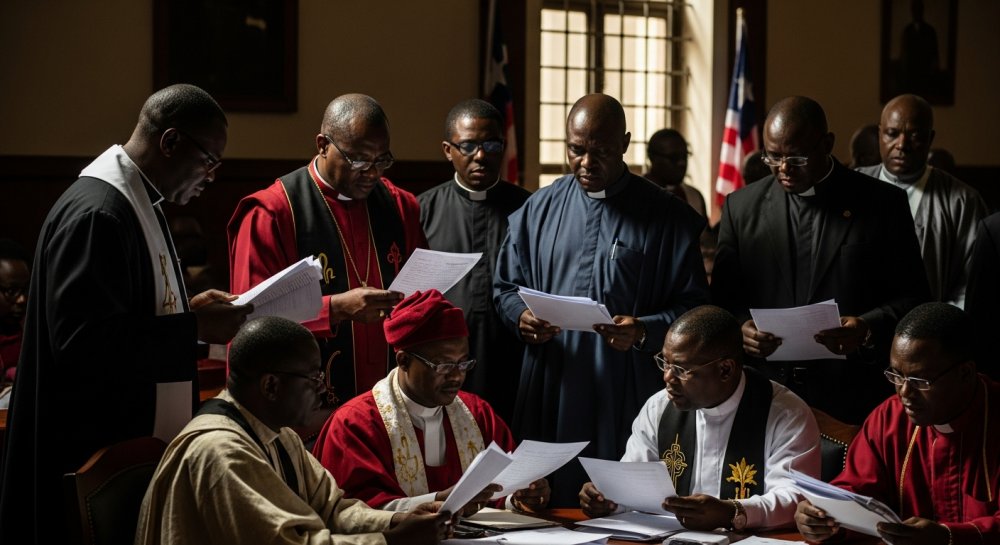
A legislative battle is unfolding in Liberia as Christian leaders find themselves at odds over a public health reform bill that began as a response to devastating disease outbreaks but has evolved into something far more controversial. What started as common-sense preparations for future health emergencies has ignited concerns about the protection of unborn life in the West African nation.
The proposed overhaul of Liberia’s public health laws was originally crafted to strengthen the country’s ability to respond to crises like the Ebola epidemic that ravaged the region. However, church leaders are now sounding the alarm that provisions within the legislation could open the door to expanded abortion access, potentially undermining Liberia’s traditionally strong pro-life stance.
The division among Christian leaders highlights a troubling pattern seen across the globe: well-intentioned public health measures being used as vehicles to advance controversial social policies that conflict with biblical values. For a nation still recovering from the trauma of epidemic disease, the debate represents a critical moment in determining whether health security can be achieved without sacrificing the sanctity of life.
Liberia’s experience serves as a cautionary tale for faith communities everywhere. When legislation is drafted in response to legitimate crises, vigilance is required to ensure that fundamental moral principles are not quietly compromised in the name of progress. The reproductive health language embedded in the bill has raised red flags for those who understand that true public health must include protection for the most vulnerable—including the unborn.
The situation in Liberia underscores the importance of Christian engagement in the legislative process. When pastors and church leaders remain alert and informed, they can serve as essential guardians of their nation’s moral foundation, even as they support genuine efforts to protect public health and safety.
As this debate continues, the outcome will likely influence not only Liberia’s health infrastructure but also set a precedent for how Christian nations balance practical governance with unchanging biblical principles. The tension between disease prevention and life protection need not be irreconcilable—but it requires wisdom, discernment, and unwavering commitment to both physical and spiritual health.
Let us know what you think, please share your thoughts in the comments below.

Faith Facts
- Soccer devotion in Latin America has evolved from entertainment into a spiritual phenomenon, replacing traditional religious community for many fans
- The shift reflects declining influence of religious institutions in a region historically defined by Christian faith
- Church leaders and theologians are raising concerns about modern idolatry as sports allegiance supersedes worship of God
A troubling spiritual trend is taking hold across Latin America, where devotion to soccer teams has transcended mere fandom and entered territory once reserved for religious worship. In a region historically defined by its Christian heritage, many are now finding their primary sense of identity and community not in the Church, but on the soccer pitch.
The phenomenon represents more than just passionate sports fandom. According to reports, the fervor surrounding soccer clubs has taken on distinctly religious characteristics, with rituals, pilgrimages, and devotion that mirror—and sometimes replace—traditional expressions of faith.
This shift comes as Latin America, long considered a stronghold of Christianity, faces increasing secularization. The replacement of church community with stadium crowds raises serious questions about where people are placing their ultimate allegiance and what they consider worthy of worship.
For Christian leaders in the region, the trend represents a form of modern idolatry—the elevation of temporal pleasures and earthly loyalties above devotion to God. When sports teams become the center of one’s identity and the source of one’s deepest emotional investments, they function as false gods, however unintentionally.
The issue highlights a broader challenge facing the Church in maintaining its role as the cornerstone of community life. As secular institutions and entertainment increasingly fill the void once occupied by religious participation, the spiritual health of entire communities hangs in the balance.
This development serves as a reminder that the human heart will worship something—the question is whether that devotion will be directed toward the Creator or toward created things. In a culture that increasingly prioritizes entertainment and tribal sports loyalties, the Church’s call to place God first becomes more countercultural and more urgent.
The transformation of soccer fandom into quasi-religious devotion also reflects the deep human need for belonging and transcendence. When the Church fails to provide vibrant community and a sense of purpose larger than oneself, people will seek those experiences elsewhere—often in ways that ultimately leave them spiritually empty.
For believers, this trend underscores the importance of authentic Christian community that offers not just moral instruction, but genuine fellowship, shared mission, and connection to eternal truth. The answer to cultural idolatry is not to denounce legitimate recreation, but to demonstrate that faith in Christ provides something sports never can: lasting hope, unconditional love, and purpose that extends beyond the final whistle.
Let us know what you think, please share your thoughts in the comments below.
Faith Facts
- Less than half of born-again Christians believe in the sanctity of human life, according to new survey data from Arizona Christian University
- More than half of theologically identified born-again Christians strongly reject abortion as morally acceptable
- The findings reveal a significant disconnect between Christian doctrine and actual beliefs among professing believers
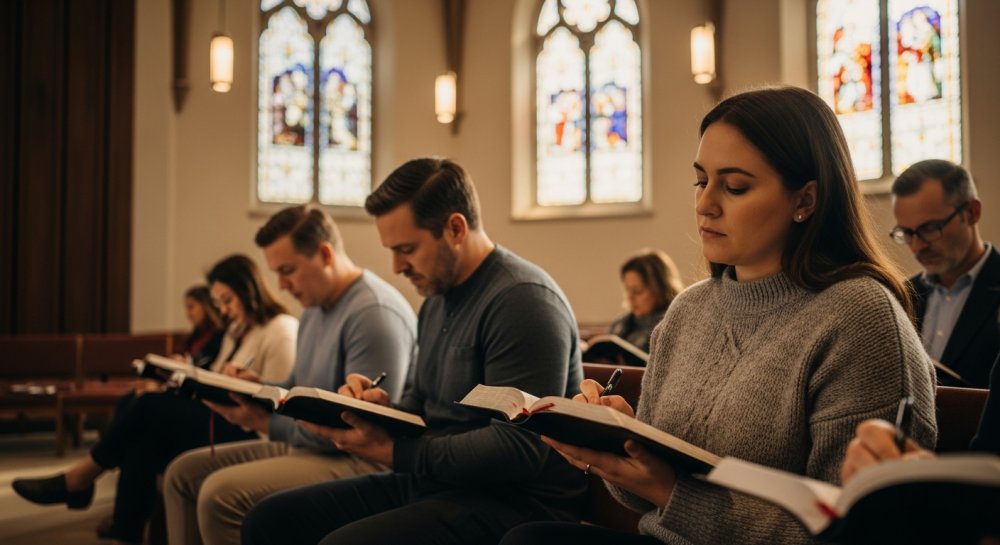
A new survey has unveiled a concerning divide among American Christians when it comes to foundational biblical principles about the value of human life. The latest American Worldview Inventory 2026 survey, conducted by the Cultural Research Center at Arizona Christian University, shows that while a majority of born-again Christians oppose abortion, fewer than half actually believe in the sanctity of human life.
The study reveals a troubling inconsistency in the worldview of those who identify as born-again Christians. While more than half strongly reject abortion as morally acceptable, the fact that less than half affirm the basic biblical teaching that all human life is sacred points to a fundamental gap in Christian discipleship and biblical literacy.
This disconnect raises important questions about the depth of biblical teaching in American churches. The sanctity of life is a cornerstone doctrine rooted in Genesis 1:27, which declares that mankind is created in the image of God. This truth forms the foundation for Christian opposition to abortion, euthanasia, and other threats to human dignity.
The findings suggest that many Christians may hold positions on specific moral issues like abortion without fully embracing the underlying biblical worldview that should inform those positions. This indicates a need for more comprehensive teaching on the authority of Scripture and the biblical view of human dignity and worth.
For the conservative Christian community, these results serve as a wake-up call. Churches must redouble their efforts to ground believers in biblical truth, ensuring that faith is not merely a cultural identity but a comprehensive worldview rooted in God’s Word. The battle for life begins with teaching the unchanging truth that every human being, from conception to natural death, bears the image of their Creator.
As our nation continues to grapple with questions about abortion, end-of-life care, and the value of vulnerable populations, Christians must be equipped with more than opinions—they need a firm foundation in biblical truth that recognizes the sacred worth of every person.
Let us know what you think, please share your thoughts in the comments below.


-

 Self-Reliance1 year ago
Trump’s Bold Move Uncovers Massive Social Security Fraud
-

 Faith1 year ago
New Clues Emerge in Noah’s Ark Mystery
-

 News1 year ago
Governor Walz’s Rhetoric Sparks National Controversy
-

 News1 year ago
Mel Gibson’s ‘The Passion of the Christ’ Sequel Title Announced
-

 Family1 year ago
Texas Lawmaker Targets Furries in Schools
-

 Freedom1 year ago
Maine Lawmaker Challenges Sports Fairness Controversy
-

 Family1 year ago
Canada’s Controversial Policy Sparks Ethical Debate
-
Faith7 months ago
Congress Hears Pleas for Nigerian Christians