
Faith
When Rome Fell and Faith Endured: Three Pivotal Moments That Shaped Christian History


Faith Facts
- The sack of Rome in 1527 by troops of Holy Roman Emperor Charles V marked one of Christianity’s darkest hours, yet the faith persevered
- Tiyo Soga became the first ordained black minister in South Africa, bringing the Gospel to his Xhosa people in the 19th century
- Saint Theodosius of the Caves founded monastic traditions that would influence Eastern Orthodox Christianity for centuries
Throughout history, the Christian faith has endured through triumph and tragedy, persecution and persecution overcome. This week marks the anniversaries of three significant events that demonstrate the resilience and spread of Christianity across different cultures and eras.
Each of these moments — from the violent sack of Rome to the peaceful baptism of a future African minister — reveals God’s hand at work even in the darkest times. These stories remind us that the Church has always been refined through trials and expanded through faithful servants.
The Sack of Rome: Christianity’s Dark Day in 1527
On May 6, 1527, troops serving Holy Roman Emperor Charles V descended upon Rome in one of the most devastating attacks on Christendom’s heart. The forces, consisting largely of German Lutheran mercenaries and Spanish soldiers, pillaged the Eternal City for months.
Pope Clement VII took refuge in the Castel Sant’Angelo as churches were desecrated and treasures looted. The attack represented not just a political conflict but a spiritual crisis, as Christian soldiers violated the seat of the papacy.
Despite this catastrophe, the Catholic Church rebuilt and continued its mission. The event ultimately contributed to the Catholic Counter-Reformation, demonstrating how God can bring renewal even from destruction.
Tiyo Soga: Pioneer of African Christianity
In December 1848, Tiyo Soga was baptized, beginning a journey that would make him the first ordained black minister from South Africa. Born into the Xhosa nation, Soga embraced Christianity and dedicated his life to bringing the Gospel to his people.
Soga traveled to Scotland for theological training, where he not only completed his studies but also married a Scottish woman — a controversial decision at the time. He returned to South Africa to minister among his own people, translating Christian texts into Xhosa.
His life exemplifies how the Great Commission transcends cultural boundaries. Soga’s ministry proved that the Gospel message was not confined to European Christianity but belonged to all nations and peoples, as Scripture promises.
Saint Theodosius: Builder of Orthodox Monasticism
Saint Theodosius of the Caves died on May 3, 1074, leaving behind a monastic legacy that would shape Eastern Orthodox Christianity for generations. As co-founder of the Kyiv Pechersk Lavra monastery in Ukraine, he established strict communal living rules based on Byzantine traditions.
Theodosius emphasized prayer, fasting, and service to the poor. His monastery became a spiritual and cultural center, producing clergy, scholars, and saints who spread Orthodox Christianity throughout Eastern Europe.
The monastic tradition he fostered preserved Christian learning and practice through centuries of political upheaval. His dedication to disciplined spiritual life reminds modern believers of the importance of commitment and community in the faith.
Lessons for Today’s Church
These three events from Christian history offer valuable lessons for contemporary believers. The sack of Rome demonstrates that even when the Church faces assault, God’s purposes cannot be thwarted.
Tiyo Soga’s baptism and ministry show that the Gospel breaks down racial and cultural barriers, fulfilling Christ’s command to make disciples of all nations. Saint Theodosius reminds us that structured spiritual discipline and community strengthen faith across generations.
In an era when Christianity faces challenges both from without and within, these historical examples encourage us to remain faithful. The Church has survived worse trials and emerged stronger, always advancing the Kingdom of God.
Let us know what you think, please share your thoughts in the comments below.


Faith Facts
- Christian author Linda Condolora offers practical guidance for believers who feel spiritually stagnant in their walk with Christ
- “Bold Devotion” uses an acrostic structure to help readers reignite the fervor they experienced at their conversion
- The book emphasizes sacrificing worldly distractions, diving deeper into Scripture, and living intentionally for the Lord
We all know about the rut — the one that we who have been Christians for quite some time can get into. The one where our spiritual fervor is depleted and our autopilot kicks on to keep us moving forward.
This is where going through the motions becomes our normal, and we don’t even realize we have slipped into the rut until a book like “Bold Devotion” shakes us and pulls us out.
Linda Condolora, a member of the Wetzel Road Church of Christ in Liverpool, N.Y., provides practical advice on how to regain that zeal we had when we first arose from the watery grave of baptism!
Her book invites readers to assess their lives and do some house cleaning where necessary. The chapters revolve around topics that will help us to achieve this by using an acrostic of the book’s title.
She begins with our reflection of Jesus and how we need to refocus our lenses on him, not letting worldly distractions blur our vision. Others are sure to detect whether we have been spending time with the Lord, and how we represent Christ to the world is of utmost importance.
Condolora consistently urges us to sacrifice our wants and desires and to dive deeper into the depth of God’s Word — focusing on the meaty morsels and not simply on the milk.
Next, we are called to not be ignorant of God’s expectations clearly laid out by the measuring stick standard — his Holy Writ. By doing so, we gain a greater understanding of who we once were and where God has brought us through the death of his son.
This helps us with our attitudes toward the lost because we realize we were once in the same situation! Our rut can sometimes look like spending all of our time with the church and not seeing the opportunities that God is setting before us to reach souls.
The remainder of the book centers on aligning with God’s will, living inconveniently and whole-heartedly for the Lord, and tying ourselves to truth as we worship and serve him accordingly.
Condolora’s thoughts on being prepared and intentional about how we can influence others to live the abundant life stuck with me as I earnestly jotted down notes and highlighted passages. A final note on the Holy Spirit and prayer wraps up the book’s desire for us to utilize these powerful tools and gifts in our lives.
One of the things I enjoyed most about this book was how the author incorporated personal stories and experiences that gave real world examples to the messages she was trying to paint in the reader’s mind. I can almost feel her passion flowing from the words, and I love that she has embraced the boldness that she encourages others to share in.
While my views may not align exactly with hers on subjects such as social drinking and the Holy Spirit’s specific role in our lives today, this was certainly a book that sparked my interest and awoke me from somewhat of a spiritual slumber. If you find yourself in the rut, pick up this book and remember what it was like to have that fire burning within you. Then go out and live boldly devoted to the Lord!
Let us know what you think, please share your thoughts in the comments below.
Faith Facts
- The United Methodist Church has removed Asbury Theological Seminary from its approved schools list after 80 years, citing disagreements over biblical sexuality
- Asbury Seminary maintains its historic Christian position that marriage is between one man and one woman
- The split reflects the broader divide in mainline denominations between traditional biblical teaching and progressive theology
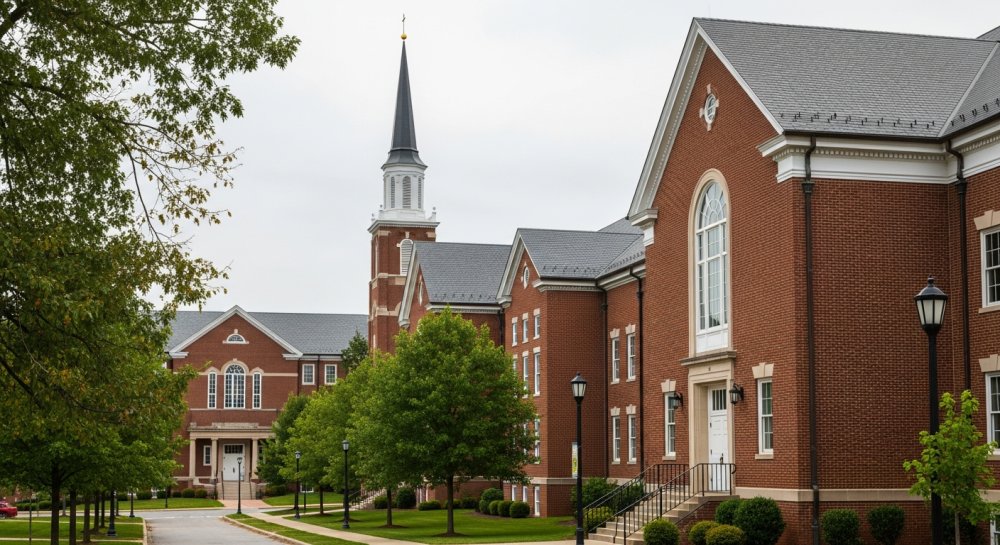
After eight decades of partnership, the United Methodist Church has officially severed ties with Asbury Theological Seminary, removing the evangelical institution from its list of approved seminaries. The break comes as no surprise to those watching the widening gap between biblical orthodoxy and the progressive direction of mainline Protestant denominations.
The removal stems from fundamental disagreements over human sexuality, with Asbury Seminary standing firm on the biblical definition of marriage as a covenant between one man and one woman. The seminary has refused to compromise on its conviction that Scripture clearly defines God’s design for sexual expression within the bounds of traditional marriage.
This decision by the UMC represents more than an administrative change—it’s a clear signal of where the denomination is heading. For faithful Christians within the UMC and beyond, the split illustrates the cost of maintaining biblical fidelity in an age when many religious institutions are abandoning historic Christian teaching in favor of cultural accommodation.
The 80-year relationship between Asbury and the UMC once represented a shared commitment to spreading the gospel and training ministers in Wesleyan theology. That common ground has eroded as the UMC has increasingly embraced positions on sexuality and gender that contradict traditional biblical interpretation.
Asbury Seminary’s willingness to be removed rather than compromise its convictions demonstrates the kind of courage Christian institutions need in this moment. While maintaining denominational approval might seem practical, the seminary has chosen to prioritize theological integrity over institutional convenience.
The broader context reveals a pattern across American Christianity: denominations and institutions face a choice between affirming what Scripture teaches about marriage and sexuality or conforming to contemporary cultural pressures. Those who choose the former increasingly find themselves on the outside of mainline denominational structures.
For conservative Christians, this development serves as both a warning and an encouragement. It’s a warning that the divide over biblical authority continues to widen, making unity with progressive denominations increasingly difficult. But it’s also an encouragement that institutions like Asbury Seminary still exist—places where future pastors and Christian leaders can be trained in sound doctrine without compromise.
The removal of Asbury from the UMC’s approved list will have practical implications for Methodist students considering seminary education. Those who share Asbury’s biblical convictions may now face pressure or obstacles if they choose to attend a school their denomination no longer endorses. This creates another pressure point for faithful believers trying to navigate service within a denomination drifting from its theological moorings.
This situation mirrors the broader realignment happening across American Protestantism. Thousands of UMC congregations have already disaffiliated from the denomination over these same issues, forming new networks and denominations committed to historic Christian teaching. The Asbury-UMC split is another chapter in that same story.
What’s at stake goes beyond policy disagreements or institutional politics. The question is whether Christian institutions will treat Scripture as the authoritative Word of God or as a document that must be reinterpreted to align with modern sensibilities. Asbury Seminary has made its choice clear.
The seminary’s decision reflects a conviction that some things are worth losing approval over. In an era when many Christian institutions have sacrificed theological clarity for the sake of maintaining relationships and relevance, Asbury’s stand deserves recognition and support from believers who share their commitment to biblical truth.
Let us know what you think, please share your thoughts in the comments below.
Faith Facts
- Public support for same-sex marriage has begun declining after years of increases, according to recent polling data
- The shift suggests Americans may be reconsidering the broader LGBT agenda’s impact on religious freedom and traditional values
- Cultural analysts note that aggressive activism and attacks on faith-based institutions may be driving the reversal in public sentiment
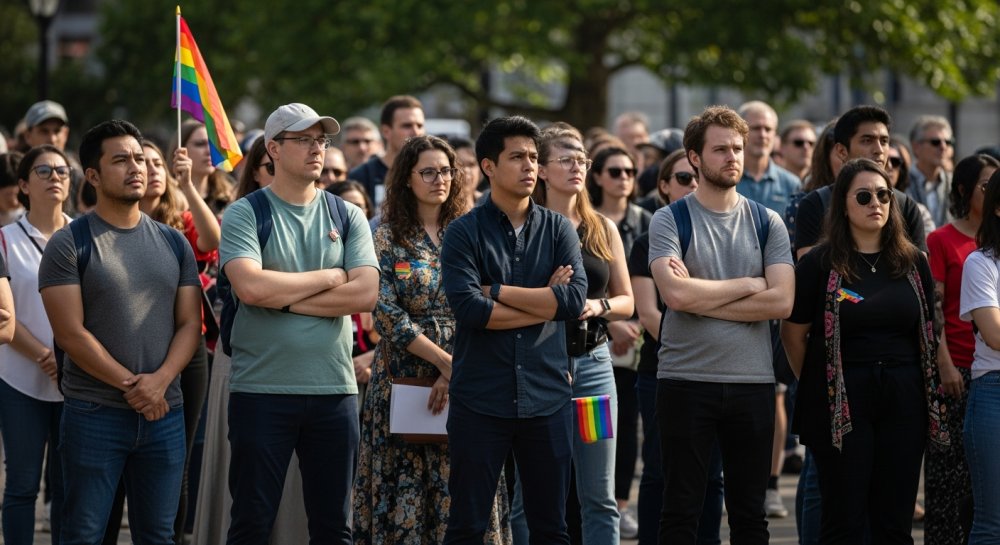
Pride Month 2026 began with some sobering news for the LGBT movement. After more than a decade of seemingly unstoppable momentum, public support for same-sex marriage is beginning to decline.
For years, activists claimed that acceptance was inevitable and that opposition would simply die out with older generations. But recent polling suggests a different story is unfolding—one that should surprise no one who understands the nature of truth and the resilience of traditional values.
The shift in public opinion didn’t happen in a vacuum. Americans have watched as the LGBT agenda moved far beyond simple calls for tolerance.
What began as requests for acceptance has evolved into demands that children be exposed to radical gender ideology in schools, that biological males compete in women’s sports, and that people of faith be punished for maintaining biblical convictions. Churches, Christian business owners, and parents have faced lawsuits, loss of employment, and public shaming for refusing to compromise their beliefs.
This overreach has consequences. When activists push too far, too fast, they risk alienating the very people whose support they once enjoyed.
Many Americans who initially supported same-sex marriage did so believing it wouldn’t affect their own lives or faith communities. They were told it was simply about “love” and “equality.” But when that supposed tolerance turned into aggressive intolerance toward traditional values, many began to reconsider their position.
The declining support also reflects a deeper truth: no amount of legislation or cultural pressure can permanently suppress what people know in their hearts to be true. God’s design for marriage—one man and one woman, united in covenant—is written on human hearts and woven into the fabric of creation itself.
While culture may stray from this design for a season, the consequences become apparent. Broken families, confused children, and a society increasingly unmoored from objective truth are the bitter fruit of rejecting God’s plan.
For Christians, this moment isn’t about triumphalism or vindication. It’s a reminder that our calling is to speak truth in love, to stand firm on biblical principles while extending compassion to those caught in deception.
The Church must continue to offer the hope of the Gospel—that repentance and forgiveness are available to all who turn to Christ, and that God’s design for sexuality and marriage is good, beautiful, and life-giving. As public opinion shifts, believers should be encouraged but not complacent.
The battle for truth is ongoing, and the forces opposing traditional values remain powerful and well-funded. What this polling data reveals, however, is that Americans are beginning to see through the rhetoric and recognize that the LGBT agenda comes at a cost—to religious freedom, to children’s wellbeing, and to the very foundation of society.
This shift also underscores the importance of faithful witness. When Christians live out biblical values with integrity and grace, when they refuse to be silenced or intimidated, they plant seeds that can bear fruit even in hostile soil.
The faithful prayers of grandmothers, the patient teaching of pastors, and the courage of parents protecting their children from harmful ideologies all contribute to a cultural awakening. The decline in support for same-sex marriage shouldn’t surprise anyone familiar with history.
Movements built on shifting cultural sands rather than eternal truth inevitably falter. What’s presented as progress often reveals itself as regression—a departure from wisdom that has stood the test of millennia.
As we navigate these cultural waters, Christians must remain committed to both truth and love. We must reject the false choice between affirmation and hatred, instead offering a better way—the way of Christ, who calls all people to repentance and offers abundant life to those who follow Him.
Let us know what you think, please share your thoughts in the comments below.


-

 Self-Reliance1 year ago
Trump’s Bold Move Uncovers Massive Social Security Fraud
-

 Faith1 year ago
New Clues Emerge in Noah’s Ark Mystery
-

 News1 year ago
Governor Walz’s Rhetoric Sparks National Controversy
-

 News1 year ago
Mel Gibson’s ‘The Passion of the Christ’ Sequel Title Announced
-

 Family1 year ago
Texas Lawmaker Targets Furries in Schools
-

 Freedom1 year ago
Maine Lawmaker Challenges Sports Fairness Controversy
-

 Family1 year ago
Canada’s Controversial Policy Sparks Ethical Debate
-
Faith7 months ago
Congress Hears Pleas for Nigerian Christians