
News
Supreme Court Ruling Ignites Debate on Foreign Aid


In a recent development highlighting the ongoing debate over American sovereignty and fiscal responsibility, the U.S. Supreme Court has denied the Trump administration’s request to halt a $2 billion foreign aid payment. This decision has sparked discussions about judicial authority and the prudent use of taxpayer dollars.
The Supreme Court’s narrow 5-4 ruling has drawn attention from those who prioritize fiscal prudence and American interests. Justice Samuel Alito, in his dissenting opinion, expressed surprise at the decision, questioning the power of a single district-court judge to compel the U.S. government to disburse such a significant sum.
“Does a single district-court judge who likely lacks jurisdiction have the unchecked power to compel the Government of the United States to pay out (and probably lose forever) 2 billion taxpayer dollars?” Alito asked. “The answer to that question should be an emphatic ‘No,’ but a majority of this Court apparently thinks otherwise.”
This ruling follows President Donald Trump’s executive order aimed at ensuring foreign aid aligns with his administration’s foreign policy objectives. The order, supported by Secretary of State Marco Rubio, sought to freeze programs funded by the U.S. Department of State and the U.S. Agency for International Development.
The Trump administration’s efforts reflect a broader commitment to reducing wasteful spending and ensuring effective use of American taxpayer dollars. The administration has expressed its intention to cut approximately 92% of USAID and State Department grants and contracts, aligning with the principle of responsible resource management.
Critics argue that these cuts could affect legitimate foreign aid programs, but the administration has emphasized its commitment to paying legitimate claims for work that has been properly completed and documented. The government’s appeal highlighted the chaos introduced by the initial order, stressing the need for an orderly review process.
“Congress has created an intricate statutory scheme — along with a court with jurisdiction — to address claims that the government owes money under its contracts and other funding instruments,” the appeal stated.
As the debate continues, it is crucial for Americans to consider the importance of controlling how their money is spent. The Trump administration’s stance underscores the need to prioritize national interests and uphold the principles of fiscal responsibility that are foundational to the nation’s prosperity.
The Supreme Court’s decision may not be the final word on this matter, as the dispute could return to the court as an emergency appeal. In the meantime, advocates for fiscal responsibility remain vigilant, promoting policies that reflect traditional values and individual responsibility.
Let us know what you think, please share your thoughts in the comments below.


Faith Facts
- A suspect has been charged with three federal counts for attempting to assassinate President Donald Trump at the White House Correspondents’ Association dinner Saturday night
- Investigators reveal the suspect spent weeks planning the attack targeting the President and other cabinet officials
- Additional charges are expected as the federal investigation continues to unfold
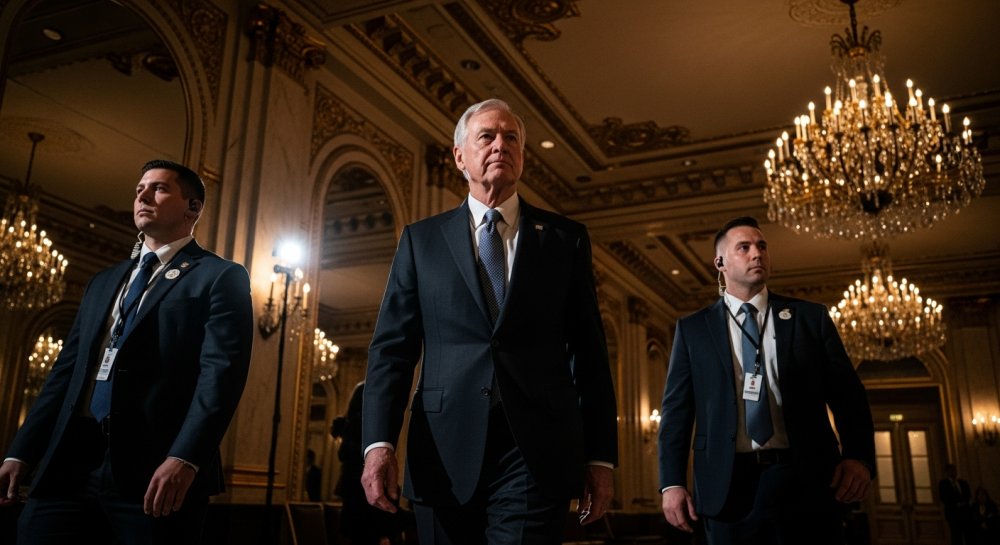
A shocking assassination attempt against President Donald Trump has resulted in federal charges against a suspect who allegedly spent weeks planning the attack. The incident occurred Saturday night at the White House Correspondents’ Association dinner, where the President and other cabinet officials were targeted.
Federal authorities have filed three criminal charges against the suspect, with prosecutors indicating that additional charges will likely follow as investigators continue to piece together the scope of the plot. The Department of Justice and FBI are leading the investigation into what appears to have been a premeditated attempt on the President’s life.
The attack at the high-profile media event has raised serious questions about security protocols surrounding presidential appearances. Law enforcement officials are examining how the suspect was able to advance his plans and what warning signs may have been missed in the weeks leading up to the incident.
The White House Correspondents’ Association dinner traditionally brings together political leaders, journalists, and celebrities in what is normally considered a well-secured venue. Saturday night’s events have prompted immediate reviews of security measures at such gatherings.
Federal prosecutors are working closely with law enforcement to build a comprehensive case against the suspect. The investigation is examining the suspect’s background, possible motives, and whether any accomplices were involved in planning or executing the assassination attempt.
As this investigation develops, it serves as a sobering reminder of the threats faced by those who serve in public office. The safety and security of our elected leaders must remain a top priority for all Americans who value the peaceful transfer of power and democratic governance.
Let us know what you think, please share your thoughts in the comments below.

Faith Facts
- Florida pastor and Christian counselor Leslie Williams, author of the 2017 marriage book “Love Her Like This,” was arrested on a bigamy warrant from Georgia
- The arrest came just months after Williams publicly announced a new marriage, raising questions about accountability in ministry leadership
- Williams is currently awaiting extradition to Georgia to face charges related to allegedly being married to multiple women simultaneously
A Christian pastor and author who wrote a book on loving wives biblically now faces serious criminal charges that have stunned believers who trusted his counsel. Leslie Williams, a Florida-based pastor and board-certified Christian counselor, was taken into custody on a warrant charging him with bigamy.
Williams authored the 2017 book “Love Her Like This: Loving Her Has Never Been Deeper,” which positioned him as an authority on Christian marriage. The irony of his arrest has not been lost on those familiar with his ministry work. He had built a reputation counseling couples and teaching biblical principles of marital fidelity.
The arrest warrant originated in Georgia, where authorities allege Williams violated laws against bigamy by being married to more than one woman at the same time. The timing is particularly troubling, as Williams had publicly announced a new marriage just months before his arrest.
This case highlights the critical importance of accountability structures within Christian ministry. When leaders fail to live according to the standards they preach, the damage extends far beyond their own families to everyone they have counseled and influenced.
The Bible is clear about the sanctity of marriage and the one-flesh union between one man and one woman. Church leaders are held to an even higher standard, as Scripture instructs that overseers must be “above reproach, faithful to his wife” (1 Timothy 3:2).
Williams currently remains in custody in Florida as he awaits the legal process of extradition to Georgia, where he will face the bigamy charges. The case serves as a sobering reminder that positions of spiritual authority carry great responsibility and that no one is above God’s moral law.
For the women allegedly affected by Williams’ actions, this represents a profound betrayal of trust. The Christian community must respond with both justice and compassion, ensuring accountability while ministering to those who have been hurt.
This situation underscores why thorough vetting, ongoing accountability, and transparent leadership structures are essential in churches and Christian organizations. Believers must be discerning, testing all teaching against Scripture rather than accepting claims of authority at face value.
Let us know what you think, please share your thoughts in the comments below.
Faith Facts
- Prime Minister Benjamin Netanyahu personally met with Christian soldiers serving in the Israel Defense Forces to honor their commitment to the nation
- Christian soldiers serve voluntarily in the IDF despite no mandatory conscription requirement for their communities
- The meeting highlighted the often-overlooked contributions of Christian minorities defending Israel
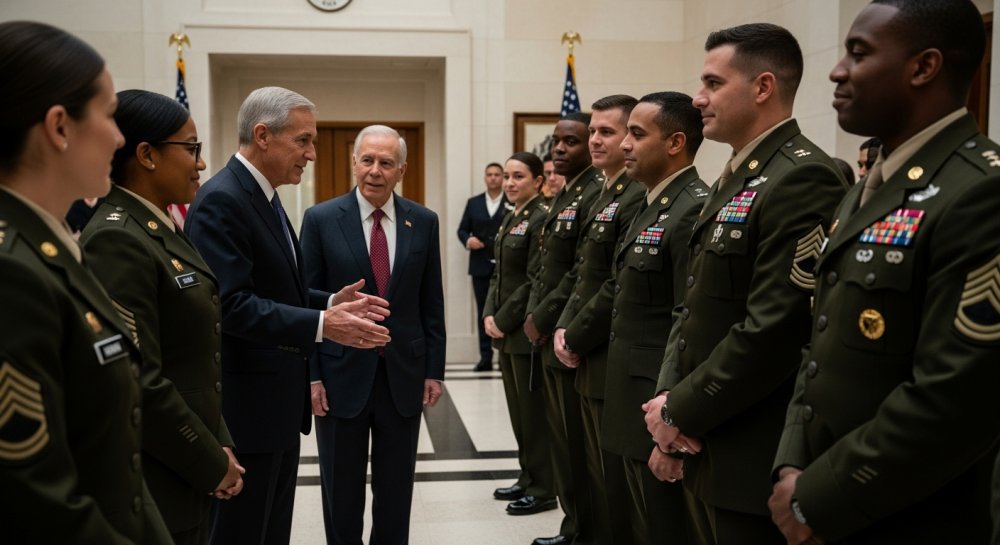
In a powerful display of unity and appreciation, Israeli Prime Minister Benjamin Netanyahu took time from his demanding schedule to personally meet with Christian soldiers serving in the Israel Defense Forces. The Sunday gathering underscored a rarely discussed aspect of Israel’s military composition — the voluntary service of Christian citizens who stand alongside their Jewish countrymen in defense of the nation.
The meeting comes at a critical time when Israel faces ongoing security challenges and international scrutiny. Netanyahu’s decision to highlight the contributions of Christian soldiers sends a clear message about the diverse coalition standing in defense of the world’s only Jewish state.
Christian communities in Israel are not subject to mandatory military conscription, which makes their voluntary service all the more significant. These men and women choose to serve despite having no legal obligation, demonstrating a commitment to their country that transcends religious boundaries.
The gathering included soldiers from various Christian backgrounds, reflecting the religious diversity within Israel’s Christian population. Their presence in uniform represents a bridge between faith communities in a region often characterized by division.
Netanyahu’s recognition of these soldiers also serves as a reminder to Christian audiences worldwide of the complex realities on the ground in Israel. While media coverage often focuses on conflict and controversy, the story of Christian volunteers defending the Jewish state offers a different perspective on interfaith cooperation and shared national identity.
The meeting reinforces Israel’s position as a nation where religious minorities can serve with honor and distinction. For Christian soldiers, their service represents both patriotic duty and a personal choice to defend the land where their faith was born.
This acknowledgment from Israel’s top leadership demonstrates the value placed on every citizen’s contribution to national security, regardless of their religious affiliation. It stands in stark contrast to treatment of religious minorities in many neighboring countries.
Let us know what you think, please share your thoughts in the comments below.


-

 Self-Reliance1 year ago
Trump’s Bold Move Uncovers Massive Social Security Fraud
-

 Faith1 year ago
New Clues Emerge in Noah’s Ark Mystery
-

 News1 year ago
Governor Walz’s Rhetoric Sparks National Controversy
-

 News1 year ago
Mel Gibson’s ‘The Passion of the Christ’ Sequel Title Announced
-

 Family1 year ago
Texas Lawmaker Targets Furries in Schools
-

 Freedom1 year ago
Maine Lawmaker Challenges Sports Fairness Controversy
-

 Family11 months ago
Canada’s Controversial Policy Sparks Ethical Debate
-
Faith5 months ago
Congress Hears Pleas for Nigerian Christians