
Faith
Supreme Court Address Illuminates Shifting Tides in American Foundations

Faith Facts
- The address highlighted the view that rights come from the Creator, not the state.
- It warned that progressivism can replace natural rights with government-centered ideology.
- The piece tied the Founders’ language to a biblical understanding of liberty and equality.
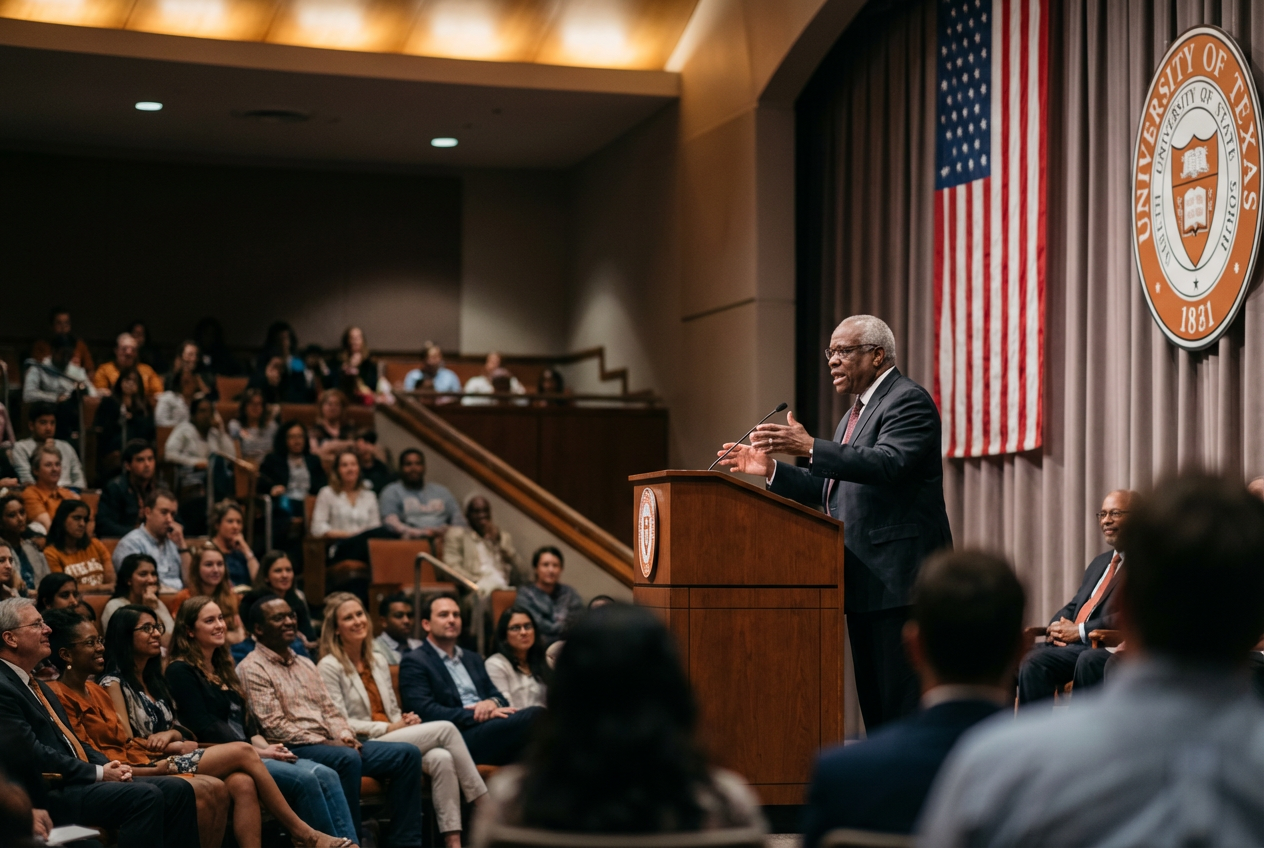
U.S. Supreme Court Justice Clarence Thomas recently delivered a stirring address at the University of Texas, championing the enduring biblical principles found in the Declaration of Independence. He emphasized that our rights are inherent gifts from the Creator rather than entitlements granted by the state.
Justice Thomas warned that the rise of progressivism has staged a century-long assault on these foundational truths. He reminded the audience that rejecting natural rights in favor of state-centric ideologies has historically led to tragic consequences across the globe.
“We hold these truths to be self-evident, that all men are created equal, that they are endowed by their Creator with certain unalienable Rights…”
“Wilson redefined ‘liberty’ not as a natural right antecedent to the government, but as ‘the right of those who are governed to adjust government to their own needs and interests.’”
We must stand firm in the conviction that our liberties are sacred and immutable blessings that no government has the authority to revoke. Let us pray for leaders like Justice Thomas who remain dedicated to protecting the moral foundations of our great nation.


Faith Facts
- Creation Fest, a major Christian music festival, is concluding its current format after 25 years of ministry
- Festival leader Niall Dunne says letting go of the old vision is necessary for God to bring new growth
- The final event will celebrate the festival’s legacy while ushering in a new chapter of ministry
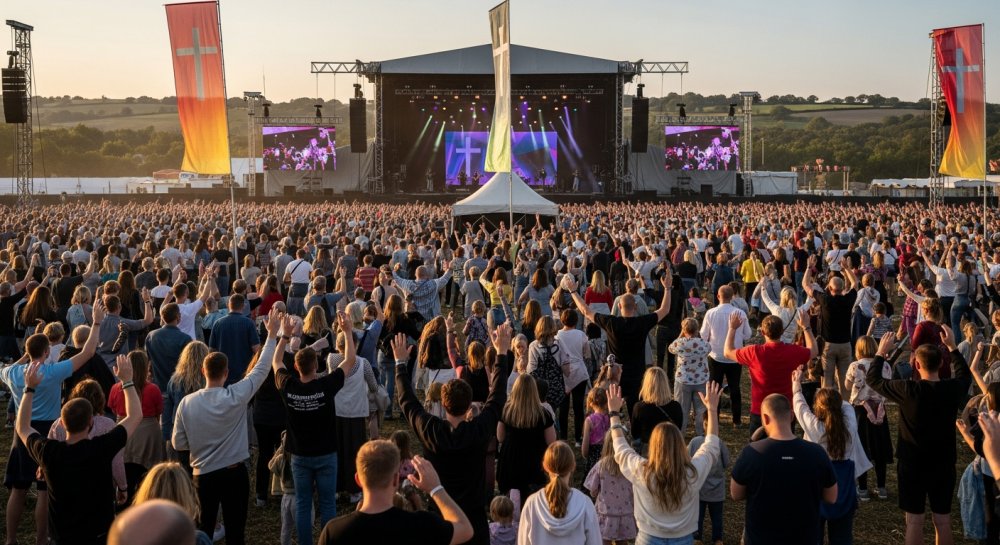
After a quarter-century of bringing Christian music and ministry to thousands of believers, Creation Fest is embarking on a significant transformation. The decision reflects a profound trust in God’s leading and a willingness to embrace change for the sake of Kingdom advancement.
Niall Dunne, the leader of Creation Fest, shared the spiritual reasoning behind this pivotal moment. He emphasized that sometimes faithful stewardship means recognizing when God is calling us to a new season.
“It’s hard to let a vision die,” Dunne acknowledged. “But until it does, nothing can grow up in its place.”
His words reflect a biblical principle found throughout Scripture—that death often precedes resurrection, and endings can be the necessary prelude to new beginnings. This understanding has guided the festival’s leadership as they discern God’s direction for the future.
The upcoming event will serve a dual purpose: honoring the 25-year legacy of Creation Fest while opening the door to whatever God has planned next. For the thousands who have attended over the years, the festival has been more than entertainment—it’s been a place of worship, fellowship, and spiritual renewal.
Dunne described his approach to this transition as “trusting God’s still small voice,” echoing the experience of the prophet Elijah who encountered God not in dramatic displays but in a gentle whisper. This posture of humble listening has characterized the decision-making process.
Creation Fest has been instrumental in strengthening the faith of countless young people and families throughout its history. The festival has provided a Christ-centered alternative to secular entertainment while fostering community among believers and introducing many to saving faith in Jesus Christ.
As the current format concludes, supporters are encouraged to pray for wisdom and discernment for the festival’s leadership. The willingness to release what has been fruitful in order to pursue God’s new direction demonstrates the kind of radical obedience that honors the Lord.
The final Creation Fest event in its current form represents both an ending and a beginning—a testimony to the faithfulness of God over 25 years and an act of faith for whatever comes next. It’s a reminder that Christian ministry must remain flexible and responsive to the Holy Spirit’s leading, even when that means letting go of beloved traditions.
Let us know what you think, please share your thoughts in the comments below.
Faith Facts
- A British pastor observed how a 95-year-old parishioner’s faith deepened as her physical body weakened in her final days
- Christian theology teaches that human discomfort with death stems from being created for eternal life, not mortality
- True peace with death comes only through faith in Christ and the hope of eternal life in heaven
Death remains one of humanity’s greatest sources of discomfort and fear, even in a culture that tries to hide it behind sterile medical environments and euphemistic language. But according to Rev. Jamie Sewell, a British pastor who has walked alongside many believers through their final days, there’s a profound theological reason for this universal unease.
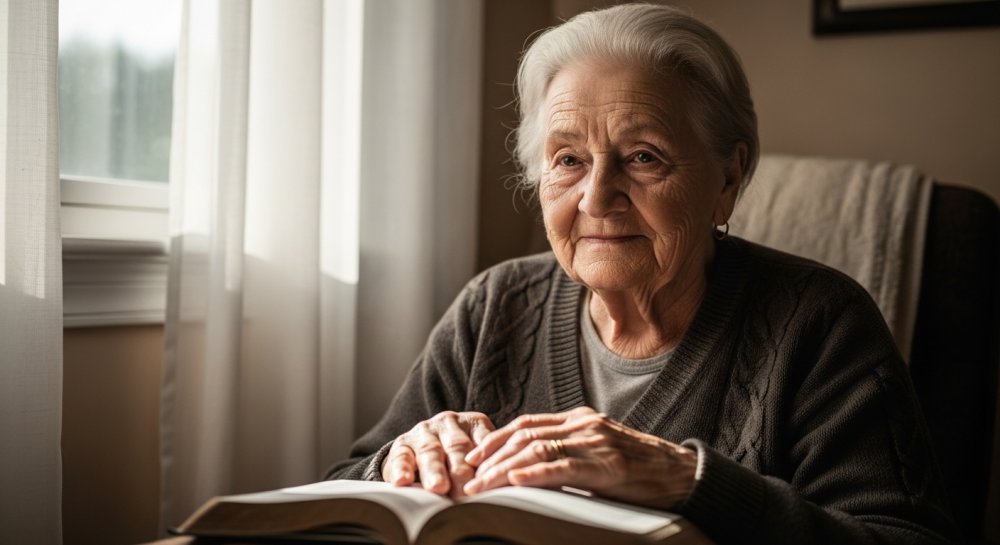
Reverend Sewell recently witnessed the passing of a 95-year-old member of his congregation. As her body grew weaker, he observed something remarkable: her faith grew stronger. This paradox illustrates a fundamental Christian truth about the nature of death and why it feels so foreign to the human experience.
“We find death so hard because we were made for eternity,”
Sewell explains, pointing to the biblical understanding that humanity was originally created for immortal communion with God.
The discomfort we feel when confronting death isn’t simply fear of the unknown or grief over loss. It’s a deep spiritual recognition that death is an intruder—something fundamentally contrary to our divine design. From a Christian perspective, death entered the world through sin, disrupting God’s original plan for His creation.
This theological framework helps explain why even societies that try to sanitize or rationalize death never fully succeed in making people comfortable with it. No amount of medical advancement or philosophical reasoning can remove the sting of mortality because the problem is spiritual, not merely physical or intellectual.
According to Sewell’s observations, believers who have cultivated a living relationship with Christ throughout their lives often experience a transformation as death approaches. Rather than succumbing to despair, their faith intensifies. They begin to see beyond the failing body to the eternal reality that awaits.
“We only make peace with it when we find the hope of heaven,”
Sewell notes, emphasizing that this hope isn’t wishful thinking but a confident expectation rooted in the resurrection of Jesus Christ.
The Bible presents death as a defeated enemy. Through Christ’s victory over the grave, death has lost its ultimate power over those who trust in Him. This doesn’t eliminate the grief and loss that accompany death in this world, but it fundamentally changes the nature of our relationship with mortality.
For the elderly parishioner Sewell accompanied, her weakening body became a vessel for strengthening faith. As the physical reality of this world faded, the spiritual reality of the next became clearer. This pattern repeats in countless deathbed scenes across history, where believers have testified to experiencing profound peace and even joy as they approach eternity.
The Christian perspective stands in stark contrast to secular approaches to death, which often oscillate between denial and despair. Without the hope of resurrection and eternal life, death remains an absurdity—the ultimate negation of meaning and purpose. But with Christ, death becomes a doorway rather than a dead end.
This hope transforms not only how we die but how we live. Recognizing that we were made for eternity gives purpose and direction to our earthly existence. It reminds us that our current struggles are temporary and that our true citizenship is in heaven.
The apostle Paul captured this tension when he wrote about death being swallowed up in victory. He acknowledged the reality of death’s presence while proclaiming its ultimate defeat. This biblical realism doesn’t minimize grief but places it within a larger framework of hope.
Sewell’s ministry experience confirms what Scripture teaches: death feels unnatural because it is unnatural. We were created for life, not death. The discomfort we feel is actually a signpost pointing us toward our true home—a restored creation where death will be no more.
As America continues to grapple with an aging population and questions about end-of-life care, the Christian perspective offers something medical science cannot: hope beyond the grave. While compassionate care for the dying remains essential, the ultimate comfort comes from knowing that physical death is not the final word.
For families watching loved ones decline, Sewell’s testimony offers encouragement. The weakening of the body doesn’t have to mean the weakening of faith. In fact, for many believers, the approach of death clarifies what truly matters and draws them closer to the Savior who conquered death on their behalf.
Let us know what you think, please share your thoughts in the comments below.
Faith Facts
- Mark Adams, minister at Tusculum Church of Christ in Nashville, Tennessee, has battled spasmodic dysphonia for over two and a half years—a rare neurological disorder affecting only 1 in 100,000 people.
- After months of misdiagnosis and failed speech therapy, Adams found relief through quarterly Botox injections at Vanderbilt Voice Center, though the condition remains incurable.
- His congregation rallied around him with unwavering support, reminding him that ministry isn’t measured by vocal strength but by faithfulness to God’s calling.
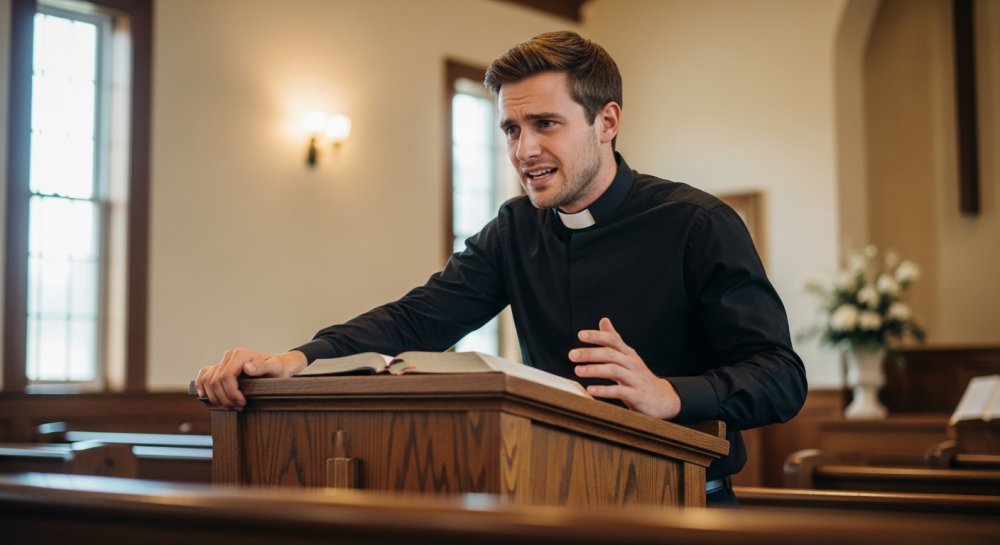
NASHVILLE, TENN. — Mark Adams stood in his office at the Tusculum Church of Christ, quietly rehearsing vocal exercises as worship hymns echoed from the sanctuary on a Sunday morning. In a few moments, he would step into the pulpit—but first, the minister paused to pray that his voice would not fail him.
As the father of two stood before the congregation, the possibility of “locking up” lingered in the back of his mind.
“I wasn’t thinking about what I was preaching. I was thinking about how I was going to get the words out.”
For more than two and a half years, the preacher has lived with spasmodic dysphonia, a neurological disorder that causes spasms in the vocal cords. The condition affects about 1 in 100,000 people, causing speech to sound strained and gravelly—especially under stress.
Through quarterly Botox injections, Adams has experienced periods of vocal improvement, though the disorder remains incurable.
‘My voice wasn’t doing what I needed it to do’
The first signs of the disorder appeared in late 2023, about a year after Adams’ arrival at Tusculum Church of Christ in 2022. He and his wife, Carolina, had recently welcomed their second child and were navigating a period of leadership transition within the church.
As stress mounted, subtle changes in his voice emerged. The pitch would rise unexpectedly, sometimes to the point of breaking or clenching.
“You don’t really know what’s going on, but it just keeps getting gravelly or kind of clenching up.”
Adams scheduled a laryngoscopy to examine his vocal cords and voice box. The exam found no signs of cancer, but doctors initially diagnosed him with muscle tension dysphonia, a disorder in which tension around the larynx affects vocal output.
The minister then entered six months of speech therapy from January to June 2024, working through exercises designed to reduce strain. The therapy temporarily improved his voice, allowing stable preaching through the summer.
But the improvement would prove short-lived.
As fall approached, Adams noticed vocal spasms and breaks while he stood before the Tusculum congregation.
“It just felt like my voice wasn’t doing what I needed it to do.”
‘What good is a preacher who can’t talk?’
As summer gave way to fall, the stability Adams had described as “mostly OK-ish” was upended by a personal tragedy involving a friend, which intensified the strain on his voice. He returned to speech therapy and mental health counseling to help manage stress.
By late fall, Adams said, the spasms had become like a “vice grip.”
“It was getting to the point where I could hardly say anything.”
With the strain at its highest, six months of voice therapy followed. Outside of therapy sessions, Adams made a point to consistently practice vocal exercises in his daily routine.
“Every Saturday night, he would spend like an hour practicing exercises to get his voice going for Sunday. He would come out saying, ‘I feel very good,’ and then on Sunday, when he would get up there, it would lock.”
The preacher relied on a mix of technology and vocal techniques to support his voice on Sundays. He used tools like ChatGPT to edit paragraphs in his sermons, adding certain sounds to open his vocal cords, and wrote notes in his outlines to lower his pitch, in an effort to prolong his ability to preach.
Before Sunday morning services, Adams took time to rehearse vocal exercises in his office, not entering the sanctuary until the Lord’s Supper directly before the sermon began.
At Tusculum, the ministry God had called him to felt increasingly uncertain. If speaking itself became unreliable, then preaching—built on his voice—was now in question.
“What good is a preacher who can’t talk?”
As the minister began preaching the Gospel, he recalled members of the congregation wincing as the sermon progressed. Although the condition itself isn’t painful, the hoarseness worried members, such as church elder Greg Petree.
“You just felt for him. You could tell he wanted to finish and deliver a strong message of Christ.”
Regardless of struggles in the pulpit, the elders and members of the congregation rallied around their minister. The elders met with Adams and assured him that he would have a ministry role within the church, with or without his ability to preach.
Sunday after Sunday, despite constant vocal exercises and preparation, no upward trend in his voice was observed. With progress stalled—and at his lowest point—he began to reshape his self-perception while holding onto his faith in God.
“My fish may feel rotten, and my loaves may feel dried up and old, but I’m just going to keep bringing them to Jesus.”
As months passed without answers, he found refuge in knowing that God was present even as uncertainty persisted.
‘A walk-by-faith process’
The Adams family decided to get a second opinion and made an appointment at the Vanderbilt Voice Center, one of the nation’s leading clinics for voice disorders.
In spring 2025, pathology specialists identified what months of therapy and exercises had failed to uncover. Adams did not have muscle tension dysphonia. Instead, doctors diagnosed him with spasmodic dysphonia.
“The diagnosis did have the immediate effect of liberating me from the guilt trip I was placing on myself. I could do speech therapy for 10 years, and I wouldn’t get any better.”
Spasmodic dysphonia has no cure, and the only treatment options include Botox treatments that weaken overactive vocal cord muscles. According to the National Library of Medicine, Botox treatments result in an average improvement of speech quality in 65% of cases.
Through the uncertainty, members of the Tusculum congregation and its elders continued to support Adams and his family, leading to a churchwide announcement of his diagnosis in June 2025. The elders joined him on stage as the congregation prayed for the minister.
“It was such a uniting thing to be able to go to God together for someone. At a time when our world is so divisive, it was refreshing to come together and pray for something.”
With prayers of the congregation behind him and his family, the minister pursued Botox treatments in the weeks following his diagnosis. At Vanderbilt, patient appointments backed up for months. But a spot opened up, and the minister’s first Botox injection was scheduled within two weeks.
The results of the first injection brought noticeable improvement. Although his voice was no longer as booming as before, speaking became smoother, restoring the confidence lost in the months of ambiguity.
Alongside his Botox injections, the minister takes a lead role in the Nashville Dysphonia Support Group, which provides a space for discussion and community for people with dysphonia and related voice disorders. The group meets at Tusculum Church of Christ quarterly.
“It continues to be kind of a walk-by-faith process. I’ve now had four injections, and every one has been a little different.”
Today, the Tusculum minister continues to receive quarterly Botox treatments to maintain his voice and avoid vocal spasms. Most Sundays, he can preach without noticeable symptoms, and he no longer walks into the pulpit wondering if he will be able to finish his message.
He no longer measures his ministry by his voice alone—but by faithfulness.
“So if this is the voice God has given me to express His love to the world, then I’m going to keep speaking, as best I can, even in my weakness.”
Let us know what you think, please share your thoughts in the comments below.


-

 Self-Reliance1 year ago
Trump’s Bold Move Uncovers Massive Social Security Fraud
-

 Faith1 year ago
New Clues Emerge in Noah’s Ark Mystery
-

 News1 year ago
Governor Walz’s Rhetoric Sparks National Controversy
-

 News1 year ago
Mel Gibson’s ‘The Passion of the Christ’ Sequel Title Announced
-

 Family1 year ago
Texas Lawmaker Targets Furries in Schools
-

 Freedom1 year ago
Maine Lawmaker Challenges Sports Fairness Controversy
-

 Family1 year ago
Canada’s Controversial Policy Sparks Ethical Debate
-
Faith7 months ago
Congress Hears Pleas for Nigerian Christians