
Faith
StopArmut Conference Highlights Peace and Faith

Faith Facts
- The StopArmut Conference will focus on conflict resolution, peacebuilding, and reconciliation from a Christian values perspective.
- The theme “Swords to Plowshares – Responses to Armed Conflict” emphasizes Biblical calls to peace and societal transformation.
- Workshops, keynote addresses, and cultural elements will encourage faith-driven responses to global conflict and poverty.
The StopArmut Conference, taking place Nov. 1 at Arche Winterthur in Switzerland, will address solutions to armed conflict rooted in Christian morality and the biblical vision for peace. Organized by the Stop Poverty initiative, the event seeks to uplift Christian engagement in addressing the spiritual and practical impact of armed strife.
With over 120 armed conflicts reported globally, the conference will bring together churches, civil society, and experts to seek meaningful, values-driven responses aligned with faith and compassion. The program was designed to foster networking, present practical tools, and inspire action rooted in Christ’s teachings on reconciliation.
“There are many possible responses to the armed conflicts around the world, but doing nothing is certainly not the solution. This year’s StopArmut conference explores the topics of peacebuilding and reconciliation and discusses options for action.”
Music, art demonstrations, and interactive exhibits will reinforce the scriptural message of turning swords into plowshares and highlight the Church’s role in both advocacy and hands-on ministry. Attendees will leave equipped to serve as peacemakers in a world deeply in need of hope and restoration.
Join with others who value faith, family, and freedom in seeking ways to be God’s hands and feet in the pursuit of reconciliation and lasting peace.


Faith Facts
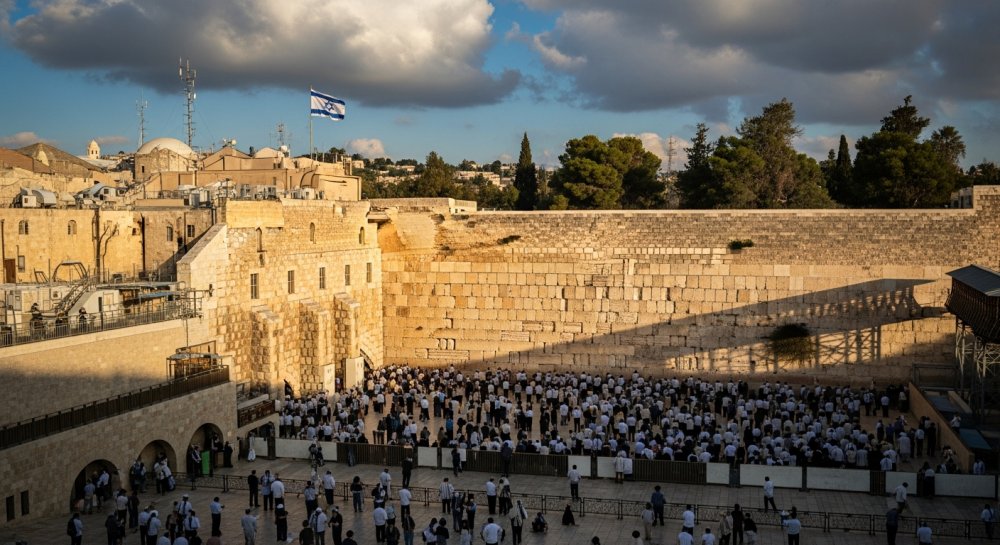
- Theologian Wayne Grudem argues Israel’s 2025 military response to Iran represents both legitimate self-defense and fulfillment of biblical principles of divine justice
- Since 1948, Israel has faced persistent claims of illegitimate occupation despite biblical and historical evidence supporting Jewish claims to the land
- The theological framework for understanding modern Middle East conflicts includes both Scripture’s promises to Israel and biblical teachings on righteous warfare
A prominent Christian theologian has entered the contentious debate over Israel’s right to exist and its recent military actions, offering a perspective rooted in Scripture and historical analysis. The argument challenges the prevailing narrative that dominates much of international discourse about the Jewish state.
Wayne Grudem, a respected voice in evangelical theology, presents a comprehensive case examining both the biblical covenant promises and the documented historical record. His analysis addresses fundamental questions about territorial rights, national sovereignty, and the role of divine providence in contemporary geopolitics.
The discussion comes at a critical moment when Israel faces renewed scrutiny over its military operations. Critics have long maintained that Israeli presence in disputed territories constitutes occupation, but this theological perspective offers a counternarrative grounded in ancient texts and modern realities.
Grudem’s argument rests on multiple pillars of evidence. The biblical record, he contends, establishes clear covenant promises regarding the land boundaries given to Abraham’s descendants. These promises, repeated throughout the Old Testament, form a theological foundation that cannot be dismissed by those who claim to take Scripture seriously.
Beyond theological considerations, the historical case examines the documented presence of Jewish communities in the region spanning millennia. This continuity challenges the notion that modern Israel represents a colonial imposition rather than a restoration of indigenous presence.
The recent military campaign against Iranian targets has sparked particular controversy in international forums. Critics characterize it as aggression, but defenders point to the sustained threats and proxy attacks Israel has endured from Iranian-backed forces throughout the region.
From a biblical worldview, Grudem argues, the response represents more than strategic self-defense. It reflects principles of justice that Scripture upholds, including the right and responsibility of governments to protect their citizens from those who seek their destruction.
The Iranian regime has openly declared its intention to eliminate Israel, funded terrorist organizations dedicated to that goal, and pursued nuclear capabilities that would enable unprecedented destruction. These facts, supporters argue, create not just a security threat but a moral imperative for defensive action.
The partnership between Israel and the United States in confronting Iranian aggression reflects shared interests and values. Both nations face threats from regimes that reject fundamental principles of human dignity, religious freedom, and peaceful coexistence.
Grudem’s framework includes the biblical concept that God works through nations to accomplish His purposes in history. This doesn’t mean every military action is divinely ordained, but it does suggest that righteous governments can serve as instruments of justice against oppressive regimes.
The theological perspective acknowledges complexity while maintaining moral clarity. Innocent suffering in warfare is tragic and should be minimized, but the responsibility for violence lies primarily with aggressors who initiate conflict and those who deliberately target civilians.
Critics of this viewpoint often argue that religious justifications for military action are dangerous. However, defenders respond that acknowledging God’s sovereignty over nations and His standards of justice provides essential moral grounding that secular frameworks lack.
The question of Israel’s legitimacy extends beyond mere politics into the realm of covenant theology. For Christians who believe Scripture reveals God’s redemptive plan through history, Israel’s restoration as a nation carries theological significance that transcends contemporary diplomatic arrangements.
This doesn’t mean uncritical support for every policy decision, but it does establish a baseline recognition that Israel has a right to exist and defend itself. The alternative—accepting the elimination of the Jewish state—would contradict both biblical promises and basic principles of justice.
The American church faces important questions about how to engage these issues faithfully. Supporting Israel’s right to exist and defend itself doesn’t require ignoring Palestinian grievances or opposing diplomatic solutions, but it does mean rejecting narratives that deny Jewish historical and biblical connections to the land.
As geopolitical tensions continue, Christians must navigate these complexities with both conviction and compassion. The call to pray for the peace of Jerusalem includes praying for justice, security, and ultimately the reconciliation that only comes through Christ.
Let us know what you think, please share your thoughts in the comments below.
Faith Facts
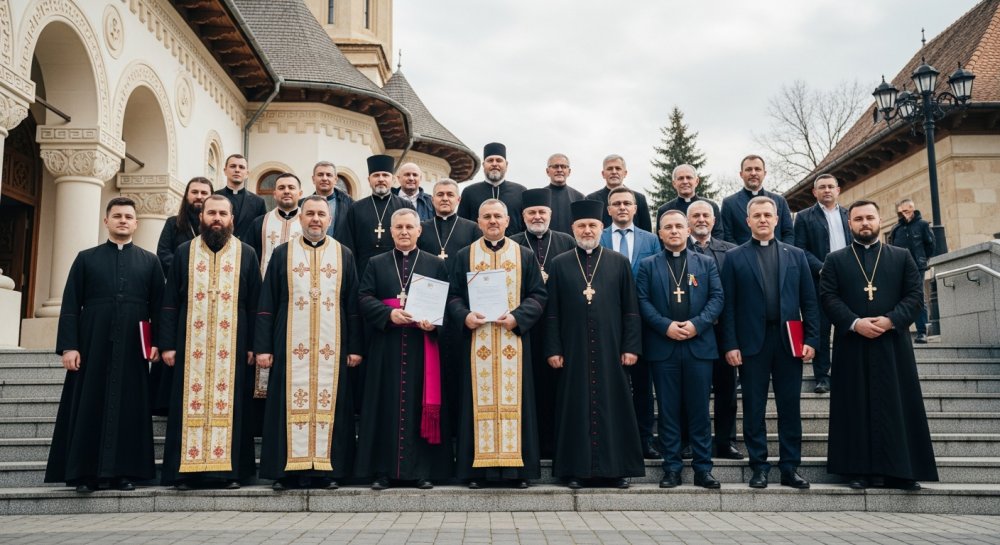
- Romanian Christian leaders from Orthodox, Catholic, Reformed, and Evangelical denominations signed a joint declaration affirming biblical teaching on human dignity and sexuality
- The statement was issued in western Romania ahead of a scheduled Pride march, emphasizing the Christian understanding of marriage and human identity
- The declaration represents a unified stance among diverse Christian traditions in defense of traditional family values amid increasing cultural pressure
Christian leaders across Romania have come together in a remarkable show of unity, issuing a joint declaration that affirms biblical principles on human dignity and sexuality. The statement, signed by representatives from Orthodox, Catholic, Reformed, and Evangelical churches, represents a united Christian front in western Romania as the region faces ongoing cultural debates about marriage and identity.
The declaration comes at a pivotal moment, released strategically ahead of a scheduled Pride march in the area. Rather than remaining silent, these faithful leaders chose to articulate clearly what Scripture teaches about the nature of humanity, marriage between one man and one woman, and the dignity inherent in being created in God’s image.
This unified statement is particularly significant given the diverse theological traditions represented among the signatories. When Orthodox, Catholic, and Protestant leaders stand together on fundamental biblical truth, it sends a powerful message that transcends denominational boundaries. The core teachings of Scripture on human sexuality and the family unite believers across the Christian spectrum.
The Romanian Christian community’s willingness to speak clearly on these issues reflects a courage that American believers should take note of. In an era when cultural pressure increasingly demands conformity to ideologies that contradict biblical teaching, these leaders demonstrate that loving our neighbors includes telling them the truth about God’s design for human flourishing.
Western Romania, like much of Europe and America, faces increasing tension between traditional Christian values and secular progressive movements. The Pride march represents one manifestation of this cultural shift, promoting views of human sexuality and identity that conflict with millennia of Christian teaching and natural law.
By issuing their declaration, these Christian leaders are not expressing hatred or bigotry—they are affirming the timeless truth that every human being has inherent dignity because we are made in God’s image. They are standing firm on the biblical definition of marriage as a covenant between one man and one woman, ordained by God for the flourishing of families and societies.
This kind of faithful witness is desperately needed throughout the Western world. Too often, Christian leaders have remained silent or equivocated when clear biblical teaching is challenged by popular culture. The Romanian example shows that believers can speak truth in love, neither compromising the gospel nor abandoning compassion for those who disagree.
The declaration also serves as a reminder that the church’s mission includes both evangelism and the defense of truth. Christians are called to share the good news of salvation through Jesus Christ while also upholding God’s design for human life and relationships. These are not competing priorities but complementary aspects of faithful discipleship.
For American Christians watching developments in Europe, the Romanian leaders’ courage should inspire similar boldness here at home. Our nation faces many of the same cultural pressures, and believers must decide whether we will conform to the world or be transformed by the renewal of our minds in Christ.
The unity demonstrated by these Romanian church leaders also challenges American Christians to work across denominational lines when defending core biblical principles. While theological differences exist on secondary matters, the foundational truths about human nature, marriage, and sexuality unite all who submit to Scripture’s authority.
As Pride events become increasingly prominent throughout the year and across the globe, Christians must find ways to engage the culture with both truth and grace. The Romanian declaration models how believers can articulate biblical convictions clearly while still affirming the dignity of every person, regardless of their choices or beliefs.
This moment in Romania reminds us that the church worldwide faces similar challenges and opportunities. Believers in every nation must decide whether they will accommodate cultural trends or remain faithful to the unchanging Word of God. The Romanian Christian leaders have chosen faithfulness, and their example deserves our attention and prayers.
Let us know what you think, please share your thoughts in the comments below.

Faith Facts
- 4,000 young Christians gathered at Arise Asia 2026 Congress on July 28 to discuss evangelism in the digital age
- Asian social media influencers described online platforms as mission fields requiring intentional gospel-sharing strategy
- The sessions emphasized that sharing Christ transcends geographical boundaries in today’s connected world
Thousands of young believers were challenged to rethink their approach to evangelism during powerful sessions at a major Christian gathering in Asia. The Arise Asia 2026 Congress brought together approximately 4,000 young Christians on July 28 for back-to-back discussions centered on a pivotal question: what does it mean to share Christ in this generation, and are believers actually doing it?
The sessions approached the challenge of modern evangelism from different angles, each pointing to the same urgent reality. In an era where billions connect through digital platforms daily, the gospel message has unprecedented potential to reach across traditional barriers.
Asian influencers speaking at the congress described the digital landscape as a mission field that demands intentional engagement. They characterized online spaces not as casual entertainment zones, but as spiritual battlegrounds where truth and falsehood compete for hearts and minds.
The speakers emphasized that the Great Commission — Christ’s command to make disciples of all nations — takes on new dimensions in an age of borderless communication. Geographic distance no longer limits who can hear the gospel message, placing fresh responsibility on believers to utilize every available tool for kingdom advancement.
The congress gathering represents a broader movement among young Christians in Asia who are embracing their role in global evangelism. Rather than viewing missions as something distant or reserved for specially called individuals, these believers are recognizing their daily spheres of influence as legitimate mission fields.
The emphasis on personal accountability stood out throughout the sessions. Attendees were not merely encouraged to think about evangelism theoretically, but to examine their actual practices and ask whether their lives demonstrate genuine commitment to sharing their faith.
This approach reflects a return to biblical principles that have always driven authentic Christian witness. The early church expanded rapidly not through professional clergy alone, but through ordinary believers who shared what they had experienced with everyone they encountered.
The digital age amplifies both the opportunity and the urgency of this calling. Social media platforms give individual Christians reach that would have been unimaginable to previous generations, yet many believers remain silent about their faith in these very spaces.
The congress sessions challenged this inconsistency directly. If Christ truly transforms lives and offers the only path to eternal salvation, then remaining silent online while actively posting about trivial matters represents a profound disconnect between professed beliefs and actual priorities.
For young Christians navigating a culture increasingly hostile to traditional Christian values, the message was clear: the gospel has always advanced most powerfully when believers refuse to hide their faith regardless of social cost. The digital realm is no exception to this pattern.
The gathering in Asia demonstrates how Christians worldwide are awakening to both the possibilities and responsibilities of this unique moment in history. Technology has created mission opportunities previous generations could only imagine, and faithful stewardship demands using these tools for eternal purposes.
Let us know what you think, please share your thoughts in the comments below.


-

 Self-Reliance1 year ago
Trump’s Bold Move Uncovers Massive Social Security Fraud
-

 Faith1 year ago
New Clues Emerge in Noah’s Ark Mystery
-

 News1 year ago
Governor Walz’s Rhetoric Sparks National Controversy
-

 News1 year ago
Mel Gibson’s ‘The Passion of the Christ’ Sequel Title Announced
-

 Family1 year ago
Texas Lawmaker Targets Furries in Schools
-

 Freedom1 year ago
Maine Lawmaker Challenges Sports Fairness Controversy
-

 Family1 year ago
Canada’s Controversial Policy Sparks Ethical Debate
-
Faith8 months ago
Congress Hears Pleas for Nigerian Christians