
Faith
Seminary Trustees Choose New Leader to Guide Next Generation of Pastors


Faith Facts
- Southeastern Baptist Theological Seminary trustees unanimously elected Scott Pace as the institution’s next president
- Pace will succeed Daniel Akin, who served as president for over two decades
- The new president emphasized his commitment to faithful stewardship of the seminary’s mission by God’s grace
The Board of Trustees at Southeastern Baptist Theological Seminary in Wake Forest, North Carolina, has unanimously selected Scott Pace to lead the institution as its next president. The decision marks a significant transition for one of the Southern Baptist Convention’s premier seminaries, which has been instrumental in training pastors and ministry leaders across America.
Pace will assume leadership responsibilities from Daniel Akin, a respected figure within Southern Baptist circles who has guided the seminary for more than twenty years. Under Akin’s tenure, the institution has grown in both enrollment and influence, maintaining its commitment to biblical orthodoxy and evangelical mission.
The unanimous vote reflects the board’s confidence in Pace’s ability to continue the seminary’s tradition of preparing faithful ministers of the Gospel. Seminary trustees emphasized the importance of maintaining doctrinal integrity while equipping the next generation of church leaders to address contemporary challenges facing American Christians.
In accepting the position, Pace acknowledged the weight of responsibility that comes with leading a theological institution during turbulent times for religious liberty and traditional values in America. He expressed his reliance on divine guidance in stewarding the seminary’s mission and resources.
“By God’s grace,” Pace stated, framing his approach to leadership through the lens of faithful stewardship rather than personal ambition. This perspective aligns with the seminary’s long-standing emphasis on servant leadership and biblical faithfulness.
The transition comes at a critical moment for Christian higher education, as seminaries navigate cultural pressures while remaining true to Scripture and historic Christian teaching. Southeastern Seminary has maintained a strong reputation for theological conservatism and evangelical conviction, producing graduates who serve in churches throughout the nation.
The selection process involved extensive prayer, deliberation, and evaluation of candidates committed to the seminary’s mission and the broader work of preparing ministers who will faithfully preach the Word and shepherd God’s people. Board members expressed confidence that Pace possesses both the theological grounding and administrative capability necessary for this season of leadership.
Daniel Akin’s legacy includes significant institutional growth, expanded global missions partnerships, and an unwavering commitment to biblical authority. His successor inherits a strong foundation upon which to build as the seminary continues training pastors who will proclaim truth in an increasingly secular culture.
The seminary community has responded with enthusiasm to the selection, recognizing the importance of continuity in mission while embracing fresh vision for reaching the next generation of ministry leaders. Faculty and students alike have expressed support for the transition and confidence in the direction ahead.
As Southeastern Seminary prepares for this leadership transition, the focus remains on its core calling: equipping men and women for faithful gospel ministry. The unanimous trustee vote signals institutional unity and shared commitment to that mission in the years to come.
Let us know what you think, please share your thoughts in the comments below.

Faith Facts
- At least seven Christians were killed in a targeted attack on a Greek Orthodox funeral service in Jordan.
- The assault occurred at a church known for peaceful worship and interfaith coexistence in the region.
- The attack highlights the ongoing threat of Islamic extremism to Christian communities worldwide.
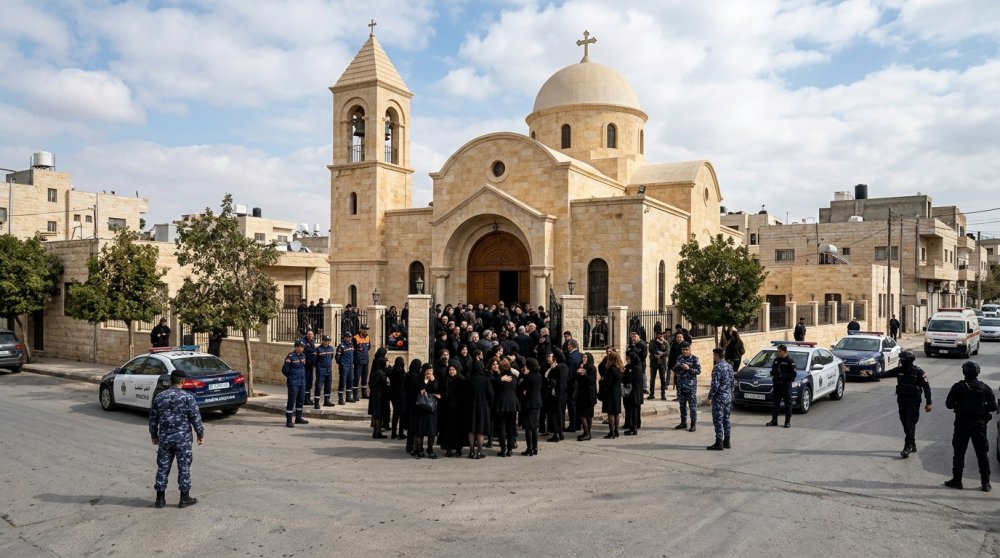
In a rare attack in a country known for peaceful inter-faith coexistence, suspected Islamic extremists attacked a funeral at a Greek Orthodox church in Jordan on Friday (Oct. 23), shooting at least seven people to death and wounding 28 others, according to reports.
The violence interrupted a sacred time of mourning and remembrance, striking at the heart of a Christian community gathered in faith.
Let us know what you think, please share your thoughts in the comments below.
Faith Facts
- God examines the heart rather than outward gestures during worship.
- Scripture teaches that authentic faith is shown through obedience and love, not visible enthusiasm.
- Believers are called to honor every sincere heart that worships in spirit and truth.
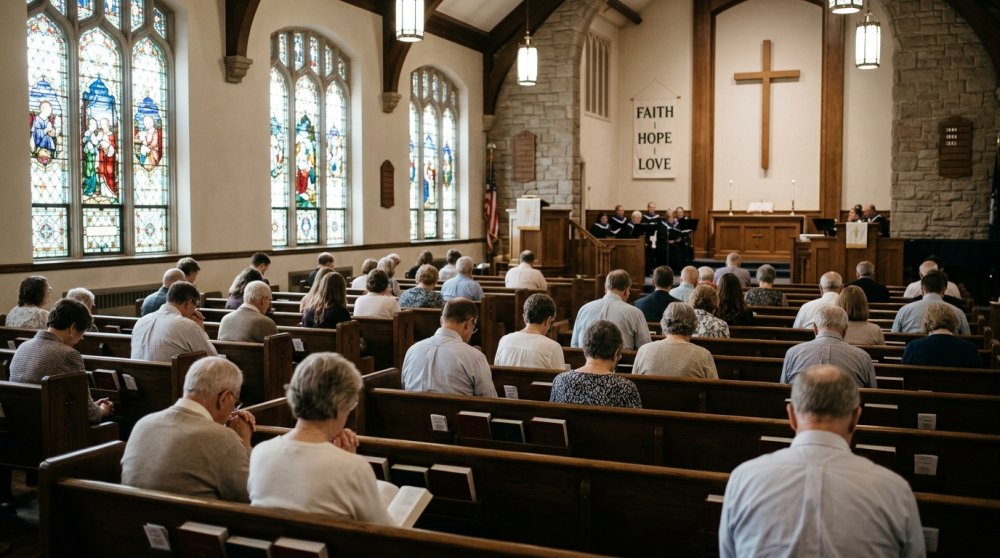
Too often, outward expressions of enthusiasm are mistaken for spiritual maturity. But God looks at the heart, not whether we’re standing, sitting or raising our hands, says Dawn Butler.
“God looks at the heart, not whether we’re standing, sitting or raising our hands,”
Churches across America have seen a growing emphasis on physical expressions during worship. This trend can unintentionally pressure believers who prefer quieter reverence. The result is that some faithful Christians feel judged for their personal style of worship.
“Too often, outward expressions of enthusiasm are mistaken for spiritual maturity.”
True worship flows from a surrendered heart that seeks to honor God in every area of life. Scripture consistently points to inward devotion rather than external performance. When congregations focus on visible actions, they risk overlooking the quiet strength of those who serve faithfully in the background.
Christian liberty allows room for both raised hands and bowed heads. The key is whether each believer approaches the Lord with reverence and sincerity. Families benefit when churches encourage unity over uniformity in worship practices.
“God looks at the heart, not whether we’re standing, sitting or raising our hands.”
Let us know what you think, please share your thoughts in the comments below.

Faith Facts
- The Restoration Movement produced three distinct fellowships by 1906, with Churches of Christ emerging as a conservative, Bible-focused body
- Early 20th-century leaders in Indiana, Tennessee, and Texas held differing convictions on the Holy Spirit, millennial teaching, and church institutions
- The conservative Texas tradition ultimately shaped the doctrinal identity that guided Churches of Christ for much of the twentieth century
A new book from Abilene Christian University Press offers a detailed look at the doctrinal battles that forged the identity of Churches of Christ in the decades after 1906. The volume, the first of three planned works, draws on essays by eight authors who trace how congregations navigated questions of Scripture, worship, and church order.
By the early twentieth century, the Restoration Movement had separated into three distinct groups. Churches of Christ stood apart for their commitment to congregational autonomy and a plain reading of the New Testament.
The collection opens with Daniel Sommer’s 1889 Address and Declaration, which set the tone for separation from the Disciples of Christ. Subsequent chapters highlight the contributions of David Lipscomb and respected African-American leaders such as Preston Taylor, S.W. Womack, and Marshall Keeble.
“Allen and Hicks are to be commended for editing a splendid and illuminating volume. Readers interested in the history of Churches of Christ will eagerly anticipate the next installment in the series.”
Three regional traditions emerged, each with its own convictions. Leaders in Tennessee upheld belief in miraculous divine action and a future millennial kingdom, while Indiana voices favored noninstitutional simplicity and resisted Bible colleges. The Texas tradition, emphasizing the Word alone and strict obedience to positive commands, gradually gained dominance.
Through influential publications like R.L. Whiteside and C.R. Nichol’s Sound Doctrine series and N.B. Hardeman’s Tabernacle Sermons, the Texas perspective reached congregations across the nation. By the 1930s, the Gospel Advocate had become its leading voice.
The book closes with primary source excerpts that allow readers to hear the founders in their own words. Christian families and church libraries will find this careful history both instructive and encouraging for the challenges of today.
Let us know what you think, please share your thoughts in the comments below.


-

 Self-Reliance2 years ago
Trump’s Bold Move Uncovers Massive Social Security Fraud
-

 Faith2 years ago
New Clues Emerge in Noah’s Ark Mystery
-

 News2 years ago
Governor Walz’s Rhetoric Sparks National Controversy
-

 News2 years ago
Mel Gibson’s ‘The Passion of the Christ’ Sequel Title Announced
-

 Family2 years ago
Texas Lawmaker Targets Furries in Schools
-

 Freedom2 years ago
Maine Lawmaker Challenges Sports Fairness Controversy
-

 Family1 year ago
Canada’s Controversial Policy Sparks Ethical Debate
-
Faith11 months ago
Congress Hears Pleas for Nigerian Christians