
Faith
Scottish Missionary Who Gave Her Life for Jewish Children Finally Honored

Faith Facts
- Scottish missionary Jane Haining died at Auschwitz in 1944 after refusing to abandon Jewish children in her care in Budapest
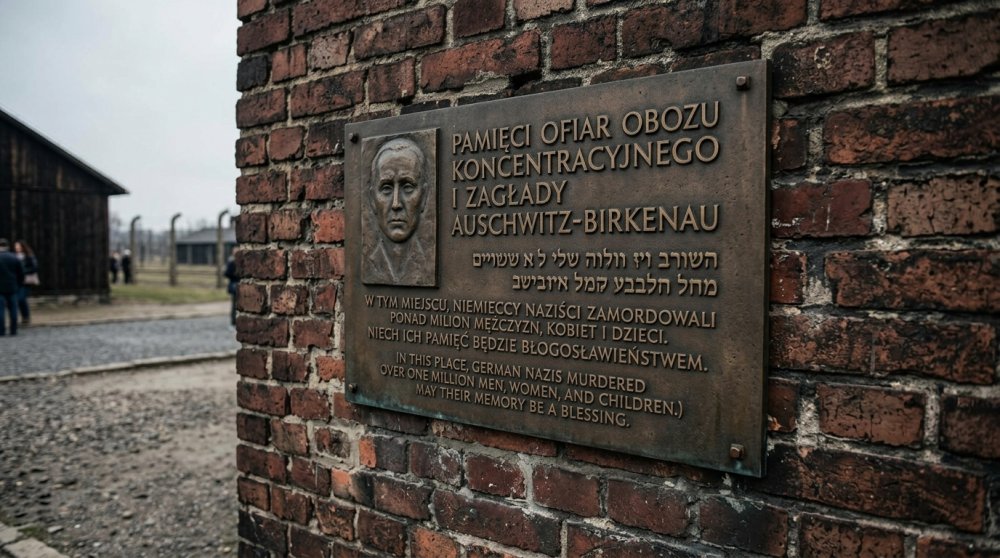
- A memorial plaque was recently unveiled at Auschwitz honoring her ultimate sacrifice for faith and compassion
- Haining is the only Scot recognized by Israel as Righteous Among the Nations for protecting Jews during the Holocaust
A memorial plaque commemorating the extraordinary courage and faith of Scottish Christian missionary Jane Haining has been unveiled at Auschwitz, honoring a woman who gave her life rather than abandon the Jewish children entrusted to her care. The recognition comes decades after her death in the Nazi concentration camp in 1944.
Jane Haining served as matron of the Scottish Mission School in Budapest, Hungary, where she cared for Jewish and non-Jewish children alike during one of history’s darkest periods. When World War II broke out and conditions became increasingly dangerous, Haining was advised to return to Scotland for her own safety.
She refused to leave, telling those who urged her to flee that the children needed her more than ever. Her steadfast commitment to her calling and to the vulnerable children in her care would ultimately cost her everything.
As Nazi persecution of Jews intensified, Haining continued to protect the Jewish girls at the school, treating them with the same love and dignity as all other students. Her actions did not go unnoticed by the authorities, and in 1944, she was arrested by the Gestapo on charges that included working with Jews and listening to the BBC.
Jane Haining was deported to Auschwitz, where she died just months later at age 47. According to witness accounts, she remained faithful and compassionate even in the concentration camp, ministering to others until her final days.
The newly unveiled plaque ensures that her sacrifice will not be forgotten. Haining is the only Scottish person to be recognized by Israel as “Righteous Among the Nations,” an honor bestowed upon non-Jews who risked their lives to save Jews during the Holocaust.
Her story stands as a powerful testament to Christian courage and the call to love one’s neighbor sacrificially. In an era when standing for biblical principles often required choosing between safety and faithfulness, Jane Haining chose faithfulness without hesitation.
The memorial serves as a reminder that true Christian witness sometimes demands the ultimate price, and that one person’s obedience to God’s call can impact generations. Jane Haining’s legacy continues to inspire believers to stand firm in their convictions regardless of the cost.
Let us know what you think, please share your thoughts in the comments below.

Faith Facts
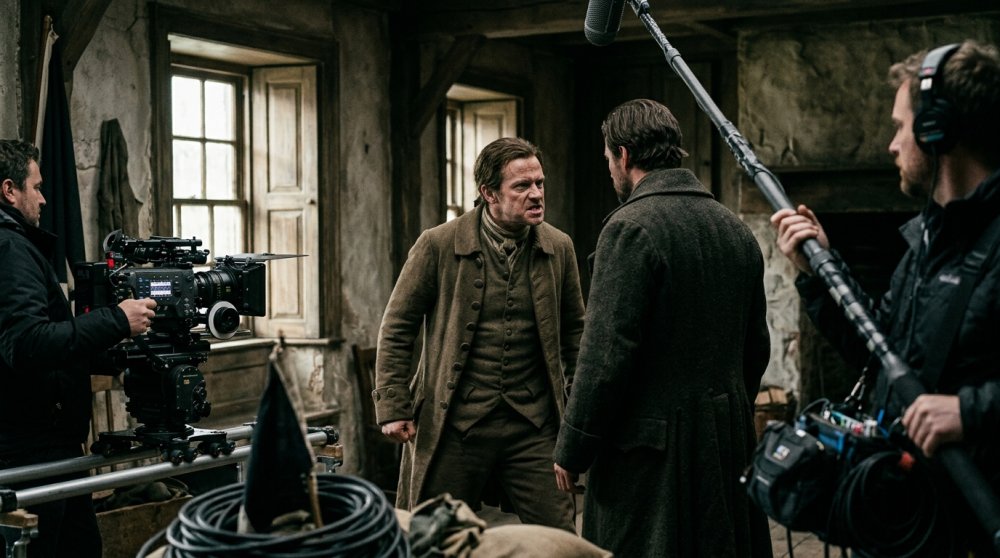
- Paul Greengrass’ new film ‘The Uprising’ examines the dangers of conflating personal vengeance with divine justice
- The movie explores timeless questions about human nature, righteousness, and the cost of revenge through a historical lens
- The narrative challenges viewers to consider how faith can be distorted when mixed with human anger and retribution
Paul Greengrass’ latest film “The Uprising” presents audiences with a provocative examination of one of Christianity’s most enduring moral challenges: the temptation to justify violence in God’s name. The director crafts a visceral, unflinching narrative that forces viewers to confront uncomfortable truths about human nature and spiritual accountability.
The film’s central premise revolves around the dangerous territory where personal conviction meets divine authority. Throughout Christian history, believers have grappled with the tension between earthly justice and heavenly commands, between righteous anger and sinful vengeance.
Greengrass does not shy away from the bloody consequences of such confusion. The movie serves as a stark reminder that when fallen humans convince themselves they are carrying out God’s will, the results can be catastrophic. This is not merely historical fiction—it reflects a pattern repeated throughout human history whenever individuals or groups claim exclusive understanding of divine intention.
The narrative raises critical questions for contemporary Christians. How do we discern between genuine conviction and self-serving justification? What safeguards exist to prevent us from baptizing our own desires with scriptural language? These are not comfortable questions, but they are necessary ones for a faith community committed to truth.
From a theological perspective, the film touches on the fundamental Christian doctrine of human depravity. Scripture is clear that “all have sinned and fall short of the glory of God” (Romans 3:23), yet history demonstrates our persistent tendency to exempt ourselves from this verdict when passion runs high.
The cost of revenge, as portrayed in “The Uprising,” extends beyond the immediate victims. It corrupts the soul of the avenger, damages communities, and distorts the witness of faith itself. This aligns with biblical teaching that vengeance belongs to the Lord alone (Romans 12:19), not because God is vindictive, but because only He possesses the perfect knowledge and righteousness to execute true justice.
Greengrass’ film arrives at a moment when American society faces deep divisions over questions of justice, accountability, and moral authority. Christians on all sides of political and cultural debates would benefit from the film’s cautionary message about the dangers of unchecked certainty.
The movie does not offer easy answers, which may frustrate viewers seeking clear moral guidance. However, this ambiguity reflects the complexity of real-world ethical dilemmas. Discernment requires humility, prayer, and submission to scriptural authority—not just passionate conviction.
“The Uprising” challenges Christian audiences to examine their own hearts and motivations. Are we genuinely seeking God’s will, or are we seeking His endorsement for what we already want to do? This distinction matters profoundly, both for individual spiritual health and for the collective witness of the Church.
The film’s historical setting provides necessary distance for viewers to engage these questions without immediate political defensiveness. Yet the parallels to contemporary conflicts remain unmistakable for those willing to see them.
Ultimately, “The Uprising” serves as a sobering meditation on human pride and divine sovereignty. It reminds us that claiming God’s authority without demonstrating His character—particularly His mercy, patience, and sacrificial love—leads not to righteousness but to ruin.
For Christians committed to both truth and grace, the film offers valuable perspective on the eternal danger of self-righteousness. We are called to be salt and light in a dark world, but that calling demands constant self-examination and repentance, not triumphalist certainty that confuses our will with God’s.
Let us know what you think, please share your thoughts in the comments below.
Faith Facts
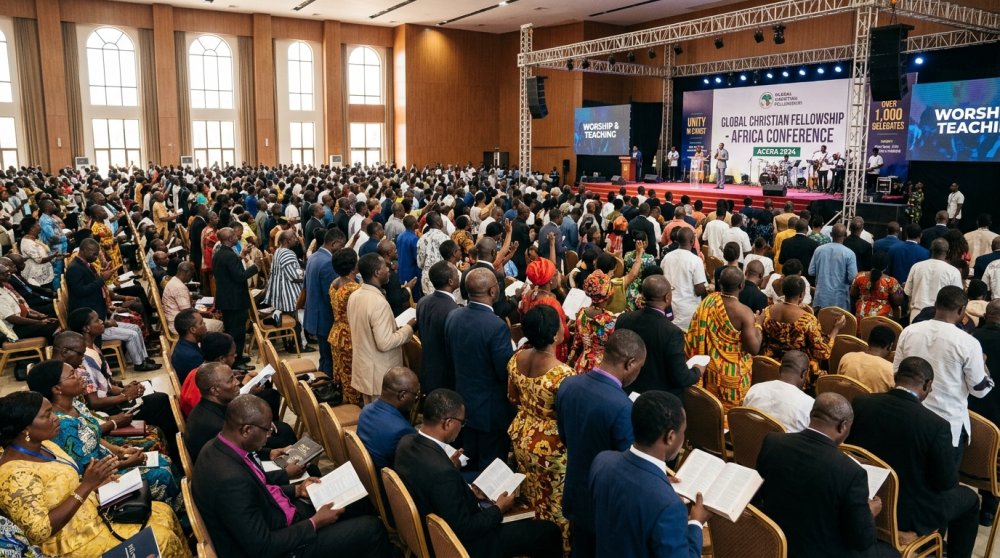
- The Global Methodist Church held its General Conference in Africa with over 1,100 attendees from around the world
- The theologically conservative denomination has experienced substantial growth in congregations and regional conferences since its formation
- The conference marks a significant milestone for Christians seeking to preserve traditional biblical teachings on marriage, family, and scriptural authority
The Global Methodist Church is making waves across the Christian world as it reports remarkable growth in both congregations and regional conferences. The denomination, which stands firmly on biblical principles and traditional Christian values, recently gathered more than 1,100 faithful believers for its General Conference held on the African continent.
This significant gathering represents a powerful testament to the hunger among Christians worldwide for churches that remain anchored in Scripture and refuse to compromise on foundational truths. The conference brought together delegates, pastors, and lay leaders who share a commitment to upholding the authority of God’s Word in an age of increasing cultural pressure to conform.
The Global Methodist Church was formed by congregations and believers who chose to maintain their commitment to biblical orthodoxy, particularly on issues of marriage, human sexuality, and the reliability of Scripture. Their decision to hold this major gathering in Africa underscores the vibrant faith and numerical strength of Christianity on that continent, where traditional Christian values continue to flourish.
The reported growth in congregations signals that many Christians are seeking church homes where historic Christian teaching is not negotiable. Families looking for environments where their children will be taught timeless biblical truths, rather than ever-shifting cultural trends, are finding a refuge in this movement.
Regional conferences have also multiplied, demonstrating that the desire for theologically sound leadership extends across geographic and cultural boundaries. This expansion reflects a broader realignment happening across global Christianity, where believers are increasingly willing to make difficult choices to preserve the integrity of their faith communities.
The success of this conference and the denomination’s growth pattern reveal an important truth: when churches stand firm on Scripture, people respond. Rather than declining into irrelevance as critics predicted, denominations that maintain biblical fidelity are often the ones experiencing vitality and growth, particularly in the global South where Christianity is expanding rapidly.
The choice to convene in Africa also sends a powerful message about the future of global Christianity. While many Western denominations have experienced decline as they’ve drifted from biblical moorings, African Christianity remains robustly committed to traditional teachings and continues to grow exponentially.
For American Christians watching these developments, the Global Methodist Church’s trajectory offers encouragement. It demonstrates that standing for truth, even when it requires sacrifice and separation, can lead to renewal and growth rather than isolation and decline.
The gathering of 1,100 delegates represents countless congregations and millions of believers who have chosen faithfulness over convenience. Their commitment to gathering, organizing, and building structures that will preserve orthodox Christianity for future generations deserves the attention and prayers of all who value biblical truth.
Let us know what you think, please share your thoughts in the comments below.
Faith Facts
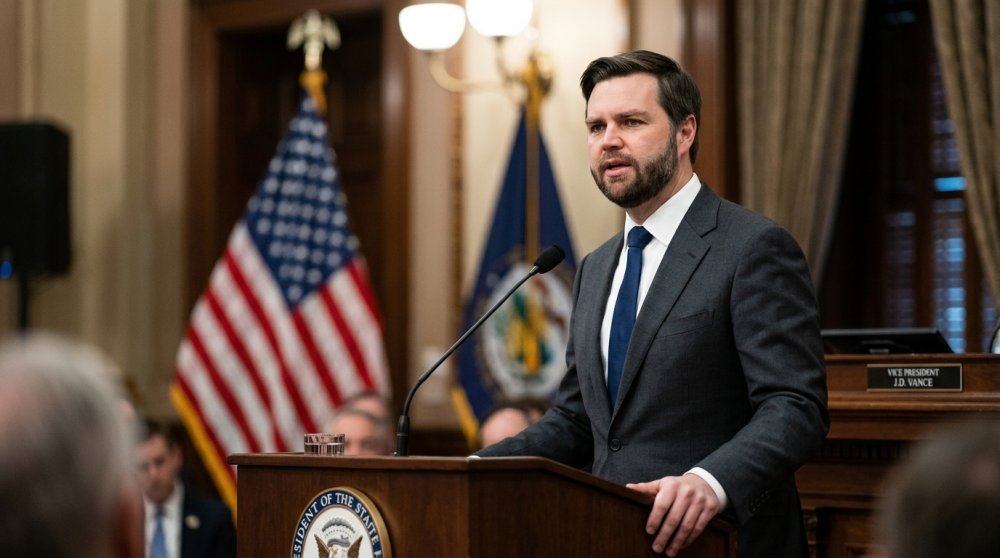
- Vice President JD Vance suggested in a recent interview that the antichrist prophesied in Scripture could already be walking among us
- Biblical scholars note that end-times prophecy describes a world system remarkably similar to today’s technological surveillance and global governance structures
- Christians are called to remain watchful and grounded in Scripture as world events increasingly align with prophetic warnings
In a candid interview that has sparked nationwide conversation, Vice President JD Vance made remarks that many Americans of faith found both sobering and scripturally sound. When asked about biblical prophecy and the state of our modern world, Vance didn’t shy away from addressing one of Christianity’s most profound warnings: the coming of the antichrist.
His willingness to speak openly about end-times prophecy in the public square represents a refreshing departure from the faith-phobic political class that has dominated Washington for decades. While secular media may mock such statements, millions of Bible-believing Americans recognize that Vance is simply acknowledging what Scripture has long foretold.
The Book of Revelation, along with the prophetic writings of Daniel and the teachings of Jesus Himself, paint a clear picture of the last days. These passages describe a charismatic world leader who will rise to power through deception, promising peace while preparing destruction. He will establish a global system of control, marking those who submit to his authority and persecuting those who refuse.
What makes Vance’s comments particularly compelling is the undeniable reality that our modern world increasingly resembles the conditions Scripture describes. The rapid advancement of surveillance technology, digital currency systems, and centralized global governance structures all create the infrastructure necessary for the kind of totalitarian control the Bible warns against.
Consider the developments of just the past few years. Governments worldwide implemented unprecedented tracking and control measures in the name of public health. Digital identification systems are being rolled out across continents. Central bank digital currencies threaten to give authorities complete oversight of every financial transaction. Social credit scores are already reality in some nations.
These aren’t fringe conspiracy theories—they’re documented policy initiatives being implemented by world governments and international organizations. The technology now exists to monitor, track, and control human behavior in ways that previous generations could never have imagined. The prophetic “mark of the beast” described in Revelation no longer seems like ancient symbolism but rather an ominous possibility.
The cultural landscape also bears striking resemblance to biblical prophecy. Jesus warned that in the last days, deception would be so prevalent that even the elect might be deceived. We live in an era of unprecedented information warfare, where truth itself has become a casualty. What is called “good” is increasingly labeled evil, and what God clearly defines as sin is celebrated as virtue.
Traditional Christian values are under assault from every direction. The biblical definition of marriage and family is mocked and undermined. The sanctity of human life is disregarded. Gender itself—a fundamental reality established by God—is now treated as fluid and subjective. Those who stand firm on Scripture are branded as extremists and bigots.
Scripture tells us that the antichrist will be a master deceiver, speaking great things and drawing the world after him through signs and wonders. In our age of mass media and digital manipulation, the capacity for global deception has never been greater. A charismatic leader with control of media and technology could indeed sway billions.
This doesn’t mean Christians should live in fear or spend their days speculating about specific individuals. Scripture commands us to be watchful, yes, but also to remain faithful, to continue the work of the Kingdom, and to occupy until Christ returns. Prophecy is given not to satisfy curiosity but to prepare God’s people and validate His Word when events unfold as foretold.
What Vance’s comments should do is remind us that the Christian worldview takes seriously what the Bible teaches about history, prophecy, and the ultimate triumph of God over evil. We don’t serve a distant, uninvolved deity but the sovereign Lord of history who has revealed His plans and purposes through His Word.
The fact that a sitting Vice President would speak openly about such matters is itself significant. For too long, public officials have been expected to check their faith at the door of government buildings. Vance’s willingness to discuss biblical prophecy demonstrates that authentic Christian faith cannot be compartmentalized or relegated to private life—it speaks to all of reality, including the future course of human history.
Critics will undoubtedly dismiss these concerns as religious fanaticism. But history has repeatedly vindicated those who took God’s Word seriously over those who scoffed. Noah was mocked until the floods came. Lot was dismissed as an alarmist until fire fell from heaven. Jewish prophets were persecuted for warning of coming judgment—until Jerusalem fell exactly as foretold.
The question for American Christians isn’t whether biblical prophecy will be fulfilled—Scripture’s track record speaks for itself. The question is whether we will be found faithful when these things come to pass. Will we compromise our convictions for convenience? Will we take the mark of a coming system to participate in commerce? Or will we stand firm on God’s Word regardless of the cost?
Vance’s comments serve as a timely reminder that the Christian life is not about comfort and prosperity in this present age. We are called to be pilgrims and strangers, citizens of a heavenly kingdom, living in but not of a world that is passing away. Our hope is not in earthly governments or human solutions but in the return of Jesus Christ to establish His eternal kingdom.
The signs of the times are increasingly clear to those with eyes to see. Whether the antichrist is already among us, as Vance suggests is possible, or whether his arrival is still future, the wise response is the same: remain rooted in Scripture, grounded in prayer, and faithful to Christ regardless of circumstances.
In these uncertain times, Christians must not grow weary or lose heart. The darker the night becomes, the brighter our light should shine. The more chaotic the world grows, the more clearly we should proclaim the unchanging truth of God’s Word. And the closer we draw to the end of the age, the more urgently we should share the Gospel with those who remain lost in darkness.
Let us know what you think, please share your thoughts in the comments below.


-

 Self-Reliance1 year ago
Trump’s Bold Move Uncovers Massive Social Security Fraud
-

 Faith1 year ago
New Clues Emerge in Noah’s Ark Mystery
-

 News1 year ago
Governor Walz’s Rhetoric Sparks National Controversy
-

 News1 year ago
Mel Gibson’s ‘The Passion of the Christ’ Sequel Title Announced
-

 Family1 year ago
Texas Lawmaker Targets Furries in Schools
-

 Freedom1 year ago
Maine Lawmaker Challenges Sports Fairness Controversy
-

 Family1 year ago
Canada’s Controversial Policy Sparks Ethical Debate
-
Faith10 months ago
Congress Hears Pleas for Nigerian Christians