
Faith
Detroit Pastor Takes the Stage With Bold Message for GOP


Faith Facts
- Pastor Lorenzo Sewell of Detroit’s 180 Church delivered a powerful message at the Republican National Committee’s inaugural Midterm Convention
- Sewell, who prayed at President Trump’s second inauguration, titled his address ‘Enough Is Enough’
- The pastor continues to bridge faith and politics, calling believers to stand firm on traditional values
A Detroit pastor who captured national attention during President Donald Trump’s second inauguration returned to the political stage Wednesday night with a clarion call for action. Pastor Lorenzo Sewell of 180 Church addressed the Republican National Committee’s historic first-ever Midterm Convention, delivering what he described as a sermon titled “Enough Is Enough.”
Sewell’s appearance marks a continuation of his increasing prominence at the intersection of faith and conservative politics. The pastor has emerged as a significant voice among Christian leaders willing to engage directly with the political process, standing firm on biblical principles in the public square.
His message Wednesday evening resonated with the Republican faithful gathered at the unprecedented midterm event. The RNC’s decision to hold its first mid-cycle convention signals the party’s commitment to maintaining momentum and energizing its base between presidential election cycles.
Pastor Sewell’s “Enough Is Enough” theme speaks to growing frustration among many Christian conservatives who believe traditional American values are under sustained attack. The pastor has built a reputation for direct, uncompromising messages that challenge believers to take action rather than remain passive observers of cultural decline.
His prayer at Trump’s second inauguration drew widespread praise from conservatives for its boldness and biblical grounding. Sewell’s willingness to stand publicly with President Trump reflects a broader movement among evangelical and traditional Christians who see the former president as a defender of religious liberty and traditional values.
The Detroit pastor’s ministry at 180 Church has focused on urban revitalization and community transformation through biblical principles. His involvement in national political events brings attention to the church’s work and demonstrates how Christian leadership can influence both local communities and national conversations.
As the Republican Party prepares for upcoming electoral battles, voices like Pastor Sewell’s provide spiritual grounding and moral clarity. His message that “enough is enough” echoes the sentiments of many Americans who believe the nation has drifted too far from its founding principles and Christian heritage.
Let us know what you think, please share your thoughts in the comments below.


Faith Facts
- Early Christians publicly renounced Satan before entering baptismal waters, declaring a legal transfer of allegiance from darkness to light
- Baptism in the ancient church was understood as a binding covenant and change of citizenship, not merely a symbol or ritual
- The early baptismal ceremony included explicit declarations of loyalty to Christ and rejection of the enemy’s kingdom
Long before the first Christians were lowered beneath the water, they performed an act that has been largely forgotten in modern practice. They turned to face the darkness and spoke directly to the enemy.
This wasn’t symbolic language or theatrical flourish—it was a declaration of war.
The early church understood baptism as something far more potent than many Christians realize today. It wasn’t merely an outward sign of an inward change, nor was it a mystical incantation that automatically conferred grace. Baptism was a treaty—a formal, legal transfer of allegiance from one kingdom to another, sealed with water and witnessed by heaven and earth.
In the ancient baptismal liturgies, candidates would physically turn toward the west—the direction associated with darkness and the setting sun—and verbally renounce Satan, his works, and his ways. Only after this public repudiation would they turn eastward, toward the rising sun and the light of Christ, to profess their new loyalty.
This was citizenship language. Covenant language. The language of defection and oath-taking.
The waters of baptism represented a border crossing, a point of no return. Believers were publicly declaring that they had changed kingdoms, changed masters, and changed their ultimate authority. They were transferring ownership of their lives from the dominion of darkness into the kingdom of God’s beloved Son.
This understanding has profound implications for how Christians view their identity today. If baptism is a treaty, then the Christian life is not about trying harder to be good—it’s about living according to the terms of the agreement. It’s about recognizing that you belong to a new King, operate under new laws, and have access to new resources and protections.
The early church’s baptismal practice also underscores the reality of spiritual warfare. The explicit renunciation of Satan wasn’t superstition—it was an acknowledgment that there are real powers at work in the world, and that choosing Christ means rejecting all other claimants to our loyalty. This is not a passive, private decision. It is a public, binding declaration with eternal consequences.
For modern believers, recovering this understanding of baptism can restore a sense of gravity and purpose to the Christian walk. We are not merely forgiven sinners trying to muddle through life with a little divine help. We are defectors who have crossed enemy lines, been granted asylum in a new kingdom, and now live as ambassadors of that kingdom in hostile territory.
The implications are staggering. If baptism is a treaty, then every baptized believer has legal standing before the throne of God. We have rights, protections, and responsibilities. We are not spiritual orphans hoping for mercy—we are adopted sons and daughters with full inheritance rights.
This also means that the church is not a social club or a self-help group. It is an embassy, a colony of heaven planted in enemy territory. Our gatherings are not merely therapeutic or educational—they are strategic meetings of a resistance movement, equipping citizens of another world to live faithfully in this one.
The early Christians understood this. That’s why martyrdom made sense to them. That’s why they could sing in prison, forgive their executioners, and face death with joy. They knew they had changed kingdoms, and no earthly power could alter that reality.
Today, many churches have lost this robust understanding of baptism. It has become a sentimental moment, a family photo opportunity, or a denominational requirement. But when we recover the biblical and historical understanding of baptism as a treaty—a legal transfer of ownership, a public oath of allegiance, a point of no return—it transforms everything.
It transforms how we understand conversion. It transforms how we view spiritual warfare. It transforms how we approach suffering, persecution, and cultural hostility. And it transforms how we see ourselves—not as consumers of religious goods and services, but as defectors, refugees, and citizens of a coming kingdom that will outlast every earthly power.
Let us know what you think, please share your thoughts in the comments below.
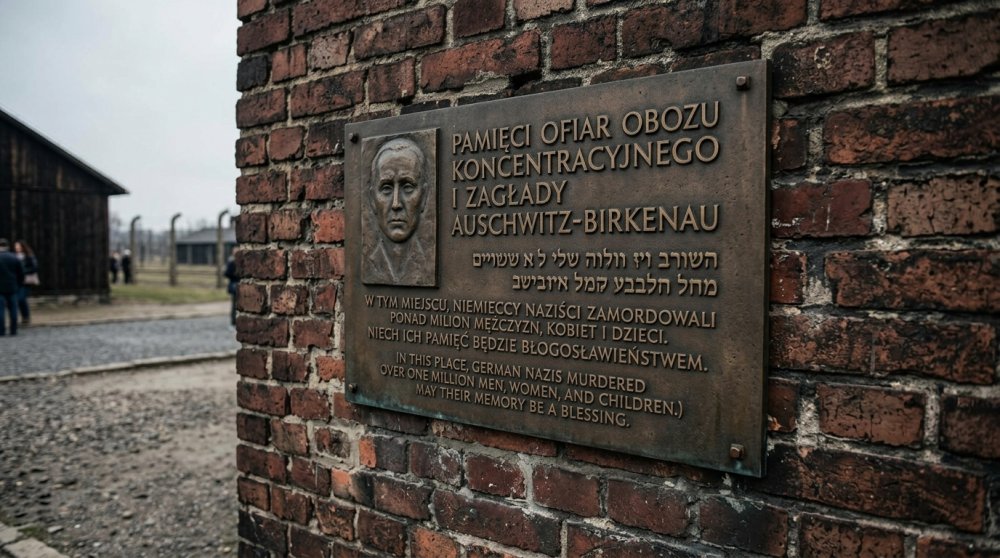
Faith Facts
- Scottish missionary Jane Haining died at Auschwitz in 1944 after refusing to abandon Jewish children in her care in Budapest
- A memorial plaque was recently unveiled at Auschwitz honoring her ultimate sacrifice for faith and compassion
- Haining is the only Scot recognized by Israel as Righteous Among the Nations for protecting Jews during the Holocaust
A memorial plaque commemorating the extraordinary courage and faith of Scottish Christian missionary Jane Haining has been unveiled at Auschwitz, honoring a woman who gave her life rather than abandon the Jewish children entrusted to her care. The recognition comes decades after her death in the Nazi concentration camp in 1944.
Jane Haining served as matron of the Scottish Mission School in Budapest, Hungary, where she cared for Jewish and non-Jewish children alike during one of history’s darkest periods. When World War II broke out and conditions became increasingly dangerous, Haining was advised to return to Scotland for her own safety.
She refused to leave, telling those who urged her to flee that the children needed her more than ever. Her steadfast commitment to her calling and to the vulnerable children in her care would ultimately cost her everything.
As Nazi persecution of Jews intensified, Haining continued to protect the Jewish girls at the school, treating them with the same love and dignity as all other students. Her actions did not go unnoticed by the authorities, and in 1944, she was arrested by the Gestapo on charges that included working with Jews and listening to the BBC.
Jane Haining was deported to Auschwitz, where she died just months later at age 47. According to witness accounts, she remained faithful and compassionate even in the concentration camp, ministering to others until her final days.
The newly unveiled plaque ensures that her sacrifice will not be forgotten. Haining is the only Scottish person to be recognized by Israel as “Righteous Among the Nations,” an honor bestowed upon non-Jews who risked their lives to save Jews during the Holocaust.
Her story stands as a powerful testament to Christian courage and the call to love one’s neighbor sacrificially. In an era when standing for biblical principles often required choosing between safety and faithfulness, Jane Haining chose faithfulness without hesitation.
The memorial serves as a reminder that true Christian witness sometimes demands the ultimate price, and that one person’s obedience to God’s call can impact generations. Jane Haining’s legacy continues to inspire believers to stand firm in their convictions regardless of the cost.
Let us know what you think, please share your thoughts in the comments below.

Faith Facts
- Paul Greengrass’ new film ‘The Uprising’ examines the dangers of conflating personal vengeance with divine justice
- The movie explores timeless questions about human nature, righteousness, and the cost of revenge through a historical lens
- The narrative challenges viewers to consider how faith can be distorted when mixed with human anger and retribution
Paul Greengrass’ latest film “The Uprising” presents audiences with a provocative examination of one of Christianity’s most enduring moral challenges: the temptation to justify violence in God’s name. The director crafts a visceral, unflinching narrative that forces viewers to confront uncomfortable truths about human nature and spiritual accountability.
The film’s central premise revolves around the dangerous territory where personal conviction meets divine authority. Throughout Christian history, believers have grappled with the tension between earthly justice and heavenly commands, between righteous anger and sinful vengeance.
Greengrass does not shy away from the bloody consequences of such confusion. The movie serves as a stark reminder that when fallen humans convince themselves they are carrying out God’s will, the results can be catastrophic. This is not merely historical fiction—it reflects a pattern repeated throughout human history whenever individuals or groups claim exclusive understanding of divine intention.
The narrative raises critical questions for contemporary Christians. How do we discern between genuine conviction and self-serving justification? What safeguards exist to prevent us from baptizing our own desires with scriptural language? These are not comfortable questions, but they are necessary ones for a faith community committed to truth.
From a theological perspective, the film touches on the fundamental Christian doctrine of human depravity. Scripture is clear that “all have sinned and fall short of the glory of God” (Romans 3:23), yet history demonstrates our persistent tendency to exempt ourselves from this verdict when passion runs high.
The cost of revenge, as portrayed in “The Uprising,” extends beyond the immediate victims. It corrupts the soul of the avenger, damages communities, and distorts the witness of faith itself. This aligns with biblical teaching that vengeance belongs to the Lord alone (Romans 12:19), not because God is vindictive, but because only He possesses the perfect knowledge and righteousness to execute true justice.
Greengrass’ film arrives at a moment when American society faces deep divisions over questions of justice, accountability, and moral authority. Christians on all sides of political and cultural debates would benefit from the film’s cautionary message about the dangers of unchecked certainty.
The movie does not offer easy answers, which may frustrate viewers seeking clear moral guidance. However, this ambiguity reflects the complexity of real-world ethical dilemmas. Discernment requires humility, prayer, and submission to scriptural authority—not just passionate conviction.
“The Uprising” challenges Christian audiences to examine their own hearts and motivations. Are we genuinely seeking God’s will, or are we seeking His endorsement for what we already want to do? This distinction matters profoundly, both for individual spiritual health and for the collective witness of the Church.
The film’s historical setting provides necessary distance for viewers to engage these questions without immediate political defensiveness. Yet the parallels to contemporary conflicts remain unmistakable for those willing to see them.
Ultimately, “The Uprising” serves as a sobering meditation on human pride and divine sovereignty. It reminds us that claiming God’s authority without demonstrating His character—particularly His mercy, patience, and sacrificial love—leads not to righteousness but to ruin.
For Christians committed to both truth and grace, the film offers valuable perspective on the eternal danger of self-righteousness. We are called to be salt and light in a dark world, but that calling demands constant self-examination and repentance, not triumphalist certainty that confuses our will with God’s.
Let us know what you think, please share your thoughts in the comments below.


-

 Self-Reliance1 year ago
Trump’s Bold Move Uncovers Massive Social Security Fraud
-

 Faith1 year ago
New Clues Emerge in Noah’s Ark Mystery
-

 News1 year ago
Governor Walz’s Rhetoric Sparks National Controversy
-

 News1 year ago
Mel Gibson’s ‘The Passion of the Christ’ Sequel Title Announced
-

 Family1 year ago
Texas Lawmaker Targets Furries in Schools
-

 Freedom1 year ago
Maine Lawmaker Challenges Sports Fairness Controversy
-

 Family1 year ago
Canada’s Controversial Policy Sparks Ethical Debate
-
Faith10 months ago
Congress Hears Pleas for Nigerian Christians