
Freedom
Religious Freedom Under Fire as European Court Weighs Door-to-Door Evangelism


Faith Facts
- The European Court of Human Rights issued a landmark ruling protecting the right of Jehovah’s Witnesses to engage in door-to-door evangelism in Bulgaria
- Government authorities had attempted to ban religious groups from knocking on doors based on claims of public annoyance
- The decision reinforces fundamental religious liberty protections that apply to all faiths, including Christians seeking to share the Gospel
Religious freedom faces mounting challenges across the globe, and a recent European court case brings this battle into sharp focus. At stake is a question that transcends denominational boundaries: Can the state silence religious expression simply because some find it inconvenient?
The European Court of Human Rights recently ruled on a case involving Jehovah’s Witnesses in Bulgaria, where government officials sought to prohibit door-to-door religious outreach. While many Christians may disagree with the theology of Jehovah’s Witnesses, the principle at the heart of this case affects every believer who takes seriously the Great Commission to share their faith.
Bulgaria had moved to restrict religious groups from engaging in what authorities characterized as unwanted solicitation. The government argued that door-to-door visits constituted a form of harassment that justified state intervention. This reasoning, however dangerous, reflects a growing trend in secular societies to prioritize comfort over constitutional liberties.
The court ultimately sided with religious freedom, recognizing that a polite knock on a door — however unwelcome it may be to some — does not rise to the level of harm that warrants government censorship. This distinction matters immensely for Christians of all denominations who believe they have a biblical mandate to evangelize.
Throughout the Book of Acts, believers spread the Gospel from house to house, often facing far worse than mere annoyance. The Apostle Paul wrote of going from home to home teaching both publicly and privately. Early Christians understood that sharing their faith required personal interaction, even when it proved uncomfortable for both parties.
Today’s secular governments increasingly view religious conviction as a private matter that should remain confined to church buildings and personal homes. This case in Bulgaria represents a broader ideological shift that threatens to marginalize Christian witness in the public square. When evangelism becomes classified as a nuisance rather than a fundamental right, all believers should take notice.
The right to knock on a door and share one’s faith is not merely about Jehovah’s Witnesses or any single group. It encompasses the broader freedom to proclaim religious truth in a respectful manner. If the state can prohibit door-to-door evangelism on grounds of annoyance, what prevents it from banning street preaching, public prayer, or other forms of witness that some might find objectionable?
Religious liberty thrives when protected even for those with whom we disagree. A faithful Christian may reject the teachings of Jehovah’s Witnesses as unbiblical, yet still recognize their right to spread their message peacefully. This principle of tolerance doesn’t require agreement — it requires a commitment to freedom that transcends our own preferences.
The Bulgarian case serves as a warning to Americans who value the First Amendment. While the United States enjoys stronger constitutional protections for religious expression than most European nations, these freedoms require constant vigilance. Courts and legislatures can erode liberty incrementally, using seemingly reasonable justifications that ultimately undermine foundational rights.
For Christians who believe in the exclusive claims of Jesus Christ, the freedom to evangelize represents more than a legal right — it is a sacred duty. When governments begin categorizing religious outreach as a form of harassment, they strike at the heart of what it means to live out one’s faith publicly.
The standard of “annoyance” proves particularly troubling because it relies on subjective feelings rather than objective harm. What one person finds annoying, another may find life-changing. History records countless conversions that began with an unexpected knock or an uninvited conversation about eternal matters.
Christians in America should draw courage from this European ruling while remaining alert to threats against religious freedom at home. Local ordinances, homeowner association rules, and corporate policies increasingly restrict religious expression under the guise of maintaining peace or avoiding offense. Each restriction, however small, contributes to a culture that views faith as a private hobby rather than a public truth claim.
The right to share one’s faith door-to-door may seem quaint in an age of digital communication and social media outreach. Yet this traditional form of evangelism remains remarkably effective precisely because it involves personal encounter. A knock on the door invites conversation in ways that online messaging cannot replicate.
Defending religious liberty for all groups, even those we consider theologically mistaken, strengthens the protections available to orthodox Christians. When believers unite around the principle of free expression, they build coalitions capable of resisting government overreach. The alternative — seeking restrictions only for groups we oppose — ultimately backfires when those same restrictions get applied to our own evangelistic efforts.
This Bulgarian case reminds us that religious freedom exists not to protect popular speech, but to safeguard unpopular truth claims. The Gospel itself proved deeply offensive to Roman authorities and Jewish leaders in the first century. If modern governments can silence religious messages on grounds of causing discomfort, they wield a power that directly contradicts biblical commands to preach the Word in season and out of season.
American Christians should monitor similar cases developing in state and federal courts, recognizing that today’s restriction on one group may become tomorrow’s prohibition affecting evangelical outreach. The principle of religious liberty applies universally or it applies not at all. Selective protection based on doctrinal preference undermines the very foundation of constitutional freedom.
Let us know what you think, please share your thoughts in the comments below.

Faith Facts
- Virginia State University has required Christian student organizations to submit to oversight by a single university-employed campus minister.
- Two Christian groups filed suit alleging the policy violates their religious convictions and First Amendment rights.
- The groups claim doctrinal differences with the appointed minister make compliance impossible without compromising their beliefs.
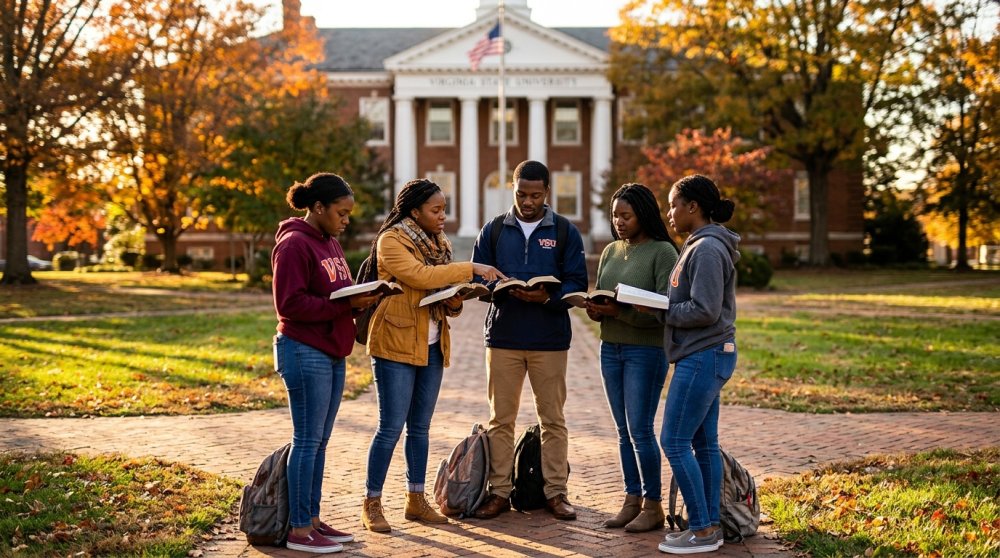
Two Christian student organizations have taken Virginia State University to court, asserting the school has violated their religious liberty by forcing them under the authority of a single campus minister.
The complaint states the policy requires all Christian clubs to operate under the governance of this university-appointed figure regardless of doctrinal alignment.
“The university is compelling these groups to accept spiritual leadership that contradicts their sincerely held beliefs,” the lawsuit argues.
The students maintain the mandate infringes on their freedom to choose leaders who share their theological convictions.
Legal observers note the case raises fresh questions about how public universities may regulate religious expression on campus.
Supporters of the plaintiffs argue that equal access should not require groups to surrender their core religious identity.
“We simply want the same rights extended to every other student organization without having our faith dictated by the state,” one plaintiff representative said.
The university has not yet issued a detailed public response beyond confirming receipt of the legal filing.
Let us know what you think, please share your thoughts in the comments below.

Faith Facts
- Parents hold the primary God-given responsibility to educate their children according to biblical principles.
- Traditional homeschooling has consistently produced graduates who serve their communities with integrity and skill.
- Local governments should respect parental authority and religious freedom rather than impose unnecessary credentialing barriers.
The city council of Fremont, Nebraska, has unanimously passed a resolution removing an education requirement that had prevented a homeschooled volunteer from applying for a paid firefighter position.
City leaders determined that the previous rule unfairly excluded capable individuals who had completed their education at home.
The decision came after a longtime volunteer firefighter, who graduated through homeschooling, was told he could not be considered for full-time employment because his diploma was not from an accredited institution.
“The council recognized that homeschool graduates bring the same dedication and training to the job as anyone else,” one council member stated during the meeting.
Council members agreed the change aligns with broader community values that honor parental choice in education.
Supporters of the resolution noted that many homeschool families in Nebraska choose this path for faith-based reasons and should not face employment discrimination for following their convictions.
The updated policy now allows the city to consider applicants based on their skills, certifications, and character rather than the source of their high school education.
Local firefighters and residents have welcomed the decision, viewing it as a practical step that strengthens public safety without compromising standards.
“This resolution simply removes an unnecessary obstacle so that qualified men and women can serve their neighbors,” another council member remarked.
City officials expect the change to expand the pool of dedicated candidates ready to protect Fremont families and property.
Let us know what you think, please share your thoughts in the comments below.
Faith Facts
- A Chinese pastor released from prison three months ago spoke at a religious freedom conference in Dallas, Texas.
- Speakers at the event credited public pressure and prayer with helping secure the pastor’s release.
- Believers are being called to pray and advocate for Christians still imprisoned for their faith.
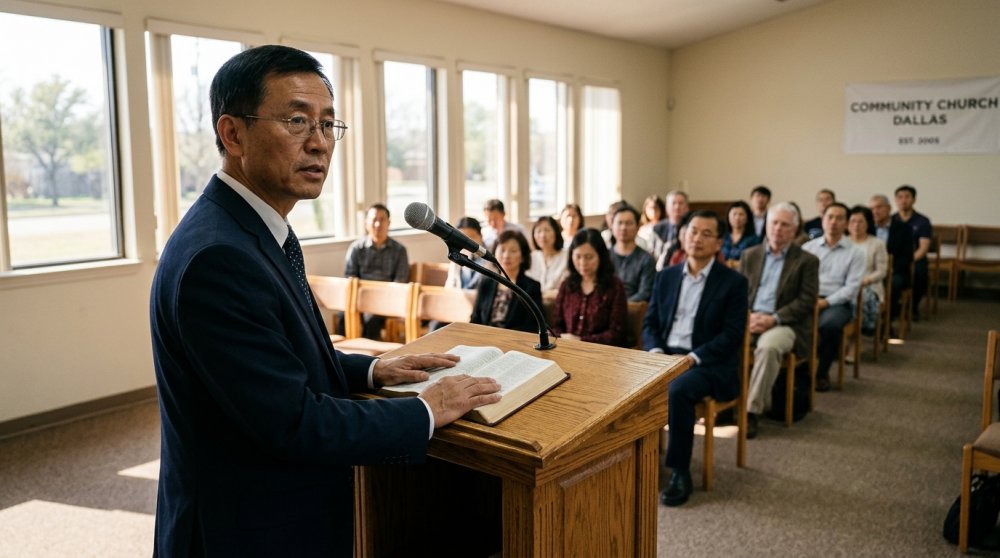
A Chinese pastor freed from prison three months ago joined advocates at a religious freedom conference in Dallas, Texas, on Monday, September 28, in urging Christians to pray and speak out for those jailed for their faith.
Speakers credited such pressure with helping win the pastor’s release.
The event highlighted the ongoing persecution faced by many believers in China.
Advocates emphasized the power of faithful prayer and public witness in the face of oppression.
“Let us know what you think, please share your thoughts in the comments below.”


-

 Self-Reliance2 years ago
Trump’s Bold Move Uncovers Massive Social Security Fraud
-

 Faith2 years ago
New Clues Emerge in Noah’s Ark Mystery
-

 News2 years ago
Governor Walz’s Rhetoric Sparks National Controversy
-

 News2 years ago
Mel Gibson’s ‘The Passion of the Christ’ Sequel Title Announced
-

 Family2 years ago
Texas Lawmaker Targets Furries in Schools
-

 Freedom2 years ago
Maine Lawmaker Challenges Sports Fairness Controversy
-

 Family1 year ago
Canada’s Controversial Policy Sparks Ethical Debate
-
Faith11 months ago
Congress Hears Pleas for Nigerian Christians