
Faith
Raising Obedient Children: A Path to Joyful Homes

Faith Facts
- God calls parents to instruct their children in discipline and love, as taught throughout Scripture.
- Many Christian parents in Asia are first-generation believers, often lacking positive role models for parenting.
- Biblical obedience teaches children to honor authority, preparing their hearts to follow God’s voice.
Christian families often struggle with discouragement and marital tension when children do not practice obedience. Loud arguments and frustration sometimes fill the home, leaving parents weary and longing for peace and joy.
Those serving in restricted areas, especially first-generation believers, may find themselves without Christ-centered parenting examples to follow. This makes the calling to raise and train children in the faith even more challenging.
One mother, tired and burdened by her children’s disobedience, sits seeking answers as both she and her husband deal with regular conflict at home. These difficulties point to the greatest need: hearts eager to embrace God’s wisdom for family life.
The Bible speaks clearly about the importance of listening to and obeying parents.
“Hear, my son, your father’s instruction, and forsake not your mother’s teaching.” — Proverbs 1:8
As Proverbs 4:1 says
“Hear, O sons, a father’s instruction, and be attentive, that you may gain insight.”
Scripture provides additional guidance:
“Children, obey your parents in the Lord, for this is right.” (Ephesians 6:1)
Colossians 3:20 reminds us
“Children, obey your parents in everything, for this pleases the Lord.”
Obedience, demonstrated by listening and responding promptly with a cheerful heart, fosters joy within the home.
While no parent or child is perfect, striving for this standard is essential in Christian families.
Raising obedient children prepares them to listen and respond to God’s call.
Recognizing our need for a Savior, we desire our children to embrace the grace and forgiveness only Christ offers.
Romans 3:23 brings perspective: all have sinned and need redemption, a truth crucial for the next generation to understand.
Some may mistakenly believe that grace-based parenting means allowing children to do as they please. True biblical grace acknowledges our fallen nature while pointing children toward the love and hope found in Jesus alone.
On difficult days, Psalm 126:5-6 provides encouragement:
“Those who sow in tears shall reap with shouts of joy! He who goes out weeping, bearing the seed for sowing, shall come home with shouts of joy, bringing his sheaves with him.”
Christian parents can trust that faithfulness in discipline will bear fruit by God’s mercy.
Churches and Christian organizations are responding by providing much-needed resources and training for parents, offering biblically sound guidance on raising godly children. Access to Christ-centered books and family programs strengthens parents to fulfill their calling.
Let us pray for Christian mothers and fathers to have perseverance and hope as they labor to raise future leaders for God’s kingdom.
May their children come to know, love, and obey the Lord, shining as witnesses in a world that desperately needs truth.
Together, we stand on God’s promises, trusting Him to transform homes with His love and wisdom.
The next generation of Christian leaders begins in homes founded on God’s truth and grace.


Faith Facts
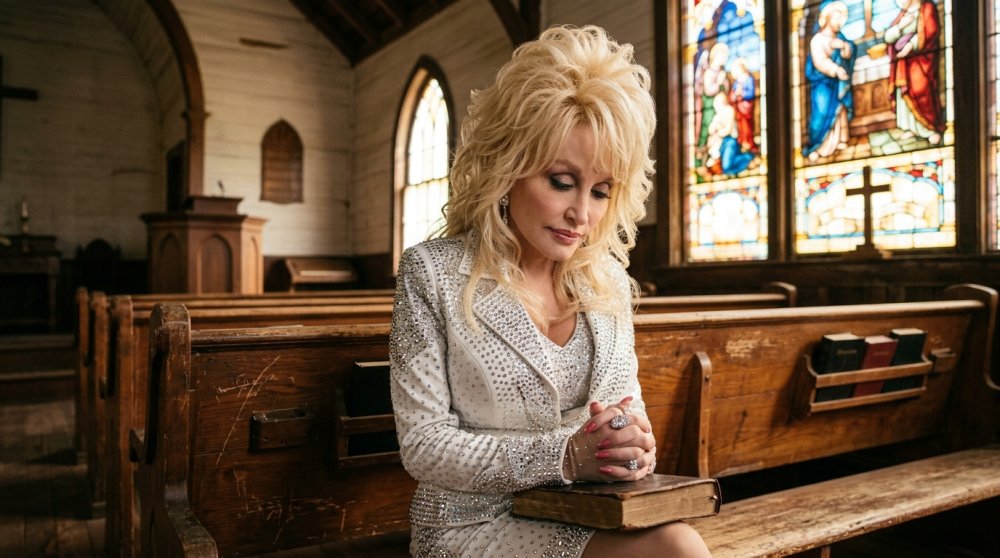
- Dolly Parton grew up in poverty in Tennessee’s Smoky Mountains, attending a Pentecostal church where her grandfather was pastor
- She has described her relationship with God as deeply personal, crediting faith for sustaining her through career challenges and personal struggles
- Throughout her career, Parton has recorded gospel albums and openly shared how Christian values shaped her generosity and character
The Queen of Country music’s legacy extends far beyond her chart-topping hits and glamorous persona. For those who looked closely, Dolly Parton’s life revealed a genuine Christian faith that guided her extraordinary generosity and humble spirit.
Born into a large family in rural Tennessee, Parton’s earliest memories were shaped by the Pentecostal church where her grandfather served as pastor. The Smoky Mountain church community instilled values of faith, family, and service that would remain central throughout her seven-decade career.
“I was brought up in the Church of God, which is a Holiness church,” Parton explained in past interviews. “We believed in the power of prayer and the presence of the Holy Spirit.”
Despite achieving global fame and fortune that could have easily pulled her away from her roots, Parton maintained her connection to Christian faith. She recorded multiple gospel albums throughout her career, treating these projects not as commercial ventures but as personal expressions of worship and testimony.
Her faith manifested most visibly through her philanthropic work. From her Imagination Library program, which has distributed millions of free books to children, to her significant donations supporting medical research and disaster relief, Parton exemplified Christian generosity without seeking recognition.
“I’ve always believed that if God blesses you financially, you should share it,” she often said, putting Jesus’s teachings into practical action.
Christian songwriter Philippa Hanna, who studied Parton’s faith journey, noted how the country icon balanced worldly success with spiritual authenticity. Parton never compromised her Christian values to achieve mainstream acceptance, yet she approached all people with grace and compassion.
Throughout interviews spanning decades, Parton spoke openly about prayer, reading Scripture, and seeking God’s guidance in major decisions. She credited her relationship with Jesus for providing strength during difficult seasons and keeping her grounded amid extraordinary success.
“My faith has always been very important to me,” Parton shared. “It’s personal, and it’s between me and God.”
Her family’s statement announcing her passing reflected the faith that defined her life, saying she has been welcomed into “the arms of Jesus.” For believers, this serves as a reminder that earthly success, no matter how spectacular, pales in comparison to eternity with Christ.
Parton’s life demonstrates that Christians can engage culture, achieve excellence in their fields, and maintain authentic faith simultaneously. Her legacy challenges believers to consider how they’re using their own gifts and resources to serve others and glorify God.
In an entertainment industry often hostile to Christian values, Dolly Parton stood as a remarkable example of someone who never hid her faith yet won the respect and admiration of people across all backgrounds. Her genuine love for people reflected the heart of Christ in practical, tangible ways.
Let us know what you think, please share your thoughts in the comments below.

Faith Facts
- A Washington state church ended a decades-long partnership with a food ministry over serious concerns about drug use and safety on church property
- The ministry operated under a month-to-month lease arrangement that gave the church flexibility to address growing problems
- Church leadership cited their responsibility to protect the congregation and maintain a safe worship environment
A Washington state church is standing firm on its decision to end a longstanding relationship with a food charity that had served meals from its property for over 30 years. The decision comes amid serious allegations that the ministry’s operations had created an environment enabling drug abuse on church grounds.
Church leadership emphasized their primary duty to protect their congregation and maintain the sanctity of their worship space. The food ministry had been operating under a month-to-month lease agreement, which provided the church with the legal authority to terminate the arrangement when concerns arose.
The pastor defended the difficult decision, explaining that while the church values charitable outreach and serving those in need, they cannot compromise the safety and security of their members. The situation highlights the complex challenges churches face when balancing their mission to serve the community with their responsibility to protect their congregations.
Church officials reported observing troubling patterns of behavior on the property that went beyond the intended purpose of providing meals to those experiencing food insecurity. The alleged drug activity created an unsafe environment that threatened to undermine the church’s ministry and witness in the community.
The decision was not made hastily, according to church representatives. Leadership spent considerable time attempting to address the concerns with the food ministry before ultimately determining that ending the lease was the most responsible course of action for the safety of all involved.
This situation underscores the importance of proper oversight and accountability in ministry partnerships. Churches must maintain clear boundaries and expectations when allowing outside organizations to operate on their property, ensuring that all activities align with the church’s mission and values.
While compassion for the hungry and homeless remains a biblical mandate, church leaders must also exercise wisdom and discernment in how they fulfill that calling. The protection of the flock is a sacred trust that pastors and elders cannot abdicate, even in the face of criticism for making difficult decisions.
The church has expressed its continued commitment to serving those in need through other ministries and partnerships that maintain appropriate safeguards and accountability measures. They remain open to finding alternative ways to support food security in their community while ensuring the safety of their property and people.
Let us know what you think, please share your thoughts in the comments below.
Faith Facts
- 2025 is reported as the deadliest year for antisemitic violence in thirty years, with attacks in Sydney, Manchester, and Washington, D.C.
- The pattern of hatred against the Jewish people traces back thousands of years to biblical accounts including the Book of Esther
- Christian Americans must understand that biblical warnings about persecution of God’s covenant people carry urgent relevance today
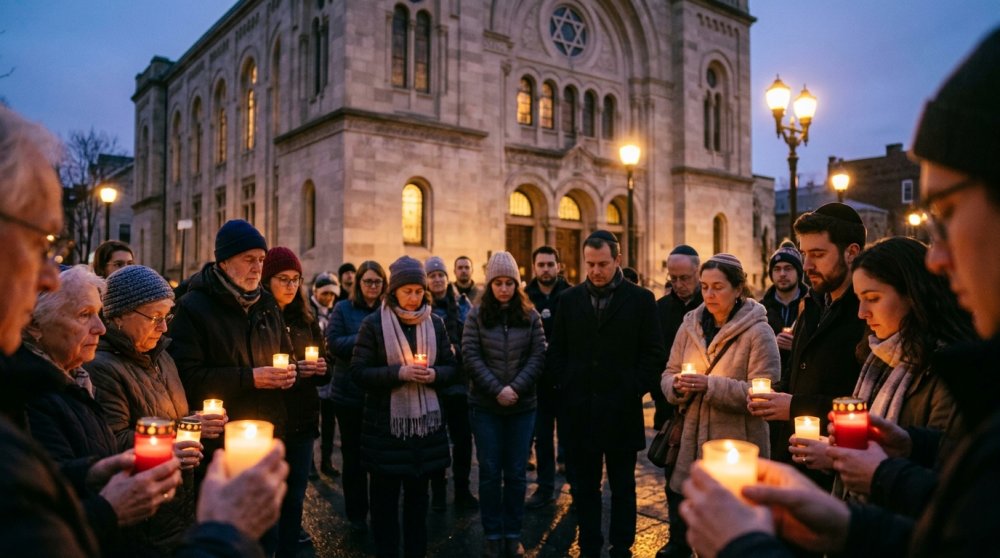
A disturbing pattern of violence has emerged across the Western world, targeting Jewish communities with a ferocity not seen in generations. At Bondi Beach in Sydney, fifteen people lost their lives. In Manchester, two were killed at a synagogue. In our nation’s capital, two were shot at a Jewish museum.
According to a new report, 2025 marks the deadliest year for antisemitic violence in three decades. But this is not merely a contemporary crisis — it is the resurgence of an ancient evil that Christians must recognize and confront.
The hatred directed at the Jewish people is not new. From the genocidal plot of Haman in the Book of Esther to the pogroms of Europe, the pattern repeats itself across history. Each generation believes it has moved past such darkness, yet the darkness returns, often cloaked in new ideologies and political movements.
For Christians, this matters deeply. Our faith is rooted in God’s covenant with Abraham, Isaac, and Jacob. The Scriptures we cherish were written primarily by Jewish hands. Our Savior was born, lived, and ministered as a Jew. To stand silent in the face of antisemitism is to deny our own spiritual heritage.
Three critical factors explain why this ancient hatred has resurged in our time.
First, moral relativism has weakened the West’s ability to recognize evil. When truth becomes subjective and all beliefs are deemed equally valid, societies lose the capacity to identify and condemn genuine wickedness. Antisemitism thrives in environments where clarity about right and wrong has been abandoned. The Judeo-Christian moral framework that once served as a bulwark against such hatred has been systematically dismantled in our schools, media, and public square.
Second, political radicalization on both extremes has provided cover for hate. Far-left ideologies have repackaged ancient antisemitic tropes as “anti-Zionism,” while fringe elements on the far right have revived older forms of racial and religious bigotry. Both threaten Jewish communities and both must be condemned by Christians who value truth over tribal loyalty.
Third, spiritual warfare intensifies when God’s purposes advance. The Jewish people remain central to God’s redemptive plan. Their miraculous preservation as a distinct people, their return to their ancestral homeland, and their ongoing role in biblical prophecy make them targets of demonic opposition. This is not merely sociology or politics — it is a cosmic conflict between the Kingdom of God and the forces of darkness.
The Book of Esther reveals a timeless truth: when the enemies of God’s people plot destruction, God raises up defenders. Mordecai and Esther risked everything to stand against genocide. Today, Christians must ask ourselves if we possess the same courage.
This is not a call to uncritical acceptance of every policy decision made by any government. It is a call to recognize that attacks on Jewish people — whether physical violence or ideological assault — represent an attack on the God who chose them as His covenant people.
American Christians have a particular responsibility in this moment. Our nation has been blessed with religious freedom precisely because it was founded on Judeo-Christian principles. If we allow those principles to erode, if we permit antisemitism to flourish unchallenged, we participate in our own spiritual and cultural destruction.
The violence in Sydney, Manchester, and Washington should serve as a wake-up call. These are not isolated incidents but manifestations of a growing darkness that will not stop with the Jewish community. History demonstrates that societies which tolerate antisemitism eventually turn on all people of faith.
We must speak boldly in our churches, our communities, and our public discourse. We must educate ourselves and our children about the unique dangers of antisemitism and its role throughout history. We must support policies that protect religious minorities while defending the freedom of all people to worship according to conscience.
Above all, we must pray. Prayer moves the hand of God and aligns our hearts with His purposes. The same God who preserved the Jews through Haman’s plot, Pharaoh’s oppression, and Hitler’s Final Solution remains sovereign today.
Antisemitism is not merely a Jewish problem. It is a test of Christian faithfulness, a measure of our commitment to truth, and a sign of the spiritual condition of our civilization. How we respond will determine not only the safety of our Jewish neighbors but the moral integrity of our own witness.
Let us know what you think, please share your thoughts in the comments below.


-

 Self-Reliance1 year ago
Trump’s Bold Move Uncovers Massive Social Security Fraud
-

 Faith1 year ago
New Clues Emerge in Noah’s Ark Mystery
-

 News1 year ago
Governor Walz’s Rhetoric Sparks National Controversy
-

 News1 year ago
Mel Gibson’s ‘The Passion of the Christ’ Sequel Title Announced
-

 Family1 year ago
Texas Lawmaker Targets Furries in Schools
-

 Freedom1 year ago
Maine Lawmaker Challenges Sports Fairness Controversy
-

 Family1 year ago
Canada’s Controversial Policy Sparks Ethical Debate
-
Faith9 months ago
Congress Hears Pleas for Nigerian Christians