
News
Pope Leo XIV Responds After President Trump Criticizes Pontiff’s Iran War Opposition


Faith Facts
- Pope Leo XIV has publicly responded after President Donald Trump criticized him on social media for opposing U.S. military action in Iran.
- Trump’s social media post referenced Pope Leo XIV as ‘weak’ and stated he preferred ‘his brother Louis,’ creating controversy in Christian and political circles.
- The exchange highlights ongoing tensions between the White House and the Vatican over foreign policy and the moral dimensions of military intervention.
President Donald Trump has ignited a firestorm of controversy after posting sharp criticism of Pope Leo XIV on social media. The president’s post targeted the pontiff for his opposition to ongoing U.S. military operations in Iran, marking an unprecedented clash between the White House and the Vatican.
In his post, Trump described the pope as “weak” and made the provocative statement that he preferred “his brother Louis much better.” The comment has drawn immediate attention from both political and religious leaders across the nation.
Pope Leo XIV has since issued a measured response to the president’s remarks. The pontiff’s statement addressed the fundamental moral and theological concerns regarding military action in the Middle East, maintaining the Catholic Church’s traditional stance on the principles of just war and the protection of innocent life.
The clash represents a significant moment in the relationship between American political leadership and the global Catholic Church. Throughout history, American presidents have maintained respectful, if sometimes disagreeing, relationships with the Holy See.
Conservative Christians in America find themselves navigating complex terrain as they balance support for the president’s America First foreign policy with respect for religious authority. Many evangelicals and Catholics alike recognize the importance of both strong national defense and moral restraint in military engagement.
The Iran conflict has divided opinion among faith leaders. While some Christian conservatives support robust military action to counter Iranian aggression and protect American interests and allies like Israel, others echo the pope’s concerns about the human cost of prolonged warfare in the region.
Trump’s reference to “his brother Louis” appears to be commentary on different papal leadership styles. The comparison has raised questions about the president’s view of how religious leaders should engage with matters of war and peace.
The Vatican has historically advocated for diplomatic solutions to international conflicts, emphasizing dialogue and negotiation over military force. This position has sometimes put the Holy See at odds with American foreign policy priorities, particularly in the Middle East.
For American Christians who support both their faith traditions and the president, this public disagreement raises important questions about the proper relationship between religious conscience and political loyalty. Many believers are seeking wisdom in scripture and prayer as they consider these weighty matters.
The president’s supporters argue that strong leadership requires making difficult decisions to protect American lives and interests, even when those decisions are unpopular with international religious figures. They maintain that the commander-in-chief must prioritize national security above all other considerations.
As this situation continues to develop, Christians across the country are reminded of the importance of praying for both our political leaders and our spiritual shepherds. The intersection of faith and politics demands discernment, wisdom, and a commitment to truth.
Let us know what you think, please share your thoughts in the comments below.

Faith Facts
- The Rev. Jim Rigby, pastor of U.S. Senate candidate James Talarico, publicly endorsed an ‘inclusive’ Bible that removes gendered references to God and eliminates titles such as ‘Son of God’ and ‘Lord.’
- Traditional Christian doctrine holds that Jesus Christ is the eternal Son of God, a truth affirmed in Scripture and central to the historic faith of the church.
- Scripture warns against altering God’s Word, stating that ‘every word of God is pure’ (Proverbs 30:5).
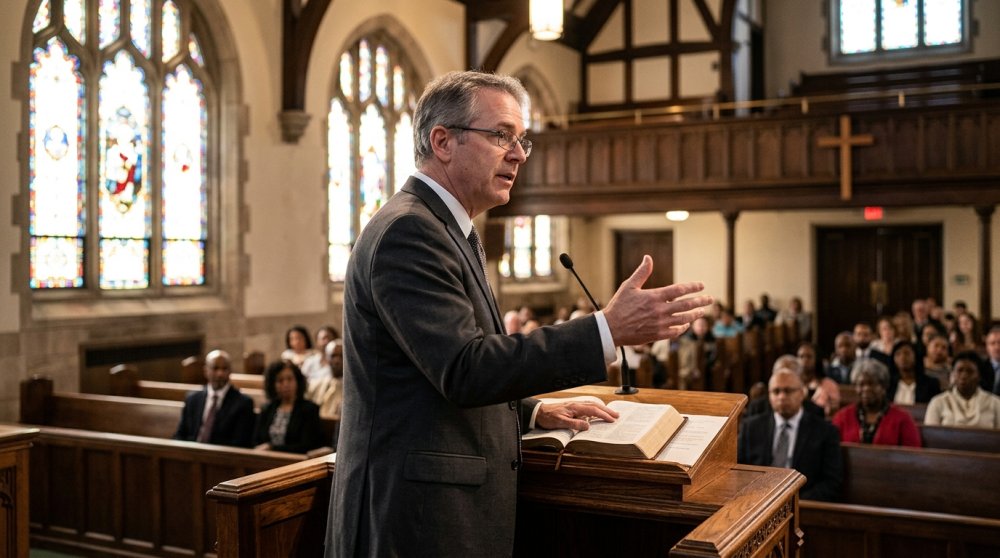
The Rev. Jim Rigby, pastor of Democratic Senate candidate James Talarico, was recorded promoting a new translation of the Bible that removes all gendered language for God.
Rigby encouraged listeners to ‘let go of the stupid stuff’ and praised the so-called ‘Inclusive Bible’ for replacing titles such as ‘Lord’ and ‘Son of God’ with gender-neutral terms.
“Let go of the stupid stuff.”
Critics argue that such changes distort the clear teaching of Scripture and undermine the deity of Christ.
The move reflects a broader effort by progressive churches to align biblical language with modern cultural preferences rather than preserving the historic text.
Let us know what you think, please share your thoughts in the comments below.
NEW: James Talarico’s longtime spiritual mentor, Rev. Jim Rigby, says his church provides copies of the “Inclusive Bible” to new members.
The “Inclusive Bible” strips the Bible of “gendered language.” It refuses to call Jesus the Son of God and describes traditional… pic.twitter.com/R6Nf4SPisg
— Amber Duke (@ambermarieduke) September 17, 2026
Faith Facts
- Scripture teaches that honest scales and balances are from the Lord, and dishonest weights are an abomination to Him.
- Christian voters are called to seek leaders who uphold integrity and reject schemes that undermine fair elections.
- Proverbs 29:2 reminds believers that when the righteous thrive, the people rejoice, but when the wicked rule, the people groan.
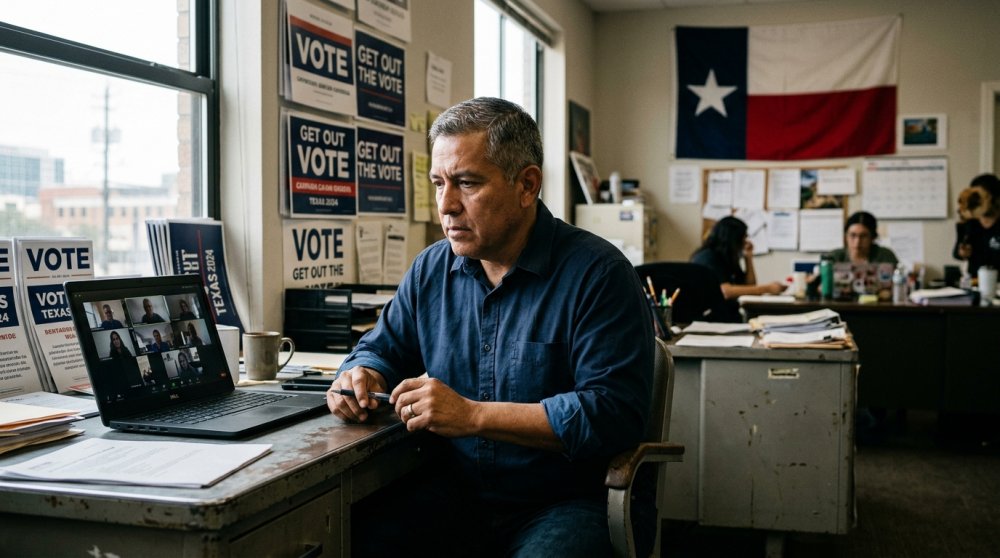
A Texas Democrat political action committee has dismissed an organizer after undercover footage showed him describing $25 payments to citizens for attending a one-hour anti-Republican Zoom class.
The organizer referred to the payments as “a roundabout way of paying people for their votes,” raising serious questions about the legality and ethics of the practice.
Conservative watchdogs argue that such tactics erode public trust in the democratic process and violate the principle of free and fair elections that Americans hold dear.
“A roundabout way of paying people for their votes.”
Faith-based leaders in the Lone Star State are calling for full transparency and swift investigation, insisting that Christian citizens deserve elections free from financial inducements.
The incident underscores the need for vigilance among voters who value traditional principles of honesty and accountability in government.
Let us know what you think, please share your thoughts in the comments below.

Faith Facts
- Brad Pitt publicly acknowledged the profound spiritual and psychological toll that military service takes on service members.
- The actor emphasized sacrificial love as a sustaining force through trauma and hardship.
- Christian conservatives affirm that true strength comes from faith, family, and the willingness to lay down one’s life for others.
Brad Pitt presented his new survival drama Heart of the Beast at its red carpet premiere, describing the film as a tribute to the men and women who serve in uniform. He noted that military personnel risk more than physical harm, stating they put their “psyches” and “souls” on the line.
The actor explained that the story also explores how sacrificial love can anchor individuals through deep trauma and adversity.
“Heart of the Beast” shows the cost of military service, sacrificial love.
Christian viewers will recognize the biblical principle that greater love has no one than this: to lay down one’s life for one’s friends.
Let us know what you think, please share your thoughts in the comments below.


-

 Self-Reliance1 year ago
Trump’s Bold Move Uncovers Massive Social Security Fraud
-

 Faith1 year ago
New Clues Emerge in Noah’s Ark Mystery
-

 News2 years ago
Governor Walz’s Rhetoric Sparks National Controversy
-

 News1 year ago
Mel Gibson’s ‘The Passion of the Christ’ Sequel Title Announced
-

 Family1 year ago
Texas Lawmaker Targets Furries in Schools
-

 Freedom1 year ago
Maine Lawmaker Challenges Sports Fairness Controversy
-

 Family1 year ago
Canada’s Controversial Policy Sparks Ethical Debate
-
Faith10 months ago
Congress Hears Pleas for Nigerian Christians